
How to Clean a Pool: The Complete Step-by-Step Guide (2026)
# How to Clean a Pool: The Complete Step-by-Step Guide
Knowing how to clean a pool properly is the difference between crystal-clear water you actually want to swim in and a murky mess that costs hundreds to fix. Whether you just bought a home with a pool or you’re tired of paying someone else to do it, this guide breaks down every step so you can handle pool cleaning like a pro.
The good news? Pool cleaning isn’t complicated, it just requires consistency. Follow these steps weekly and you’ll spend more time swimming and less time troubleshooting.
What You Need Before You Start Cleaning Your Pool
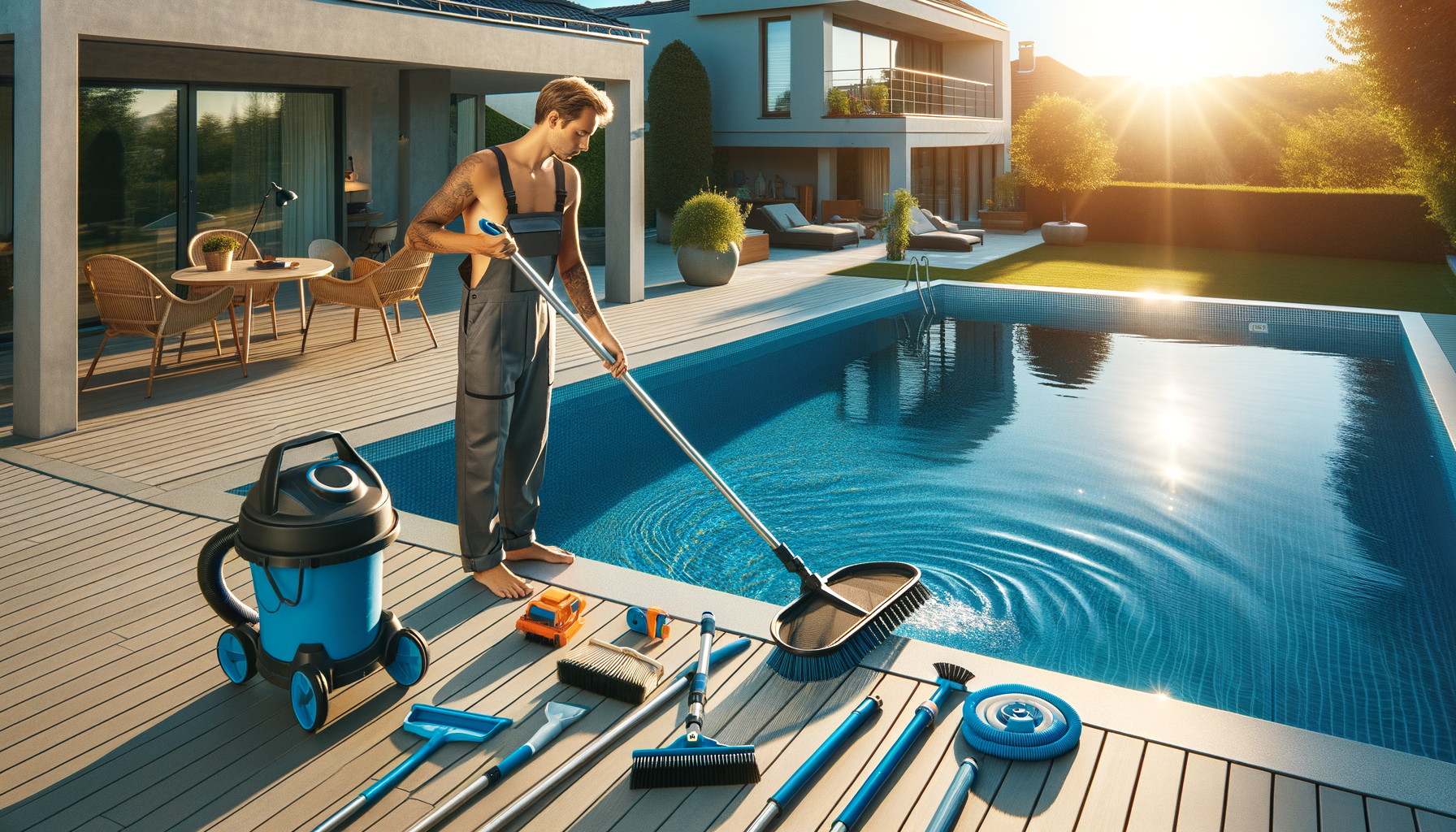
Before diving into the cleaning process, gather your supplies. Having everything on hand makes the job faster and prevents you from cutting corners.
Essential pool cleaning equipment:
- Telescopic pole (attaches to most cleaning tools)
- Skimmer net or leaf rake
- Pool brush (nylon for vinyl/fiberglass, stainless steel for concrete)
- Manual pool vacuum or automatic pool cleaner
- Water testing kit or digital pool calculator
- Pool chemicals (chlorine, pH adjuster, alkalinity increaser)
- Garden hose with spray nozzle
Optional but helpful:
- Robotic pool cleaner (saves significant time)
- Tile brush for waterline cleaning
- Filter cleaning solution
- Phosphate remover
Our Top Equipment Picks
Need to gear up? These are the products we trust for weekly pool cleaning. (As an Amazon Associate, we earn from qualifying purchases.)
- U.S. Pool Supply 16-Foot Telescopic Pole, Heavy-duty aluminum pole that attaches to skimmers, brushes, and vacuum heads. Extends to 16 ft for deep-end reach. (~$30–$40)
- Stargoods Pool Skimmer Net with Fine Mesh, Fine mesh catches even pollen and small debris. Deep bag holds more than flat rakes. (~$15–$20)
- Lalapool 18-Inch Pool Brush, Nylon bristles safe for vinyl, fiberglass, and plaster. Wide 18″ head covers more surface per pass. (~$12–$16)
- Dolphin Nautilus CC Plus Robotic Pool Cleaner, The best investment you can make for weekly cleaning. Scrubs walls and floor independently, set it and go. (~$700–$900)
- Taylor K-2006 Complete Test Kit, The most accurate home test kit available. Tests all five key parameters with drop-based reagents. (~$80–$100)
- Poolmaster 28300 Big Sucker Leaf Vacuum, Budget-friendly manual vacuum that connects to your garden hose. Great for quick debris pickup. (~$25–$35)
How to Clean a Pool in 7 Steps
Follow these steps in order for the most efficient clean. This entire process takes 30–60 minutes for most residential pools.
Step 1: Skim the Surface
Start by removing leaves, insects, and floating debris with your skimmer net. Work from one end of the pool to the other in overlapping passes. This prevents debris from sinking to the bottom where it’s harder to remove and can stain your pool surface.
Pro tip: Skim daily if your pool is near trees. A 2-minute daily skim prevents a 20-minute weekend cleanup.
Step 2: Empty the Skimmer Baskets and Pump Basket
Turn off your pump, then remove and empty all skimmer baskets. Check your pump strainer basket too, a clogged basket restricts water flow and reduces your filter’s effectiveness by up to 50%.
Rinse baskets with a garden hose to clear stuck debris. Replace any cracked baskets immediately, broken pieces can damage your pump impeller.
Step 3: Brush the Walls, Floor, and Steps
Attach your pool brush to the telescopic pole and scrub all pool surfaces:
- Walls: Brush from the waterline down to the floor
- Floor: Push debris toward the main drain
- Steps and ladders: Scrub thoroughly, these are algae hotspots
- Behind ladders and in corners: Don’t skip tight areas where algae hides
Brush toward the main drain so your filter system can capture the loosened debris. For concrete and plaster pools, use a stainless steel brush at least once a month to prevent algae from embedding in the porous surface.
Step 4: Vacuum the Pool
After brushing (give it 15–20 minutes for debris to settle), vacuum the pool floor. You have three options:
1. Manual vacuum: Connect to skimmer via vacuum hose. Slow, steady passes, moving too fast stirs up debris without capturing it.
2. Automatic suction cleaner: Connects to skimmer, runs while your pump is on. Set it and forget it.
3. Robotic cleaner: Independent unit, most thorough clean. Worth the investment if you clean weekly.
If you have heavy debris on the bottom, set your filter valve to “Waste” to bypass the filter and send dirty water straight out. This prevents clogging your filter with large amounts of debris.
Step 5: Clean the Waterline
The waterline (where water meets tile or vinyl) accumulates oils, sunscreen residue, and mineral deposits. Use a tile brush or magic eraser with a waterline cleaning product.
For stubborn calcium deposits on tile, a pumice stone works well on plaster and tile (never use on vinyl or fiberglass, it will scratch). Regular waterline cleaning prevents buildup that becomes increasingly difficult to remove over time.
Step 6: Check and Clean Your Filter
Your pool filter is the backbone of clean water. Clean it based on type:
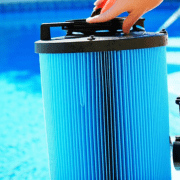
- Cartridge filter: Remove and hose down every 2–4 weeks. Deep clean with filter cleaner solution every 3 months. Replace cartridges annually.
- Sand filter: Backwash when pressure gauge reads 8–10 PSI above clean starting pressure. Replace sand every 5–7 years.
- DE filter: Backwash and recharge with fresh DE powder when pressure rises 8–10 PSI. Perform a full teardown and clean twice per year.
A clean filter means clear water. A dirty filter means chemicals can’t do their job no matter how much you add.
Step 7: Test and Balance Your Water Chemistry
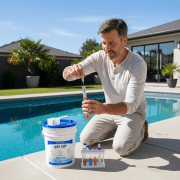
This is the step most pool owners get wrong, or skip entirely. After physically cleaning your pool, test the water and adjust chemistry:
| Parameter | Ideal Range |
|———–|————|
| Free Chlorine | 1–3 ppm |
| pH | 7.2–7.6 |
| Total Alkalinity | 80–120 ppm |
| Calcium Hardness | 200–400 ppm |
| Cyanuric Acid (Stabilizer) | 30–50 ppm |
Testing is easy. Knowing exactly how much of each chemical to add based on your pool’s volume and current readings? That’s where most people struggle, and where a pool chemical calculator saves you time and money.
How Often Should You Clean Your Pool?
Not every step needs to happen at the same frequency:
| Task | Frequency |
|——|———–|
| Skim surface | Daily (or every other day) |
| Empty baskets | Weekly |
| Brush walls and floor | Weekly |
| Vacuum | Weekly |
| Clean waterline | Bi-weekly |
| Test water chemistry | 2–3 times per week |
| Clean filter | Monthly (cartridge) or as needed |
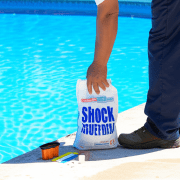
| Shock treatment | Weekly or after heavy use |
Consistency beats intensity. A 30-minute weekly routine prevents the 3-hour emergency cleanup that happens when you skip two weeks.
Common Pool Cleaning Mistakes to Avoid
Brushing after vacuuming, Always brush first, then vacuum. Brushing after vacuuming just stirs settled debris back into suspension.
Ignoring water chemistry, A physically clean pool with bad chemistry will turn green fast. Always test after cleaning. Use the Pool Chemical Calculator to get precise dosing for your specific pool size.
Running the pump too little, Your pump should run 8–12 hours daily during swim season. Water that isn’t circulating is water that’s growing algae.
Backwashing too often, Sand and DE filters actually work better with a slight amount of buildup. Only backwash when pressure rises 8–10 PSI above baseline.
Calculate It Instantly with Pool Chemical Calculator
Stop guessing with your pool chemistry! The Pool Chemical Calculator app tells you exactly how much of each chemical to add based on your pool’s size and current readings.
Chlorine, pH, Alkalinity, Calcium Hardness & more
Works for all pool types, chlorine, salt water, above ground
Free to download
Frequently Asked Questions
How long does it take to clean a pool?
A routine weekly pool cleaning takes 30–60 minutes for most residential pools. This includes skimming, brushing, vacuuming, and testing water chemistry. The first deep clean may take 2–3 hours if the pool has been neglected.
Can I clean my pool without chemicals?
Physical cleaning (skimming, brushing, vacuuming) removes visible debris, but you absolutely need chemicals to sanitize the water and prevent bacteria, algae, and waterborne illness. There is no safe substitute for proper sanitization in a swimming pool.
How do I know how much chemical to add after cleaning?
Test your water first using a test kit or test strips, then use a pool chemical calculator to determine exact dosing. The amount depends on your pool’s volume, current chemical levels, and target ranges.
Should I run the pump while cleaning?
Turn the pump off when emptying skimmer baskets and while manually vacuuming (unless vacuuming to waste). Keep the pump running while brushing and after cleaning to filter out loosened debris. Run it for at least 8 hours after adding chemicals.
How often should I deep clean my pool?
Perform a deep clean (including filter cleaning, waterline scrubbing, and thorough brushing of all surfaces) at least once a month during swim season. At minimum, deep clean during spring opening and fall closing.