
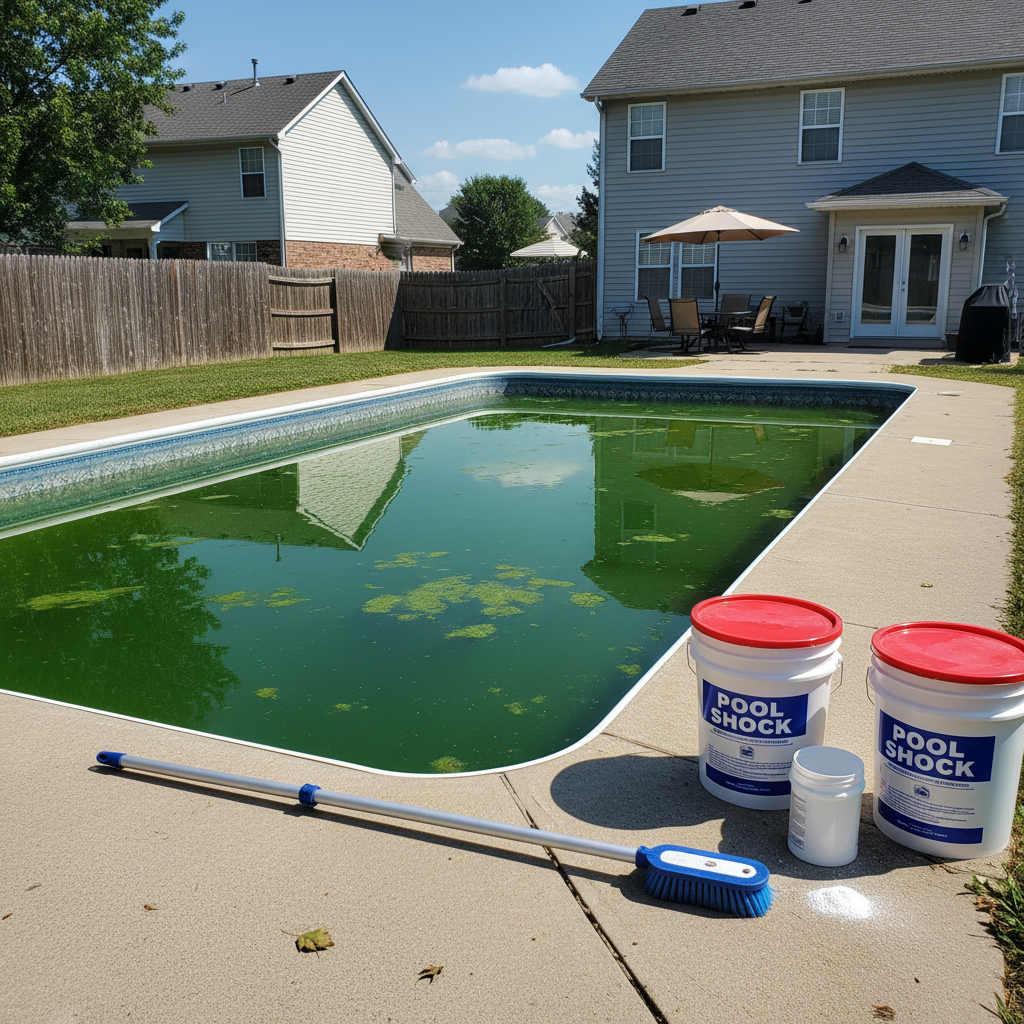
How to Get Rid of Pool Algae Fast: A No-Nonsense Action Plan
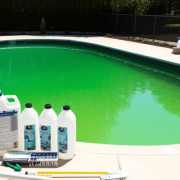
You walked outside expecting blue water and got hit with something that looks like a swamp. Green, murky, maybe a little slimy on the walls. Algae moved in while you weren’t paying attention, and now it’s throwing a party.
Good news — you can crash that party in 24 to 48 hours if you act fast and follow the right steps. No half-measures, no guessing, no dumping random chemicals and hoping.
Here’s your battle plan.
Why Algae Shows Up in the First Place
Algae spores are everywhere. They blow in on the wind, hitch a ride on swimsuits, float in with rain. Your pool is never truly algae-free — it’s just that proper chlorine levels keep those spores from multiplying.
When chlorine drops below 1 ppm, algae wakes up. A few things accelerate it:
- Missed a shock treatment. Even one skipped week in summer can do it.
- Heavy rain. Dilutes chlorine and throws off pH in one shot.
- Warm water. Above 85°F and algae grows like it’s getting paid.
- Poor circulation. Dead spots behind ladders and in corners are where it starts.
- Low stabilizer levels. Without cyanuric acid (CYA), UV light destroys your chlorine in hours.
Understanding the “why” matters because you need to fix the root cause — not just treat symptoms. Kill the algae today and it’ll come right back next week if your chemistry stays off.
Identify What You’re Dealing With
Not all algae is the same, and the type changes how aggressive your treatment needs to be.
Green Algae (Most Common)
Floats in the water, turns everything emerald green, makes walls slippery. This is the easiest to kill. A good shock treatment handles it in 24 hours.
Yellow/Mustard Algae
Sits on walls and the floor in patches that look like sand or pollen. Brushes off easily but comes right back. Chlorine-resistant — you’ll need a higher dose and some patience.
Black Algae
Dark spots that look like they’re embedded in the plaster. These have protective layers and deep roots. The hardest to kill and the most stubborn. You’ll need aggressive brushing plus heavy chemical treatment.
Quick rule of thumb: Green = one shock, yellow = double shock, black = triple shock plus elbow grease.
The Fast Algae Kill: Step by Step
This process works for all three types. The difference is intensity. For green algae, one round usually does it. For yellow or black, repeat the shock step.
Step 1: Brush Everything First
Before you add a single chemical, grab a pool brush and scrub every surface — walls, floor, steps, behind the ladder, around the skimmer. Get aggressive with it.
Why? Algae protects itself with a biofilm — a slimy outer layer that deflects chlorine. Brushing breaks that layer open so the chemicals can actually reach the algae cells and kill them.
For black algae, use a stainless steel brush (on plaster/concrete pools only — never on vinyl or fiberglass). A nylon brush works for everything else.
Spend a solid 15-20 minutes brushing. Don’t rush this. It’s the single most important step people skip, and it’s the reason their first shock attempt fails.
Recommended: Leslies Pro Wall Brush 18″ — wide enough to cover ground fast without tiring your arms out.
Step 2: Test and Adjust pH
Your pool’s pH needs to be between 7.1 and 7.4 before you shock. This is critical and most people miss it.
Here’s why: chlorine’s killing power depends entirely on pH. At 7.2, about 65% of your chlorine is in its active form (hypochlorous acid). At 8.0? Only 21%. Same amount of chlorine, less than a third of the punch.
Test your water and lower the pH if it’s above 7.4. Muriatic acid works fast — about a cup per 10,000 gallons drops pH by roughly 0.2 points. Let the pump run for 30 minutes, retest, then move on.
Recommended: Taylor K-2006 Complete Test Kit — the gold standard for accurate readings. Way more reliable than test strips.
Step 3: Shock the Pool — Hard
This isn’t a maintenance shock. You need to hit breakpoint chlorination — the level where chlorine overwhelms the algae and oxidizes every organic contaminant in the water.
How much shock to use:
- Green algae: 2 pounds of calcium hypochlorite (cal-hypo) shock per 10,000 gallons. That’s roughly double a normal shock dose.
- Yellow/mustard algae: 3 pounds per 10,000 gallons. Yellow algae laughs at normal doses.
- Black algae: 4 pounds per 10,000 gallons. Yes, it’s aggressive. Yes, you need it.
Target chlorine level: 30 ppm for green, 40+ ppm for yellow or black. These numbers sound extreme but that’s the whole point — you’re carpet-bombing the algae.
Dissolve the shock in a 5-gallon bucket of pool water before adding it. Pour it around the perimeter with the pump running. Do this at dusk — sunlight degrades chlorine and you need every bit of it working overnight.
Recommended: In The Swim Cal-Hypo Pool Shock (24-pack) — buy the bulk pack. You’ll use 4-8 bags depending on your pool size and algae type.
Step 4: Run the Filter 24/7
Your filter is doing the heavy lifting now. After shocking, run the pump non-stop for at least 24 hours. 48 hours is better. Don’t turn it off until the water is clear.
The chlorine kills the algae. The filter catches the dead stuff. Both need to work together.
- Sand filter: Backwash every 8-12 hours during the process. The pressure gauge will tell you — when it rises 8-10 PSI above normal, backwash.
- Cartridge filter: Pull and hose it down every 12 hours. Dead algae clogs cartridges fast.
- DE filter: Backwash and add fresh DE as needed. Monitor pressure closely.
If your filter can’t keep up, add a clarifier to help clump the tiny dead algae particles so your filter can grab them.
Step 5: Brush Again (Yes, Again)
12 hours after shocking, go back out and brush everything a second time. You’ll see dead algae on the walls and floor — grey or white patches instead of green. Brush it all down so the filter can suck it up.
For black algae: brush each individual spot directly. Those root systems go deep into plaster and one pass isn’t enough. Hit each spot 3-4 times hard.
Step 6: Test and Re-Shock if Needed
After 24 hours, test your chlorine level. If it’s dropped back below 5 ppm, the algae consumed it — which means there’s still living algae in there. Shock again at the same dose.
Keep this cycle going until your chlorine level holds above 5 ppm overnight without dropping significantly. That means the algae is dead and the chlorine has nothing left to fight.
For green algae, one shock usually does it. Yellow might take 2-3 rounds. Black algae can take 3-4 rounds over several days.
Step 7: Vacuum to Waste
Once the water starts clearing up, you’ll see dead algae settled on the bottom. Don’t vacuum it through your filter — set your multiport valve to “waste” and vacuum it straight out of the pool.
This bypasses the filter entirely and prevents dead algae from clogging it or passing through and clouding your water. You’ll lose some water, so keep the hose running to refill as you go.
No multiport valve? Vacuum normally but clean your filter immediately after.
The Timeline: What to Expect
| Time After Shocking | What You Should See |
|---|---|
| 0-6 hours | Water still green/cloudy, chlorine working |
| 6-12 hours | Green fading, water turning grey or milky |
| 12-24 hours | Significant clearing, dead algae settling |
| 24-48 hours | Water approaching clear, may need second shock |
| 48-72 hours | Crystal clear (green algae) or nearly clear (yellow/black) |
If you’re not seeing improvement after 24 hours, check your pH. Nine times out of ten, the shock didn’t work because the pH was too high.
Preventing Algae From Coming Back
Killing algae is one thing. Keeping it gone is another. Build these habits:
Keep chlorine at 2-4 ppm. Not 1 ppm. Not “around” 2 ppm. Actually 2-4 ppm, tested at least twice a week in summer. Your pool app makes this easy — just log your readings and it tells you exactly what to add.
Shock weekly during swim season. Every single week, no skipping. A pound of shock per 10,000 gallons every 7 days is cheap insurance.
Maintain CYA at 30-50 ppm. Cyanuric acid is sunscreen for your chlorine. Without it, UV light destroys free chlorine within hours. With it, your chlorine lasts all day.
Run your pump 8-12 hours daily. Dead water grows algae. Moving water doesn’t. In peak summer, lean toward 12 hours.
Brush walls weekly. Five minutes of brushing prevents the biofilm from building up. Way easier than a full algae treatment.
Keep phosphates low. Phosphates are algae food. If your levels are above 500 ppb, use a phosphate remover to starve the algae out.
Calculate Your Chemical Doses Exactly
Guessing at chemical amounts is how people end up over-treating or under-treating — both waste money and time. The Pool Chemical Calculator app does the math for you. Plug in your pool volume, current readings, and target levels, and it tells you exactly how much of each chemical to add, down to the ounce.
???? Download Free:
No more math, no more guessing. Just clear water.
FAQ
How long does it take to get rid of pool algae?
Green algae clears up in 24-48 hours with proper shocking and filtration. Yellow (mustard) algae takes 2-4 days with repeated treatments. Black algae is the most stubborn — plan for 5-7 days of aggressive treatment with multiple shock cycles and heavy brushing.
Can I swim while treating pool algae?
No. During treatment, chlorine levels are dangerously high — 30 ppm or more, compared to the normal 1-4 ppm range. Stay out until chlorine drops below 5 ppm and the water is visibly clear. That usually takes 24-48 hours after the final shock.
Why didn’t shocking kill my pool algae?
Three common reasons: your pH was too high (above 7.6, shock is barely effective), you didn’t use enough shock (algae needs 2-4x the normal dose), or you didn’t brush first (the biofilm layer protects algae from chlorine). Fix those three things and re-shock.
Should I use algaecide or shock to kill algae?
Shock. Every time. Algaecide is a preventive tool, not a cure. Once algae is visible, you need the brute force of high-dose chlorine to kill it. Use algaecide after the water is clear to help prevent it from coming back — not as your primary treatment.
How much does it cost to treat a green pool?
For a standard 15,000-gallon pool with green algae, you’re looking at about $30-50 in shock treatment (4-6 bags of cal-hypo), plus maybe $10-15 for pH adjustment chemicals. Yellow and black algae cost more because they require repeated treatments — budget $75-100 for stubborn cases.