
Pool Article
Slug: pool-algae-prevention-summer
# Pool Algae Prevention in Summer: Keep Your Water Crystal Clear When It Matters Most
Summer heat is algae’s best friend. Warm water, heavy use, and afternoon rainstorms create the perfect environment for that green slime to show up uninvited. Fighting algae after it takes hold is a pain — it eats your time, your chemicals, and your patience.
The smarter play? Stop it before it starts. Preventing pool algae during summer is simpler than treating it, cheaper too, and your water stays swim-ready all season.
Here’s what actually works to keep algae out of your pool from June through September.
Why Algae Loves Summer
Before you can beat algae, it helps to understand what you’re up against.
Algae spores are everywhere — in the air, on swimsuits, hitching rides on pool toys. They’re getting into your water no matter what you do. The difference between a clean pool and a green one comes down to whether those spores find conditions they can thrive in.
Summer hands algae three advantages at once:
- Warm water temperatures. Algae grows fastest between 77°F and 95°F. That’s pool season.
- Sunlight exposure. UV light breaks down chlorine while simultaneously fueling algae photosynthesis. A double hit.
- Heavy bather loads. More swimmers mean more sweat, sunscreen, and organic debris. All of it consumes chlorine faster than normal.
Add a thunderstorm dumping phosphates and nitrogen into your pool, and you’ve got an algae buffet. The good news? Every one of these factors is manageable.
Keep Chlorine Levels Rock Steady
This is the single most important thing you can do. Chlorine is what kills algae spores before they can multiply. Let it drop — even for a day — and you’re rolling the dice.
Target free chlorine: 2-4 ppm during summer. That’s higher than the 1-3 ppm range you might run in spring or fall. Summer demands more because UV light and bather load chew through chlorine faster.
A few ways to keep levels consistent:
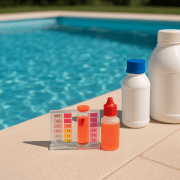
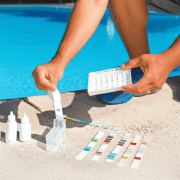
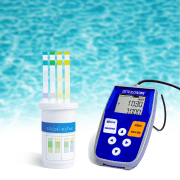
- Test daily during peak heat. Not weekly. Daily. It takes 30 seconds with a test strip. The Taylor K-2006 test kit gives more precise readings if you want lab-grade numbers.
- Use a chlorine floater or auto-chlorinator. These release chlorine continuously instead of creating big spikes that burn off quickly.
- Shock weekly. A regular weekly shock treatment oxidizes organic waste that normal chlorination misses. Use calcium hypochlorite or dichlor — follow the dosage for your pool size.
Not sure how much chlorine your pool actually needs? The Pool Calculator app takes the guesswork out. Enter your pool volume and current readings, and it tells you the exact amount to add. Grab it on iOS or Android.
Protect Your Chlorine with Stabilizer
Here’s something a lot of pool owners miss: you can dump chlorine in all day, but without cyanuric acid (CYA) protecting it, the sun burns it off within hours.
CYA acts like sunscreen for your chlorine. It shields it from UV degradation so it lasts long enough to actually kill algae.
Target CYA level: 30-50 ppm. Go higher than 70 ppm and it starts working against you — the chlorine becomes less effective even though your test shows adequate levels. This is called chlorine lock, and it’s a common summer trap.
If your CYA is too high, the only real fix is a partial drain and refill. No chemical lowers CYA. Keep an eye on it, especially if you use stabilized chlorine (dichlor or trichlor) regularly, since each dose adds more CYA to the water.
Brush and Skim Religiously
Algae doesn’t start in the middle of your pool where water circulates freely. It starts on surfaces — the walls, the floor, behind the ladder, around the steps. Anywhere water movement is weak.
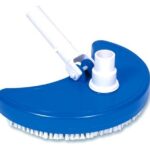
Brush your pool walls and floor at least twice a week in summer. Once a week might cut it in cooler months, but summer growth is aggressive. You’re knocking spores loose before they can establish colonies and exposing them to the chlorine in your water.
Pay extra attention to:
- Corners and crevices
- Behind ladders and handrails
- Around return jets and the skimmer opening
- The waterline (where sunlight and warm water meet — algae paradise)
Skim the surface daily. Every leaf, bug, and piece of debris that floats in your pool is organic material that consumes chlorine. Get it out fast.
Run Your Filter Long Enough
Your filter is your first line of defense. It physically removes algae spores and debris from the water. But only if it runs long enough.
Run your pump at least 10-12 hours per day in summer. The goal is to turn over your entire pool volume at least once every 24 hours. Most residential pools need 8-12 hours to achieve a full turnover depending on pump size and plumbing.
During heat waves or heavy use periods, consider running it 24/7. Yes, it costs more in electricity. It costs a lot less than draining and treating an algae-infested pool.
Clean your filter regularly too. A dirty filter restricts flow and reduces circulation. Backwash sand and DE filters when pressure rises 8-10 PSI above clean baseline. Rinse cartridge filters with a hose every 2-3 weeks. A deep clean with filter cleaner solution once a month keeps cartridges performing their best.
Balance Your Water Chemistry
Chlorine gets all the attention, but the supporting cast matters just as much. Out-of-balance water makes chlorine less effective, even when levels read fine.
Key ranges to maintain:
- pH: 7.4-7.6. That’s where chlorine works most efficiently. At pH 7.8, chlorine’s only about 25% as effective as it is at 7.2. That’s a massive difference.
- Total alkalinity: 80-120 ppm. This buffers your pH and prevents wild swings. Rainstorms, heavy use, and chemical additions all push pH around — alkalinity keeps it steady.
- Calcium hardness: 200-400 ppm. Too low and water gets aggressive, corroding equipment. Too high and you’ll get scaling. Neither helps with algae directly, but both create conditions that’ll make your pool harder to maintain.
Test all of these at least twice a week during summer. The Pool Calculator app can help you figure out exactly what adjustments to make based on your specific readings.
Use Algaecide as Insurance
Think of algaecide as a backup plan, not a primary weapon. Chlorine does the heavy lifting. Algaecide handles what chlorine misses.
A weekly dose of a quality polyquat algaecide (like PoolRx) adds a second layer of protection. Polyquat formulas don’t foam, don’t stain, and work alongside chlorine without interference.
Avoid copper-based algaecides unless you know your water chemistry inside and out. Copper can stain pool surfaces and turn blonde hair green if levels get too high. Polyquat is safer for most pool owners.
Add algaecide the day after shocking, not the same day. Shock will destroy the algaecide before it has a chance to work.
After Rainstorms: Act Fast
Summer thunderstorms are algae accelerators. Rain dumps phosphates, nitrogen, pollen, and dirt into your pool while simultaneously diluting your chlorine and messing with pH.
After any significant rainfall:
1. Test immediately. Don’t wait until your regular testing day. Check chlorine and pH at minimum.
2. Shock the pool. A quick shock after a storm resets your chlorine level and kills any spores that washed in.
3. Clean the skimmer and pump baskets. Storms blow debris everywhere. Clear it out so your filtration system runs at full capacity.
4. Run the pump for 24 hours. Give your filter time to process all the junk that washed in.
This 30-minute routine after a storm prevents days of algae treatment later.
The Algae Prevention Cheat Sheet
Here’s your summer routine boiled down:
| Task | Frequency |
|——|———–|
| Test chlorine and pH | Daily |
| Skim surface debris | Daily |
| Run pump 10-12 hours | Daily |
| Brush walls and floor | 2x per week |
| Test full chemistry panel | 2x per week |
| Shock the pool | Weekly |
| Add algaecide | Weekly |
| Clean filter | Every 2-3 weeks |
| Check CYA level | Monthly |
Stick to this and algae won’t stand a chance.
FAQ
How do I prevent algae in my pool during summer?
Maintain free chlorine at 2-4 ppm, run your pump 10-12 hours daily, brush walls twice a week, and shock weekly. Keep cyanuric acid between 30-50 ppm to protect chlorine from UV breakdown. Adding a polyquat algaecide weekly provides extra insurance.
What chlorine level prevents algae?
Keep free chlorine between 2-4 ppm during summer months. This is higher than the typical 1-3 ppm recommendation because warm water, UV light, and heavier bather loads consume chlorine faster. Test daily during peak heat to catch drops before algae can establish.
Does running the pool pump prevent algae?
Yes. Circulating water prevents stagnant zones where algae thrives. Run your pump at least 10-12 hours per day in summer to achieve a full water turnover. During extreme heat or after storms, run it 24 hours.
Should I use algaecide every week in summer?
A weekly dose of polyquat algaecide is good insurance alongside proper chlorination. Add it the day after shocking — not the same day — so the shock doesn’t destroy the algaecide. It’s a backup layer, not a substitute for maintaining chlorine levels.
Why does my pool keep getting algae in summer?
The most common causes are insufficient chlorine (especially after sunny days or heavy use), inadequate filtration run time, and poor circulation in dead spots. Rainstorms also introduce nutrients that feed algae growth. Check that your CYA isn’t too high — above 70 ppm, chlorine becomes less effective even when levels test normal.