
The Complete Guide to Pool Chemicals: What You Need and How to Use Them

The Complete Guide to Pool Chemicals: What You Need and How to Use Them

Meta Description: Learn everything about pool chemicals — from chlorine to pH balancers. This complete guide covers what each chemical does, when to use it, and how to keep your water crystal clear.

Target Keyword: pool chemicals
URL Slug: pool-chemicals-guide
Date: 2026-01-30


Keeping your pool safe, clean, and sparkling isn’t magic — it’s pool chemicals working together in the right balance. Whether you just installed a backyard pool or you’ve been maintaining one for years, understanding pool chemicals is the single most important skill you can develop as a pool owner.

The problem? Most people buy whatever the pool store recommends without understanding why they need it or how much to add. That leads to wasted money, cloudy water, and skin irritation. This guide breaks down every pool chemical you’ll ever need, what it does, and exactly how to use it.

Essential Pool Chemicals Every Owner Needs

Not all pool chemicals are created equal. Some you’ll use every week, others only when a specific problem appears. Here’s the complete breakdown by category.

Sanitizers — Your First Line of Defense

Sanitizers kill bacteria, viruses, and algae in your pool water. Without them, your pool becomes a breeding ground for harmful organisms within 24-48 hours.

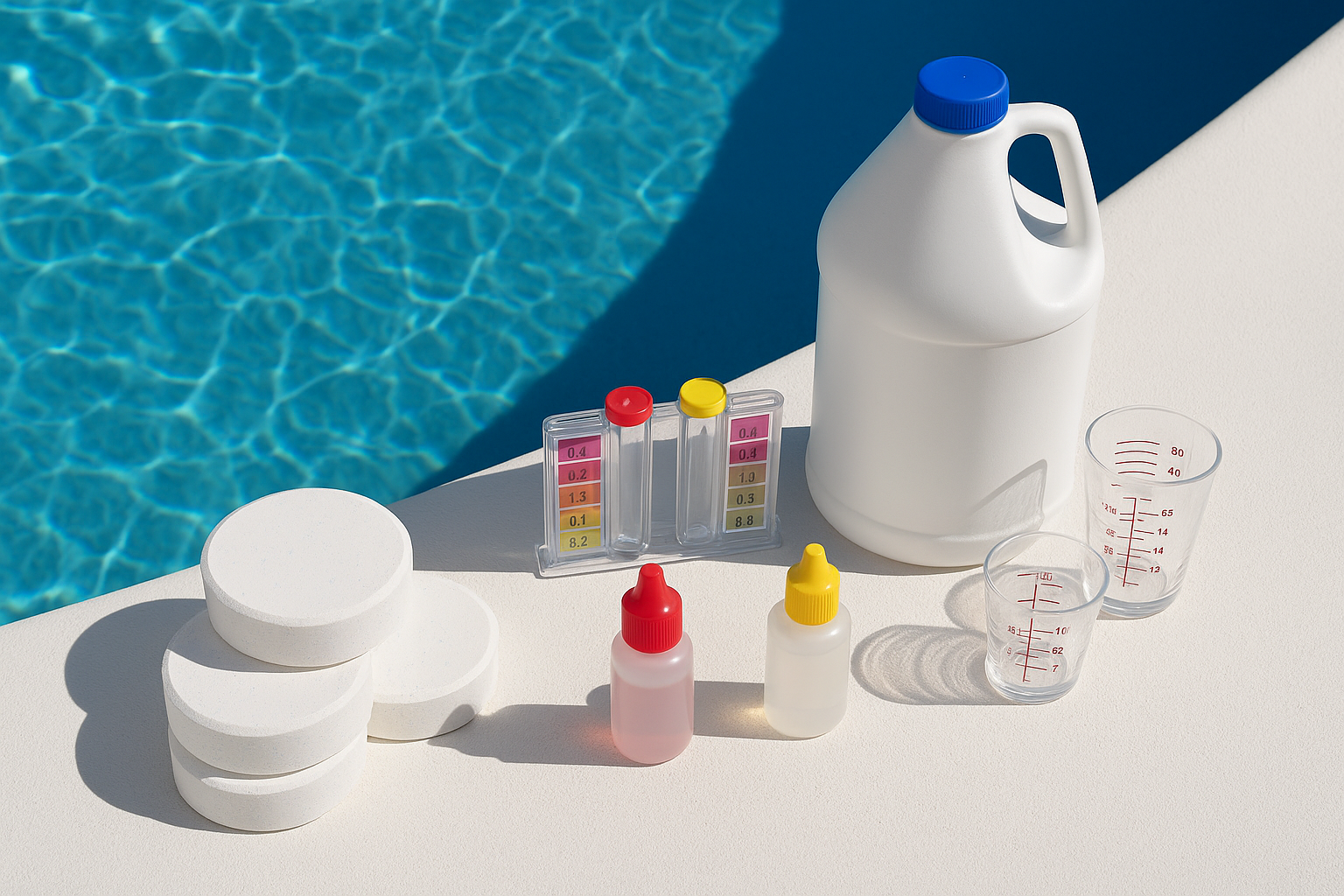
  • Chlorine (Liquid, Granular, or Tablets): The most common pool sanitizer. Liquid chlorine (sodium hypochlorite) works fast and leaves no residue. Granular chlorine (calcium hypochlorite or dichlor) dissolves quickly for spot treatments. Tablet chlorine (trichlor) dissolves slowly in a floater or chlorinator for steady, hands-off sanitation.
  • Bromine: An alternative to chlorine that works better in hot water (spas and hot tubs). Less effective in direct sunlight, so it’s not ideal for outdoor pools.
  • Salt Chlorine Generators: Salt water pools still use chlorine — the salt cell converts dissolved salt into chlorine automatically. You still need to monitor levels and balance other chemicals.

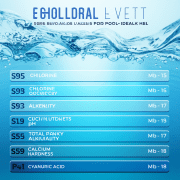
Ideal chlorine level: 1-3 ppm (parts per million) for residential pools.

pH Balancers — The Foundation of Water Chemistry

pH measures how acidic or alkaline your water is on a scale of 0-14. Pool water should stay between 7.2 and 7.6. Outside that range, chlorine becomes less effective and your equipment corrodes faster.

  • pH Increaser (Soda Ash / Sodium Carbonate): Raises pH when water is too acidic (below 7.2). Acidic water causes eye irritation, corrodes metal fittings, and etches plaster surfaces.
  • pH Decreaser (Muriatic Acid or Sodium Bisulfate): Lowers pH when water is too alkaline (above 7.6). High pH makes chlorine sluggish and causes cloudy water and scale buildup.

Alkalinity Adjusters — The pH Buffer

Total alkalinity (TA) acts as a buffer that prevents pH from swinging wildly. Think of it as the shock absorber for your pH level. Target range: 80-120 ppm.

  • Alkalinity Increaser (Sodium Bicarbonate / Baking Soda): Raises TA without dramatically affecting pH.
  • To lower alkalinity: Use muriatic acid in small doses with aeration. This brings TA down while allowing pH to recover naturally.

Calcium Hardness — Protecting Your Pool Surface

Calcium hardness measures dissolved calcium in your water. Too little and the water becomes aggressive, pulling calcium from your plaster, grout, and equipment. Too much and you get scale deposits everywhere. Target: 200-400 ppm.

  • Calcium Hardness Increaser (Calcium Chloride): Add when your water is too soft.
  • To lower calcium: Partially drain and refill with fresh water, or use a reverse osmosis treatment.

Stabilizer (Cyanuric Acid) — Sunlight Protection

Cyanuric acid (CYA) shields chlorine from UV degradation. Without it, sunlight destroys up to 90% of your free chlorine within two hours. Target: 30-50 ppm.

  • Stabilizer / Conditioner: Add at the start of the season and monitor monthly. Trichlor tablets contain CYA, so tablet users often see levels climb over time.
  • To lower CYA: The only reliable method is partial drain and refill.

Specialty Pool Chemicals for Common Problems

Beyond the everyday essentials, you’ll occasionally need these problem-solvers:

Pool Shock

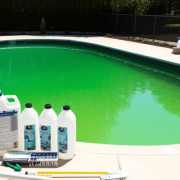
Shock treatment is a large dose of chlorine (or non-chlorine oxidizer) that eliminates combined chlorine (chloramines), kills algae blooms, and resets your water after heavy use or rainstorms. Shock your pool:

  1. Test your water to know your current free chlorine and combined chlorine levels
  2. Calculate the dose based on your pool’s volume — typically 1 lb of calcium hypochlorite per 10,000 gallons for a standard shock
  3. Add shock at dusk — sunlight degrades chlorine before it can do its job
  4. Run your pump for at least 8 hours to circulate
  5. Retest the next morning and don’t swim until free chlorine drops below 5 ppm

Algaecide

A preventive chemical that inhibits algae growth. Use it weekly as insurance, not as a cure for an existing bloom. Copper-based algaecides are the most effective but can stain if overused. Quat (quaternary ammonium) algaecides are safer for vinyl and fiberglass pools.

Clarifier and Flocculant

  • Clarifier: Causes tiny particles to clump together so your filter can catch them. Great for mildly cloudy water.
  • Flocculant: Causes particles to sink to the bottom for manual vacuuming. Use for severely cloudy water when you need fast results.

Metal Sequestrant

If your fill water contains iron, copper, or manganese, a sequestrant binds to these metals and prevents staining. Essential if you fill from a well.

How to Test and Balance Pool Chemicals (Step by Step)

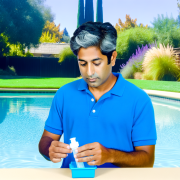
Proper testing comes before adding any chemicals. Here’s the process:

  1. Collect a water sample from elbow-deep in the pool, away from return jets
  2. Test with a reliable kit — liquid reagent kits (Taylor K-2006) are more accurate than strips
  3. Check levels in this order: Free Chlorine → pH → Total Alkalinity → Calcium Hardness → CYA
  4. Adjust alkalinity first — it affects pH, so stabilize it before touching pH
  5. Adjust pH second — once TA is stable, dial in your pH to 7.2-7.6
  6. Adjust sanitizer last — add chlorine or shock as needed to reach 1-3 ppm
  7. Retest after 4-6 hours of circulation to confirm your adjustments took hold

The key principle: adjust one chemical at a time and wait before testing again. Dumping everything in at once leads to overcorrection and more problems.

How Much Pool Chemical Do You Actually Need?

This is where most pool owners get tripped up. Every pool is different — volume, current levels, water source, and usage patterns all affect dosing. A 10,000-gallon pool needs very different amounts than a 25,000-gallon pool.

Instead of guessing or relying on vague label instructions, use a precise calculator that factors in your specific pool size and current chemistry readings.


???? Calculate It Instantly with Pool Chemical Calculator

Stop guessing with your pool chemistry! The Pool Chemical Calculator app tells you exactly how much of each chemical to add based on your pool’s size and current readings.

✅ Chlorine, pH, Alkalinity, Calcium Hardness & more
✅ Works for all pool types — chlorine, salt water, above ground
✅ Free to download

Download for Android →
Download for iPhone/iPad →
Use Online →


Recommended Products for Pool Chemical Care

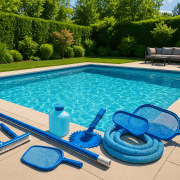
If you’re stocking up on pool chemicals and equipment, these are the products we recommend based on quality, value, and what actually works. (As an Amazon Associate, we earn from qualifying purchases.)

Testing

  • Taylor K-2006 Complete Test Kit — The gold standard liquid reagent test kit mentioned throughout this guide. Tests FC, pH, TA, CH, and CYA with laboratory-grade accuracy. (~$80–$100)
  • AquaChek 7-Way Test Strips (100 ct) — Quick daily spot-checks when you don’t need full precision. Tests chlorine, bromine, pH, alkalinity, and more. (~$15–$20)

Sanitizers

pH & Alkalinity

Shock & Specialty


Pool Chemical Safety Tips

Pool chemicals are industrial-strength products. Handle them with respect:

  • Never mix chemicals together — especially chlorine and muriatic acid, which produces toxic chlorine gas
  • Add chemicals to water, not water to chemicals — prevents dangerous splashback
  • Store in a cool, dry, ventilated area away from direct sunlight
  • Wear gloves and eye protection when handling granular or liquid chemicals
  • Keep chemicals separated in storage — even fumes from different products can react
  • Never use the same scoop for different chemicals

Frequently Asked Questions About Pool Chemicals

What pool chemicals do I need to add weekly?
At minimum, test and adjust chlorine and pH weekly. Add algaecide as a preventive measure. During peak swimming season (summer), you may need to test and adjust 2-3 times per week to keep up with increased swimmer load, sunlight, and higher temperatures.

How long after adding pool chemicals can you swim?
It depends on the chemical. After adding pH adjusters or alkalinity increasers, wait at least 15-30 minutes with the pump running. After shocking, wait until free chlorine drops below 5 ppm — typically 8-24 hours. Always test before swimming.

Can I add all pool chemicals at the same time?
No. Add one chemical at a time and allow at least 15-30 minutes of circulation between additions. Some chemicals react when combined directly, and adding everything at once makes it impossible to know what’s working. Start with alkalinity, then pH, then sanitizer.

What is the most important pool chemical?
Chlorine (or your chosen sanitizer) is the most critical because it keeps water safe from harmful bacteria and pathogens. However, pH is equally important because if pH is too high, your chlorine won’t work effectively no matter how much you add.

How do I know which pool chemicals to buy?
Start by testing your water. Your test results tell you exactly what’s out of range. Only buy chemicals to correct what’s actually wrong — don’t stockpile products you might not need. A basic kit for most pools includes: chlorine tablets or liquid, pH decreaser, alkalinity increaser, shock, and a test kit.