
Pool Chlorine Levels: The Complete Guide to Safe Swimming Water
# Pool Chlorine Levels: The Complete Guide to Safe Swimming Water
Getting your pool chlorine levels right is the single most important thing you can do for safe, crystal-clear water. Too little chlorine and bacteria thrive. Too much and swimmers deal with burning eyes, skin irritation, and bleached swimsuits. This guide walks you through everything you need to know about maintaining proper pool chlorine levels, from ideal ranges to testing methods to troubleshooting common problems.
What Are the Ideal Pool Chlorine Levels?
The recommended pool chlorine levels for residential swimming pools fall within a specific range set by health authorities and pool industry experts:
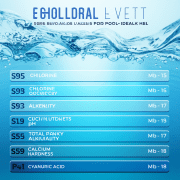
| Chlorine Type | Ideal Range | Danger Zone |
|—|—|—|
| Free Chlorine (FC) | 1.0 – 3.0 ppm | Below 1.0 ppm or above 5.0 ppm |
| Combined Chlorine (CC) | 0.0 – 0.2 ppm | Above 0.5 ppm |
| Total Chlorine (TC) | 1.0 – 3.0 ppm | N/A (FC + CC) |
Free chlorine is the active, working chlorine that kills bacteria and algae. This is the number that matters most. Combined chlorine (also called chloramines) is chlorine that has already reacted with contaminants, it’s used up and no longer effective. That strong “chlorine smell” at public pools? That’s actually combined chlorine, not free chlorine.
The Free Chlorine Sweet Spot
For most residential pools, 2.0–3.0 ppm of free chlorine is the sweet spot. Here’s why:
- 1.0 ppm, Minimum safe level. Works in ideal conditions but leaves little margin for error.
- 2.0 ppm, Good for pools with moderate use. Handles typical bather loads and debris.
- 3.0 ppm, Best for pools with heavy use, lots of sun exposure, or warm climates.
- Above 5.0 ppm, Swimmers should stay out until levels drop. Can cause skin and eye irritation.
If your pool has a high cyanuric acid (stabilizer) level, you may need to maintain higher free chlorine. The ratio matters, the FC/CYA chart is your best friend here.
How to Test Pool Chlorine Levels
Testing your pool chlorine levels accurately is the first step to maintaining them. Here are the most common methods:
1. Test Strips
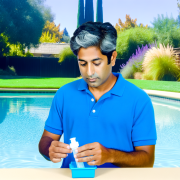
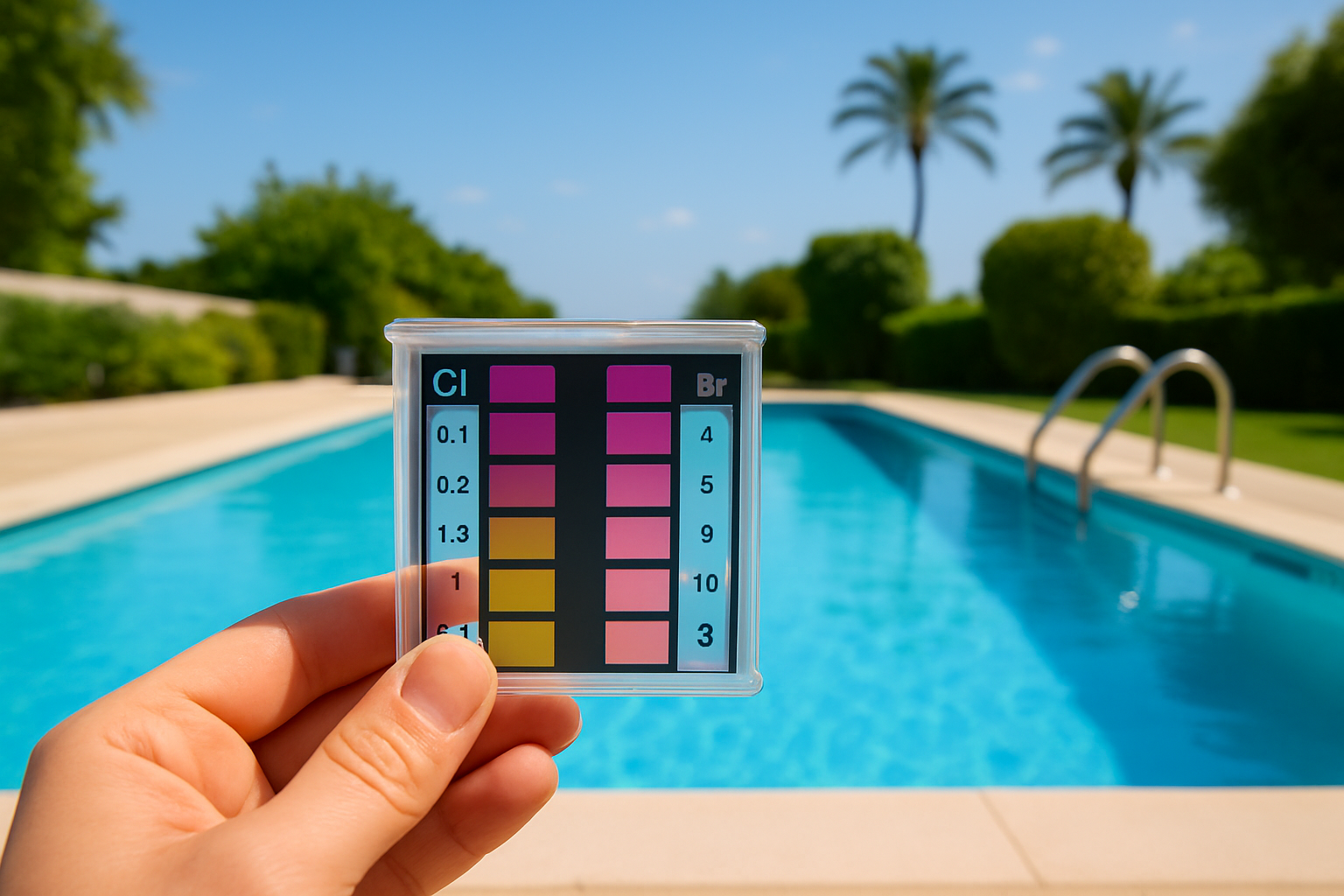
The fastest and easiest option. Dip a strip into pool water, wait 15-30 seconds, and compare the color to the chart on the bottle. Test strips measure free chlorine, and many also show pH, alkalinity, and other readings.
Pros: Quick, cheap, no mess
Cons: Less precise than liquid kits, affected by humidity and age
2. Liquid Drop Test Kits (DPD or OTO)
DPD kits are the gold standard for home testing. They use reagent drops that change water color based on chlorine concentration. OTO kits only measure total chlorine (not free vs. combined), so DPD is preferred.
Pros: More accurate than strips, measures both free and total chlorine
Cons: Takes a few minutes, reagents expire
3. Digital Testers and Photometers
Electronic testers provide precise numerical readings. They’re more expensive but eliminate the guesswork of color matching.
Pros: Most accurate, easy to read
Cons: Expensive, require calibration
4. Pool Chemical Calculator App
For the fastest results after testing, plug your numbers into the Pool Chemical Calculator to find out exactly how much chlorine to add. No math, no guesswork.
How to Raise Pool Chlorine Levels
If your test shows free chlorine is below 1.0 ppm, you need to add chlorine. Here’s how:
Step 1: Test Your Current Levels
Use a DPD test kit or test strips to measure your current free chlorine and combined chlorine levels. Also check your pH, chlorine works best when pH is between 7.2 and 7.6.
Step 2: Choose Your Chlorine Source
- Liquid chlorine (sodium hypochlorite), Fast-acting, no residue. Best for quick boosts.
- Granular chlorine (calcium hypochlorite), Powerful, dissolves relatively quickly. Raises calcium hardness.
- Chlorine tablets (trichlor), Slow-dissolving, good for ongoing maintenance. Lowers pH and adds stabilizer.
- Dichlor granules, Fast-dissolving, pH-neutral. Also adds stabilizer.
Step 3: Calculate the Right Amount
The amount of chlorine you need depends on your pool volume and how much you need to raise the level. For example, to raise a 10,000-gallon pool by 1 ppm, you’d need approximately:
- Liquid chlorine (12.5%): ~10 oz
- Cal-hypo (65%): ~2 oz
- Dichlor (56%): ~2.5 oz
Or skip the math entirely, the Pool Chemical Calculator app computes the exact dose for your pool size and current readings.
Step 4: Add Chlorine to the Pool
Add liquid chlorine directly to the pool water while the pump is running. For granular chlorine, pre-dissolve in a bucket of pool water first, then pour along the pool’s edge. Never throw undissolved granules directly into the pool, they can bleach surfaces.
Step 5: Retest After 4-6 Hours
Wait at least 4 hours (preferably overnight) before retesting. Chlorine needs time to mix and react with contaminants. If levels are still low, repeat the process.
How to Lower Pool Chlorine Levels
Over-chlorinated your pool? Here’s how to bring levels back down:
- Wait it out, Sunlight and normal use naturally reduce chlorine. Uncovering the pool on a sunny day can drop levels by 1-2 ppm in a few hours.
- Sodium thiosulfate, A chlorine neutralizer that works immediately. Use carefully, it’s easy to overshoot.
- Partial drain and refill, Dilute the pool water by replacing some with fresh water.
- Vitamin C (ascorbic acid), Also neutralizes chlorine, but can affect other chemistry levels.
Why Pool Chlorine Levels Drop Quickly
If you find yourself constantly battling low chlorine, common culprits include:
- Low cyanuric acid (CYA), Without stabilizer, UV light destroys chlorine rapidly. Outdoor pools need 30-50 ppm CYA.
- High bather load, More swimmers = more contaminants = more chlorine consumed.
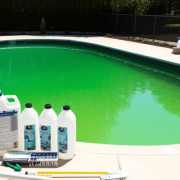
- Algae growth, Even early-stage algae eats chlorine fast. If chlorine demand seems insatiable, you may have an algae bloom.
- High water temperature, Warm water accelerates chlorine consumption.
- Organic debris, Leaves, pollen, and dirt all consume free chlorine.
Diagnosing and fixing the root cause saves you money and time. Use the Pool Chemical Calculator to keep all your levels balanced, not just chlorine.
Recommended Products for Chlorine Management
These are the products we recommend for testing and maintaining proper chlorine levels. (As an Amazon Associate, we earn from qualifying purchases.)
Testing Your Chlorine
- Taylor K-2006 Complete Test Kit, The DPD test kit referenced in this guide. Measures free chlorine, combined chlorine, pH, alkalinity, calcium hardness, and CYA with precision. The best investment for accurate chlorine management. (~$80–$100)
- LaMotte ColorQ Pro 11 Digital Pool Tester, If you want digital precision without color-matching, this photometer tests 11 parameters including free and total chlorine. (~$200–$250)
- AquaChek 7-Way Test Strips (100 ct), Quick daily chlorine checks between full test kit sessions. (~$15–$20)
Chlorine Products
- In The Swim 3-Inch Chlorine Tablets (25 lbs), Slow-dissolving trichlor tablets for steady, hands-off chlorination. Best value per pound. (~$60–$80)
- Pool Mate 1-1405 Chlorine Stabilizer / Conditioner (7 lbs), Pure cyanuric acid to protect your chlorine from UV degradation. Essential if you use liquid chlorine (which contains no stabilizer). (~$25–$35)
- In The Swim Cal-Hypo Pool Shock (24 x 1 lb bags), When chlorine drops dangerously low, shock treatment brings it back fast. Pre-measured bags for easy dosing. (~$55–$70)
Pool Chlorine Levels for Different Pool Types
Not all pools need the same chlorine levels:
- Standard chlorine pools: 1.0 – 3.0 ppm free chlorine
- Salt water pools: 1.0 – 3.0 ppm (the salt cell generates chlorine, but the target range is the same)
- Hot tubs/spas: 3.0 – 5.0 ppm (higher temperature requires more sanitizer)
- Above-ground pools: 1.0 – 3.0 ppm (same as in-ground, but smaller volume means dosing must be more precise)
Calculate It Instantly with Pool Chemical Calculator
Stop guessing with your pool chemistry! The Pool Chemical Calculator app tells you exactly how much of each chemical to add based on your pool’s size and current readings.
Chlorine, pH, Alkalinity, Calcium Hardness & more
Works for all pool types, chlorine, salt water, above ground
Free to download
Frequently Asked Questions
What should pool chlorine levels be?
Ideal free chlorine levels for residential swimming pools should be between 1.0 and 3.0 parts per million (ppm). The sweet spot for most pools is 2.0–3.0 ppm, which provides effective sanitation while remaining comfortable for swimmers.
How often should I test pool chlorine levels?
You should test pool chlorine levels at least 2-3 times per week during swimming season. During periods of heavy use, extreme heat, or after rain, test daily. Consistent testing prevents problems before they start.
Is it safe to swim with chlorine at 5 ppm?
While 5 ppm is at the upper limit, it’s generally considered safe for brief swimming. However, sensitive individuals may experience eye or skin irritation. It’s best to wait until levels drop below 4 ppm before swimming, and ideally keep them in the 1-3 ppm range.
Why does my pool lose chlorine so fast?
Rapid chlorine loss is usually caused by low cyanuric acid (stabilizer), heavy sun exposure, high bather loads, warm water temperatures, or an undetected algae bloom. Testing your CYA level and maintaining it at 30-50 ppm for outdoor pools is the most effective fix.
What is the difference between free chlorine and total chlorine?
Free chlorine is the active chlorine available to sanitize your pool. Total chlorine is the sum of free chlorine and combined chlorine (chloramines). If total chlorine is significantly higher than free chlorine, your combined chlorine level is too high and you likely need to shock the pool.