Pool Maintenance Checklist: Daily, Weekly & Monthly Tasks
A pool without a maintenance schedule is a pool headed for trouble. Green water, broken equipment, and expensive chemical corrections all trace back to the same root cause — skipping routine tasks until they become emergencies. The difference between pool owners who spend 20 minutes a week on maintenance and those who spend entire weekends fixing problems comes down to one thing: a checklist.
This guide gives you a complete pool maintenance checklist broken into daily, weekly, monthly, and seasonal tasks. Follow it consistently, and your pool stays clear, safe, and ready to swim in all season long.
Daily Pool Maintenance Checklist
Daily tasks take less than five minutes. They prevent small issues from becoming big ones overnight.
Skim the surface. Use a leaf skimmer to remove floating debris — leaves, bugs, pollen, anything sitting on top. Debris left on the surface sinks to the bottom, stains surfaces, and feeds algae.
Check the skimmer basket. Pull out the basket and empty it. A full basket restricts water flow to the pump, reducing filtration efficiency and potentially burning out the motor over time.
Inspect the water level. Your water should sit halfway up the skimmer opening. Too low, and the pump sucks air and runs dry. Too high, and the skimmer cannot pull in surface debris effectively.
Run the pump. Your pool pump should run 8 to 12 hours per day during swimming season. Many pool owners set a timer to run it during off-peak electricity hours. The pump needs to turn over the entire pool volume at least once per day.
Visual check. Glance at the water clarity and color. Crystal clear with a slight blue tint is normal. Any cloudiness, green tint, or foam means something needs attention before your next swim.
Weekly Pool Maintenance Checklist
Weekly tasks are the core of pool maintenance. Set aside 30 to 45 minutes once a week, and you will avoid the majority of common pool problems.
Test and Balance Water Chemistry
Test your water with a reliable test kit or test strips. Adjust chemicals based on these target ranges:
Always adjust alkalinity first, then pH, then chlorine. This order matters because alkalinity affects pH, and pH affects chlorine effectiveness. Wait 30 minutes between each chemical addition and retest before adding the next.
Shock the Pool
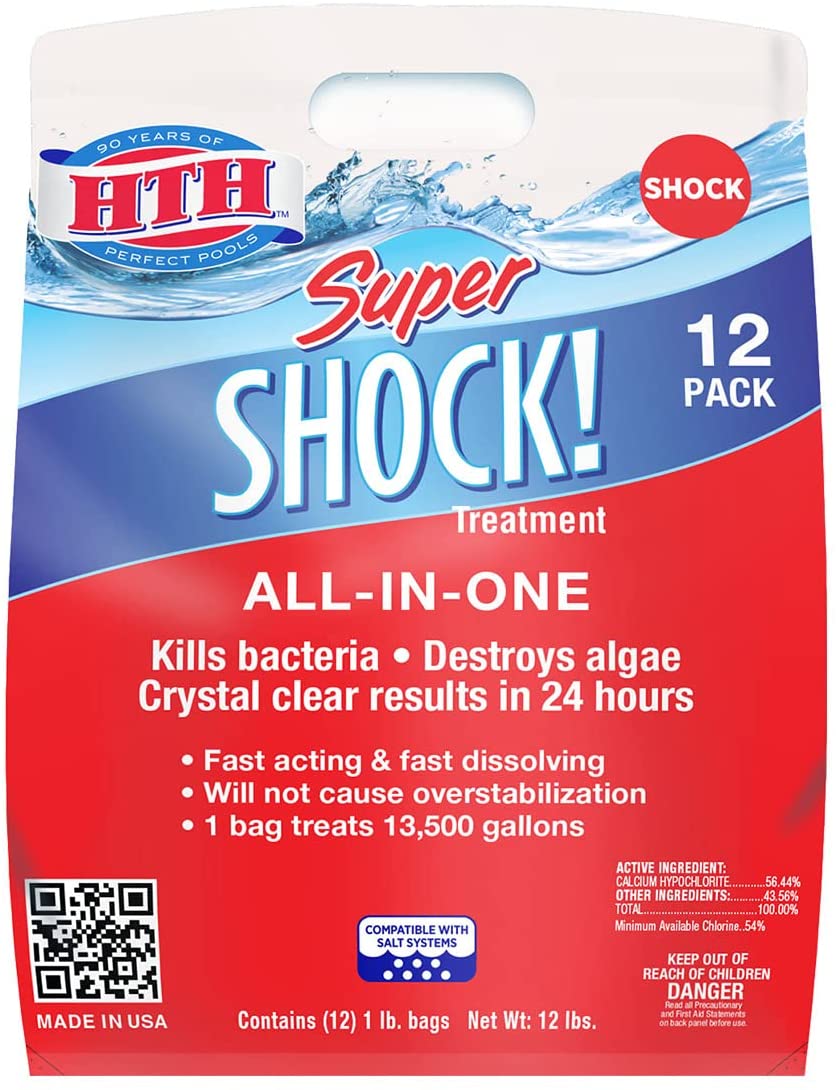
Shocking raises your chlorine level to 10 times the normal amount, killing bacteria and algae that regular chlorination misses. Shock once per week during swimming season, or after heavy use, a rainstorm, or any signs of algae.
Add shock at dusk or after dark. Sunlight breaks down unstabilized chlorine within hours, and most shock treatments use unstabilized (calcium hypochlorite) chlorine for maximum killing power.
Brush Walls and Floor
Brush the pool walls, floor, steps, and behind ladders using a nylon brush for vinyl or fiberglass pools, or a stainless steel brush for plaster and concrete. Brushing dislodges algae spores before they can take hold, pushes debris into areas where the filter can capture it, and prevents calcium scale buildup.
Pay extra attention to corners, around fittings, and behind the ladder — anywhere water circulation is weak.
Vacuum the Pool
After brushing, vacuum the settled debris from the pool floor. You can use a manual vacuum head attached to your telescopic pole or a robotic pool cleaner that handles this automatically.
If you vacuum through the filter (the “filter” setting on your multiport valve), your filter captures the debris. If the pool is especially dirty, use the “waste” setting to send debris directly out without clogging your filter.
Empty the Pump Basket
Remove and clean the pump strainer basket. Turn off the pump first, close the valves, remove the lid, pull out the basket, clean it, and replace everything in reverse order. A clogged pump basket reduces flow rate and makes the pump work harder than necessary.
Monthly Pool Maintenance Checklist
Monthly tasks catch the things that weekly maintenance misses. These focus on equipment health and deeper chemical adjustments.
Test Calcium Hardness
Calcium hardness should stay between 200 and 400 ppm. Low calcium makes water aggressive — it will pull calcium from your plaster, grout, and equipment to satisfy itself. High calcium leads to cloudy water and scale deposits on surfaces and inside pipes.
Test monthly because calcium levels change slowly. Add calcium chloride to raise it. Draining and diluting with fresh water is the most practical way to lower it.
Inspect the Filter
Check your filter pressure gauge. When the pressure reads 8 to 10 psi above the clean baseline pressure, it is time to clean the filter.
Check Equipment
Walk around your equipment pad and inspect each piece:
Clean the Waterline
Oils, sunscreen, and minerals accumulate at the water line, creating a visible ring. Use a tile and vinyl cleaner with a soft cloth or sponge to wipe it away monthly. Letting it build up makes it harder to remove and feeds bacteria.
Seasonal Pool Maintenance Checklist
Spring Opening (March–April)
Opening your pool correctly sets the tone for the entire season.
Summer Peak Season (May–August)
Summer means more swimmers, more sunscreen, more rain, and more chemical demand. Increase your testing to twice per week. Shock after every heavy-use day or rainstorm. Keep extra chlorine, pH adjuster, and shock on hand — you will go through chemicals faster than any other time.
Check CYA levels monthly during summer. If you use stabilized chlorine tablets, CYA accumulates over time. Once it exceeds 70 ppm, chlorine becomes ineffective even at normal levels. The only fix is draining and diluting.
Fall Closing (September–November)
Winter Monitoring (December–February)
Even closed pools need occasional attention. Check the cover monthly for water accumulation, tears, or sagging. Remove standing water with a cover pump. If you use a mesh cover, check the water level underneath and add chemicals if needed.
Printable Pool Maintenance Schedule
Here is a quick-reference version you can print and post in your pool equipment area:
|———–|——|
Common Maintenance Mistakes to Avoid
Not testing before adding chemicals. Guessing leads to over-treatment or under-treatment. Always test first.
Shocking during the day. Sunlight destroys unstabilized chlorine. Shock at dusk for maximum effectiveness.
Ignoring alkalinity. People obsess over pH and chlorine but forget that alkalinity is the foundation. Fix alkalinity first — pH will follow.
Running the pump too little. Under-circulation is the number one cause of cloudy water and algae. Eight hours is the minimum.
Skipping brushing. Chemicals alone cannot prevent algae on surfaces with poor circulation. Brushing is physical prevention that chemicals support, not replace.
???? Recommended Products
*As an Amazon Associate, we earn from qualifying purchases. These are products we genuinely recommend for pool maintenance.*
Taylor K-2006 Complete Test Kit (~$90) — The gold standard for pool water testing. Measures chlorine, pH, alkalinity, calcium hardness, and CYA with lab-grade accuracy. Essential for any serious pool owner.
U.S. Pool Supply Telescopic Pole 16ft (~$35) — Heavy-duty aluminum pole that extends to 16 feet. Attaches to skimmer nets, brushes, and vacuum heads. The backbone of your cleaning toolkit.
Stargoods Pool Skimmer Net (~$17) — Fine mesh catches even small debris. Attaches to standard telescopic poles. You will use this every single day.
Lalapool 18″ Pool Brush (~$14) — Wide nylon brush covers more surface area per stroke. Works on vinyl, fiberglass, and plaster surfaces.
In The Swim Cal-Hypo Shock 24-pack (~$62) — Individual 1-lb bags of calcium hypochlorite shock. One bag per 10,000 gallons for weekly shocking. Buy the 24-pack and you are set for the whole season.
Dolphin Nautilus CC Plus Robotic Cleaner (~$800) — If you want to eliminate manual vacuuming forever, this is the investment. Scrubs walls and floor independently, filters down to 2 microns. Drop it in, walk away.
???? Calculate It Instantly with Pool Chemical Calculator
Stop guessing with your pool chemistry! The Pool Chemical Calculator app tells you exactly how much of each chemical to add based on your pool’s size and current readings.
✅ Chlorine, pH, Alkalinity, Calcium Hardness & more
✅ Works for all pool types — chlorine, salt water, above ground
✅ Free to download
Frequently Asked Questions
How often should I test my pool water?
Test at least twice per week during swimming season. Test more frequently after rain, heavy use, or when you notice any change in water clarity. Monthly testing is sufficient for calcium hardness and CYA since those levels change slowly.
How many hours a day should I run my pool pump?
Run your pump 8 to 12 hours per day during swimming season. The goal is to turn over your entire pool volume at least once every 24 hours. Larger pools or those with poor circulation may need the full 12 hours.
What order should I add pool chemicals?
Always adjust total alkalinity first, then pH, then chlorine. Wait at least 30 minutes between each chemical and retest before adding the next. This order matters because each parameter affects the ones after it.
Can I shock my pool during the day?
You can, but it is far less effective. Sunlight breaks down unstabilized chlorine rapidly. Shocking at dusk gives the chlorine 8 to 10 hours of darkness to work before the sun degrades it.
How do I know when to clean my pool filter?
Check the pressure gauge on your filter. When the reading is 8 to 10 psi above your clean baseline pressure, it is time to clean. If you do not know your baseline, note the pressure right after your next cleaning.