
Why Is My Pool Green? (And How to Fix It Fast)
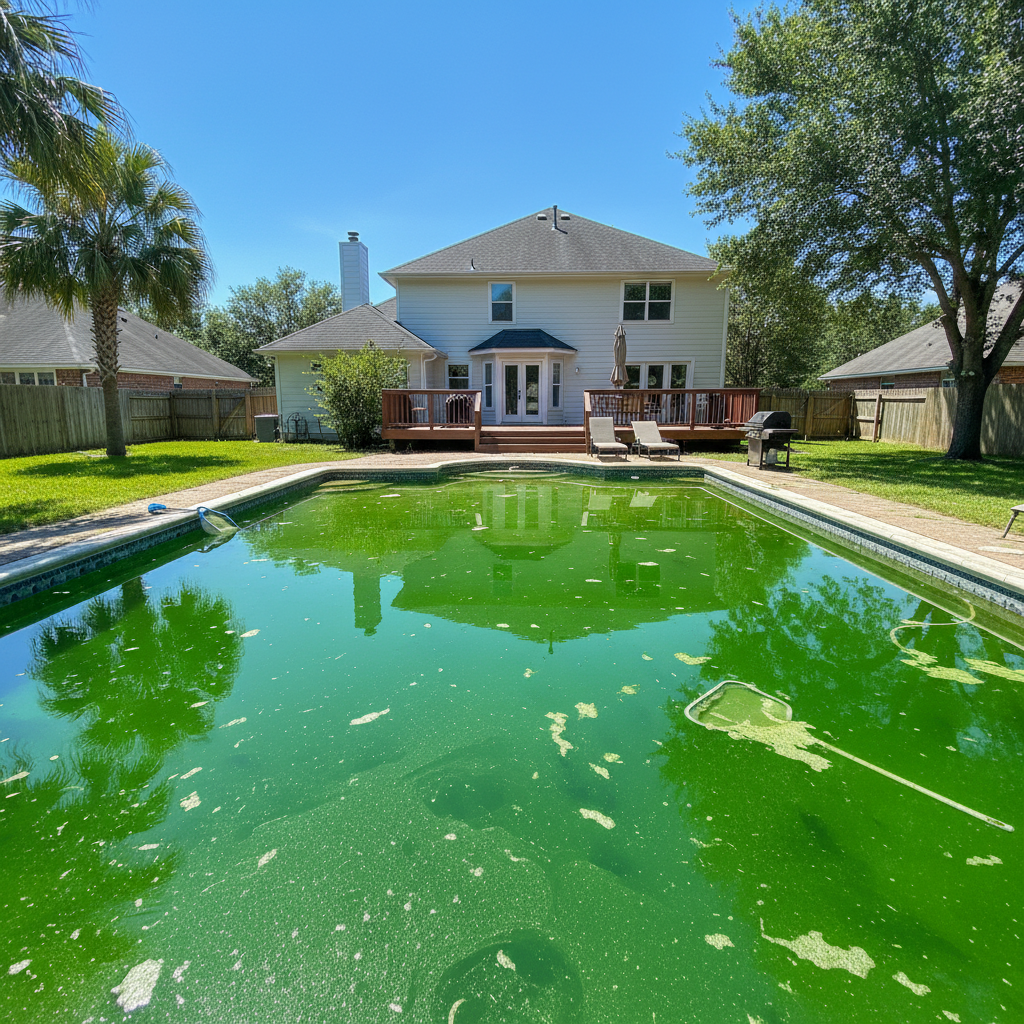
You walk outside with your morning coffee, ready to enjoy your pool, and… swamp. Your crystal-clear water turned into something that looks like it belongs in a bayou.
Green pool water is one of the most common pool problems homeowners face. And while it looks disgusting, the fix is straightforward once you understand what’s happening.
What Causes Green Pool Water?
Your pool turned green because algae is throwing a party in your water. Algae are tiny plants that love warm water, sunlight, and — most importantly — low chlorine levels.
Think of chlorine as your pool’s immune system. When it drops below 1 ppm (parts per million), algae spores that are always floating around finally get their chance to multiply. Within 24-48 hours, you’ve got a green pool.
But chlorine doesn’t drop on its own. Something pushed it out of balance.
The Real Culprits Behind Low Chlorine
Heavy rain or pool parties. Rain dilutes your pool’s chemistry. Twenty kids cannonballing for three hours use up chlorine fast. Both scenarios drop your chlorine levels before you notice.
Broken or dirty filter. Your filter removes dead algae and other junk. If it’s clogged or not running enough hours per day, algae wins.
Hot weather and direct sunlight. UV rays literally burn off chlorine. That’s why outdoor pools need more maintenance in summer than winter. Cyanuric acid (stabilizer) helps, but only up to a point.
Phosphates in the water. Phosphates are algae food. They come from rain, leaves, fertilizer runoff, and even some pool chemicals. High phosphate levels (above 500 ppb) make algae grow faster than your chlorine can kill it.
pH is off. When pH climbs above 7.8, chlorine becomes less effective. You might have plenty of chlorine reading on your test strip, but it’s not actually doing its job.
How to Fix a Green Pool (Step-by-Step)
Fixing a green pool takes 2-5 days depending on how bad it is. Here’s the proven method.
Step 1: Test Your Water
Before you throw chemicals at the problem, you need to know what you’re working with. Test for:
- Free chlorine (should be 1-3 ppm)
- pH (should be 7.2-7.6)
- Total alkalinity (should be 80-120 ppm)
- Cyanuric acid/stabilizer (should be 30-50 ppm)
Use test strips or a liquid test kit. Those cheap strips from the hardware store work fine for this.
Or better yet, use Pool Chemical Calculator (iOS | Android | Web) to log your results and get exact dosing instructions for your pool size.
Step 2: Adjust pH First
If your pH is above 7.8, your shock treatment won’t work as well. Add muriatic acid or dry acid to bring pH down to 7.2-7.4.
Why fix pH before shocking? Because chlorine is 50% less effective at pH 8.0 than at pH 7.2. You’ll waste money and time if you shock at high pH.
Step 3: Brush the Pool Walls and Floor
Grab your pool brush and scrub every surface — walls, steps, corners, behind ladders. Algae clings to surfaces, and brushing breaks it loose so your shock treatment can actually reach it.
This step takes 10 minutes and makes a huge difference. Don’t skip it.
Step 4: Shock the Pool
“Shocking” means adding a large dose of chlorine all at once to kill algae and oxidize organic waste. You’re aiming for 10-20 ppm of free chlorine (yes, way higher than the normal 1-3 ppm).
For a light green pool, use 2 pounds of calcium hypochlorite shock per 10,000 gallons.
For a dark green swamp? Double it. Use 4 pounds per 10,000 gallons.
Pro tip: Shock at dusk or after dark. Sunlight burns off chlorine before it can kill the algae. Shocking at night gives your chemicals 8-10 hours to work before UV rays hit.
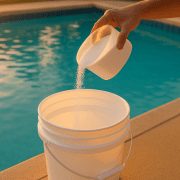
Dissolve shock in a bucket of water first, then pour it slowly around the perimeter of the pool while the pump is running. Never dump shock powder directly in — it can bleach your liner or stain concrete.
Step 5: Run the Filter 24/7
Your filter needs to run continuously until the water clears. Set it to run all day and night. Backwash or clean the filter every 24 hours because dead algae will clog it fast.
Skimping on filter runtime is the #1 reason people’s pools stay green for weeks. The filter is doing the actual work of removing dead algae — let it run.
Step 6: Test and Re-Shock if Needed
Check your chlorine level after 24 hours. If it’s dropped below 5 ppm and the water is still cloudy, shock again. You might need 2-3 rounds of shock for a really bad algae bloom.
Once the water is clear but still cloudy (milky white instead of green), you’re almost done. Add a pool clarifier to clump tiny particles together so your filter can catch them.
Step 7: Prevent It From Happening Again
After your water is clear and balanced, add an algaecide as a backup defense. Algaecide is not a substitute for chlorine, but it helps slow algae growth between shocking.
Then get on a weekly testing schedule. Test your water every Sunday (or whatever day works for you) and adjust chemicals as needed. Consistency prevents green pools.
Different Types of Pool Algae
Not all algae is the same. The color tells you what you’re dealing with.
Green algae (most common) — Floats in the water, turns everything murky green. Responds well to shock treatment.
Yellow/mustard algae — Clings to walls, looks like pollen or sand in corners. Needs brushing + extra shock.
Black algae — Dark spots on walls that don’t brush off easily. Has roots that dig into plaster or pebble surfaces. Requires scrubbing with a steel brush and triple-shock doses. Black algae is rare in vinyl pools.
Can You Swim in a Green Pool?
Technically yes, but you shouldn’t. Green water means algae, and algae creates a breeding ground for bacteria. You’re risking ear infections, skin rashes, and upset stomach.
Plus, you can’t see the bottom. That’s a drowning hazard, especially if you have kids.
Fix the pool first. Swimming can wait a few days.
How Much Does It Cost to Fix a Green Pool?
If you do it yourself:
- Shock treatment: $30-60
- Test kit or strips: $10-20
- pH adjuster: $10-20
- Algaecide: $20-40
Total: $70-140 for most residential pools.
If you call a pool service, expect $200-500 depending on how bad the algae is and whether they need to drain and acid-wash the pool.
DIY is totally doable. You’ll spend a weekend on it, but you’ll save hundreds.
Frequently Asked Questions
How long does it take to clear a green pool?
For a lightly green pool, 24-48 hours after shocking. For a dark green or black pool, expect 3-5 days of shocking, filtering, and re-shocking. The key is keeping chlorine levels high (10+ ppm) until the water clears.
Will shocking a green pool damage the liner?
No, as long as you dissolve the shock in a bucket first and pour it around the perimeter. Never dump shock powder directly onto a vinyl liner — it can bleach or burn the material.
Why is my pool still green after shocking?
Three common reasons: (1) pH was too high when you shocked, (2) you didn’t use enough shock, or (3) your filter isn’t running long enough. Re-test your water, adjust pH if needed, add more shock, and run the filter 24/7.
Can I use household bleach instead of pool shock?
Yes, but it’s less efficient. Pool shock is 65-75% chlorine. Household bleach is 5-8%. You’d need 2-3 gallons of bleach to equal one pound of shock. For a full-blown algae bloom, stick with pool shock.
Do I need to drain my pool if it’s green?
Almost never. Draining should be a last resort — it’s expensive, wastes water, and can damage your pool structure. Shocking and filtering clears 95% of green pools without draining.
The Bottom Line
Green pool water happens when chlorine levels drop and algae takes over. The fix is simple: balance pH, shock hard, brush everything, run your filter continuously, and test daily until it clears.
Prevent future algae blooms by testing weekly and keeping chlorine levels steady. Use Pool Chemical Calculator (iOS | Android | Web) to track your water chemistry and get precise dosing instructions for your pool size.
Your pool will be swim-ready in 2-5 days. And next time you see a storm rolling in or plan a big pool party, bump up your chlorine before it drops. That’s the real secret to crystal-clear water.