
5 Common Pool Chemistry Mistakes (And How to Fix Them)
Even experienced pool owners make chemistry mistakes that can lead to cloudy water, algae blooms, or worse: damaged equipment. Here are the five most common errors and how to avoid them.
1. Testing at the Wrong Time
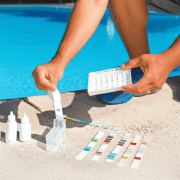
The Mistake: Testing your water right after adding chemicals or during peak swim hours.
Why It Matters: Chemical readings need time to stabilize. Testing too soon gives you inaccurate results, leading to over-correction.
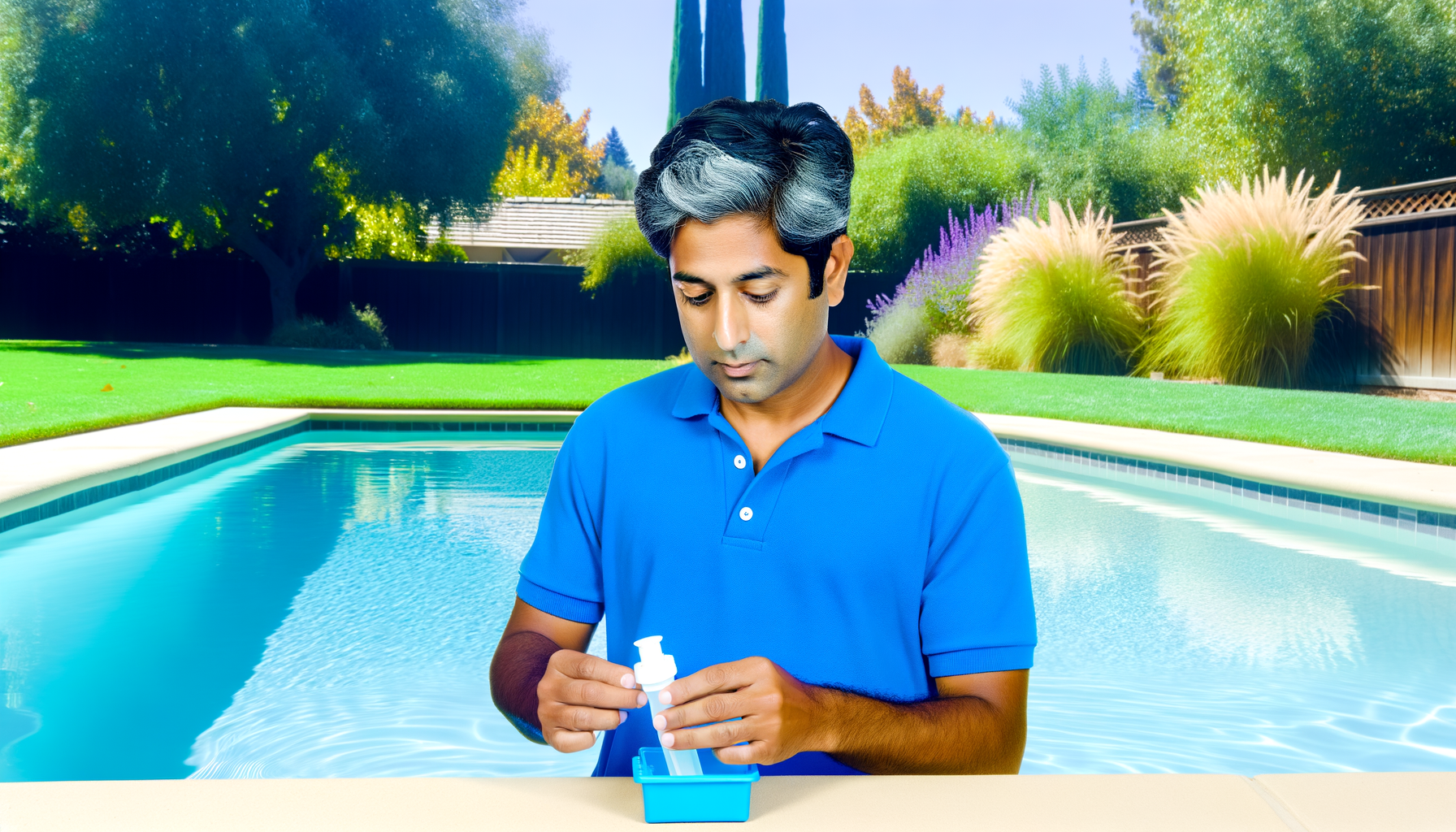
The Fix: Wait at least 8 hours after adding chemicals before testing. Test in the morning before heavy use, with the pump running for at least 30 minutes to ensure proper circulation.
2. Adding Chemicals Without Calculating Volume
The Mistake: Eyeballing chemical doses instead of calculating based on your pool’s actual volume.
Why It Matters: A 15,000-gallon pool needs very different amounts than a 25,000-gallon pool. Guessing leads to under- or over-treatment.
The Fix: Know your pool’s exact volume. Use a pool calculator to determine precise dosing. When in doubt, start with less. You can always add more.
3. Neglecting Cyanuric Acid (Stabilizer) Levels
The Mistake: Ignoring CYA levels or letting them climb too high from stabilized chlorine products.
Why It Matters: Low CYA means the sun destroys your chlorine in hours. High CYA (above 80 ppm) locks up chlorine, making it ineffective against algae and bacteria.
The Fix: Maintain CYA between 30-50 ppm for non-saltwater pools, 70-80 ppm for saltwater. The only way to lower high CYA is partial drain and refill.
4. Shocking in Daylight
The Mistake: Adding shock treatment during the day when the sun is intense.
Why It Matters: UV rays destroy unstabilized chlorine rapidly. Daytime shocking can lose 50% or more of your chlorine before it does its job.
The Fix: Always shock at dusk or after dark. Run the pump overnight for full circulation and chemical distribution.
5. Ignoring Total Alkalinity
The Mistake: Focusing only on pH while ignoring Total Alkalinity (TA).
Why It Matters: TA acts as a buffer for pH. If TA is too low, your pH will swing wildly. If too high, pH becomes resistant to adjustment.
The Fix: Always adjust TA first (80-120 ppm is ideal), then fine-tune pH. This creates stable water chemistry that holds its balance.
Products That Help You Avoid These Mistakes
The right tools make it much easier to maintain consistent chemistry. Here are our picks. (As an Amazon Associate, we earn from qualifying purchases.)
- Taylor K-2006 Complete Test Kit — Prevents Mistake #1 (inaccurate testing) with laboratory-grade reagent drops. The single best upgrade from test strips. (~$80–$100)
- Poolmaster 5-Way Test Kit — An affordable liquid kit that tests chlorine, bromine, pH, alkalinity, and acid demand. Good stepping stone from strips. (~$20–$25)
- In The Swim Cal-Hypo Pool Shock (24 x 1 lb bags) — Pre-measured 1 lb bags solve Mistake #2 (guessing dosage). One bag per 10,000 gallons — no math needed. (~$55–$70)
- Pool Mate 1-1405 Chlorine Stabilizer / CYA (7 lbs) — Fixes Mistake #3 (neglecting CYA). Pure cyanuric acid to keep your stabilizer at 30–50 ppm. (~$25–$35)
- Arm & Hammer Baking Soda (15 lbs) — Addresses Mistake #5 (ignoring alkalinity). Pure sodium bicarbonate at a fraction of “pool brand” prices. (~$15)
The Bottom Line
Good pool chemistry isn’t complicated. It’s about consistency and precision. Test regularly, calculate your doses, and address issues in the right order. Your reward? Crystal-clear water all season long.
Need help calculating your chemical doses? Our free Pool Chemical Calculator takes the guesswork out of water chemistry. Just enter your numbers and get exact dosing instructions.