
Is Salt Water Pool Better Than Chlorine? The Truth About Costs, Maintenance & Which One You Actually Need
Your neighbor just installed a salt water pool and won’t shut up about it. “No more chlorine smell!” they say. “Softer water!” they claim. Meanwhile, you’re standing there with your bucket of chlorine tablets wondering if you’re doing this whole pool thing wrong.
Here’s the truth: Salt water pools do use chlorine. Yep. The “salt water vs chlorine” debate is actually a bit misleading from the start. But there are real differences in how you maintain them, what they cost, and which one makes sense for your situation.
Let me break this down like I would if you caught me at Home Depot and asked for real advice.
The Real Cost Breakdown (Because Nobody Talks About This Honestly)
Upfront Costs
A traditional chlorine pool runs you $25,000-$50,000 for installation. Pretty standard.
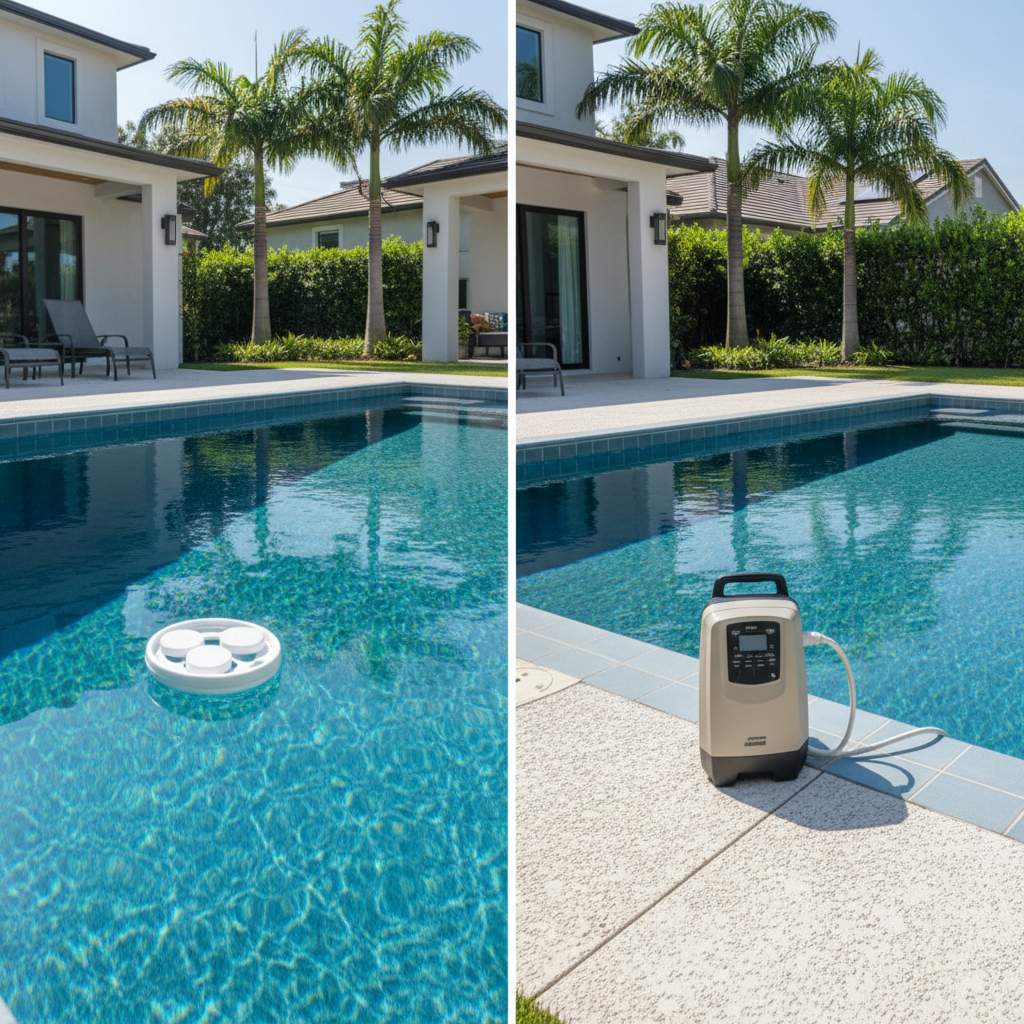
Salt water? Add another $1,500-$2,500 on top of that for the salt chlorine generator system. That’s the device that converts salt into chlorine automatically. You can retrofit an existing pool, but you’re still looking at that same equipment cost plus installation.
So right off the bat, salt water is more expensive. But that’s not where the story ends.
Ongoing Costs
Here’s where it gets interesting.
Traditional chlorine pool (annual costs):
- Chlorine tablets/liquid: $300-$600/year
- pH balancers, alkalinity adjusters: $100-$200/year
- Test strips or test kit refills: $50-$100/year
- Total: $450-$900/year
Salt water pool (annual costs):
- Salt (you’ll need to add some each season): $50-$100/year
- Replacement salt cell (every 3-5 years): $200-$700 amortized = $40-$230/year
- pH balancers (yes, you still need these): $50-$150/year
- Electricity to run the generator: $200-$500/year
- Total: $340-$980/year
Wait. They’re basically the same?
Yep. The “salt water pools save you money” thing is mostly a myth. You might save $100-$200 annually, but you’re still dropping $1,500-$2,500 upfront. That’s a 10-15 year payback period. And that’s assuming nothing breaks.
What Maintenance Actually Looks Like Week-to-Week
Chlorine Pool Maintenance
You’re adding chlorine manually. Could be tablets in a floater, could be liquid chlorine you pour in, could be granular chlorine you brush in. You’re also testing water 2-3 times per week during swim season.
Takes about 15-20 minutes per week if you’re on top of it. Miss a week in summer? Your pool’s turning green.
You need to physically handle chlorine, which means storing it safely (away from kids and pets), dealing with the smell, and occasionally getting it on your hands even when you’re careful.
Salt Water Pool Maintenance
The generator handles chlorine production automatically. You still test water 1-2 times per week. You still balance pH (salt water pools tend to run high pH, actually). You still clean the filter and skim leaves.
But you’re not hauling chlorine buckets. You’re not measuring out doses. The system just… works.
Until it doesn’t. Salt cells need cleaning every few months – you pull them out and soak them in diluted acid to remove calcium buildup. Takes 30-45 minutes. And when the cell dies (3-5 years average), you’re dropping $400-$700 for a replacement.
Real talk: Salt water is lower maintenance day-to-day, but it’s not zero maintenance. And when something breaks, it’s more expensive to fix.
The Water Feel Debate (Does It Actually Feel Different?)
Yeah, it does.
Salt water pools feel softer on your skin. They don’t have that tight, dried-out feeling you get from heavily chlorinated pools. Your eyes won’t sting as much. Hair doesn’t feel like straw afterward.
But here’s the thing: A properly maintained traditional chlorine pool doesn’t feel harsh either. That chlorine burn you remember from the public pool as a kid? That’s from poor maintenance and chloramines (combined chlorine) building up. When free chlorine is at 1-3 ppm and pH is balanced, a regular pool feels pretty damn good.
Salt water just gives you more wiggle room. If you’re slightly off on your chemistry, it’s less noticeable to swimmers.
The salt concentration in these pools is about 3,200 ppm – roughly one-tenth the salinity of ocean water. You can taste it if you swallow pool water, but it’s mild. Not like swimming in the ocean.
Equipment and Repair Costs (The Part Pool Companies Don’t Emphasize)
Salt is corrosive. Not terribly corrosive, but enough that it matters.
Metal fixtures, ladders, and heaters wear faster in salt water pools. Pool lights can corrode. If you have stone coping or certain types of tile, salt can accelerate deterioration.
Your pool pump works harder with a salt system running. And some equipment (heaters, especially) needs to be specifically rated for salt water or it’ll void the warranty.
Budget an extra 10-20% over the pool’s lifetime for equipment replacement compared to traditional chlorine.
Health Considerations (Skin, Eyes, Hair)
For Regular Swimmers
If you or your kids are in the pool daily, salt water is genuinely easier on the body. Less skin irritation, fewer red eyes, hair that doesn’t turn green (that’s usually copper, by the way, not chlorine).
People with eczema or sensitive skin often report fewer flare-ups with salt water pools.
For Occasional Swimmers
Honestly? You won’t notice much difference if you’re swimming once or twice a week. Both types are safe when properly maintained.
The Allergy Question
Some people claim they’re “allergic to chlorine.” Real chlorine allergies are rare. What they’re usually reacting to is chloramines – those compounds that form when chlorine binds to sweat, oils, and urine (yes, urine). Salt water systems can actually maintain more consistent free chlorine levels, which means fewer chloramines.
But again: A well-maintained traditional pool shouldn’t have high chloramines either.
Which Is Better For YOUR Situation? (Real Recommendations)
Go Salt Water If:
- You swim nearly every day
- You have young kids who are in the pool constantly
- You hate handling chemicals
- You’re willing to pay more upfront for convenience
- You have skin sensitivity issues
- You’re handy enough to clean the salt cell yourself
Stick With Traditional Chlorine If:
- You’re on a tight budget
- You use the pool seasonally (3-4 months per year)
- You don’t mind the weekly maintenance routine
- You have an older pool with equipment that’s not salt-compatible
- You live where electricity costs are high
- You want the simplest possible system
The Honest Middle Ground
For most homeowners who use their pool regularly in summer but aren’t swimming laps daily, traditional chlorine makes more financial sense. Yes, you handle chemicals. Yes, it’s slightly more maintenance. But it’s proven, it’s cheaper, and it works.
Salt water is a premium option. It’s nice. It’s convenient. But it’s not revolutionary.
Common Myths About Salt Water Pools (Let’s Kill These)
Myth 1: “Salt water pools are chlorine-free”
Nope. The generator converts salt (sodium chloride) into chlorine through electrolysis. You still have 1-3 ppm of free chlorine in the water at all times. That’s literally the same target as traditional pools.
Myth 2: “Salt water pools are maintenance-free”
They’re lower maintenance, not zero maintenance. You still test water, balance pH, clean filters, and maintain equipment.
Myth 3: “Salt water pools don’t need shocking”
Wrong. You still need to shock occasionally, especially after heavy use or when combined chlorine levels spike. The generator can boost output, but sometimes you need to manually add chlorine shock.
Myth 4: “Salt water is better for the environment”
Both systems use chlorine. Salt water pools use electricity to generate it. There’s no clear environmental winner here.
Myth 5: “The water tastes salty”
It’s 3,200 ppm – about the salinity of a contact lens solution. You can taste it slightly if you swallow, but it’s not ocean water.
How to Calculate Which Makes Sense For You
Take the upfront cost difference (around $2,000). Divide by your estimated annual savings (maybe $200 if you’re lucky). That’s a 10-year break-even.
Will you own this house for 10+ years? Will the equipment last that long without major repairs? Do you value the convenience enough to pay a premium?
If you answered yes to those, salt water might make sense. If not, save the money.
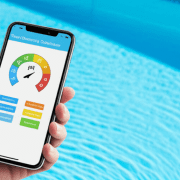
Use the Pool Chemical Calculator app to track your actual chemical costs over a season. You might find you’re spending less than you thought on traditional chlorine maintenance.
Frequently Asked Questions
Does a salt water pool feel like the ocean?
No. Ocean water is about 35,000 ppm salt. Your pool is 3,200 ppm. It’s slightly soft and smooth, but not noticeably salty unless you deliberately taste it.
How long do salt chlorine generators last?
The control unit can last 10-15 years. The salt cell (the part that actually produces chlorine) lasts 3-5 years on average, depending on use and how well you maintain it. Expect to replace the cell 2-3 times over the generator’s lifetime.
Can you convert a chlorine pool to salt water?
Yes. It costs $1,500-$2,500 for a salt chlorine generator system and installation. Make sure your existing equipment (especially heaters and lighting) is compatible with salt water, or you’ll need to replace those too.
Do salt water pools damage pool liners?
Not directly. But if pH drifts too high (common with salt systems), it can shorten liner life. As long as you maintain proper chemistry, both types are equally safe for liners.
Is the chlorine from a salt system different than regular chlorine?
No. Chemically, it’s identical – sodium hypochlorite. The only difference is how it’s delivered: automatically generated versus manually added. Your water doesn’t know or care which method you used.
What happens if your salt cell stops working?
Your pool stops producing chlorine. You can manually add chlorine while you replace the cell, so it’s not an emergency. But you will need to replace it – they’re not really repairable. Budget $400-$700 for a new cell.
Can you use a salt water system with a hot tub?
Yes, but it’s less common. Hot tub salt systems exist, but the higher water temperature and smaller volume mean the cell works harder and may not last as long. Many hot tub owners stick with traditional chlorine or bromine.
The Bottom Line
Is salt water better than chlorine? It’s more convenient for daily swimmers and easier on sensitive skin, but it costs more upfront and isn’t dramatically cheaper to run.
For families using the pool heavily all summer, the convenience is worth it. For occasional swimmers or budget-conscious homeowners, traditional chlorine does the job just fine.
Both work. Both are safe. Both require maintenance. Choose based on your budget, how often you swim, and whether you’d rather spend money or time.
And whichever you pick, use the Pool Chemical Calculator app (available on iOS too) to track your chemistry and make sure you’re maintaining proper balance. Because an improperly maintained salt water pool feels just as bad as an improperly maintained chlorine pool.
Good chemistry beats fancy equipment every time.