
Pool Chemicals for Winter: Everything You Need to Close Your Pool Right
# Pool Chemicals for Winter: Everything You Need to Close Your Pool Right
You’ve enjoyed your pool all summer. Now winter’s coming, and you’re wondering what chemicals you actually need to winterize it properly.
Get this wrong and you’ll open to a green swamp next spring. Get it right and your April self will thank you.
Why Winter Pool Chemicals Matter
Your pool doesn’t hibernate. Even under a cover, stuff happens. Algae tries to grow. Metals can stain. Scale builds up. And if your water chemistry goes sideways over winter, you’re looking at hours of extra work come spring.
The right chemicals keep your water balanced and protected while you’re not watching it.
The Essential Winter Chemical Checklist
Here’s what you actually need. No marketing fluff.
1. Chlorine Shock
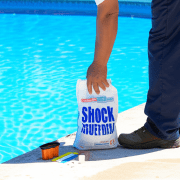
Shock your pool 24-48 hours before closing. This nukes any lingering bacteria and algae. You want chlorine levels around 10-12 ppm at closing — way higher than the normal 1-3 ppm.
Why so high? Because chlorine degrades over winter. Start strong, stay protected.
I use calcium hypochlorite shock (cal-hypo) for closing. It’s more stable in cold water than liquid chlorine.
How much: Use 1 pound per 10,000 gallons for shock treatment.
2. Algaecide (The Right Kind)
Not all algaecides work in winter. You need a polymer-based winter algaecide or polyquat 60. These stay active in cold water.
Regular summer algaecides? They quit working below 50°F. Save your money.
Add winter algaecide after shocking, following the bottle instructions. Usually it’s 1 quart per 10,000 gallons.
3. pH Balancer
Your pH should sit at 7.4-7.6 when you close. Too low and you’ll corrode metal parts over winter. Too high and you’ll get scale buildup.
Test your pH after shocking (shock raises pH). Use pH decreaser if needed to bring it down.
4. Alkalinity Increaser
Total alkalinity buffers your pH. You want 80-120 ppm at closing. If it’s low, your pH will bounce around all winter.
Alkalinity increaser is just sodium bicarbonate (baking soda). Add it slowly and retest after a few hours.
5. Winterizing Chemical Kit (Optional but Smart)
If you don’t want to buy chemicals separately, grab a winterizing kit. These usually include:
- Shock
- Winter algaecide
- Stain & scale preventer
- Clarifier
Kits are sized by pool volume. Convenient and nothing gets forgotten.
The Winter Chemical Sequence (Step by Step)
Timing matters. Here’s the order:
1 Week Before Closing:
- Test your water (pH, alkalinity, chlorine, calcium hardness)
- Balance pH and alkalinity first
- Add calcium hardness increaser if needed (200-400 ppm range)
2-3 Days Before Closing:
- Shock the pool heavily (bring chlorine to 10-12 ppm)
- Run the filter for 24 hours to circulate
- Brush the walls and floor while it’s running
Day of Closing:
- Add winter algaecide (chlorine should be down to 3-5 ppm by now)
- Add stain & scale preventer if you have hard water
- Lower water level below skimmer (or use gizzmos if keeping water high)
- Cover the pool
Pro tip: Don’t add all chemicals at once. Shock first, wait a day, then add algaecide. Some chemicals fight each other if mixed.
What About Stain & Scale Preventer?
If you have hard water (calcium hardness above 300 ppm) or well water, add a stain & scale preventer. This stops metals from staining your liner or plaster over winter.
Skip it if you have soft water. You’re just wasting money.
Chlorine vs. Non-Chlorine Winter Strategies
Chlorine winterizing (most common):
- Shock with chlorine
- Add winter algaecide
- Cover and forget
Non-chlorine winterizing (rare):
- Some people use only winter algaecide with no shock
- Only works if your pool was pristine at closing
- Risky — I don’t recommend it
Chlorine is your insurance policy. Don’t skip it.
How Much Does Winterizing Cost?
Depends on your pool size. For a typical 20,000-gallon pool:
- Shock: $25-40
- Winter algaecide: $20-35
- pH/Alkalinity adjusters: $15-25
- Stain preventer (if needed): $15-20
Total: $75-120
Compare that to paying a pool service ($150-300) or opening to a disaster ($500+ in spring chemicals and cleaning).
Track Your Chemistry with Pool Calculator
Want to nail your winter closing numbers? Use the Pool Calculator app. It calculates exactly how much of each chemical you need based on your test results.
No guessing. No waste. Just precise dosing.
Download here:
Common Winter Chemical Mistakes
Adding Chemicals in the Wrong Order
Shock first, algaecide later. Never together.
Using Summer Algaecide
It doesn’t work in cold water. You’re wasting money.
Over-Shocking
More isn’t better. Shock to 10-12 ppm, not 20+. You’ll bleach your liner.
Forgetting to Test First
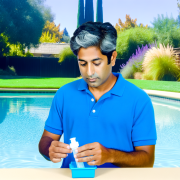
You can’t balance what you don’t measure. Test before buying anything.
Closing Too Early
Wait until water temps are consistently below 60°F. Algae loves 60-70°F water. If you winterize while it’s still warm, you’re creating a science experiment.
Do You Need Antifreeze?
Maybe. Pool antifreeze (propylene glycol) goes in your plumbing lines if you’re in a freeze zone. But it doesn’t go in the pool water itself.
Blow out your lines with a shop vac or compressor, then add pool antifreeze to the skimmer, return jets, and pump basket.
This is separate from water chemistry. Don’t confuse the two.
Opening Prep: What Winter Chemicals Do for Spring
Good winter chemistry means:
- Clear water at opening (or close to it)
- No stains or scaling
- Balanced pH (less adjustment needed)
- Minimal scrubbing and shocking
Bad winter chemistry means:
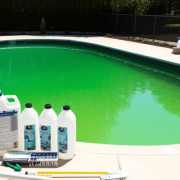
- Swamp green water
- Black algae spots
- Stained surfaces
- A week of chemical warfare to recover
I learned this the hard way. Skipped algaecide one year. Opened to a horror show. Never again.
FAQs About Pool Chemicals for Winter
How long do winter pool chemicals last?
Winter algaecides are designed to last 3-6 months in closed pools. Chlorine from shocking degrades gradually but gives you a protective buffer for 4-8 weeks.
Can I use regular household bleach instead of pool shock?
Technically yes, but you’d need gallons of it. Pool shock is concentrated and more cost-effective. Stick with cal-hypo shock for closing.
What if I forgot to add winter chemicals?
If your pool is already covered and freezing, you’re stuck until spring. Open early, shock immediately, and run the filter 24/7 until clear. It’ll cost you time and chemicals.
Do I need to add chemicals mid-winter?
No. If you winterized correctly, your pool needs nothing until spring. Don’t lift the cover to check — you’ll just let in leaves and debris.
Should I use tablets in a floater over winter?
No. Chlorine tablets are too concentrated for closed pools and can bleach your liner if they settle in one spot. Shock at closing is enough.
What temperature should I winterize my pool?
Wait until water temperature drops below 60°F consistently. In most regions, that’s late September through November.
Bottom Line
Winter pool chemicals aren’t complicated. You need:
1. Shock (cal-hypo)
2. Winter algaecide (polymer-based)
3. pH and alkalinity balanced
4. Optional: stain preventer if you have hard water
Do it right now, enjoy easy spring opening later. Skip it and you’ll pay triple in time and money next year.
Test your water, dose accurately, and close when temps drop below 60°F. That’s the formula.
And if you want to skip the guesswork, grab Pool Calculator. It does the math so you don’t have to.