
Pool Water Chemistry: The Complete Guide to Balanced Water (2026)
Calculate It Instantly with Pool Chemical Calculator
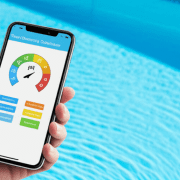
Stop guessing with your pool chemistry! The Pool Chemical Calculator app tells you exactly how much of each chemical to add based on your pool’s size and current readings.
Chlorine, pH, Alkalinity, Calcium Hardness & more
Works for all pool types, chlorine, salt water, above ground
Free to download
Recommended Products for Water Chemistry Management
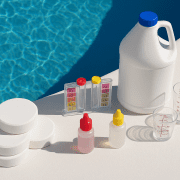
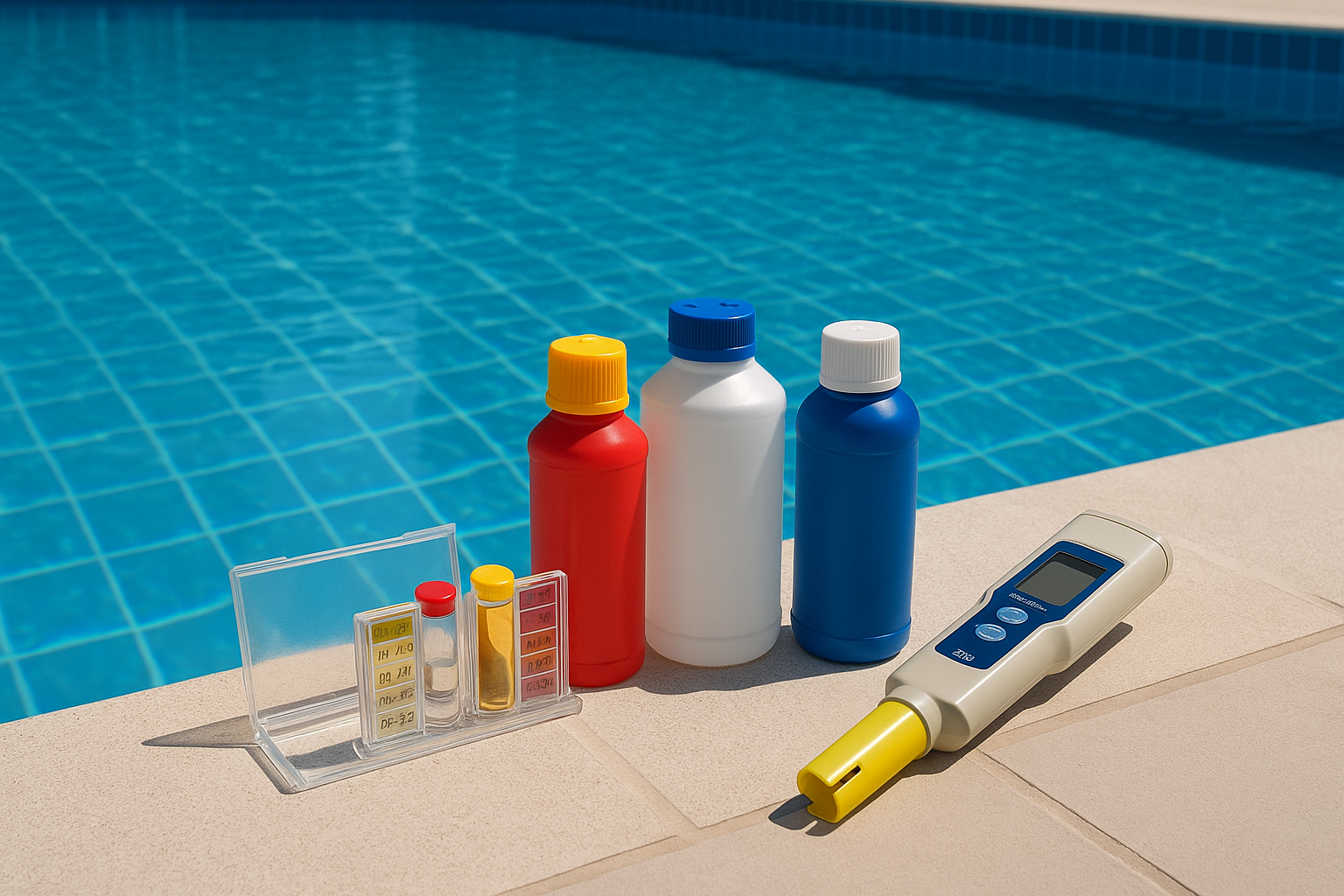
Keeping your water balanced starts with accurate testing and quality chemicals. These are the products we trust. (As an Amazon Associate, we earn from qualifying purchases.)
Testing Equipment
- Taylor K-2006 Complete Test Kit, The liquid reagent kit recommended by pool professionals worldwide. Tests all five key parameters (FC, pH, TA, CH, CYA) with drop-counting precision. (~$80–$100)
- LaMotte ColorQ Pro 11 Digital Tester, Digital photometer that eliminates color-matching guesswork. Tests 11 parameters. (~$200–$250)
- AquaChek 7-Way Test Strips (100 ct), Budget-friendly daily spot checks between full kit tests. (~$15–$20)
Essential Chemicals
- In The Swim 3-Inch Chlorine Tablets (25 lbs), Steady-release trichlor for your primary sanitizer. (~$60–$80)
- Clorox Pool&Spa pH Down (5 lbs), Sodium bisulfate pH decreaser. Safer than muriatic acid for most homeowners. (~$12–$15)
- Arm & Hammer Baking Soda (15 lbs), Pure sodium bicarbonate for raising total alkalinity. Same chemical, fraction of the “pool store” price. (~$15)
- Pool Mate Calcium Hardness Increaser (25 lbs), Calcium chloride flakes for raising calcium hardness to the 200–400 ppm target. (~$35–$45)
- Pool Mate 1-1405 Chlorine Stabilizer / CYA (7 lbs), Pure cyanuric acid to protect chlorine from UV. Critical for outdoor pools. (~$25–$35)
Common Pool Water Chemistry Problems (and Fixes)
| Problem | Likely Cause | Fix |
|———|————-|—–|
| Cloudy water | High pH, low chlorine, or high calcium | Test all levels, adjust in order |
| Green water | Algae (low chlorine + high phosphates) | Shock treatment + algaecide |
| Eye/skin irritation | pH below 7.0 or chloramines | Adjust pH, shock to break chloramines |
| Scale buildup | High calcium + high pH | Lower pH, reduce calcium hardness |
| Chlorine disappears fast | Low CYA (no UV protection) | Add cyanuric acid stabilizer |
Frequently Asked Questions
How often should I test pool water chemistry?
Test your pool water at least 2–3 times per week during swimming season. In hot weather or after heavy rain, daily testing is recommended. In the off-season, test weekly to prevent damage to equipment and surfaces.
What is the most important pool chemical to monitor?
Free chlorine is the most critical parameter because it’s your primary defense against bacteria and algae. However, pH directly affects chlorine’s effectiveness, at pH 8.0, chlorine is only about 20% effective. So monitoring both together is essential.
Can I swim immediately after adding pool chemicals?
It depends on the chemical. After adding pH adjusters or alkalinity increasers, wait at least 20 minutes with the pump running. After shocking, wait until free chlorine drops below 5 ppm (typically 8–24 hours). Never swim immediately after adding any chemical.
What causes pool water chemistry to change?
Several factors constantly affect your water chemistry: sunlight (destroys chlorine), rain (dilutes chemicals and lowers pH), swimmer load (introduces contaminants), temperature changes (warmer water consumes chlorine faster), and source water during top-offs.
Is pool water chemistry different for salt water pools?
Salt water pools still require balanced chemistry, the same pH, alkalinity, calcium, and CYA monitoring applies. The main difference is that a salt chlorine generator produces chlorine continuously, so daily chlorine adjustments are less frequent. However, salt cells tend to raise pH, so you’ll likely need to add acid more often.
Wrapping Up
Mastering pool water chemistry comes down to understanding how the five key parameters interact, testing regularly, and adjusting in the right order. It’s not complicated, but it does require consistency.
If you want to take the guesswork out of chemical dosing completely, the Pool Chemical Calculator does the math for you. Just plug in your readings and pool size, and get exact amounts for every chemical adjustment.
Your pool is an investment. Treat the water right, and it’ll treat you right.