
Salt Water Pool Maintenance: Complete Guide for Crystal-Clear Water
How Salt Water Pools Actually Work
Salt water pools contain chlorine. They generate it automatically instead of requiring manual addition.
Here’s the process:
Step 1: Salt in the Water
You add pool-grade salt (sodium chloride, the same as table salt without additives) to your pool water. The ideal salt level is 2700-3400 ppm (parts per million). Check your salt chlorinator manufacturer’s recommendation for your specific system.
Step 2: Salt Cell Generates Chlorine
Water flows through the salt cell (chlorine generator). An electrical charge splits the salt molecules into sodium and chlorine gas. The chlorine sanitizes your pool, killing bacteria and algae.
Step 3: Chlorine Reverts to Salt
After sanitizing the water, the chlorine breaks down and converts back into salt. The cycle repeats continuously.
You’re not eliminating chlorine. You’re automating its production. This means you still need to test chlorine levels, balance pH, and maintain proper water chemistry.
—
Salt Water Pool Maintenance Schedule
Consistency prevents problems. Here’s your complete maintenance schedule:
Daily (During Swim Season):
- Run your pump 8-12 hours per day (adjust based on pool size and usage)
- Check chlorine output setting on your salt cell controller
- Skim surface debris
Weekly:
- Test free chlorine (target: 1-3 ppm)
- Test pH (target: 7.2-7.6)
- Test total alkalinity (target: 80-120 ppm)
- Clean skimmer baskets and pump strainer
- Brush walls and floor to prevent algae buildup
Monthly:
- Test salt level (target: 2700-3400 ppm, check manufacturer specs)
- Test calcium hardness (target: 200-400 ppm)
- Test cyanuric acid/stabilizer (target: 70-80 ppm for salt pools)
- Inspect salt cell for scale buildup
- Backwash or clean filter (depending on type)
Every 3 Months:
- Deep clean salt cell to remove calcium scale
- Inspect cell blades for damage or wear
- Check all equipment for leaks or damage
Annually:
- Professional equipment inspection (optional)
- Replace salt cell (typically lasts 3-7 years)
- Deep clean filter and replace media if needed
Most salt chlorinator systems have diagnostic features that track cell life, salt levels, and output. Check your controller display weekly to catch problems early.
—
How to Test and Balance Salt Water Pool Chemistry
Salt water pools require the same chemical balance as traditional pools, plus one additional parameter: salt level.
Essential Tests and Target Ranges:
Free Chlorine: 1-3 ppm
Your salt cell generates chlorine automatically. Test weekly to verify it’s producing the right amount. Adjust your chlorinator’s output percentage if needed.
pH: 7.2-7.6
Salt pools tend to drift toward higher pH (above 7.8) because the electrolysis process is slightly alkaline. High pH reduces chlorine effectiveness and causes cloudy water and scale buildup.
Total Alkalinity: 80-120 ppm
Alkalinity acts as a pH buffer. Keep it in range to prevent pH swings. Use muriatic acid or dry acid to lower alkalinity. Use sodium bicarbonate (baking soda) to raise it.
Calcium Hardness: 200-400 ppm
Low calcium causes corrosion and etching. High calcium leads to scale deposits on your salt cell and pool surfaces. This matters for salt pools because calcium buildup on the cell reduces efficiency.
Cyanuric Acid (Stabilizer): 70-80 ppm
Salt pools can tolerate (and often benefit from) slightly higher stabilizer levels (70-80 ppm) compared to traditional pools (30-50 ppm). This protects the automatically generated chlorine from UV degradation.
Salt Level: 2700-3400 ppm
This is critical for salt pools. Too low and your cell won’t generate enough chlorine. Too high and you risk corrosion and skin irritation. Always check your salt chlorinator manufacturer’s specific recommendation.
What You’ll Need:
- Test strips or liquid test kit for chlorine, pH, alkalinity
- Salt test kit or digital salt meter (most test strips include salt)
- Calcium hardness test kit
- Cyanuric acid test kit
Taylor K-2006 Salt Water Test Kit (~$70) provides accurate salt pool testing. It includes everything you need: chlorine, pH, alkalinity, calcium, salt, and cyanuric acid tests.
For quick daily checks, AquaChek Salt Test Strips (~$18) test salt, free chlorine, pH, total alkalinity, and cyanuric acid in one dip.
—
How to Clean Your Salt Cell
The salt cell generates chlorine for your pool. It needs regular cleaning to function properly. Over time, calcium and mineral deposits build up on the cell’s metal plates, reducing chlorine production and efficiency.
Signs Your Salt Cell Needs Cleaning:
- “Check Salt Cell” or “Inspect Cell” warning on your controller
- Chlorine levels dropping despite the cell running at high output
- Visible white scale buildup on the cell blades
- Reduced water flow through the cell
- It’s been 3+ months since your last cleaning
Step-by-Step Salt Cell Cleaning:
Step 1: Turn Off the Power
Turn off your pump and salt chlorinator before removing the cell. Most systems have a dedicated breaker or shutoff switch.
Step 2: Remove the Salt Cell
Disconnect the cell from the plumbing (usually two union fittings) and unplug the electrical cable. Handle carefully. The plates inside are fragile.
Step 3: Inspect the Cell
Look inside at the metal plates. Light white residue is normal. Heavy crusty buildup or flaking indicates calcium scale that needs removal.
Step 4: Prepare a Cleaning Solution
Mix a 10:1 solution of water to muriatic acid in a bucket or PVC tube large enough to submerge the cell. Always add acid to water, never water to acid.
For a standard cell, use 1 part muriatic acid to 10 parts water. Work in a well-ventilated area and wear gloves and eye protection. Never use metal containers. Acid corrodes them.
Step 5: Soak the Cell
Submerge the cell in the cleaning solution for 10-15 minutes. You’ll see bubbling and fizzing as the acid dissolves the calcium scale. For heavily scaled cells, soak for up to 30 minutes.
Step 6: Rinse Thoroughly
Remove the cell and rinse it completely with fresh water from a garden hose. Inspect the plates. They should look clean and metallic. If scale remains, repeat the soaking process.
Step 7: Reinstall and Restart
Reconnect the cell to the plumbing, plug in the electrical cable, and turn the system back on. Reset any error codes on your controller.
Some salt cell manufacturers sell proprietary cleaning solutions or have specific cleaning instructions. Check your owner’s manual first.
You can create a vertical cleaning tube by gluing a PVC end cap on one end of a PVC pipe. Fill with cleaning solution, drop the cell in, and let gravity do the work.
—
Common Salt Water Pool Problems (And How to Fix Them)
Problem 1: Low Chlorine Despite Cell Running
Possible causes:
- Salt level too low (below 2700 ppm)
- Salt cell covered in scale and not producing efficiently
- Cell has reached end of life (most last 3-7 years)
- Cyanuric acid too high, locking up chlorine
- Cell output set too low
Solutions:
- Test salt level and add pool-grade salt if below 2700 ppm
- Clean the salt cell
- Check cell age and replace if necessary
- Test and balance cyanuric acid (keep at 70-80 ppm maximum)
- Increase cell output percentage on your controller
Problem 2: High pH (Above 7.8)
Salt pools naturally push pH higher due to the electrolysis process. High pH makes chlorine less effective and causes cloudy water.
Solutions:
- Add muriatic acid or dry acid to lower pH to 7.2-7.4
- Run your pool pump to circulate the acid
- Retest pH after 4-6 hours
- Consider installing a pH controller (automatic acid dosing system) if pH climbs constantly
Problem 3: Calcium Scale on Pool Surfaces
Causes:
- High calcium hardness (above 400 ppm)
- High pH
- Imbalanced water chemistry
Solutions:
- Lower calcium hardness by partially draining and refilling your pool
- Keep pH in the lower range (7.2-7.4) to prevent calcium precipitation
- Use a sequestering agent to keep calcium in solution
- Brush and vacuum regularly to prevent buildup
Problem 4: “Check Salt” or “Low Salt” Error
Causes:
- Salt level actually is too low
- Dirty or scaled salt cell preventing accurate readings
- Faulty salt cell sensor
Solutions:
- Test salt level with test strips or digital meter (don’t trust the controller alone)
- Add pool salt if levels are below 2700 ppm
- Clean the salt cell
- If salt level is correct and cell is clean, you may need a new sensor or cell
Problem 5: Corrosion on Pool Equipment or Ladder
Causes:
- Salt level too high (above 3600 ppm)
- Imbalanced water chemistry
- Poor grounding or bonding of metal components
Solutions:
- Test salt level and partially drain/refill if above 3600 ppm (you can’t easily remove salt, dilution is the only option)
- Balance pH, alkalinity, and calcium hardness
- Ensure all metal components are properly bonded to prevent galvanic corrosion
- Consider zinc anodes to protect metal parts
—
Recommended Salt Water Pool Products
As an Amazon Associate, we earn from qualifying purchases. These products make salt water pool maintenance easier and more affordable.
Clorox Pool Salt 40 lbs (~$16) – High-purity pool-grade salt. 99.8% sodium chloride, fast-dissolving, no additives. One bag raises salt levels by approximately 400 ppm in a 10,000-gallon pool.
AquaChek White Salt Test Strips (~$18) – Test salt, free chlorine, pH, total alkalinity, stabilizer, and total hardness in 30 seconds. 25 strips per bottle.
Taylor K-2006 Complete Test Kit (~$70) – Professional-grade testing for salt water pools. Includes all essential tests with accurate reagents.
SOLAXX CLG10A SaltDrop (~$100) – Digital Bluetooth salt meter. Tests salt, TDS, and temperature with lab-grade accuracy. Syncs with a smartphone app to track readings over time.
GLB 71418 Salt Cell Descaler (~$15) – Pre-mixed descaling solution specifically formulated for salt cells. Safer and easier than mixing your own muriatic acid solution.
Hayward GLX-CELL-5 TurboCell (~$650) – Replacement salt cell for Hayward AquaRite systems. 15,000-gallon capacity, 5-year warranty.
Pentair 520555 IntelliChlor IC20 (~$800) – Premium salt cell for up to 20,000 gallons. Full-flow design reduces backpressure, built-in diagnostics, and easy-view display.
In The Swim Pool Chlorine Stabilizer (~$30) – 100% cyanuric acid. Protects chlorine from UV degradation. Essential for salt pools in sunny climates.
—
Simplify Salt Water Pool Care with Pool Chemical Calculator
Balancing salt water pool chemistry can be tricky, especially when pH and alkalinity interact. The Pool Chemical Calculator app does the math for you.
Calculate exact amounts of acid, salt, and chemicals needed
Track salt cell cleanings and maintenance schedules
Log test results and spot trends over time
Get alerts when chemistry is out of balance
Free to download
Download for Android
Download for iPhone/iPad
Use Online
—
How to Add Salt to Your Pool
When you first convert to a salt water system or when salt levels drop below 2700 ppm, you’ll need to add pool-grade salt.
Step-by-Step Salt Addition:
Step 1: Calculate How Much Salt You Need
Use your pool volume and current salt level to determine how many pounds of salt to add. Most salt chlorinators require 2700-3400 ppm.
Example: To raise salt from 2000 ppm to 3000 ppm in a 20,000-gallon pool, you need approximately 167 pounds of salt (roughly four 40-pound bags).
Step 2: Add Salt Around the Pool Perimeter
With your pump running, pour salt slowly around the shallow end of your pool. Don’t dump it all in one spot.
Step 3: Brush to Dissolve
Use a pool brush to sweep the salt around and help it dissolve. Most pool salt dissolves within 24 hours.
Step 4: Wait Before Testing
Run your pump for at least 24 hours before testing salt levels. This ensures the salt is fully dissolved and evenly distributed.
Step 5: Retest and Adjust
Test salt level and add more if needed. It’s better to add salt gradually than to overshoot. You can’t easily remove salt from your pool.
Only use pool-grade salt, NOT water softener salt or rock salt. These contain additives and impurities that can damage your salt cell and cloud your water.
—
Salt Water Pool vs. Traditional Chlorine Pool
If you’re deciding between salt and chlorine, here’s an honest comparison:
Advantages of Salt Water Pools:
- Softer water that’s gentler on skin, eyes, and swimwear
- Lower ongoing costs (no need to buy chlorine tablets or liquid chlorine)
- Automatic chlorine generation
- More stable chlorine levels
- Less chlorine smell when properly maintained
Disadvantages of Salt Water Pools:
- Higher upfront cost (salt chlorinator systems cost $800-$2,500 installed)
- Replacement cells needed every 3-7 years ($400-$900)
- Higher pH requires more frequent adjustment
- Corrosion risk (salt can corrode metal fixtures, ladders, and heaters if not properly maintained)
- Still requires testing, balancing, and cleaning
Salt water pools save time and money in the long run. They’re not zero maintenance. If you’re willing to invest upfront and learn the system, salt is a good choice for most pool owners.
—
FAQs About Salt Water Pool Maintenance
How often should I add salt to my pool?
Salt doesn’t evaporate or get consumed by the chlorine generation process. It’s recycled continuously. You’ll only need to add salt when you dilute your pool by draining and refilling, after heavy backwashing, or due to splash-out and overflow. Most pool owners add salt once or twice per year at most. Test monthly to monitor levels.
Can I use regular table salt in my pool?
No. Use only pool-grade salt, which is 99% pure sodium chloride without anti-caking agents, iodine, or other additives found in table salt and water softener salt. These impurities can damage your salt cell, cloud your water, and cause staining.
Why is my salt water pool turning green?
Green water in a salt pool is almost always caused by insufficient chlorine production. Common causes include low salt levels (below 2700 ppm), a scaled or failing salt cell, stabilizer levels too high (above 100 ppm), or the cell output set too low. Test your salt level, clean your cell, and verify your chlorinator is producing adequate chlorine. You may need to manually shock the pool to clear the algae.
How long does a salt cell last?
Most salt cells last 3-7 years, depending on usage, water chemistry, and maintenance. Proper care (regular cleaning, balanced calcium levels, and avoiding excessive output settings) can extend cell life. Many manufacturers warranty cells for 3-5 years. Monitor your cell’s diagnostic display for estimated remaining life.
Do I still need to shock a salt water pool?
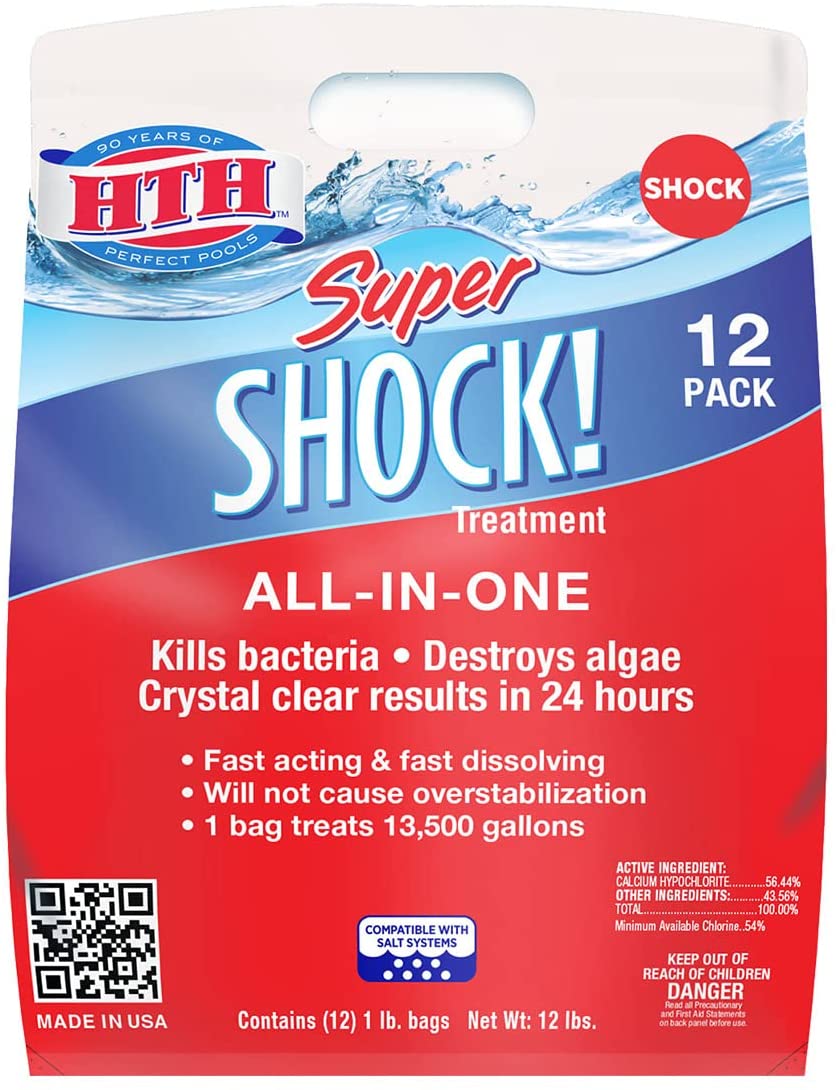
Yes. While your salt cell generates chlorine continuously, you’ll still need to shock occasionally after heavy pool use, rainstorms, or algae blooms. You can use standard pool shock (calcium hypochlorite or non-chlorine shock) or temporarily boost your salt cell output to shock levels if your system supports it. Shocking oxidizes organic waste and restores water clarity.
—
—
Final Thoughts on Salt Water Pool Maintenance
Salt water pools offer a better swimming experience. The water feels softer, chlorine production is automated, and ongoing chemical costs are lower. Proper maintenance requires regular testing, salt cell cleaning, and careful chemistry balancing.
Once you understand how your salt chlorinator works and establish a routine, maintenance becomes easier. Test weekly, clean your cell every few months, and keep your chemistry balanced. You’ll have crystal-clear water all season long.
For personalized chemical dosing calculations and maintenance tracking specific to your salt water pool, download the Pool Chemical Calculator app. It takes the guesswork out of pool care and helps you maintain perfect water chemistry year-round.
Related Articles: