
Pool Metal Stain Removal: How to Remove Iron, Copper, and Manganese Stains
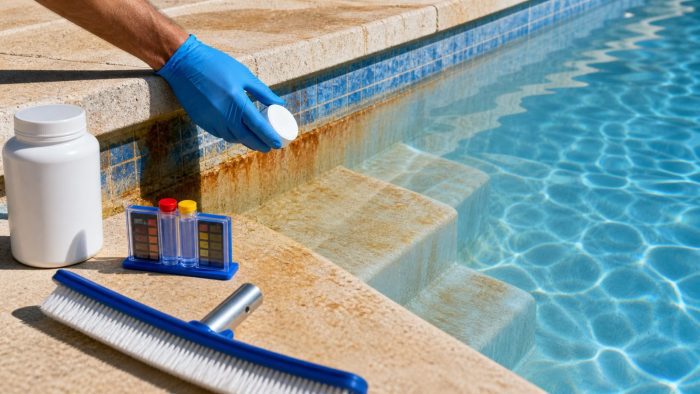
You noticed it last weekend — an ugly brown splotch on your pool’s plaster that wasn’t there before. Or maybe it’s a greenish-blue streak near your return jets. Either way, you’ve got a metal stain problem, and scrubbing won’t fix it. Trust me, I’ve seen homeowners spend hours with a brush only to watch the stain come right back. Pool metal stain removal requires a different approach: chemistry, not elbow grease.
Quick answer
Pool Metal Stain Removal: How to Remove Iron, Copper, and Manganese Stains: You noticed it last weekend — an ugly brown splotch on your pool’s plaster that wasn’t there before. Or maybe it’s a greenish-blue streak near your return jets. Either way, you’ve got a metal stain problem, and.
Here’s the good news. Those stains aren’t permanent, and you don’t need to drain your pool or resurface anything. With the right products and process, most metal stains disappear in 24-48 hours. I’ll walk you through exactly how to identify what’s causing your stains, remove them completely, and prevent them from returning.
Why Metal Stains Happen in the First Place
Before you can fix the problem, you need to understand why metals are staining your pool. And no, it’s not because you did something wrong.
Where Pool Metals Come From
Metals enter your pool water from multiple sources:
- Well water — The biggest culprit. Well water often contains iron (0.3-10+ ppm), copper, and manganese
- Corroding equipment — Old copper heat exchangers, brass fittings, and galvanized pipes slowly dissolve
- Cheap algaecides — Many contain copper sulfate as the active ingredient
- Source water — Even municipal water contains trace metals
- Lawn fertilizers — Runoff adds iron and other minerals
The metals themselves don’t cause immediate problems. They float around invisibly until something triggers precipitation — that’s when dissolved metals come out of solution and attach to surfaces.
What Triggers Metal Staining
Three things cause dissolved metals to suddenly become visible stains:
- pH spikes above 7.8 — Higher pH makes metals less soluble
- Chlorine shock treatments — Oxidizes metals, causing them to precipitate
- Adding calcium or alkalinity increasers — Changes water chemistry rapidly
This explains why many pool owners notice stains after shocking their pool. You didn’t cause the stain by shocking — you just revealed metals that were already there.
Identifying Your Specific Metal Stain
Different metals create different colored stains. Knowing what you’re dealing with helps you choose the right treatment approach.
Stain Color Guide
| Stain Color | Likely Culprit | Common Source |
|---|---|---|
| Reddish-brown, rust-colored | Iron | Well water, corroding rebar |
| Green, teal, blue-green | Copper | Heat exchangers, copper pipes, algaecides |
| Brownish-black, purple | Manganese | Well water |
| Gray or black | Silver or manganese | Older ionizers |
The Vitamin C Test
Not sure if your stain is metal-based or organic (like algae or tannins)? Here’s a 30-second test:
- Grab a vitamin C tablet from your medicine cabinet
- Hold it directly against the stain for 30 seconds
- Rub gently in a circular motion
If the stain lightens or disappears: It’s a metal stain. Proceed with this guide.
If nothing happens: You’re dealing with an organic stain. You’ll need different treatment (usually chlorine and brushing).
This works because ascorbic acid (vitamin C) is a reducing agent that reverses the oxidation causing metal stains. It’s the foundation of most metal stain removal methods.
What You’ll Need for Metal Stain Removal
Gather these supplies before starting. Having everything ready makes the process smoother.
Essential Supplies
- Ascorbic acid powder (vitamin C) — 1-2 pounds per 10,000 gallons
- Metal sequestrant — Quality product like Jack’s Magic Blue Stuff or similar
- pH reducer (dry acid or muriatic acid)
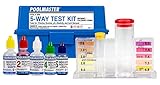
- Good test kit — Strips won’t cut it here; use a Taylor K-2006 kit or similar
- Pool brush — Nylon for vinyl/fiberglass, stainless steel for plaster
- Bucket for pre-dissolving chemicals
What NOT to Use
- Chlorine-based shock (makes stains worse)
- Calcium-based products
- Metal-based algaecides
- Bleach of any kind
Step-by-Step Metal Stain Removal Process
This process works for iron, copper, and manganese stains on all pool surface types. Plan for 3-5 days total, with the heaviest work on day one.
Step 1: Lower Your Chlorine Level (Day Before Treatment)
Metal stain removal requires very low chlorine — ideally below 1.0 ppm. High chlorine will oxidize the metals as fast as you’re reducing them, making removal impossible.
How to lower chlorine quickly:
– Stop adding chlorine 24-48 hours before treatment
– Remove chlorine tablets from feeders/floaters
– If chlorine is above 3 ppm, partially drain and refill with fresh water
– In a pinch, add sodium thiosulfate (chlorine neutralizer) at 2 oz per 1,000 gallons to drop 1-2 ppm
Target: Below 1.0 ppm chlorine before starting
Step 2: Balance Your Water Chemistry
Metal stain treatment works best with specific water chemistry. Test and adjust these parameters:
- pH: 7.2-7.4 (slightly low helps the process)
- Total Alkalinity: 80-100 ppm
- Chlorine: Below 1.0 ppm
Lower pH increases the effectiveness of ascorbic acid. If your pH is above 7.6, add pH reducer before proceeding.
Step 3: Turn Off Your Heater and Salt Cell
If you have a salt chlorine generator, turn it off completely. Same with your heater. You want zero chlorine production during treatment, and the low pH can damage equipment.
Keep your pump and filter running — circulation helps distribute the treatment chemicals evenly.
Step 4: Add Ascorbic Acid
Now for the satisfying part. You’ll watch those ugly stains disappear in real-time.
Dosing guide:
– Light staining: 1/2 pound per 10,000 gallons
– Moderate staining: 1 pound per 10,000 gallons
– Heavy staining: 2 pounds per 10,000 gallons
Application method:
1. Pre-dissolve the ascorbic acid in a bucket of pool water (it dissolves better this way)
2. Walk around the pool perimeter, pouring the solution evenly
3. Pay extra attention to heavily stained areas
4. Brush the entire pool surface
5. Run the pump for 30 minutes
What you’ll see: Within 15-30 minutes, metal stains will start fading. Most disappear completely within 2-4 hours. Stubborn spots may need a second application.
Important: Your water will temporarily turn slightly greenish or bluish. This is normal — it’s the dissolved metals now in solution rather than stuck to your surfaces.
Step 5: Add Metal Sequestrant (Critical Step)
Here’s where most people mess up. They remove the stains and think they’re done. But those metals are still in your water — they’ll just re-stain your pool within days.
Within 24 hours of ascorbic acid treatment, add a quality metal sequestrant. Sequestrants don’t remove metals; they bind to them and keep them dissolved so they can’t attach to surfaces.
Recommended products:
– Jack’s Magic Blue Stuff (copper)
– Jack’s Magic Magenta Stuff (iron/manganese)
– Natural Chemistry Metal Free
– ProTeam Metal Magic
Dosing: Follow product instructions, but typically 32 oz per 10,000 gallons for initial treatment.
Add the sequestrant with the pump running and brush the pool again. Let it circulate for 24 hours.
Step 6: Slowly Raise Chlorine and pH
After 24 hours with the sequestrant circulating, gradually restore normal water chemistry.
Day 2-3:
– Raise chlorine to 1.0 ppm
– Let pH naturally rise (it will)
– Continue running the pump
Day 4-5:
– Bring chlorine to 2-3 ppm
– Adjust pH to 7.4-7.6
– Resume normal chlorine dosing
Key point: Don’t shock your pool for at least 2 weeks after treatment. Aggressive chlorine addition can cause metals to precipitate again before the sequestrant fully protects them.
Preventing Metal Stains From Returning
Removing stains feels great. But if you don’t address the root cause, you’ll repeat this process every season.
Ongoing Maintenance Protocol
Weekly:
– Add maintenance dose of sequestrant (typically 4-8 oz per 10,000 gallons)
– Test pH and keep it below 7.6
– Avoid pH spikes above 7.8
Before any shock treatment:
– Add extra sequestrant 24 hours before shocking
– This protects against oxidation-triggered precipitation
After adding fresh water:
– If using well water, always add sequestrant before adding chlorine
– Consider a hose filter for filling (see below)
Address the Source
If your metals come from corroding equipment, sequestrant is just a bandaid. Consider:
- Replacing copper heat exchangers with titanium or cupro-nickel
- Switching to non-metal algaecides (polyquat-based products)
- Installing a sacrificial anode if you have a salt system
- Checking for corroding rebar (serious issue requiring professional repair)
Use a Pre-Filter When Adding Water
If you have well water high in metals, filter it before it enters your pool. The Camco Water Filter attaches to your garden hose and removes iron, copper, and manganese. Replace the cartridge after every 10,000-15,000 gallons.
This single step prevents 90% of metal stain problems for well water users.
Special Situations and Troubleshooting
Stains That Won’t Come Out
If ascorbic acid lightened but didn’t fully remove your stains:
- Try a stronger dose — Add another 1/2 pound per 10,000 gallons
- Lower pH further — Drop to 7.0-7.2 temporarily
- Apply directly — For vinyl or fiberglass, make a paste of ascorbic acid and apply directly to stubborn spots
- Wait longer — Some deep stains need 24-48 hours of contact time
If vitamin C doesn’t affect the stain at all, you might be dealing with:
– Organic stains (algae, leaves, tannins) — require chlorine treatment
– Scale deposits — require acid washing
– Permanent surface damage — may need resurfacing
Treating a Vinyl Liner Pool
The process is identical for vinyl liners, with one advantage: stains don’t penetrate as deeply as they do in plaster, so removal is usually faster and more complete.
Extra precaution: Keep pH above 7.0 during treatment. Extremely low pH can damage vinyl liner seams over time.
Treating a Fiberglass Pool
Fiberglass responds well to ascorbic acid treatment. However, some fiberglass pools develop a condition called “cobalt spotting” — tiny purple-black dots that look like metal stains but are actually a manufacturing defect.
The vitamin C test helps distinguish: metal stains lighten immediately, while cobalt spots don’t respond. Cobalt spotting requires professional repair or replacement.
Dealing With Severe Iron Staining
Pools with extremely high iron (common with well water in certain regions) may need more aggressive treatment:
- Partially drain the pool — Remove 1/3 to 1/2 of the water
- Refill with filtered water — Use a hose pre-filter
- Treat remaining stains — Follow standard ascorbic acid process
- Maintain religiously — Weekly sequestrant is non-negotiable
For pools where iron exceeds 1.0 ppm consistently, consider installing a whole-house iron filter or dedicated pool fill line filter.
Cost Breakdown: DIY vs. Professional Treatment
Understanding the costs helps you decide whether to tackle this yourself or hire help.
DIY Metal Stain Removal
| Item | Cost |
|---|---|
| Ascorbic acid (2 lbs) | $20-30 |
| Quality sequestrant (64 oz) | $35-50 |
| Good test kit (if needed) | $60-80 |
| Hose pre-filter (if needed) | $25-35 |
| Total first treatment: | $80-120 |
| Future treatments: | $50-70 |
Professional Treatment
Professional pool stain removal typically costs $200-400, depending on your location and the severity of staining. They’ll use the same basic process but with commercial-grade products.
When to hire a pro:
– You’ve tried DIY methods without success
– Staining covers more than 50% of pool surface
– You suspect equipment corrosion or structural issues
– You don’t have time to monitor the 3-5 day process
For most homeowners, DIY treatment works perfectly well and saves significant money.
Frequently Asked Questions
Can I swim during metal stain treatment?
Technically yes, but I’d wait. The low chlorine levels during treatment mean reduced sanitization. And some people report mild skin irritation from the ascorbic acid in water. Best to stay out until chlorine returns to 1-3 ppm, usually 48-72 hours after starting treatment.
How often should I add sequestrant for maintenance?
For pools with ongoing metal issues, add a maintenance dose weekly. Most products recommend 4-8 oz per 10,000 gallons for maintenance (versus 32 oz for initial treatment). If you have well water, add sequestrant every time you add fresh water to the pool.
Will metal stain remover hurt my pool equipment?
Ascorbic acid at proper doses won’t damage pumps, filters, or plumbing. The temporarily low pH is the bigger concern — that’s why you turn off heaters and salt cells during treatment. Keep treatment duration to 24-48 hours and monitor pH to avoid issues.
Why did my stains come back after I removed them?
Two common reasons: First, you didn’t use sequestrant (or used too little) to keep the metals in solution. Second, you shocked the pool too soon, causing metals to re-precipitate. Always wait at least 2 weeks before shocking after treatment, and maintain weekly sequestrant doses.
Is it safe to use ascorbic acid in a salt water pool?
Yes, but turn off your salt chlorine generator during treatment. The generator produces chlorine, which counteracts the stain removal process. Resume normal operation 2-3 days after treatment once you’ve restored proper chlorine levels through the cell.
Next Steps: Calculate Your Treatment Needs
Ready to tackle those metal stains? You’ll need accurate pool volume and chemical calculations to get the dosing right.
Use Pool Chemical Calculator to determine your exact pool volume and calculate chemical additions during recovery. The app helps with chlorine, pH, alkalinity, calcium hardness, stabilizer, salt, and more so you can restore water balance carefully after stain treatment.
???? iPhone / iPad: https://itunes.apple.com/us/app/pool-chem-calculator/id1453351222
???? Android: https://play.google.com/store/apps/details?id=com.poolchemicalcalculator.poolcalc
???? Full guide: https://poolchemicalcalculator.com/news/pool-metal-stain-removal/
Don’t guess on chemical amounts — that’s how you end up repeating the process or damaging your equipment. Get the math right the first time, and those ugly metal stains will be gone for good.
As an Amazon Associate, Pool Chemical Calculator earns from qualifying purchases. Accurate readings make every chlorine, pH, alkalinity, calcium, and CYA dose safer. Slow-dissolving tablets help keep routine free chlorine steady in floaters or chlorinators. Lowers high pH and helps bring alkalinity down when used carefully.Recommended pool supplies


Get exact pool chemical doses
Pool Chemical Calculator turns your test readings, pool volume, and target levels into exact treatment amounts for chlorine, pH, alkalinity, calcium, stabilizer, salt, and more.
Open the Pool Chemical Calculator app or download it from the App Store and Google Play.