
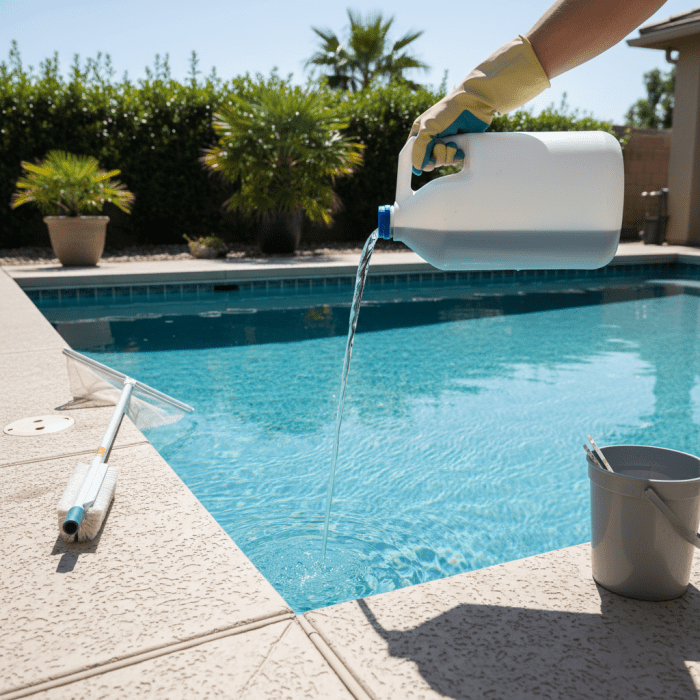
Muriatic Acid Pool Use: The Complete Guide to Safely Lowering pH and Alkalinity
Your pool’s pH just tested high, and that usually means cloudy water, scale buildup, and chlorine that stops pulling its weight. Muriatic acid is one of the fastest and cheapest ways to fix it, but this is not a chemical to freestyle with. Used correctly, it solves a real problem. Used carelessly, it can damage surfaces, equipment, and you.
Quick answer
Muriatic Acid Pool Use: The Complete Guide to Safely Lowering pH and Alkalinity: Your pool’s pH just tested high, and that usually means cloudy water, scale buildup, and chlorine that stops pulling its weight. Muriatic acid is one of the fastest and cheapest ways to fix it, but this is not a.
Here’s how to use muriatic acid in a pool safely, how much to add, what mistakes to avoid, and when to use something gentler instead.
What Is Muriatic Acid in Pool Care?
Muriatic acid is hydrochloric acid diluted for commercial use, usually around 31.45% concentration for pool products. In pool maintenance, it is mainly used for two things:
- lowering pH
- lowering total alkalinity
That matters because pool water works best in a fairly tight chemistry range.
Ideal target ranges
- pH: 7.2 to 7.6
- Total alkalinity: 80 to 120 ppm
When pH gets too high, chlorine becomes less effective. Water can look dull or cloudy, and scale can start building up on tile, heaters, and salt cells.
When Should You Use Muriatic Acid in a Pool?
Use muriatic acid when testing shows:
- pH is above 7.8
- total alkalinity is too high
- you have persistent scale formation
- your pH keeps drifting upward
If your pH is already normal, don’t add acid just because it seems like routine maintenance. Pool chemistry should be based on test results, not habit.
How Much Muriatic Acid Does a Pool Need?
This depends on:
- pool size
- current pH
- current alkalinity
- target pH
- cyanuric acid level
- whether your acid is full-strength or diluted
A rough rule for a 10,000 gallon pool:
- to lower pH from about 8.0 to 7.4, you may need roughly 12 to 16 ounces
- to lower alkalinity by 10 ppm, you may need roughly 20 to 25 ounces
Those are ballpark numbers, not gospel. The safer move is to calculate the exact dose for your water.
> Use the Pool Chemical Calculator app to get an exact dose for your pool size and chemistry before adding acid.
>
> – Website: https://poolchemicalcalculator.com
> – iPhone/iPad: https://itunes.apple.com/us/app/pool-chem-calculator/id1453351222
> – Android: https://play.google.com/store/apps/details?id=com.poolchemicalcalculator.poolcalc
If you are between doses, undershoot first. You can always add more later.
How to Add Muriatic Acid to a Pool Safely
This is where most mistakes happen. Slow down and do it right.
Safety gear you should actually wear
At minimum:
- chemical-resistant gloves
- sealed safety goggles
- old clothes or long sleeves
- closed-toe shoes
- a plastic measuring cup used only for pool chemicals
A good option for eye protection is these sealed chemical splash goggles:
- https://www.amazon.com/dp/B08H8HRCB9?tag=poolcalc04-20
Step-by-step instructions
1. Test the water first
- Measure pH and total alkalinity.
- Write the numbers down.
2. Calculate the dose
- Use a calculator, then start with a slightly smaller amount than the full recommendation if you want to play it safe.
3. Run the pump
- Make sure circulation is on before adding acid.
4. Go to the deep end
- Pour slowly near a return jet so the acid disperses quickly.
- Hold the container low, close to the water surface, to reduce splashing.
5. Let it circulate
- Keep the pump running for at least 30 minutes, preferably longer.
6. Retest after several hours
- Wait about 4 to 6 hours, then test again.
7. Adjust if needed
- If pH is still high, repeat carefully.
What Not to Do With Muriatic Acid
Do not:
- pour it into the skimmer
- dump it directly onto pool steps, liners, or plaster
- add it while standing downwind of the fumes
- mix it with chlorine or any other pool chemical
- add water into acid
That last one matters. The safe rule is:
Always add acid to water, never water to acid.
If you are diluting it in a bucket for a specific method, that order matters because the reverse can splash violently.
Lowering pH vs Lowering Alkalinity
A lot of pool owners lump these together, but they are not exactly the same job.
If your main goal is lowering pH
- add muriatic acid slowly with the pump running
- pour in front of a return in the deep end
- retest later
If your main goal is lowering alkalinity
You usually need a more deliberate process:
- lower pH with acid
- then aerate the water to bring pH back up without raising alkalinity much
- repeat until alkalinity is where you want it
That is slower, but it works better than just blindly pouring in more acid.
Muriatic Acid vs Dry Acid
If you hate handling liquid acid, dry acid is the common alternative.
Muriatic acid pros
- cheaper
- works fast
- widely available
Muriatic acid cons
- stronger fumes
- harsher to handle
- more dangerous if spilled
Dry acid pros
- easier to store
- easier to measure
- less intimidating for many homeowners
Dry acid cons
- more expensive
- slower and less cost-efficient for larger corrections
If you want a dry alternative, this is a common one:
- https://www.amazon.com/dp/B004BGALEW?tag=poolcalc04-20
How to Store Muriatic Acid Safely
Store it:
- in the original container
- upright, with the cap tight
- in a cool, ventilated area
- away from chlorine and metal tools
- away from kids and pets
Do not tuck it beside your shock, tablets, or random garage hardware. Acid fumes can rust nearby metal and create dangerous reactions if chemicals leak.
If you want a dedicated spot, a simple outdoor storage cabinet helps keep pool chemicals separated:
- https://www.amazon.com/dp/B000WEMFWI?tag=poolcalc04-20
Common Problems After Adding Muriatic Acid
“My pH keeps rising again”
Your total alkalinity may still be too high. High alkalinity tends to pull pH back upward.
“I added too much acid”
Retest first. If pH dropped too low, you may need to raise it with soda ash or increase alkalinity with baking soda depending on what moved.
“The acid didn’t do much”
Double-check:
- your real pool volume
- the acid strength on the label
- your test results
- whether total alkalinity is fighting you
FAQ: Muriatic Acid Pool Use
How long after adding muriatic acid can you swim?
Usually after at least 30 minutes of circulation, but waiting a few hours and retesting is safer. Swim only when pH is back in a safe range.
Can muriatic acid damage a vinyl liner or plaster pool?
Yes, if it is poured carelessly or allowed to sit concentrated on one surface. Always disperse it properly.
Is muriatic acid the same as hydrochloric acid?
Yes. Muriatic acid is the common commercial name for diluted hydrochloric acid.
How often should you add muriatic acid to a pool?
Only when testing shows high pH or high alkalinity. For some pools that is weekly, for others much less often.
Can you use muriatic acid in a saltwater pool?
Yes. In fact, saltwater pools often need acid more frequently because salt systems tend to push pH upward over time.
The Smart Way to Dose Acid
If you want the short version, here it is:
- test first
- calculate the dose
- add less than you think you need
- circulate
- retest
- repeat only if necessary
Guessing with acid is dumb. The calculator is easier.
Use the Pool Chemical Calculator app before adding acid
Get an exact recommendation based on your pool size and current readings:
- Website: https://poolchemicalcalculator.com
- iPhone/iPad: https://itunes.apple.com/us/app/pool-chem-calculator/id1453351222
- Android: https://play.google.com/store/apps/details?id=com.poolchemicalcalculator.poolcalc
FAQ Schema
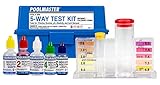
As an Amazon Associate, Pool Chemical Calculator earns from qualifying purchases. Lowers high pH and helps bring alkalinity down when used carefully. Raises total alkalinity so pH is less likely to bounce around after treatment. Accurate readings make every chlorine, pH, alkalinity, calcium, and CYA dose safer.
Recommended pool supplies


Get exact pool chemical doses
Pool Chemical Calculator turns your test readings, pool volume, and target levels into exact treatment amounts for chlorine, pH, alkalinity, calcium, stabilizer, salt, and more.
Open the Pool Chemical Calculator app or download it from the App Store and Google Play.