
Pool Cloudy After Algae Treatment: Why It Happens and How to Clear It
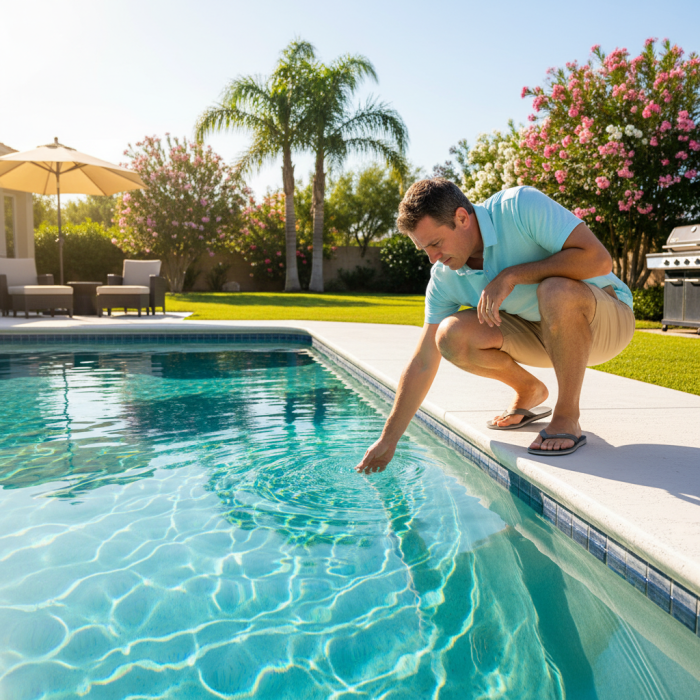
You finally killed that algae bloom. The green slime is gone, the walls aren’t slimy anymore, and you’re ready to swim. But wait — your pool cloudy after algae treatment looks like someone dumped milk into it. What gives?
Quick answer
Pool Cloudy After Algae Treatment: Why It Happens and How to Clear It: You finally killed that algae bloom. The green slime is gone, the walls aren’t slimy anymore, and you’re ready to swim. But wait — your pool cloudy after algae treatment looks like someone dumped milk into it. What.
Don’t panic. This is actually normal. And it means your treatment worked.
Here’s what happened: when you shocked your pool to kill algae, all those billions of dead algae cells didn’t just disappear. They’re now floating in your water as microscopic particles — too small for your filter to catch immediately, but large enough to scatter light and make your pool look like a foggy mess.
The good news? You’re 80% done with the hard part. The bad news? You’ve got some work ahead to finish the job. This guide walks you through exactly how to clear that cloudy water, typically within 24-72 hours.
Why Your Pool Turned Cloudy After Shocking Algae
Understanding the cause helps you fix it faster. Three things create post-treatment cloudiness:
Dead Algae Particles
Live algae clings to surfaces. Dead algae floats. When chlorine destroys algae cell walls, the contents spill into your water. A single algae bloom can release millions of particles smaller than 5 microns — that’s about 1/15th the width of a human hair.
Your standard sand filter catches particles down to 20-40 microns. Cartridge filters grab 10-20 microns. Even DE filters, the finest option, only capture particles down to 3-5 microns. Some of those dead algae particles slip right through.
Suspended Debris and Organic Matter
Algae doesn’t grow in isolation. It feeds on contaminants — body oils, sunscreen, leaves, pollen, and other organic junk in your water. When the algae dies, these particles get released too. Think of it like popping a water balloon filled with dirt. The balloon’s gone, but now you’ve got dirt everywhere.
Chemical Residue from the Treatment Process
Shocking your pool to 30+ ppm chlorine creates chemical byproducts. Combined chlorine (chloramines), oxidized metals, and calcium compounds can all contribute to haziness. If you used an algaecide alongside shock treatment, those chemicals add to the mix.
The 5-Step Process to Clear Cloudy Post-Algae Water
Here’s your action plan. Follow these steps in order — skipping ahead usually backfires.
Step 1: Test Your Water Chemistry (Don’t Skip This)
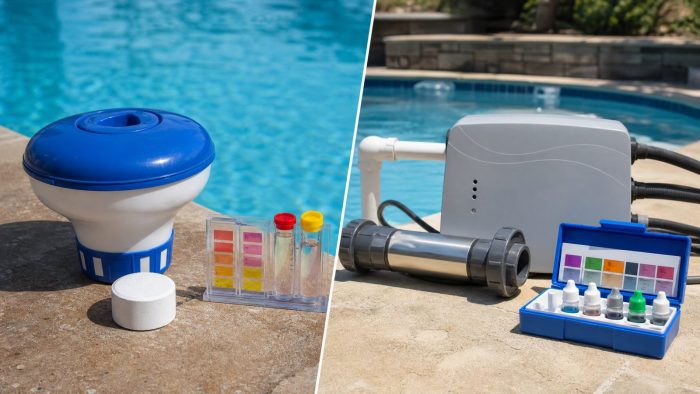
Grab your test kit and check these levels before doing anything else:
| Parameter | Target Range | Why It Matters |
|---|---|---|
| Free Chlorine | 1-3 ppm | Must drop from shock level before clarifying |
| pH | 7.2-7.6 | Affects chlorine effectiveness and clarifier performance |
| Alkalinity | 80-120 ppm | Stabilizes pH during treatment |
| Cyanuric Acid | 30-50 ppm | Protects chlorine from UV breakdown |
Critical point: If your free chlorine is still above 5 ppm, wait. Clarifiers and flocculants don’t work well in heavily chlorinated water. Let the chlorine drop naturally (usually 24-48 hours) or dilute with fresh water.
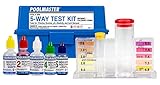
A reliable test kit makes all the difference here. The Taylor K-2006 Complete Test Kit gives you professional-grade accuracy for all the readings you need.
Step 2: Brush Everything Again
Yes, again. Even if you brushed during treatment.
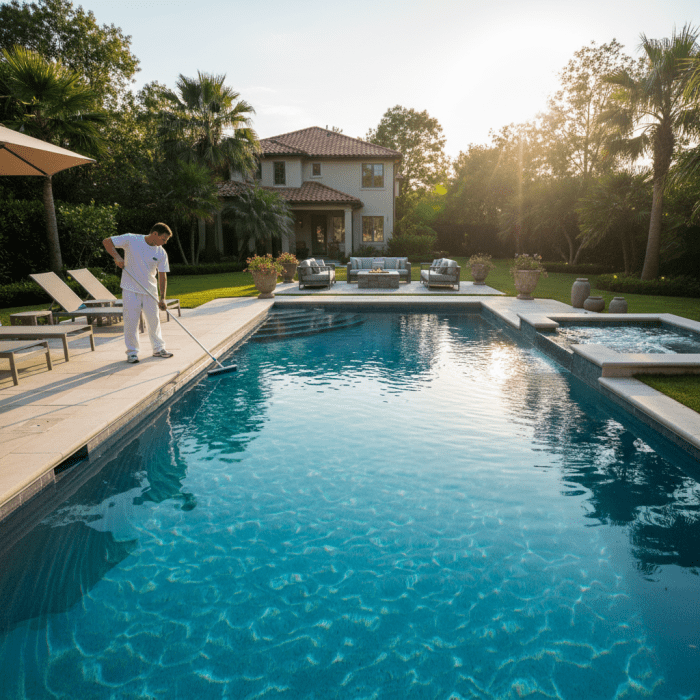
Dead algae settles on surfaces. It clings to corners, crevices, ladder treads, and light fixtures. Brushing suspends these particles so your filter can capture them.
Use a stiff-bristled brush for concrete and gunite pools. Softer nylon bristles work better for vinyl and fiberglass. Spend 10-15 minutes on this — brush the walls, floor, steps, and behind ladders. Pay extra attention to shady areas where algae was thickest.
Step 3: Run Your Filter 24/7 (And Clean It Often)
This is where most pool owners go wrong. They run their filter for 8-10 hours and wonder why the water stays cloudy for a week.
Run your pump continuously until the water clears. For most pools, that means 48-72 hours of non-stop filtration.
But here’s the catch: your filter will clog with dead algae. A clogged filter doesn’t filter — it just circulates dirty water.
Filter maintenance schedule during clearing:
- Sand filters: Backwash when pressure rises 8-10 psi above clean starting pressure. Expect to backwash 2-3 times per day initially.
- Cartridge filters: Remove and hose off every 8-12 hours. Consider having a backup cartridge to swap while one dries.
- DE filters: Backwash and recharge with fresh DE when pressure rises 8-10 psi. You’ll go through extra DE powder during this process.
Step 4: Use a Water Clarifier (The Secret Weapon)
Clarifiers are polymers that clump tiny particles together into larger masses your filter can actually catch. Think of it like turning dust into dust bunnies — suddenly your filter can grab them.
How to use clarifier properly:
- Add the recommended dose based on your pool volume (typically 1 oz per 5,000 gallons)
- Run your pump for at least 8 hours
- Don’t add more thinking it’ll work faster — overdosing creates gummy residue
- Wait 12-24 hours before assessing results
A quality clarifier like Clorox Pool&Spa Super Water Clarifier works for most situations. For severe cloudiness, you may need to repeat the dose after 24 hours.
Pro tip: Clarifiers work best when your pH sits between 7.2-7.4. Higher pH reduces effectiveness significantly.
Step 5: Consider Flocculant for Stubborn Cloudiness
If clarifier doesn’t fully clear your pool after 48 hours, flocculant (or “floc”) offers a more aggressive option.
Flocculant works differently than clarifier. Instead of clumping particles for your filter, it binds them together and sinks them to the pool floor. You then vacuum the sediment directly to waste — bypassing your filter entirely.
When to use floc instead of clarifier:
- Water still cloudy after 48+ hours of filtering with clarifier
- You can see more than 6-8 feet into the water (if you can’t, the debris load may be too heavy for clarifier alone)
- You need the pool clear for an event within 24-48 hours
- Your filter struggles to keep up with the particle load
Flocculant process:
- Raise water level 2-3 inches above normal (you’ll lose water vacuuming to waste)
- Add floc according to package directions
- Run pump for 2 hours to distribute
- Turn pump OFF and let sit overnight (8-12 hours minimum)
- Particles will settle to the floor as a visible cloud
- Vacuum slowly to waste — don’t use filter setting or you’ll clog your system
- Refill pool and rebalance chemistry
Warning: Flocculant doesn’t work with cartridge filters since you can’t vacuum to waste without a multiport valve. You’ll need to rig a submersible pump or hire a pro.
Common Mistakes That Keep Your Pool Cloudy
Avoid these errors and you’ll clear your water faster.
Adding More Shock
Your instinct might say “it’s not clear, so I need more chlorine.” Wrong. The algae is already dead. More shock just means higher chlorine levels that prevent clarifiers from working and delay your ability to swim.
Only add more shock if you see green returning — which indicates live algae, not dead particles.
Not Running the Pump Long Enough
Your pool turns over its entire water volume based on pump runtime. A typical 15,000-gallon pool with a 1.5 HP pump turns over in about 8 hours at full speed. That means every 8 hours, all your water passes through the filter once.
Cloudy water needs multiple turnovers. At minimum, run 24 hours continuously. Better results come from 48-72 hours.
Ignoring Filter Maintenance
A dirty filter is worse than no filter. It restricts flow, reduces turnover rate, and can actually push captured debris back into the pool.
Clean your filter at least every 12 hours during the clearing process. Yes, it’s annoying. Yes, it’s necessary.
Swimming Too Soon
I get it — you just want your pool back. But swimming in cloudy water stirs up particles, adds body oils, and extends clearing time. Wait until you can clearly see the main drain (typically 8+ feet of visibility).
Also, verify chlorine has dropped below 5 ppm before swimming. Post-shock levels can irritate skin and eyes.
When Cloudiness Indicates a Bigger Problem
Sometimes cloudy water after treatment signals issues beyond dead algae.
Metals in Your Water
If your water has a greenish-gray or rusty tint after clearing attempts, you may have oxidized metals. Copper from algaecides or iron from well water turn cloudy when chlorine oxidizes them.
Test for metals with a specific metal test strip. If present, you’ll need a metal sequestrant before continuing treatment.
High Calcium Hardness
Calcium levels above 400 ppm can cause cloudy water that doesn’t respond to clarifiers. The calcium precipitates out of solution, especially at higher pH levels.
Fix this by partially draining and refilling with fresh water to dilute calcium concentration.
Algae Isn’t Actually Dead
Green cloudiness (not white or gray) means live algae. Test your chlorine — if it’s below 1 ppm, algae can survive and regrow. You may need to shock again and start the treatment process over.
Biofilm or Hidden Algae Sources
If cloudiness keeps returning, you might have algae hiding in your filter, pipes, or pool equipment. Consider chemically cleaning your filter and running a pipe cleaner through your circulation system.
Preventing Cloudiness After Future Algae Treatments
Next time you battle algae (and there will be a next time — every pool owner faces it eventually), these strategies minimize cloudiness:
Pre-Brush Before Shocking
Brushing before you shock loosens algae from surfaces so the chlorine can kill it faster and more completely. Dead algae releases from surfaces more easily when treated early.
Use the Right Amount of Shock
More isn’t always better. Calculate your exact dose based on pool volume. For algae treatment, you need 30 ppm of free chlorine. A high-quality calcium hypochlorite shock offers consistent strength for accurate dosing.
Add Clarifier Proactively
Add a maintenance dose of clarifier 12-24 hours after shocking, before cloudiness fully develops. This helps your filter catch particles immediately rather than waiting until they’ve dispersed throughout the water.
Clean Your Filter Before Treatment
A clean filter at the start of treatment has maximum capacity for all the debris coming its way. Don’t start algae treatment with an already-dirty filter.
Timeline: What to Expect During Clearing
Here’s a realistic timeline so you know if your progress is normal:
Hours 0-12: Water may actually look worse as particles disperse. This is normal. Filter pressure will rise quickly.
Hours 12-24: Slight improvement in visibility. Should be able to see 2-3 feet into water. Clean filter at least once.
Hours 24-48: Noticeable improvement. Visibility extends to 4-6 feet. Water shifts from milky to hazy. Add clarifier if you haven’t already.
Hours 48-72: Water should be clearing significantly. Visibility 6-8+ feet. Can see main drain in most pools.
Hours 72-96: Water clear or nearly clear for most pools. Light cloudiness may persist but swimming is typically safe if chemistry is balanced.
If you’re not seeing progress on this timeline, revisit the steps above. Check your filter cleanliness, verify pH is in range, and make sure the pump actually ran continuously (power outages happen).
FAQ: Pool Cloudy After Algae Treatment
How long should cloudy water last after algae treatment?
Expect 24-72 hours with continuous filtration and proper clarifier use. Severe algae blooms may take 4-5 days. If cloudiness persists beyond a week, you likely have a separate issue like high metals, calcium precipitation, or ongoing algae growth.
Can I swim in cloudy pool water after killing algae?
Wait until you can clearly see the bottom drain (8+ feet visibility) and chlorine has dropped below 5 ppm. Swimming too soon stirs up particles, extends clearing time, and high chlorine levels irritate skin and eyes. Most pools are swimmable 48-72 hours after treatment.
Should I keep adding shock if my pool stays cloudy?
No — the algae is dead, and more shock won’t help clear dead particles. Additional chlorine actually delays clearing by interfering with clarifiers. Only add more shock if you see green returning, which indicates live algae survived treatment.
Why did my pool turn white instead of green after treatment?
White or milky cloudiness indicates dead algae particles and is a sign that treatment worked. Green cloudiness means live algae — if your water is still green-tinted, test chlorine levels and consider re-shocking if below 1 ppm.
Will clarifier hurt my pool or equipment?
When used as directed, clarifiers are safe for all pool types and equipment. Overdosing can create a sticky residue that clogs filters. Follow package instructions carefully — typically 1 oz per 5,000 gallons initially, with a repeat dose after 24 hours if needed.
Get Your Water Perfectly Balanced
Clearing cloudy water is just the first step. Once your pool is clear, you’ll want to dial in your chemistry to prevent future algae blooms and keep water crystal clear all season.
Use Pool Chemical Calculator to get exact dosing recommendations for your pool size. Enter your test results, and the app tells you exactly what to add for chlorine, pH, alkalinity, calcium hardness, stabilizer, salt, and more — no guesswork, no overdosing, no wasted chemicals.
???? iPhone / iPad: https://itunes.apple.com/us/app/pool-chem-calculator/id1453351222
???? Android: https://play.google.com/store/apps/details?id=com.poolchemicalcalculator.poolcalc
???? Full guide: https://poolchemicalcalculator.com/news/pool-cloudy-after-algae-treatment/
As an Amazon Associate, Pool Chemical Calculator earns from qualifying purchases. Accurate readings make every chlorine, pH, alkalinity, calcium, and CYA dose safer. Helpful for spot-cleaning settled debris, dead algae, and problem areas after treatment. Raises calcium hardness to reduce corrosive water risk in plaster, concrete, and equipment.
Recommended pool supplies


Get exact pool chemical doses
Pool Chemical Calculator turns your test readings, pool volume, and target levels into exact treatment amounts for chlorine, pH, alkalinity, calcium, stabilizer, salt, and more.
Open the Pool Chemical Calculator app or download it from the App Store and Google Play.