
Dry Acid Pool Calculator: Exact Dosing to Lower pH and Alkalinity Safely
Keyword: dry acid pool calculator
Quick answer
Dry Acid Pool Calculator: Exact Dosing to Lower pH and Alkalinity Safely: Keyword: dry acid pool calculator Quick Answer For a 10,000-gallon pool, lowering pH by about 0.2 usually takes roughly 6 ounces of dry acid, also called sodium bisulfate. To lower total alkalinity by about 10 ppm.
Quick Answer
For a 10,000-gallon pool, lowering pH by about 0.2 usually takes roughly 6 ounces of dry acid, also called sodium bisulfate. To lower total alkalinity by about 10 ppm, expect closer to 12 ounces per 10,000 gallons. Your exact dose depends on pool volume, current pH, target pH, total alkalinity, and how aggressively your water responds to acid.
The easiest path is simple: test pH and total alkalinity, confirm your gallons, calculate the dose, add dry acid with the pump running, then retest after circulation. Use the Pool Chemical Calculator pH calculator, alkalinity calculator, or the Pool Chemical Calculator app to get the exact dry acid dose for your pool.
Your pool water test just came back with high pH or elevated total alkalinity. You have a bag of pH reducer in the garage, but the label gives a generic dose that may not match your pool. A dry acid pool calculator keeps you from guessing, overdosing, or chasing pH for three days.
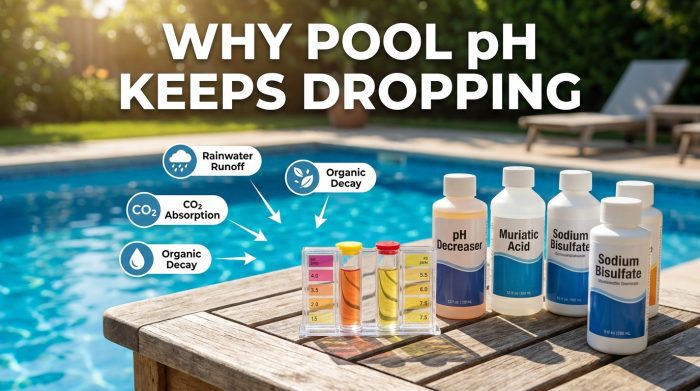
Dry acid is the granular form of pool acid. The active ingredient is usually sodium bisulfate. It lowers pH, lowers total alkalinity, and is easier for many homeowners to store and handle than liquid muriatic acid.
The tradeoff is that dry acid still needs respect. It can irritate skin, damage surfaces if granules sit on the floor, and push pH too low if you add too much at once. Measure first. Pour second.
When to Use Dry Acid in a Pool
Use dry acid when your pool pH is too high, total alkalinity is too high, or both. For most residential pools, the target ranges are:
- pH: 7.2-7.6
- Total alkalinity: 80-120 ppm
- Free chlorine: usually 2-5 ppm, depending on stabilizer level
- Cyanuric acid: usually 30-50 ppm for chlorine pools
High pH makes chlorine less effective, encourages calcium scale, clouds the water, and can leave swimmers with irritated eyes. High alkalinity makes pH stubborn. You lower pH, it looks good for a day, then it climbs again.
If you are not sure how many gallons are in the pool, use the pool volume calculator before dosing. A 20% volume mistake creates a 20% chemical mistake.
Dry Acid vs. Muriatic Acid
Muriatic acid works fast and usually costs less per treatment. Dry acid wins on storage and handling.
| Chemical | Common Form | Best For | Watch Out For |
|—|—|—|—|
| Dry acid | Granular sodium bisulfate | Safer storage, easier measuring, small weekly corrections | Costs more and can leave residue if not dissolved |
| Muriatic acid | Liquid hydrochloric acid | Large pH and alkalinity reductions | Fumes, splashes, corrosion, stronger safety risk |
Many homeowners choose dry acid because it does not splash, does not produce the same harsh fumes, and can be measured by weight with a simple scale. If you want the lowest cost and are comfortable handling liquid acid, muriatic acid is still a strong option. If you want a cleaner homeowner-friendly routine, dry acid is hard to beat.
For granular pH reducer, products like In The Swim Dry Acid or similar sodium bisulfate products work well. Always confirm the active ingredient and follow the label’s safety instructions.
Dry Acid Dosage Chart for pH
Use this as a starting point for normal pool water. High alkalinity can make pH harder to move, and low alkalinity can make pH drop faster than expected.
| Pool Size | Lower pH 0.2 | Lower pH 0.4 | Lower pH 0.6 |
|—|—:|—:|—:|
| 10,000 gallons | 6 oz | 12 oz | 18 oz |
| 15,000 gallons | 9 oz | 18 oz | 27 oz |
| 20,000 gallons | 12 oz | 24 oz | 36 oz |
| 25,000 gallons | 15 oz | 30 oz | 45 oz |
| 30,000 gallons | 18 oz | 36 oz | 54 oz |
Do not try to force a big correction in one shot. If your calculated dose is more than 1 pound per 10,000 gallons, split it into smaller treatments. Add acid, circulate, retest, then continue.
Dry Acid Dosage Chart for Total Alkalinity
Lowering alkalinity usually takes more acid than a small pH correction.
| Pool Size | Lower TA 10 ppm | Lower TA 20 ppm | Lower TA 30 ppm |
|—|—:|—:|—:|
| 10,000 gallons | 12 oz | 24 oz | 36 oz |
| 15,000 gallons | 18 oz | 36 oz | 54 oz |
| 20,000 gallons | 24 oz | 48 oz | 72 oz |
| 25,000 gallons | 30 oz | 60 oz | 90 oz |
| 30,000 gallons | 36 oz | 72 oz | 108 oz |
If alkalinity is high but pH is already in range, go slower. Acid lowers both readings. You may need to lower alkalinity in stages, then aerate the water to bring pH back up without raising alkalinity again.
Step-by-Step: How to Add Dry Acid to a Pool
Step 1: Test pH and Total Alkalinity
Do not dose from memory. Test pH and total alkalinity first. A fresh liquid kit such as the Taylor K-2006 test kit is more reliable than old strips that sat in a humid shed all summer.
Write down both readings. You need pH to calculate the immediate correction, and alkalinity to understand whether pH will keep drifting.
Step 2: Confirm Pool Volume
Check your gallon number before using any dry acid chart. If you are estimating, run the pool through the Pool Chemical Calculator volume calculator. Chemical dosing depends directly on gallons.
Example: a 15,000-gallon pool needs 9 ounces to lower pH by about 0.2. A 20,000-gallon pool needs 12 ounces for the same change. Same chemistry problem, different dose.
Step 3: Calculate the Dry Acid Dose
Use the chart above or calculate directly in the Pool Chemical Calculator app. For rough pH corrections, use this rule:
Dry acid ounces = (pool gallons / 10,000) x (desired pH drop / 0.2) x 6
For example, if a 20,000-gallon pool needs to drop from pH 8.0 to 7.6, the desired drop is 0.4:
(20,000 / 10,000) x (0.4 / 0.2) x 6 = 24 ounces
That is 1.5 pounds of dry acid.
Step 4: Pre-Dissolve the Dry Acid
Pre-dissolving is not always required, but it is the smarter move for vinyl liners, fiberglass pools, and any pool where granules might settle on the floor.
Fill a clean 5-gallon bucket halfway with pool water. Slowly add the measured dry acid while stirring. Add acid to water, not water to acid. Stir for 30-60 seconds until the granules dissolve.
Wear chemical-resistant gloves and eye protection. Dry acid is easier than liquid acid, but it is still acid.
Step 5: Add It With the Pump Running
Pour the dissolved dry acid slowly into the deep end while the pump is running. If you are broadcasting granules directly, walk along the pool edge and spread them widely. Do not dump the full dose in one spot.
Brush the area afterward if any product settles. Undissolved acid can lighten vinyl liners or sit against plaster longer than you want.
Step 6: Circulate, Wait, and Retest
Run the pump for at least 4 hours. For the cleanest reading, wait 24 hours before deciding whether you need a second dose. Testing too soon can fool you because the acid may not be fully mixed through the pool.
When you retest, check both pH and total alkalinity. If pH is still high, add a smaller follow-up dose. If pH dropped into range but alkalinity is still high, use a staged acid and aeration process instead of hammering the pool with one large dose.
Troubleshooting Dry Acid Problems
The pH barely moved
The usual causes are high alkalinity, bad volume estimates, old test reagents, or not enough circulation time. Confirm gallons, run the pump, wait 24 hours, then retest. If alkalinity is above 140 ppm, expect pH to resist small acid doses.
The pH dropped too low
Stop adding acid. Run the pump and retest after circulation. If pH is below 7.2, use soda ash to raise it. The pH calculator can calculate a correction dose without overshooting in the other direction.
Total alkalinity is still high
Lowering alkalinity often takes repeated acid treatments. Add acid to bring pH down near 7.0-7.2, then aerate the water with returns, spa jets, fountains, or a compressor to raise pH without raising alkalinity. Repeat until alkalinity lands in range.
White powder settled on the pool floor
Brush it immediately and run the pump. The powder is usually undissolved dry acid or filler from the product. Pre-dissolve future doses in a bucket, especially if you have a vinyl liner.
The pool got cloudy after adding dry acid
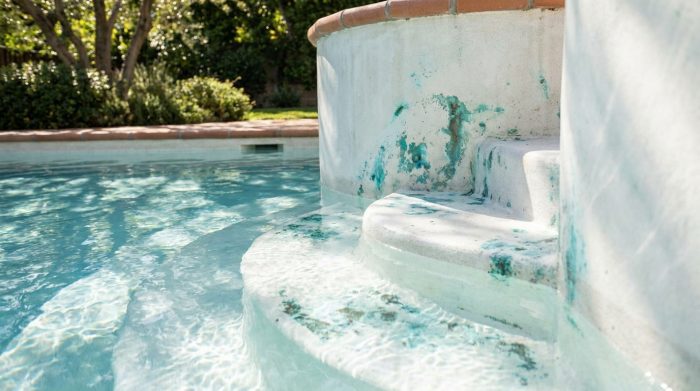
Cloudiness after acid usually means chemistry was already unstable, calcium scale was disturbed, or the product was added too fast. Test pH, alkalinity, calcium hardness, and filter pressure. If pH is in range, keep circulating and clean the filter if pressure rises 8-10 psi over clean pressure.
Safety Rules for Dry Acid
Dry acid is easier to handle than muriatic acid, but do not treat it like table salt.
- Wear gloves and safety glasses.
- Keep the bag sealed between uses.
- Store it away from chlorine, shock, metals, and moisture.
- Never mix dry acid with chlorine products.
- Never add it while swimmers are in the pool.
- Use a clean scoop that is only for acid.
- Keep kids and pets away from the treatment area.
A basic pair of chemical-resistant nitrile gloves is cheap insurance if you handle pool chemicals every week.
When Not to Use Dry Acid
Skip dry acid if pH is already below 7.2, total alkalinity is already low, or you are trying to fix cloudy water without a test result. Acid is not a clarifier. It will not kill algae, remove debris, or replace chlorine.
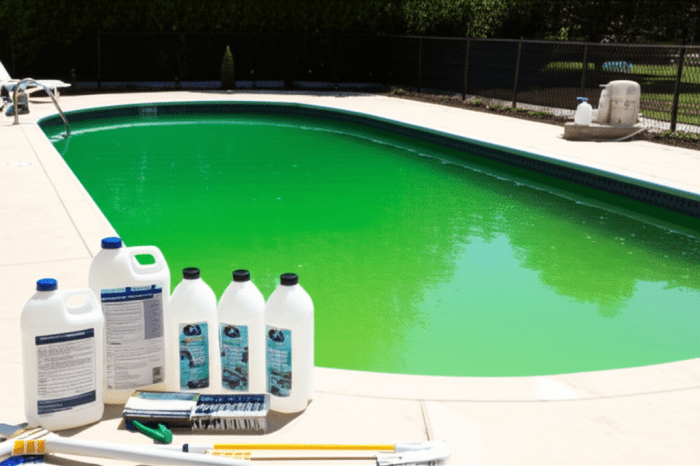
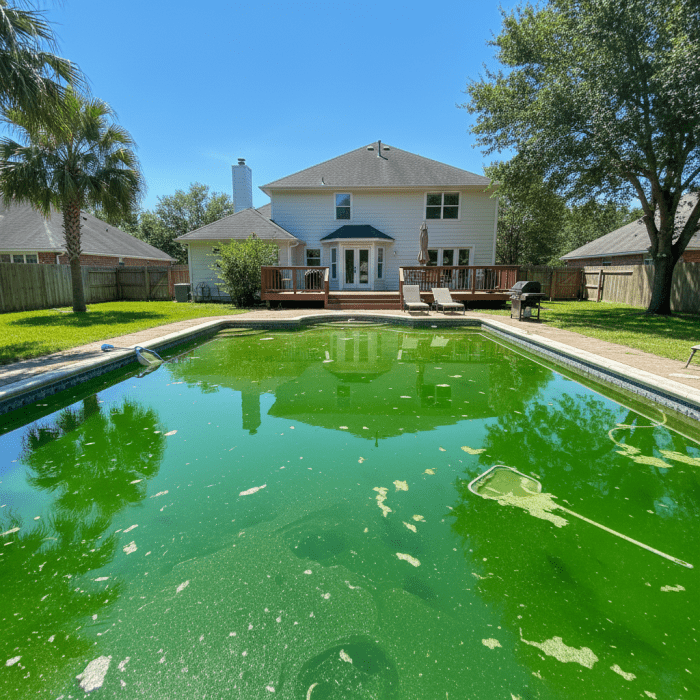
If the water is green, test chlorine and stabilizer first. Use the chlorine calculator to dose sanitizer correctly, then adjust pH after the algae problem is under control.
Also be careful with saltwater pools. Some salt cell manufacturers discourage frequent sodium bisulfate use because sulfates can build up over time and may contribute to scaling or cell issues. Occasional dry acid use is common, but if your salt pool needs acid every week, consider liquid muriatic acid or check why pH is rising so fast.
Frequently Asked Questions
How much dry acid do I add to lower pool pH?
As a rough rule, add 6 ounces of dry acid per 10,000 gallons to lower pH by about 0.2. A 20,000-gallon pool lowering pH from 8.0 to 7.6 would need about 24 ounces. Always retest after circulation before adding more.
Can dry acid lower total alkalinity?
Yes. Dry acid lowers total alkalinity as well as pH. Plan on about 12 ounces per 10,000 gallons to lower alkalinity by roughly 10 ppm, then use aeration if you need pH to rise back up without raising alkalinity.
Is dry acid the same as pH decreaser?
Usually, yes. Most granular pool pH decreaser products are sodium bisulfate, which is dry acid. Check the label to confirm the active ingredient and concentration before using a dosing chart.
How long after adding dry acid can you swim?
Wait at least 30 minutes with the pump running, then confirm pH is between 7.2 and 7.8 before swimming. If you added a large dose, wait longer and retest. Safe chemistry matters more than the clock.
Can I add dry acid directly to the pool?
You can broadcast dry acid directly into the deep end with the pump running, but pre-dissolving it in a bucket is safer for liners and surfaces. Never dump a pile of granules in one spot.
Get Exact Dry Acid Doses
Dry acid is simple when the math is right. Enter your test readings and pool volume in the Pool Chemical Calculator app, then follow the exact dose instead of guessing from a bag.
Use it for dry acid, chlorine, pH, alkalinity, calcium hardness, stabilizer, salt, and more. One app, one smart link, no hunting for separate iOS or Android downloads.
Recommended pool supplies
As an Amazon Associate, Pool Chemical Calculator earns from qualifying purchases.

Lowers high pH and helps bring alkalinity down when used carefully.
View on Amazon
Accurate readings make every chlorine, pH, alkalinity, calcium, and CYA dose safer.
View on Amazon
Raises low pH to protect swimmers, plaster, liners, heaters, and metal equipment.
View on AmazonGet exact pool chemical doses
Pool Chemical Calculator turns your test readings, pool volume, and target levels into exact treatment amounts for chlorine, pH, alkalinity, calcium, stabilizer, salt, and more.
Open the Pool Chemical Calculator app for iOS, Android, or web.