
Pool Stains Copper Removal: How to Get Rid of Blue-Green Pool Stains
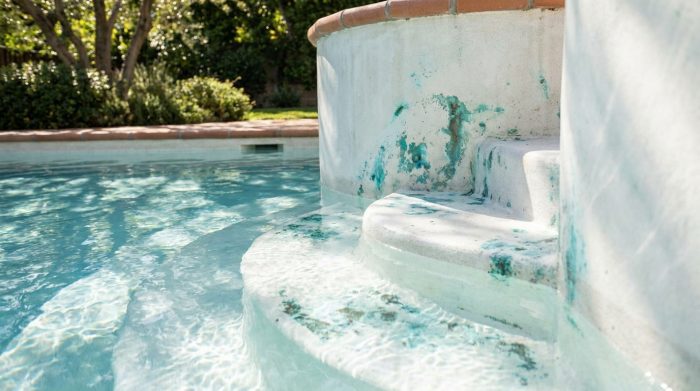
You finally saved up for that backyard oasis. The kids love it, the neighbors are jealous, and summer was looking perfect. Then you noticed it — ugly blue-green stains spreading across your pool’s pristine white plaster. Maybe they’re on the walls, creeping up from the waterline. Maybe they’ve taken over your pool steps. Either way, you’ve got a copper problem.
Quick answer
Pool Stains Copper Removal: How to Get Rid of Blue-Green Pool Stains: You finally saved up for that backyard oasis. The kids love it, the neighbors are jealous, and summer was looking perfect. Then you noticed it — ugly blue-green stains spreading across your pool’s pristine white.
Pool stains copper removal isn’t complicated once you understand what you’re dealing with. But here’s what most pool owners get wrong: they scrub, they drain, they panic — and the stains keep coming back. That’s because copper stains are symptoms, not the disease. If you want those marks gone permanently, you need to attack both the stain AND the source.
I’ve helped hundreds of pool owners tackle this exact problem. The good news? You can fix this yourself over a weekend, typically for under $50 in supplies. Let’s get your pool looking new again.
Why Does Copper Stain Your Pool in the First Place?
Before you grab the chemicals, you need to understand your enemy. Copper enters your pool water in dissolved form — completely invisible. You can’t see it, smell it, or taste it. But when conditions change, that dissolved copper precipitates out of solution and bonds to your pool surfaces.
Think of it like this: copper in water is like sugar dissolved in coffee. Add enough, and eventually it won’t dissolve anymore. The excess settles to the bottom. In your pool, the excess copper settles onto walls, floors, and steps — creating those stubborn blue-green stains.
Common Sources of Copper in Pool Water
Source water (tap or well): This is the number one culprit. Well water especially can contain 0.1-0.5 ppm of copper naturally. Municipal water sometimes has copper too, especially in areas with older plumbing.
Copper-based algaecides: Those “miracle” algaecides that promise to keep your pool crystal clear? Many contain copper sulfate or chelated copper. They work great for algae. They work even better for creating stains.
Corroding heat exchangers: If you have a pool heater with a copper heat exchanger, low pH water slowly dissolves the copper right into your pool. This is expensive damage happening silently.
Copper ionizers: Some pool owners install copper ionizers as “chemical-free” alternatives to chlorine. The ionizers work by releasing — you guessed it — copper ions into the water.
Old copper pipes: If your pool plumbing includes copper sections, aggressive water chemistry can leach copper from the pipes themselves.
How Much Copper Is Too Much?
Here’s your target: keep copper below 0.2 ppm (parts per million). At 0.3 ppm, you’re in the danger zone. Above 0.5 ppm? Stains are almost guaranteed, especially if your pH spikes or you shock the pool.
The frustrating part is that copper can accumulate over months or years. Each time you add water, you add a tiny bit more copper. Eventually, you cross the threshold and wake up to a stained pool.
Identifying Copper Stains vs. Other Pool Stains
Not all pool stains are copper. Treating a rust stain with copper removal chemicals won’t help. Here’s how to tell what you’re dealing with:
Copper Stains
- Color: Blue, green, or teal (sometimes almost turquoise)
- Location: Often near returns, on walls, on steps — anywhere water flows
- Texture: Smooth, appears painted on
- Test: Drop a small amount of ascorbic acid (vitamin C) on the stain. Copper stains lighten immediately.
Iron/Rust Stains
- Color: Brown, orange, reddish-brown
- Location: Random spots, often near metal fixtures
- Texture: Smooth or slightly rough
- Test: Also responds to ascorbic acid, but color is clearly rust-colored
Organic Stains
- Color: Brown, tan, or greenish-brown
- Location: Usually where leaves, berries, or algae sat for extended periods
- Texture: Can be rough or smooth
- Test: Responds to chlorine, not ascorbic acid
Calcium/Scale Deposits
- Color: White or grayish
- Location: Waterline, tile, spillovers
- Texture: Rough, crusty
- Test: Responds to muriatic acid, not ascorbic acid
The vitamin C test takes 30 seconds and tells you exactly what you’re dealing with. Crush a 500mg ascorbic acid tablet, hold it against the stain for 30 seconds. If the stain lightens or disappears, you’re dealing with a metal stain (copper or iron). If nothing happens, it’s organic or calcium.
The Complete Copper Stain Removal Process
Alright, you’ve confirmed you have copper stains. Here’s the step-by-step process to remove them — and keep them gone.
Step 1: Test Your Current Water Chemistry
Before adding anything, you need to know where you’re starting. Test for:
- pH: Should be 7.2-7.6
- Chlorine: Note the current level
- Copper: You need a metal test kit for this
- Total alkalinity: Should be 80-120 ppm
- Calcium hardness: Should be 200-400 ppm
Write these numbers down. You’ll need them.
Step 2: Lower Your Chlorine Level
This is crucial. Chlorine oxidizes metals and can actually set stains deeper into your pool surface. You want chlorine at 0 ppm — or as close as possible — before treating copper stains.
Options to lower chlorine:
- Wait it out: Stop adding chlorine and let sunlight break it down. Takes 2-7 days depending on your levels.
- Add sodium thiosulfate: This neutralizes chlorine quickly. Follow package directions based on your pool volume.
- Partially drain and refill: If chlorine is very high, this might be faster.
Don’t rush this step. Treating copper stains with high chlorine levels reduces effectiveness by 50% or more.
Step 3: Apply Ascorbic Acid Treatment
Ascorbic acid (vitamin C) is your primary weapon against copper stains. It works by chemically reducing the oxidized copper, which releases it from your pool surface back into the water.
Here’s the math: You need approximately 1 pound of ascorbic acid per 10,000 gallons of pool water. For a 20,000-gallon pool, that’s 2 pounds.
Application process:
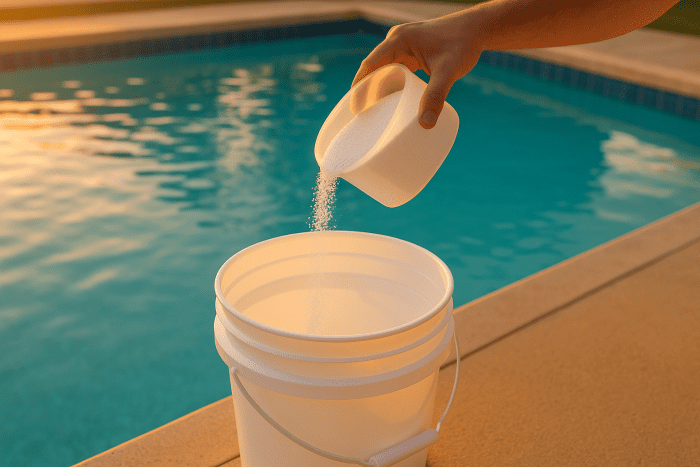
- With the pump running, broadcast the ascorbic acid powder across the entire pool surface
- Pay extra attention to stained areas — sprinkle directly over heavy stains
- Brush the entire pool thoroughly
- Let the pump run for 30 minutes
- Check your stains
Most stains disappear within 30 minutes to 2 hours. Stubborn stains might need a second application.
Pro tip: For concentrated stain spots, make a paste with ascorbic acid and water. Apply directly to the stain, let sit for 10 minutes, then brush.
You can buy pure ascorbic acid powder affordably: Milliard Ascorbic Acid Powder (2 lb) works great and treats most residential pools.
Step 4: Add a Metal Sequestrant Immediately
Here’s where most people mess up. The ascorbic acid removed the stain, but the copper is still in your water — now it’s dissolved again. Within days, it will re-stain your pool unless you neutralize it.
Metal sequestrants (also called chelating agents) grab onto metal ions and hold them in solution. They don’t remove the copper; they prevent it from precipitating onto surfaces.
Add a quality sequestrant immediately after the stains disappear. I recommend Jack’s Magic The Magenta Stuff — it’s specifically designed for copper and works better than generic alternatives.
Dosage: Follow package directions, but typically 32 oz per 20,000 gallons for initial treatment.
Step 5: Raise Chlorine Gradually
Wait at least 24-48 hours after ascorbic acid treatment before adding chlorine. The ascorbic acid needs time to fully dissipate, and the sequestrant needs time to bind with the copper.
When you do add chlorine, go slow:
- Day 1: Raise to 1 ppm
- Day 2: Raise to 2 ppm
- Day 3: Return to normal levels (1-3 ppm)
Shocking your pool immediately after treatment can re-oxidize the copper and cause stains to return within hours. Don’t undo all your work.
Step 6: Balance pH and Alkalinity
With stains gone and chlorine returning to normal, balance your pH and alkalinity:
- Target pH: 7.4-7.6
- Target alkalinity: 100-120 ppm
Keeping pH slightly higher (7.6 vs 7.2) helps prevent copper from plating out onto surfaces. But don’t exceed 7.8, or you’ll create other problems like cloudy water and reduced chlorine effectiveness.
Preventing Copper Stains from Coming Back
Removing stains feels great. Having them return two months later feels terrible. Here’s how to break the cycle permanently.
Identify and Eliminate the Copper Source
Remember those sources I mentioned earlier? You need to find yours.
Test your fill water: Before adding fresh water to your pool, test it for copper. If your tap or well water contains more than 0.1 ppm copper, you’ve found your culprit.
Solution: Use a hose-end pre-filter when adding water. CuZn UC-200 Pool Pre-Filter removes up to 98% of copper from incoming water. Fill it up, run your hose through it, problem solved.
Check your heat exchanger: Look for greenish discoloration on the heat exchanger. If your heater is more than 10 years old and you’re seeing copper stains, the exchanger might be corroding.
Solution: Replace the heat exchanger or have a pool professional inspect it. Also, ensure your pH never drops below 7.2 — acidic water accelerates corrosion.
Stop using copper-based algaecides: Read the labels on your algaecide products. If they contain copper sulfate, copper hydroxide, or “chelated copper,” switch to a copper-free alternative like polyquat algaecide.
Maintain Proper Water Chemistry
Copper stains form more readily when water chemistry is off. Specifically:
- Low pH accelerates copper release from metal components
- High pH and high alkalinity cause copper to precipitate faster
- High chlorine oxidizes copper, making stains worse
Keep your chemistry balanced, and you’re 80% of the way to a stain-free pool.
Use a Maintenance Dose of Sequestrant
Even after removing stains, continue adding sequestrant monthly. A maintenance dose (typically 8-16 oz per 20,000 gallons monthly) keeps any residual copper locked in solution.
Some pool owners skip this step because “the stains are gone.” Then they’re back here six months later wondering why the stains returned. The sequestrant is your insurance policy. Use it.
Consider a Metal Removal System
If your source water is exceptionally high in copper (above 0.3 ppm), or if you have multiple metal sources you can’t eliminate, consider a dedicated metal removal system. These attach to your plumbing and continuously filter metals from your pool water.
They’re more expensive upfront ($200-500) but can save significant frustration and chemical costs over time.
What NOT to Do When Removing Copper Stains
I’ve seen pool owners make these mistakes over and over. Learn from their pain:
Don’t Drain Your Pool
Your first instinct might be to drain the pool and start fresh. Don’t. Draining creates new problems:
- Plaster pools can pop out of the ground without water weight holding them down
- Vinyl liners shrink and crack when dry
- Draining doesn’t address the copper source, so stains will return
Draining should be a last resort for severe staining that doesn’t respond to treatment, not a first step.
Don’t Scrub with Abrasives
Steel wool, pumice stones, and rough brushes might remove surface stains — along with your pool finish. Aggressive scrubbing damages plaster, creates rough spots that attract more stains, and shortens your surface’s lifespan.
Use the chemical approach first. It’s gentler and more effective.
Don’t Add Chlorine During Treatment
I mentioned this above, but it bears repeating. Adding chlorine during ascorbic acid treatment wastes both chemicals and can set stains deeper. Wait until treatment is complete.
Don’t Use Bleach or Harsh Acids Directly on Stains
Bleach (sodium hypochlorite) oxidizes copper, making stains worse. Muriatic acid can etch plaster and doesn’t effectively remove copper stains anyway. Stick with ascorbic acid — it’s specifically designed for this job.
FAQ: Your Copper Stain Questions Answered
How long does it take for copper stains to form in a pool?
Copper stains can appear within hours of a chemistry imbalance, or they can develop slowly over months. The typical scenario: copper accumulates invisibly over time, then you shock the pool or let pH spike, and suddenly stains appear “overnight.” In reality, the copper was already there — the chemistry change just caused it to precipitate.
Can I swim while treating copper stains with ascorbic acid?
Technically, ascorbic acid isn’t harmful to swimmers — it’s just vitamin C. But I recommend staying out of the pool during treatment and for at least 24 hours after. This gives the chemicals time to work without disruption, and chlorine levels will be low during treatment, which creates sanitation concerns.
Will copper stains damage my pool permanently?
No. Copper stains sit on the surface of your pool finish — they don’t penetrate deeply. With proper treatment, they remove completely with no lasting damage. However, if you leave stains untreated for years, or if you use aggressive removal methods like acid washing, you can damage the underlying surface.
How do I know if my stains are copper or algae?
Algae is alive and will feel slimy or fuzzy. Copper stains are smooth and feel no different from unstained areas. Algae responds to chlorine (it dies). Copper stains get worse with chlorine. The vitamin C test confirms it: if the stain lightens with ascorbic acid, it’s copper or iron, not algae.
Can I prevent copper stains if my fill water contains copper?
Yes. Use a hose-end pre-filter to remove copper from incoming water. Add a sequestrant immediately after adding fresh water. Test your pool for copper monthly and treat immediately if levels exceed 0.2 ppm. With consistent maintenance, you can manage even high-copper source water successfully.
Get Your Pool Chemistry Right Every Time
Removing copper stains is satisfying work. But keeping them gone requires consistent water chemistry management — and that’s where most pool owners struggle.
Stop guessing about chemical dosages. Use Pool Chemical Calculator to get exact measurements for your specific pool. Enter your current readings, target levels, and pool volume, and the app tells you precisely what to add and how much.
???? iPhone / iPad: https://itunes.apple.com/us/app/pool-chem-calculator/id1453351222
???? Android: https://play.google.com/store/apps/details?id=com.poolchemicalcalculator.poolcalc
???? Full guide: https://poolchemicalcalculator.com/news/pool-stains-copper-removal/
No more wasted chemicals. No more chemistry swings that cause stains. Just clear, balanced water all season long.
Your pool deserves better than blue-green stains. And you deserve better than spending every weekend fixing chemistry problems. Get your levels dialed in, keep up with maintenance sequestrant, and enjoy your pool the way it’s meant to be enjoyed — sparkling clean.
As an Amazon Associate, Pool Chemical Calculator earns from qualifying purchases. Raises free chlorine quickly without adding stabilizer, which is useful when CYA is already high. Useful for algae cleanup, cloudy water, high bather load, and weekly oxidation routines. Lowers high pH and helps bring alkalinity down when used carefully.
Recommended pool supplies


Get exact pool chemical doses
Pool Chemical Calculator turns your test readings, pool volume, and target levels into exact treatment amounts for chlorine, pH, alkalinity, calcium, stabilizer, salt, and more.
Open the Pool Chemical Calculator app or download it from the App Store and Google Play.