
Pool Calcium Hardness Calculator: The Complete Guide to Balancing Your Water
Keyword: pool calcium hardness calculator
Quick answer
Pool Calcium Hardness Calculator: The Complete Guide to Balancing Your Water: Keyword: pool calcium hardness calculator Quick Answer: To calculate how much calcium hardness increaser your pool needs, use this formula: (Target ppm – Current ppm) × Pool Gallons × 0.00001 = pounds of calcium.
Quick Answer: To calculate how much calcium hardness increaser your pool needs, use this formula: (Target ppm – Current ppm) × Pool Gallons × 0.00001 = pounds of calcium chloride (100% strength) needed. For a 15,000-gallon pool with 150 ppm calcium that you want to raise to 250 ppm, that’s (250 – 150) × 15,000 × 0.00001 = 15 pounds of calcium chloride. But here’s the catch — product strengths vary (typically 77-94%), so always check your label or use our free pool calcium hardness calculator to get exact dosing for your situation.
Calcium hardness is the unsung hero of pool chemistry. Everyone obsesses over chlorine and pH (and they should), but calcium? It quietly protects your pool’s surfaces, equipment, and even your skin. Get it wrong, and you’re looking at etched plaster, corroded metal, or stubborn scale buildup that costs thousands to fix.
I’ve seen pool owners spend $8,000 replastering a pool that was damaged by low calcium over just two seasons. The kicker? A $15 bag of calcium hardness increaser every few months would have prevented the whole mess.
Let’s break down exactly how to test, calculate, and adjust your calcium hardness — with real numbers you can use today.
What Is Calcium Hardness and Why Should You Care?
Calcium hardness measures the amount of dissolved calcium in your pool water, expressed in parts per million (ppm). Think of water as hungry — it wants to absorb minerals until it reaches equilibrium. If your water doesn’t have enough calcium, it’ll steal it from your pool surfaces. Plaster, grout, concrete, even metal fittings become targets.
This aggressive, calcium-hungry water is called “corrosive” or “soft.” And it’s destructive.
On the flip side, water oversaturated with calcium can’t hold any more dissolved minerals. The excess calcium precipitates out and deposits on surfaces — that’s scale. You’ve seen it: white crusty buildup on tile lines, inside pipes, and clogging heater elements.
Neither extreme is good. Your job is finding the sweet spot.
The Real-World Impact of Wrong Calcium Levels
Too Low (under 150 ppm):
- Etching and pitting in plaster and concrete
- Corroded metal equipment (heaters, ladders, rails)
- Faded and rough pool surfaces
- Shortened equipment lifespan
Too High (over 400 ppm):
- White scale deposits on tile and waterline
- Cloudy water that won’t clear
- Reduced filter efficiency
- Clogged heater tubes and circulation issues
Ideal Calcium Hardness Ranges by Pool Type
Here’s where many pool owners get confused. The ideal range depends on your pool’s surface material.
Plaster, Gunite, and Concrete Pools: 200-400 ppm
These surfaces contain calcium. If your water is calcium-deficient, it’ll leach calcium directly from the plaster, causing etching, roughness, and eventual structural damage. Aim for 200-275 ppm as a comfortable target, with 400 ppm as your upper limit.
Vinyl Liner and Fiberglass Pools: 175-275 ppm
Vinyl and fiberglass don’t contain calcium, so there’s nothing for hungry water to attack — at least not the pool surface. But your equipment (heaters, pumps, metal fittings) still needs protection. Keep calcium between 175-275 ppm. Some manufacturers recommend staying under 225 ppm to prevent potential cloudiness issues.
Important: Always check your pool manufacturer’s documentation. Some fiberglass pool brands have specific recommendations that differ from general guidelines.
Hot Tubs and Spas: 150-250 ppm
Higher temperatures accelerate scaling, so spa owners should stay on the lower end of acceptable ranges. Monitor more frequently since evaporation concentrates minerals faster.
How to Test Your Calcium Hardness
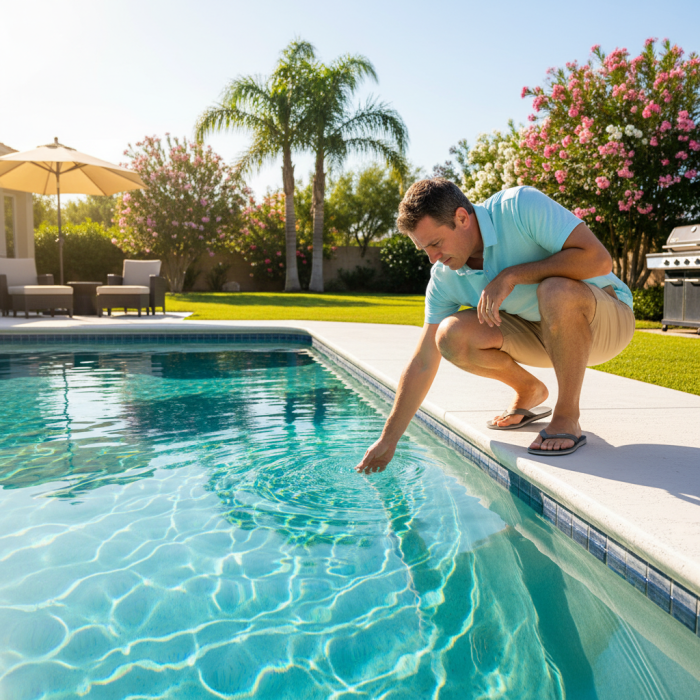
You can’t adjust what you don’t measure. Test your calcium hardness at least monthly — more often if you’ve had issues or recently filled with new water.
Test Strip Method (Quick but Less Precise)
Dip a test strip into your pool water, wait the specified time (usually 15-30 seconds), and compare the color to the chart. Test strips give you a ballpark figure, which works for routine monitoring.
A reliable kit like the JNW Direct Pool and Spa Test Strips tests for calcium hardness along with pH, chlorine, alkalinity, and cyanuric acid — all in one dip.
Liquid Drop Test (Most Accurate)
For precision, liquid reagent test kits beat strips every time. You’ll add drops to a water sample and count until the color changes. Each drop represents a specific ppm increment.
The Taylor K-2006 Complete Test Kit is what professionals use. It’s an investment at around $80-100, but it’ll last years and give you laboratory-grade accuracy for calcium hardness and every other parameter.
Pro Tip: Sample Properly
Collect water from elbow-depth in the middle of your pool, away from return jets and skimmers. Surface water and water near returns gives skewed readings.
The Pool Calcium Hardness Calculator Formula
Time for math. Don’t worry — it’s straightforward once you understand the pieces.
The Basic Formula
Pounds of Calcium Chloride = (Target ppm – Current ppm) × Pool Volume (gallons) × 0.00001
This formula assumes 100% pure calcium chloride, which doesn’t exist in consumer products. Real-world calcium hardness increasers are typically 77-94% calcium chloride. You’ll need to adjust accordingly.
Adjusting for Product Strength
If your product is 77% calcium chloride (common for many pool-store brands):
Actual Product Needed = Calculated Amount ÷ 0.77
So if the formula says you need 1.5 pounds of pure calcium chloride, you’d actually need:
1.5 ÷ 0.77 = 1.95 pounds of a 77% product
Real-World Worked Examples
Let’s run through two scenarios you might actually face.
Example 1: Plaster Pool with Low Calcium
- Pool size: 20,000 gallons
- Current calcium: 120 ppm (way too low)
- Target calcium: 250 ppm (comfortable middle range)
- Product: Calcium chloride at 77% strength
Step 1: Calculate the ppm difference
250 – 120 = 130 ppm needed
Step 2: Apply the formula
130 × 20,000 × 0.00001 = 26 pounds (pure calcium chloride)
Step 3: Adjust for product strength
26 ÷ 0.77 = 33.8 pounds of product needed
That’s a lot! And this is exactly why you should never add more than 10 pounds per 10,000 gallons at once. You’ll need to add this in stages over several days (more on that below).
Example 2: Fiberglass Pool Maintenance Dose
- Pool size: 12,000 gallons
- Current calcium: 180 ppm
- Target calcium: 220 ppm
- Product: Calcium chloride at 94% strength
Step 1: Calculate the ppm difference
220 – 180 = 40 ppm needed
Step 2: Apply the formula
40 × 12,000 × 0.00001 = 4.8 pounds (pure calcium chloride)
Step 3: Adjust for product strength
4.8 ÷ 0.94 = 5.1 pounds of product needed
Much more manageable. You could add this in a single treatment, but I’d still recommend splitting it into two additions for safety.
Don’t Know Your Pool Volume?
Use our free pool volume calculator to get accurate gallons for any pool shape — rectangular, oval, kidney, or freeform.
Step-by-Step: How to Raise Calcium Hardness
You’ve got your numbers. Now here’s how to actually add the chemical without creating problems.
What You’ll Need
- Calcium chloride (calcium hardness increaser)
- 5-gallon bucket
- Protective goggles and gloves
- Test kit or strips
- Calculator or pool calculator app
Step 1: Calculate Your Dose
Use the formula above or our calcium hardness calculator for instant results. Always round down if you’re between amounts — you can add more, but you can’t take it out.
Step 2: Pre-Dissolve the Chemical
Fill a 5-gallon bucket with pool water. Slowly add the calcium chloride while stirring constantly. The product dissolves with an exothermic reaction — it generates heat. This is normal, but avoid splashing the concentrated solution on skin or pool surfaces.
Warning: Never add more than 5 pounds per bucket. The heat can be intense with larger amounts.
Step 3: Add to the Pool with Pump Running
With your circulation pump running, slowly pour the dissolved solution around the pool’s perimeter. Avoid pouring directly onto pool surfaces — especially plaster. Walk around the pool distributing the solution evenly.
Step 4: Wait and Retest
Let the pump run for at least 6-8 hours (overnight is better) before retesting. Calcium takes time to distribute evenly throughout the water.
Step 5: Repeat if Needed
If you needed more than 10 pounds per 10,000 gallons total, wait 24 hours before your next addition. Large calcium increases in a single dose can temporarily cloud water and stress pool equipment.
Safety Notes
- Calcium chloride generates significant heat when dissolving. Use caution and never add water to the dry chemical — always add chemical to water.
- Wear eye protection. Splashes can cause irritation.
- Product strengths vary widely. A bag labeled “Calcium Hardness Increaser” might be 77%, 83%, or 94% calcium chloride. Check the label and adjust your dose accordingly.
- When in doubt, add less. Raising calcium is easy. Lowering it? That’s a nightmare (more on that next).
A quality pool calcium hardness increaser with clear labeling makes this process much easier.
Troubleshooting: What If Your Calcium Is Too High?
This is where things get frustrating. There’s no chemical you can add to lower calcium hardness. Your options:
Option 1: Dilution (Partial Drain and Refill)
The only practical method for most homeowners. Drain a portion of your pool water and replace it with fresh water that has lower calcium content.
The Math:
If your calcium is 600 ppm and you want 300 ppm, you need to replace roughly half your water. Drain 50%, refill, test, and adjust.
The Catch:
If your tap water already has high calcium (common in Arizona, Nevada, parts of Texas, and Florida), dilution doesn’t help much. Test your fill water’s calcium first.
Option 2: Reverse Osmosis Treatment
Companies with mobile RO units can process your pool water and remove dissolved minerals including calcium. This typically costs $300-600 depending on pool size and severity — but it’s faster than draining and conserves water.
Option 3: Flocculant and Vacuuming (Marginal Effectiveness)
Some pool owners try using flocculants to precipitate excess calcium, then vacuum it to waste. Results are inconsistent. This works better for removing debris than dissolved minerals.
Prevention Is Easier Than Cure
Test your fill water before you ever add it to your pool. Many municipal water supplies run 200-400 ppm calcium hardness. Well water can be even higher. If your fill water tests at 350 ppm, you’re starting near your upper limit before adding anything.
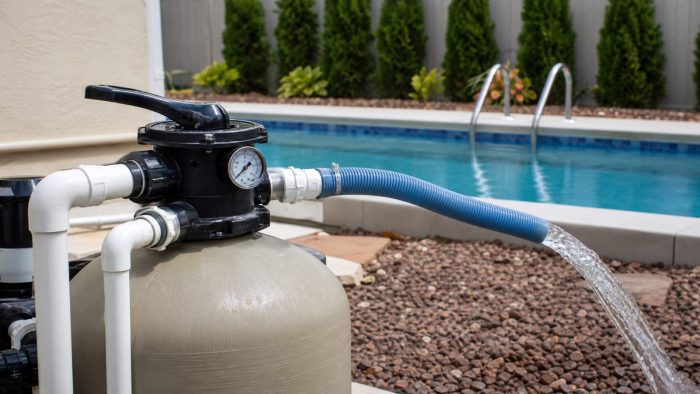
Consider a hose filter for filling if your source water is exceptionally hard.
How Calcium Hardness Relates to Other Chemistry
Calcium hardness doesn’t exist in isolation. It interacts with pH and total alkalinity to determine your water’s overall balance — measured by the Langelier Saturation Index (LSI).
The Simplified Version
- High pH + High Alkalinity + High Calcium = Scale formation
- Low pH + Low Alkalinity + Low Calcium = Corrosive water
If your calcium runs high (say, 350-400 ppm), keep your pH on the lower end of acceptable (7.2-7.4) and alkalinity moderate (80-100 ppm). This helps compensate and keeps your overall water balance neutral.
For complete chemistry balancing, use our pool chemistry calculator app, which factors in all these relationships automatically.
Related Chemistry Guides
- Chlorine Calculator — Get your sanitizer levels dialed in
- pH Calculator — Balance acidity for comfortable swimming
- Alkalinity Calculator — Stabilize your pH swings
Frequently Asked Questions
How often should I test calcium hardness?
Test monthly during swim season and after any significant water addition (rain, refilling, top-offs). Unlike chlorine, calcium hardness changes slowly — you won’t need daily testing. But don’t neglect it either. A seasonal check isn’t enough.
Can I use calcium chloride ice melt to raise pool calcium?
Technically, yes — calcium chloride is calcium chloride. But ice melt products often contain anti-caking agents, dyes, and other additives you don’t want in your pool. The cost savings aren’t worth the risk. Stick with products labeled specifically for pool use.
My pool is brand new. Should I add calcium immediately?
For new plaster pools, your pool builder may recommend keeping calcium slightly lower (180-200 ppm) during the initial 30-day curing period. Fresh plaster releases calcium into the water naturally. Test weekly and adjust once curing completes. Always follow your installer’s specific guidelines.
Does high calcium hardness cause cloudy water?
Yes, but usually in combination with other factors. High calcium plus high pH plus high alkalinity creates conditions where calcium precipitates out of solution, causing cloudiness. If you’re seeing haze and your calcium reads over 400 ppm, the calcium likely contributes — but check pH and alkalinity too.
Why is my calcium hardness climbing even though I haven’t added any?
Evaporation. When water evaporates, minerals stay behind. Every time you top off your pool with more tap water (which contains its own calcium), you’re adding to the total. Over seasons, calcium accumulates. This is why periodic partial drains can be part of normal pool maintenance, especially in hot climates.
Get Precise Calculations Every Time
Doing pool math by hand works, but it’s tedious and leaves room for error. One decimal in the wrong place and you’ve added way too much or too little.
Our free Pool Chemical Calculator app handles calcium hardness, chlorine, pH, alkalinity, and stabilizer calculations instantly. Just enter your pool volume, current levels, and target levels — you’ll get exact doses for the products you actually have.
No registration. No cost. Just accurate pool chemistry in seconds.
Recommended pool supplies
As an Amazon Associate, Pool Chemical Calculator earns from qualifying purchases.

Accurate readings make every chlorine, pH, alkalinity, calcium, and CYA dose safer.
View on Amazon
Raises calcium hardness to reduce corrosive water risk in plaster, concrete, and equipment.
View on Amazon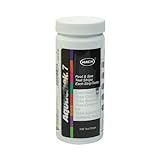
Fast daily checks between full liquid tests, especially during heavy swim season.
View on AmazonGet exact pool chemical doses
Pool Chemical Calculator turns your test readings, pool volume, and target levels into exact treatment amounts for chlorine, pH, alkalinity, calcium, stabilizer, salt, and more.
Open the Pool Chemical Calculator app for iOS, Android, or web.