
How to Lower CYA Levels: The Ultimate Guide to Fixing Over-Stabilization
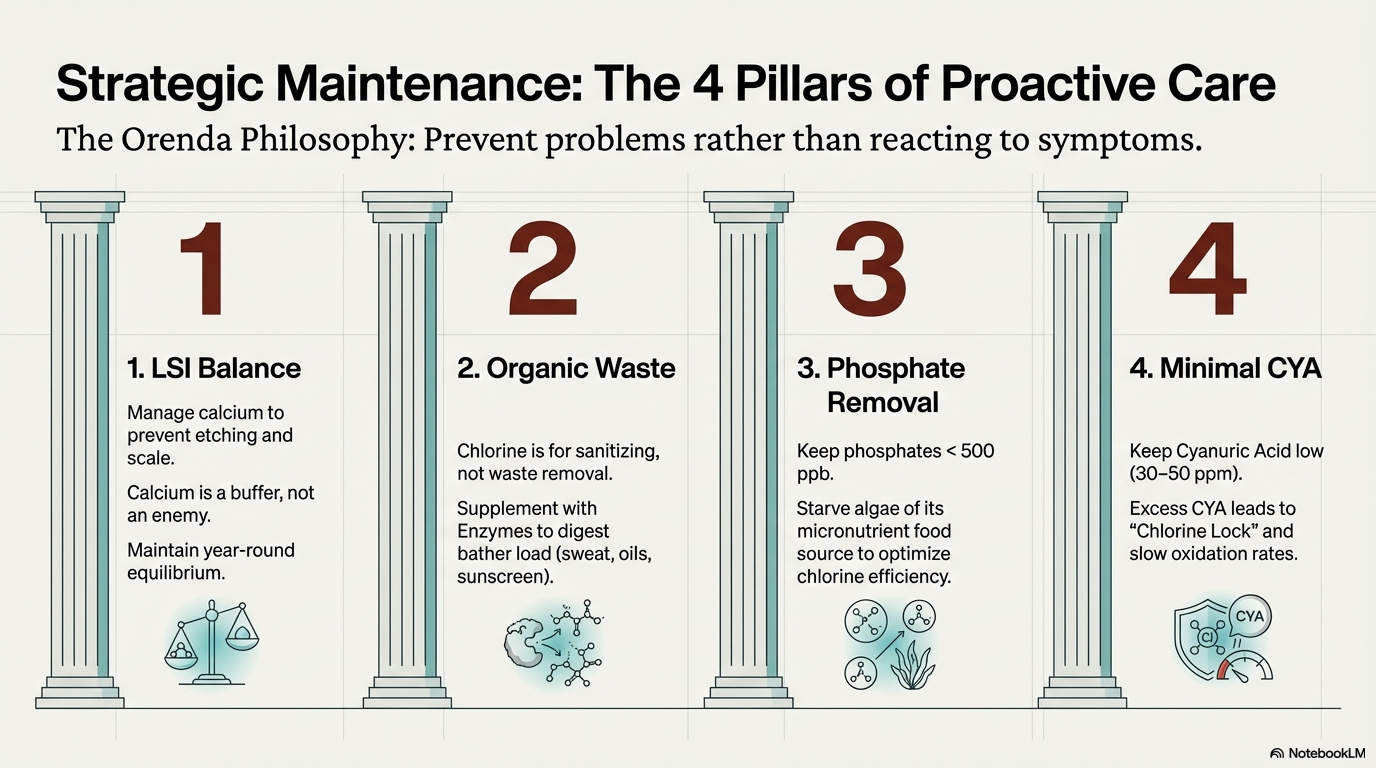
If you’ve been following our 2025 guide to pool chemistry, you know that Cyanuric Acid (CYA) is basically “sunscreen” for your chlorine. It’s essential for protecting your sanitizer from being evaporated by the sun’s UV rays. But there is a very real tipping point where “a little bit of help” turns into a “chemical lockdown.”
When your CYA levels climb too high—a condition known as over-stabilization—your chlorine becomes trapped. It’s still in the water, but it’s chemically “handcuffed” and unable to kill algae or bacteria. If you’re staring at a green pool despite having “high” chlorine readings, you likely have a CYA problem.
In this guide, we’ll look at the safest, most effective ways to lower your stabilizer levels and get your pool back into the safety zone.
The Over-Stabilization Trap: Why High CYA is a Maintenance Nightmare
In the world of the Model Aquatic Health Code (MAHC), the recommended limit for CYA is often 50 ppm, with some residential pros suggesting up to 30–50 ppm for standard pools. Once you cross the 100 ppm mark, you are in the danger zone.
The problem is that most common chlorine products—specifically “Trichlor” pucks and “Dichlor” shock—are “stabilized.” This means they contain CYA. Every time you add a puck to your feeder, you are permanently increasing your CYA level. Unlike water, CYA does not evaporate. It only leaves your pool through splash-out, backwashing, or a physical drain.
High CYA leads to:
-
Chlorine Ineffectiveness: You might need 10 ppm of chlorine just to do the work that 2 ppm would do at lower CYA levels.
-
Cloudy Water: Fine particles aren’t filtered as easily when the chemistry is out of whack.
-
Algae Blooms: Even with chlorine present, algae can thrive because the sanitizer is too slow to react.
How to Test for High CYA Accurately
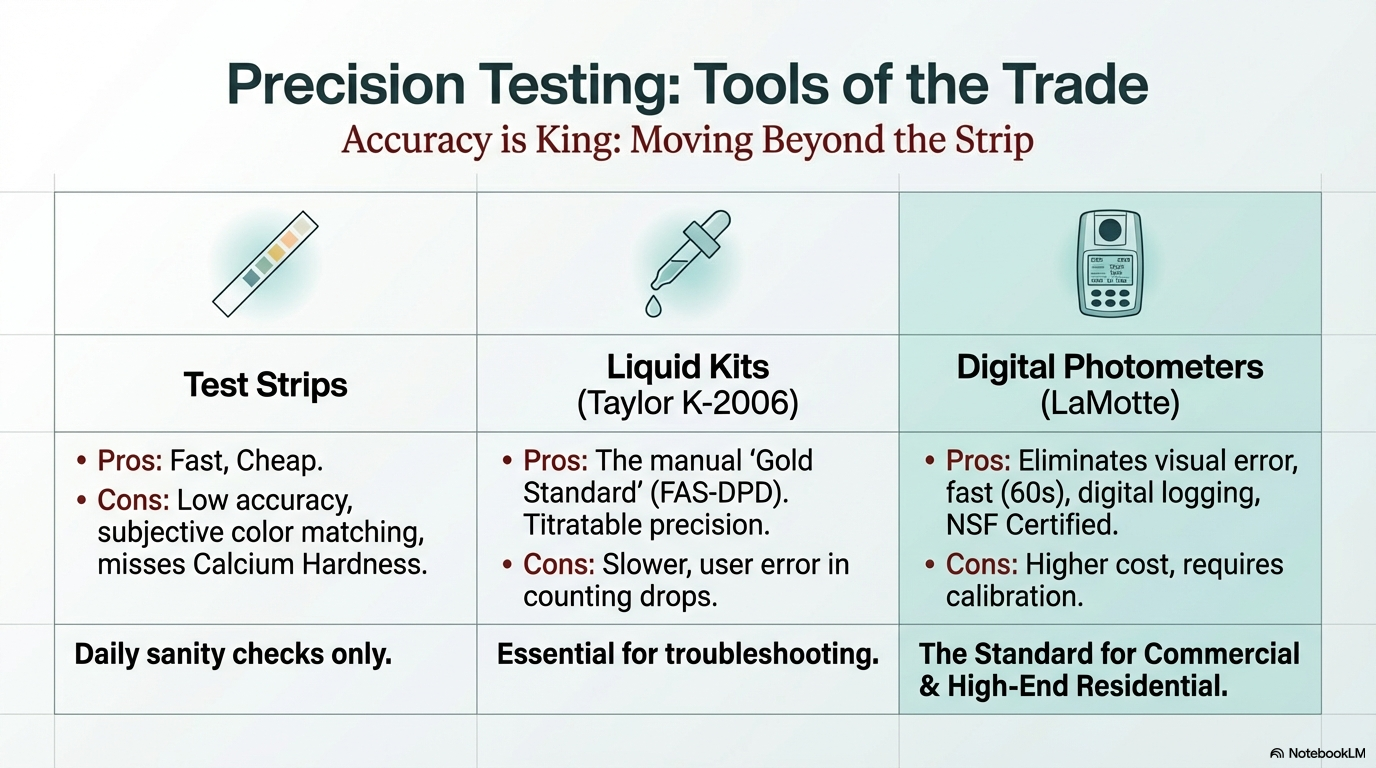
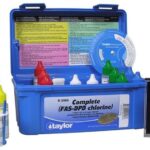
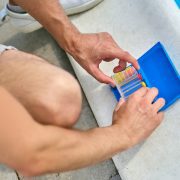
Before you take drastic measures, you need an accurate reading. Many “test strips” struggle to differentiate between 100 ppm and 150 ppm. For a true “source of truth,” use a DPD test kit with a turbidimetric (cloudy water) test or a digital kit like the LaMotte SpinTouch.
Pro Tip: If your test shows the maximum reading immediately, perform a “dilution test.” Mix one part pool water with one part tap water, test that mixture, and multiply the result by two. This gives you a much clearer picture of just how high your levels actually are.
The Gold Standard: The Drain and Refill Method
Currently, the only 100% reliable way to lower CYA is to remove a portion of the high-CYA water and replace it with fresh water.
1. Calculate the Percentage
If your CYA is at 100 ppm and you want it at 50 ppm, you need to replace 50% of your water. The Pool Chemical Calculator can help you determine your total pool volume so you know exactly how much water you’re moving.
2. The Safe Way to Drain
-
Never drain a pool completely without professional guidance. Hydrostatic pressure from the ground can literally pop a pool out of the earth or cause liners to shrink and tear.
-
The “Salami Slice” Approach: If you need to replace 50%, do it in two or three smaller sessions (20% at a time). Drain a foot or two, refill, circulate for 24 hours, and repeat. This is much safer for your pool’s structural integrity.
3. Use the “Water Exchange” Method
If you have a concrete pool, you can sometimes “exchange” water by placing a garden hose in the deep end while simultaneously pumping water out from the surface. Since high-CYA water is often cooler and denser, it tends to settle, allowing you to pull out the “bad” water while adding the “good.”
Alternative Solutions: CYA Reducers and Reverse Osmosis
You may see “CYA Reducer” packets at the store. These use specialized enzymes to “eat” the cyanuric acid.
-
The Catch: These are notoriously finicky. They require specific water temperatures (usually above 70°F), a pH around 7.2, and zero chlorine in the water to work. For most homeowners, the cost and the narrow window of success make draining and refilling the more practical choice.
-
Reverse Osmosis (RO) Filtration: In drought-prone areas like Arizona or California, mobile RO trailers can filter your water at the curb, removing CYA and calcium without wasting water. It’s expensive but eco-friendly.
How to Prevent CYA from Climbing Again
Once you’ve hit that target 30–50 ppm range, keep it there by changing your habits:
-
Switch to Unstabilized Chlorine: Use Liquid Chlorine (Sodium Hypochlorite) or Cal-Hypo for your weekly sanitization. Neither of these contains CYA.
-
Limit the Pucks: Use Trichlor pucks only when you’re going on vacation or if you specifically need to raise your CYA.
-
Monitor Monthly: Use the Pool Chemical Calculator to log your CYA levels once a month. Catching a climb early is much easier than fixing a 150 ppm disaster.
Conclusion: Take Control of Your Stabilizer
High CYA is the “silent killer” of pool clarity. It’s frustrating to spend money on chlorine that isn’t working, but by following a disciplined drain-and-refill schedule, you can reset your chemistry and enjoy a safer, clearer swim.
Don’t guess your dosage. Use the Pool Chemical Calculator to track your CYA trends and calculate exactly how much water you need to exchange to hit your goals.
Ready to fix your water? Download the Pool Chemical Calculator today to get your pool back in balance! Download on the Google Play Store
Internal Links to Explore:
-
The LSI Calculator Guide: Learn how CYA levels affect your overall water balance and LSI score.
-
Why is my Pool Cloudy?: Explore the connection between over-stabilization and water clarity.
Recommended Products
As an Amazon Associate, we earn from qualifying purchases.
- Taylor K-2006 Complete Pool Water Test Kit ($90) — The gold standard of pool test kits. Tests free/combined chlorine, pH, alkalinity, calcium hardness, and CYA.
- AquaChek 7-Way Pool & Spa Test Strips (100 ct) ($17) — Quick and easy 7-way test strips for daily spot checks between comprehensive testing.
- Pool Mate Cyanuric Acid Pool Stabilizer (7 lbs) ($30) — Protects chlorine from UV breakdown. Without stabilizer, you can lose 90% of chlorine to sunlight in hours.
- In The Swim 3-Inch Chlorine Tablets (25 lbs) ($70) — Stabilized trichlor tablets for consistent, slow-dissolving chlorination. Lasts most pools an entire season.