
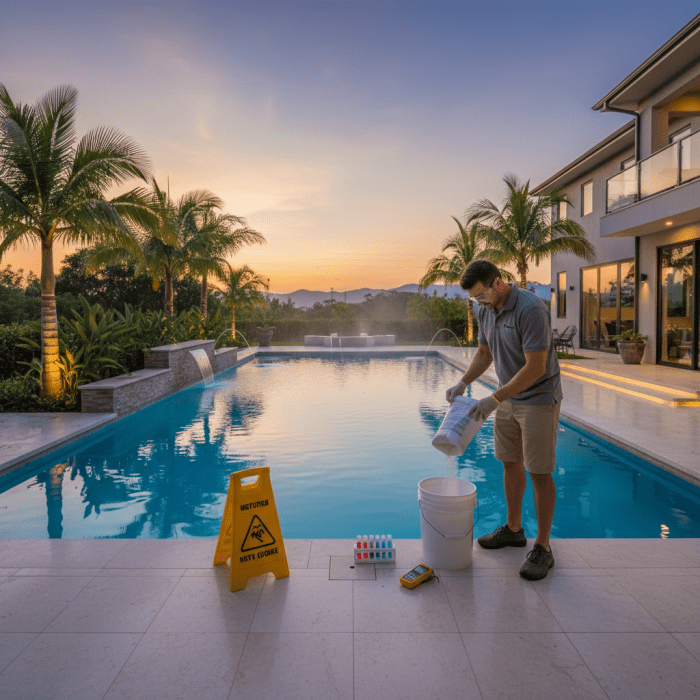
Can You Over Shock a Pool? Yes, and Here’s What Happens When You Do
So you’ve got a green pool, cloudy water, or maybe you just want to wipe out whatever’s brewing in the water. Your first thought is usually simple: add more shock and be done with it.
Quick answer
Can You Over Shock a Pool? Yes, and Here’s What Happens When You Do: So you’ve got a green pool, cloudy water, or maybe you just want to wipe out whatever’s brewing in the water. Your first thought is usually simple: add more shock and be done with it. Bad move. Yes, you can over shock.
Bad move.
Yes, you can over shock a pool. And when you do, the result usually isn’t “extra clean water.” It’s a pool nobody should swim in, irritated skin and eyes, wasted chemicals, and sometimes damage to liners or equipment if you make a habit of it.
The good news is this is fixable. And if you understand what over-shocking actually does, you’ll stop guessing and start dosing your pool correctly.
What pool shock actually does
Pool shock is a high-dose sanitizer treatment, usually calcium hypochlorite, dichlor, or liquid chlorine, designed to raise chlorine fast enough to kill algae, bacteria, and chloramines.
In a normal maintenance routine, your free chlorine should usually sit around 1 to 3 ppm. Shocking a pool temporarily pushes chlorine much higher so it can burn through contaminants and reset the water.
That part is fine.
The problem starts when people assume more shock means faster results. Pool chemistry doesn’t work like that. Doubling or tripling the dose doesn’t magically solve the problem faster. Sometimes it just creates a new problem.
Yes, you can over shock a pool
A pool is considered over-shocked when chlorine levels climb far past what the treatment actually requires. In many backyard pools, that means chlorine can shoot to 10, 20, 30 ppm or more above where it should be, especially when someone dumps in extra bags “just to be safe.”
And that’s where things get ugly.
What happens if you add too much shock
1. Chlorine gets way too high for swimming
This is the biggest immediate issue.
If your chlorine is too high, the water can cause:
- – burning eyes
- – itchy skin
- – dry skin and hair
- – bleached swimsuits
- – that harsh chemical smell people think means “clean”
It doesn’t mean clean. It usually means the water is out of balance or overloaded.
As a rule of thumb, you shouldn’t swim until free chlorine is back in a safe range. For most residential pools, that’s generally 1 to 4 ppm, though many people wait until it’s under 5 ppm after shocking.
2. You can damage liners, covers, and equipment
One accidental over-shock probably won’t destroy your pool overnight. But repeated over-shocking is rough on materials.
High chlorine levels can speed up wear on:
- – vinyl liners
- – automatic covers
- – pump seals
- – gaskets and O-rings
- – heater components
- – skimmer parts
Think of chlorine like bleach, because in a lot of ways that’s basically what you’re dealing with. A little in the right amount helps. Too much starts chewing through things.
3. Your water can get cloudy or weird-looking
People expect shock to clear a pool instantly. Sometimes it does. But when you overdose it, the water can turn cloudy, hazy, or just look off for a while.
That can happen because:
- – high chlorine reacts with metals in the water
- – pH gets pushed out of range
- – calcium comes out of solution
- – dead contaminants overwhelm the filter
So now you’ve got a pool that’s over-chlorinated and ugly.
4. You waste money for no reason
Shock isn’t free. And tossing in extra bags because it “feels right” is one of the fastest ways to burn money on pool care.
Most pool owners who over shock aren’t dealing with a chlorine problem anyway. They’re usually dealing with one of these:
- – incorrect pool volume estimate
- – poor circulation
- – dirty filter
- – high cyanuric acid
- – bad pH or alkalinity
- – algae that needs a full treatment plan, not random chemical dumping
How much shock is too much?
It depends on the pool size, the shock type, and the reason you’re shocking.
But here’s a simple example using a common cal-hypo shock product:
| Pool Size | Typical Routine Shock Dose | Likely Too Much |
|—|—|—|
| 10,000 gallons | 1 lb | 2+ lbs without a reason |
| 15,000 gallons | 1.5 lbs | 3+ lbs without a reason |
| 20,000 gallons | 2 lbs | 4+ lbs without a reason |
If you’re doing a heavy algae cleanup, those numbers can change. But for normal maintenance, more isn’t better.
And if you don’t know your exact pool volume, you’re already guessing. That’s where a calculator helps a lot.
Use the Pool Chemical Calculator app for Android or download it on iPhone to get the correct dose for your actual pool size. It’s way better than eyeballing it in the backyard with a half-open bag of shock.
Signs you over shocked your pool
If you’re not sure whether you went too far, watch for these signs:
- – chlorine test reads extremely high or maxes out the kit
- – pool smells very strong
- – eyes burn almost immediately near the water
- – swimsuits start fading
- – water looks cloudy after shocking
- – your skin feels irritated after brief contact
And if you’re using cheap test strips, this gets harder. A better liquid test kit gives you a much clearer picture.
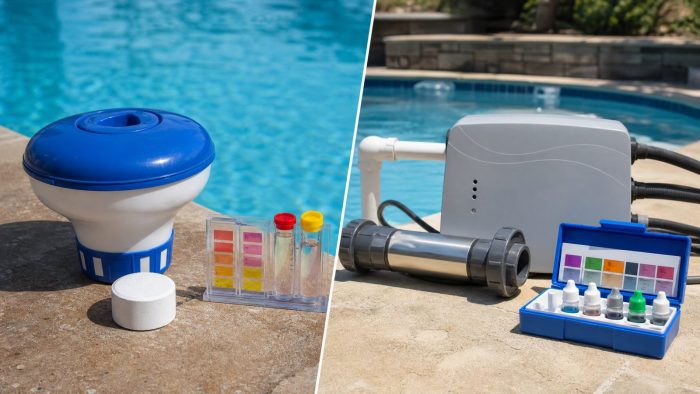
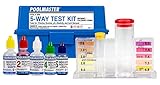
A solid pick is the Taylor K-2006 test kit. It’s not the cheapest option, but it’s one of the best tools you can buy if you want real numbers instead of guesswork.
How to fix an over-shocked pool
The nice thing about too much chlorine is that it usually comes down on its own. You just need patience, sunlight, and a little common sense.
Option 1: Wait it out
In many cases, this is the best move.
Sunlight burns off chlorine naturally, especially if stabilizer levels aren’t sky-high. Leave the pool uncovered, keep the pump running, and retest later.
This works well if the chlorine is high, but not insane.
Option 2: Use a chlorine neutralizer
If chlorine is way too high and you need the pool usable sooner, a neutralizer can bring it down faster.
Products like chlorine neutralizer with sodium thiosulfate are designed for exactly this. But don’t go crazy with it either. Over-correcting can leave you with zero sanitizer, which opens the door to algae and bacteria.
Option 3: Dilute with fresh water
If levels are extremely high, partially draining and refilling the pool can help.
This isn’t always the first choice, but it works. And if your water already has other chemistry problems, dilution may solve more than one issue at the same time.
Option 4: Check your full chemistry, not just chlorine
Sometimes the pool still looks bad even after chlorine drops. That’s because the real issue isn’t only chlorine. You also need to check:
- – pH
- – total alkalinity
- – cyanuric acid
- – calcium hardness
If you’re trying to figure out exact adjustments, use the Pool Chemical Calculator website instead of stacking random chemicals and hoping for the best.
How to shock a pool the right way
If you want clear water without overdoing it, follow this order.
Step 1: Test the water first
Always test before shocking. Always.
You need to know:
- – current free chlorine
- – pH
- – combined chlorine if possible
- – stabilizer level if chlorine keeps disappearing fast
If your chlorine is already decent and your pH is a mess, shock may not even be the first thing to fix.
Step 2: Calculate the actual dose
Don’t guess based on vibes. Don’t use “about one bag.” Calculate it from your pool volume and the product directions.
Step 3: Add shock at dusk or night
Sunlight burns through chlorine fast. Shocking at night gives it time to work.
Step 4: Run the pump long enough
Let the pool circulate for at least 8 hours after shocking so the chemical distributes evenly.
Step 5: Retest before swimming
Don’t assume it’s safe because the water looks fine. Test it.
That’s the whole game.
Best products that help prevent over-shocking mistakes
If you want fewer chemistry screwups, these help a lot:
- – Taylor K-2006 test kit for accurate readings
- – pool chlorine neutralizer if you accidentally overshoot
- – calcium hypochlorite pool shock if you need a reliable granular shock option
- – liquid chlorine for fast sanitizing without added stabilizer
You don’t need every product under the sun. But a good test kit and the right dosing tool save a lot of frustration.
FAQ
Can you swim in an over-shocked pool?
No, not until chlorine drops back into a safe range. High chlorine can irritate skin, eyes, and lungs, especially for kids.
How long does it take for chlorine to drop after shocking?
Usually 8 to 24 hours for a normal shock treatment, but it can take longer if you added too much. Sunlight, temperature, and stabilizer levels all matter.
Will over-shocking bleach a pool liner?
Repeated over-shocking can absolutely fade or weaken a vinyl liner over time. One mistake probably won’t ruin it, but it’s not something you want to make a habit of.
What chlorine level is too high to swim?
Most pool owners wait until free chlorine is below 5 ppm, and ideally in the normal 1 to 3 ppm range before swimming.
Can too much shock make pool water cloudy?
Yes. High chlorine can react with metals, affect pH, or create temporary cloudiness while contaminants get oxidized and filtered out.
Bottom line
So, can you over shock a pool?
Yep. Easily.
And when you do, you don’t get bonus-clean water. You get wasted chemicals, irritated swimmers, and a pool that’s out of commission longer than it needed to be.
Test first. Dose correctly. Retest before swimming.
That’s how you keep your pool clear without turning it into a bleach bath.
If you want the fast, no-guesswork version, use the Pool Chemical Calculator website or grab the app on Android or iPhone.
“`json
{
“@context”: “https://schema.org”,
“@type”: “FAQPage”,
“mainEntity”: [
{
“@type”: “Question”,
“name”: “Can you over shock a pool?”,
“acceptedAnswer”: {
“@type”: “Answer”,
“text”: “Yes. Adding too much shock can push chlorine far above safe swimming levels, irritate skin and eyes, damage pool materials over time, and waste chemicals.”
}
},
{
“@type”: “Question”,
“name”: “How long should you wait to swim after shocking a pool?”,
“acceptedAnswer”: {
“@type”: “Answer”,
“text”: “Wait until free chlorine returns to a safe range, usually under 5 ppm, and ideally between 1 and 3 ppm for normal swimming.”
}
},
{
“@type”: “Question”,
“name”: “Can too much pool shock damage a liner?”,
“acceptedAnswer”: {
“@type”: “Answer”,
“text”: “Repeated over-shocking can fade or weaken a vinyl liner and put extra stress on seals, gaskets, and other pool equipment.”
}
},
{
“@type”: “Question”,
“name”: “How do you lower chlorine after adding too much shock?”,
“acceptedAnswer”: {
“@type”: “Answer”,
“text”: “You can wait for sunlight to burn it off naturally, use a chlorine neutralizer, or partially drain and refill the pool if levels are extremely high.”
}
}
]
}
“`
“`json
{
“@context”: “https://schema.org”,
“@type”: “HowTo”,
“name”: “How to shock a pool without overdoing it”,
“step”: [
{
“@type”: “HowToStep”,
“name”: “Test the water first”,
“text”: “Measure free chlorine, pH, and other key chemistry readings before adding shock.”
},
{
“@type”: “HowToStep”,
“name”: “Calculate the correct dose”,
“text”: “Use your pool volume and product directions to determine the right amount of shock.”
},
{
“@type”: “HowToStep”,
“name”: “Add shock at dusk”,
“text”: “Shock the pool in the evening so sunlight does not burn through the chlorine too quickly.”
},
{
“@type”: “HowToStep”,
“name”: “Run circulation”,
“text”: “Keep the pump running for at least 8 hours to distribute the shock evenly.”
},
{
“@type”: “HowToStep”,
“name”: “Retest before swimming”,
“text”: “Make sure chlorine is back in a safe swimming range before anyone gets in the water.”
}
]
}
“`
As an Amazon Associate, Pool Chemical Calculator earns from qualifying purchases. Raises free chlorine quickly without adding stabilizer, which is useful when CYA is already high. Accurate readings make every chlorine, pH, alkalinity, calcium, and CYA dose safer. Useful for algae cleanup, cloudy water, high bather load, and weekly oxidation routines.Recommended pool supplies


Get exact pool chemical doses
Pool Chemical Calculator turns your test readings, pool volume, and target levels into exact treatment amounts for chlorine, pH, alkalinity, calcium, stabilizer, salt, and more.
Open the Pool Chemical Calculator app or download it from the App Store and Google Play.