
Pool After Heavy Rain, What to Do First So It Doesn’t Turn Green
Heavy rain can wreck a pool faster than most people expect. One storm dumps in dirt, leaves, pollen, phosphates, and a bunch of extra water. Then it dilutes your chlorine and shoves your chemistry out of range.
Quick answer
Pool After Heavy Rain, What to Do First So It Doesn’t Turn Green: Heavy rain can wreck a pool faster than most people expect. One storm dumps in dirt, leaves, pollen, phosphates, and a bunch of extra water. Then it dilutes your chlorine and shoves your chemistry out of range. That’s.
That’s why a pool can look fine the night after a storm and like a swamp by the next afternoon.
The good news is this usually isn’t hard to fix if you move fast.
If your pool got hammered by rain, here’s the order that actually makes sense.
What heavy rain does to pool water
Rain doesn’t just “add water.” It changes the whole balance.
After a big storm, you are usually dealing with some mix of these problems:
- Lower chlorine because the water got diluted
- More debris in the water and skimmer baskets
- pH and alkalinity drift
- Mud, pollen, or fine dirt that clouds the pool
- Extra contaminants from runoff, especially if the deck drains toward the pool
- Higher algae risk if warm weather follows the storm
Think of heavy rain like somebody sneaking into your backyard and tossing in half a bag of dirt and a few gallons of untreated water. That is basically the problem.
What to do after heavy rain hits your pool
Do these steps in order. It saves time. And it keeps you from throwing chemicals at the wrong problem.
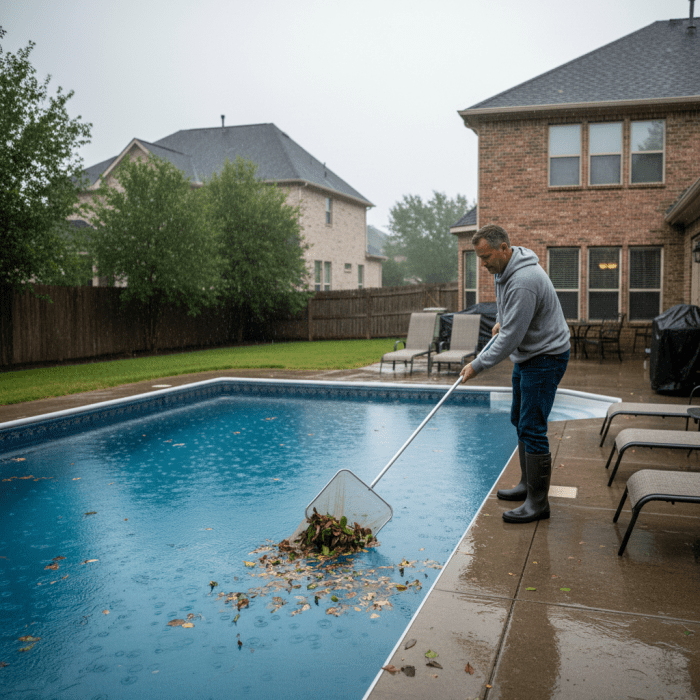
1. Remove leaves and debris first
Start with the obvious mess.
Use a leaf rake or skimmer net to remove:
- Leaves
- Twigs
- Bugs
- Mulch
- Anything sitting on the bottom
If you leave that junk in the water, it starts breaking down and burning through chlorine.
A good heavy-duty leaf rake helps a lot here:
- Pool leaf rake:
2. Empty the skimmer and pump baskets
Storm cleanup clogs baskets fast. If the baskets are packed, circulation drops. Then everything gets worse.
Check and empty:
- Skimmer basket
- Pump basket
- Cleaner basket, if your cleaner has one
This takes two minutes. Don’t skip it.
3. Check the water level
If the rain pushed the pool level too high, your skimmer may not work right.
For most pools, the water should sit around the middle of the skimmer opening.
If it is much higher than that, lower the water before you do the rest of your cleanup. Otherwise the skimmer cannot pull surface debris the way it should.
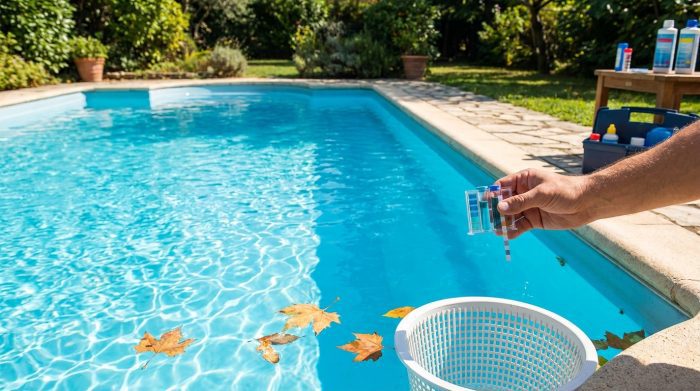
4. Test the chemistry before dumping in chemicals
This is where people get impatient and do something dumb.
Don’t shock first and test later. Test first.
Check at least:
- Free chlorine
- pH
- Total alkalinity
- Stabilizer if chlorine has been disappearing fast lately
These are solid targets for most residential pools:
- Free chlorine: 1 to 3 ppm
- pH: 7.2 to 7.8
- Total alkalinity: 80 to 120 ppm
- Cyanuric acid: often 30 to 50 ppm for non-salt pools
If you need a reliable kit, this one is still the gold standard:
- Taylor K-2006 test kit:
And if you want the chemical math done for you instead of scribbling numbers on a napkin, use the Pool Chemical Calculator app:
- iPhone:
- Android:
5. Bring chlorine back up if rain diluted it
This is the main move after a storm.
If your chlorine is low, raise it back into range right away. If the water looks dull, smells odd, or took in a lot of organic debris, you may want to shock the pool instead of making a tiny correction.
A basic rule:
- Small storm, water still clear: bring chlorine back to normal range
- Big storm, lots of debris, water turning dull or cloudy: shock it
Liquid chlorine is the easiest post-storm fix for most backyard pools because it acts fast and does not add stabilizer.
- Liquid pool chlorine:
If you are not sure how much to add, use the app calculator instead of guessing high.
6. Brush the walls and floor
Rain usually leaves behind fine dirt or the early start of algae film, especially in corners, steps, and shady spots.
Brush the pool after you adjust chlorine. Get the walls, floor, steps, and behind ladders.
This part matters more than people think. A pool brush turns hidden grime into suspended particles your filter can actually catch.
- Nylon pool brush:
7. Run the pump longer than usual
After heavy rain, your pool needs extra circulation.
Run the pump for at least 8 to 12 hours after cleanup. If the pool got really dirty or cloudy, running it overnight is even better.
The goal is simple. Move the water, distribute the chemicals, and let the filter do its job.
8. Vacuum if dirt settled on the bottom
If you can see a layer of dirt on the floor, vacuum it out before it keeps breaking apart.
Manual vacuuming is slower, sure. But it beats letting the filter struggle with a pile of mud for two days.
If you need a manual kit:
- Manual pool vacuum head:
9. Backwash or clean the filter if pressure rises
Storm cleanup loads up the filter fast.
Watch your filter pressure gauge. If pressure is around 8 to 10 psi over clean starting pressure, it is time to clean or backwash.
That depends on your filter type:
- Sand filter: backwash
- DE filter: backwash and recharge if needed
- Cartridge filter: hose it off thoroughly
If pressure is normal, leave it alone. But keep an eye on it during storm cleanup.
Should you shock your pool after heavy rain?
Sometimes yes. Not always.
Shock the pool after heavy rain if:
- Free chlorine tested low
- The water looks cloudy or slightly green
- A lot of leaves, dirt, or runoff got in
- The storm hit during hot weather and algae risk is high
- The pool has had water quality issues recently
You probably don’t need to shock if:
- The rain was brief
- Water is still clear
- Chemistry is still in range
- Chlorine held up fine
This is one of those cases where testing saves money.
Can rain make a pool turn green?
Absolutely.
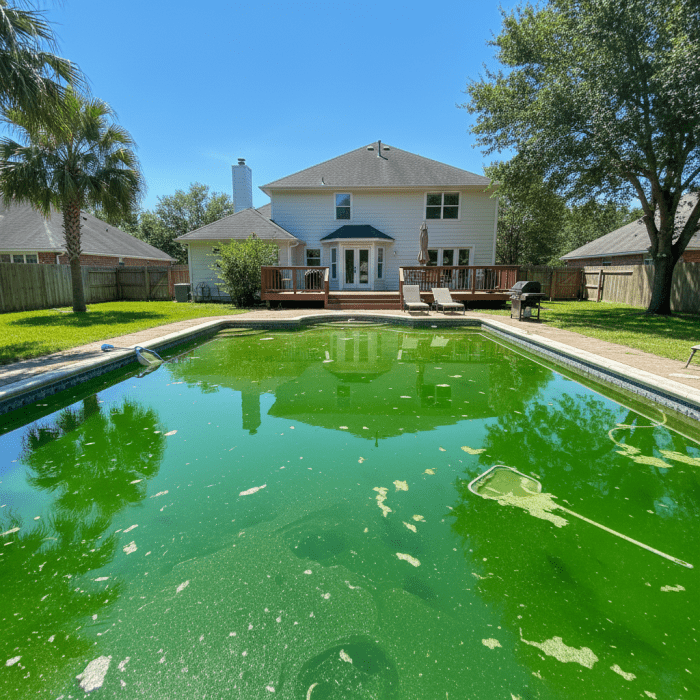
Rain itself is not green, obviously. The problem is what follows it. Low chlorine plus warm water plus contaminants equals algae opportunity.
That’s why waiting until tomorrow can bite you. Storm cleanup is easier the same day.
What if your pool is cloudy after rain?
Cloudy water after rain usually means one of three things:
- Fine dirt and debris are suspended in the water
- Chlorine got too low
- pH or alkalinity drifted out of range
Usually the fix is:
1. Remove debris
2. Test and correct chemistry
3. Brush
4. Run the pump longer
5. Clean the filter if pressure rises
Pool clarifier can help sometimes, but it should not be the first move.
- Pool clarifier:
How soon can you swim after heavy rain?
If there’s thunder or lightning, stay out. No debate there.
After the storm passes, you can usually swim once:
- The water is clear enough to see the bottom
- Chlorine is back in range
- pH is in range
- Debris has been removed
- Any shock treatment has had time to circulate and drop to a safe level
If you shocked the pool, wait until chlorine returns to normal swimming range.
Best post-rain pool routine for busy owners
If you want the short version, here it is:
- Skim debris
- Empty baskets
- Lower water if needed
- Test the water
- Raise chlorine or shock if needed
- Brush the pool
- Run the pump longer
- Vacuum and clean the filter if needed
That’s the whole playbook.
Nothing fancy. Just the right order.
FAQ
What should I do to my pool immediately after heavy rain?
Start by removing debris, emptying baskets, and checking water level. Then test chlorine, pH, and alkalinity before adding chemicals.
Should I shock my pool after every rainstorm?
No. Shock is usually only needed if chlorine is low, the water is cloudy, or the pool took in a lot of organic debris or runoff.
Can heavy rain lower chlorine in a pool?
Yes. Heavy rain dilutes chlorine and can add contaminants that use up the chlorine you had left.
Why is my pool cloudy after heavy rain?
Usually because of fine dirt, diluted sanitizer, or chemistry drift. Testing, brushing, circulation, and filter cleanup usually fix it.
How long should I run my pool pump after heavy rain?
At least 8 to 12 hours is a good starting point. If the pool is dirty or cloudy, run it overnight.
How-To Schema
1. Skim leaves, bugs, and storm debris from the surface and floor.
2. Empty skimmer and pump baskets.
3. Lower the water level if it is above the middle of the skimmer.
4. Test free chlorine, pH, and total alkalinity.
5. Add chlorine or shock if levels are low or the pool looks dull.
6. Brush the walls, steps, and floor.
7. Run the pump for 8 to 12 hours or overnight.
8. Vacuum settled dirt and clean the filter if pressure rises.
Final take
If your pool got hit by heavy rain, do not overthink it. Clean out the junk, test the water, get chlorine back where it belongs, and keep the water moving.
That is how you stop a one-day storm mess from turning into a three-day algae cleanup.
And if you want the fastest way to calculate post-rain chemical adjustments without second-guessing yourself, use the Pool Chemical Calculator app:
- iPhone:
- Android:
As an Amazon Associate, Pool Chemical Calculator earns from qualifying purchases. Raises free chlorine quickly without adding stabilizer, which is useful when CYA is already high. Accurate readings make every chlorine, pH, alkalinity, calcium, and CYA dose safer. Useful for algae cleanup, cloudy water, high bather load, and weekly oxidation routines.Recommended pool supplies


Get exact pool chemical doses
Pool Chemical Calculator turns your test readings, pool volume, and target levels into exact treatment amounts for chlorine, pH, alkalinity, calcium, stabilizer, salt, and more.
Open the Pool Chemical Calculator app or download it from the App Store and Google Play.