How to Calculate the Volume of a Swimming Pool: From Simple to Complex Shapes

Calculating the volume of your swimming pool is an essential task, whether you are a pool owner or a professional. Knowing the volume is crucial for determining the right amount of chemicals to use, heating or cooling requirements, and filtration needs. This article will guide you through the process of calculating the volume of swimming pools, starting with simple shapes and moving on to more complex ones. Grab your measuring tape, a pen, and some paper – let’s dive in!

I. Simple Shapes:

  1. Rectangular Pools

The most straightforward pool shape to calculate the volume for is a rectangular pool. Follow these steps:

a. Measure the length, width, and depth of the pool (in feet or meters). b. Multiply these measurements together to find the volume in cubic feet (or cubic meters): Volume = Length × Width × Depth

  1. Circular Pools

Circular pools are also relatively simple to calculate. Here are the steps:

a. Measure the diameter (across the widest part) and depth of the pool (in feet or meters). b. Calculate the radius by dividing the diameter by 2. c. Use the formula for the volume of a cylinder: Volume = π × Radius² × Depth, where π is a mathematical constant (approximately 3.14159).

II. Complex Shapes:

  1. Oval Pools


For an oval pool, follow these steps:

a. Measure the major axis (longest diameter) and minor axis (shortest diameter) of the pool, as well as the depth (in feet or meters). b. Calculate the volume using the following formula: Volume = π × (Major Axis / 2) × (Minor Axis / 2) × Depth

  1. Kidney-Shaped Pools

Calculating the volume of a kidney-shaped pool involves a few more steps:

a. Measure the lengths of the two axes (longest and shortest diameters) and the depth at the deepest and shallowest points of the pool. b. Calculate the average depth by adding the deepest and shallowest depths and dividing by 2: Average Depth = (Deepest Depth + Shallowest Depth) / 2 c. Use the formula for an oval pool (from above) with the average depth to calculate the volume.

  1. Free-Form Pools

For free-form pools, the best way to estimate the volume is by dividing the pool into smaller sections (such as rectangles, circles, or triangles) and calculating the volume of each section separately. Afterward, add the volumes together to find the total pool volume. Remember to use the appropriate formulas for each shape and to account for varying depths by using average depths when needed.

III. Considerations for Varying Depths

Many swimming pools have varying depths, such as a shallow end and a deep end. In these cases, it is essential to measure the depths at the shallowest and deepest points and use average depths in the volume calculations. For rectangular and oval pools, follow the steps mentioned earlier for calculating average depths. For more complex shapes, you might need to divide the pool into smaller sections and apply the same concept.

Conclusion:

Calculating the volume of a swimming pool is crucial for proper maintenance and operation. By following the steps and formulas outlined in this article, you can determine the volume of various pool shapes, from simple rectangles to more intricate free-form designs. Remember to consider the varying depths and always measure carefully to ensure accurate calculations. Happy swimming!


Recommended Products

As an Amazon Associate, we earn from qualifying purchases.

How to Raise pH in a Swimming Pool: A Comprehensive Guide for Pool Owners

Maintain the Perfect pH Balance for a Healthy and Enjoyable Swimming Experience

Introduction

Maintaining the ideal pH level in your swimming pool is crucial to ensuring a comfortable swimming experience, protecting your pool equipment, and promoting effective sanitization. The pH scale ranges from 0 to 14, with 7 being neutral. The optimal pH level for a swimming pool is typically between 7.2 and 7.8. If your pool’s pH is too low, it can lead to corrosion of pool equipment, skin and eye irritation, and reduced effectiveness of sanitizing chemicals. This article will provide you with a comprehensive guide on how to raise the pH level in your swimming pool to achieve a well-balanced and healthy swimming environment.

Step 1: Test Your Pool Water

Begin by testing your pool water to determine the current pH level. You can use a pool test kit or test strips, which are readily available at most pool supply stores. Follow the instructions provided with your testing method to obtain accurate results.

Step 2: Calculate the Required pH Increaser Amount

If your pH level is below 7.2, you will need to add a pH increaser (also known as a pH up or pH plus) to raise the pH. Sodium carbonate (soda ash) and sodium bicarbonate (baking soda) are two common chemicals used as pH increasers.

To calculate the amount of pH increaser required, consult the product label or use an online pool calculator. You will need to know your pool’s volume, the current pH level, and the target pH level.

Step 3: Pre-dissolve the pH Increaser

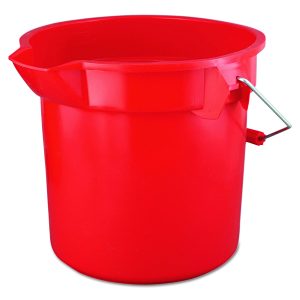
To ensure even distribution and prevent cloudiness or damage to your pool surfaces, pre-dissolve the pH increaser in a bucket of water before adding it to your pool. Fill a large plastic bucket with water, and gradually add the required amount of pH increaser, stirring continuously until it’s fully dissolved.

Step 4: Add the pH Increaser to Your Pool

Slowly pour the dissolved pH increaser solution into the pool, spreading it evenly around the perimeter. Avoid pouring the solution directly onto pool surfaces or fittings, as this may cause damage.

Step 5: Circulate the Pool Water

Turn on your pool pump and allow it to circulate the water for at least 2-4 hours. This will help to distribute the pH increaser evenly throughout the pool, ensuring the pH level is raised consistently.

Step 6: Retest and Adjust as Needed

After the pool water has circulated for a sufficient time, retest the pH level using your pool test kit or test strips. If the pH level is still below the ideal range, repeat Steps 2-5, adding more pH increaser as necessary. Keep in mind that it’s better to make gradual adjustments to avoid overshooting the target pH level.

Conclusion

Maintaining the optimal pH level in your swimming pool is essential for a healthy and enjoyable swimming environment. By following this comprehensive guide on how to raise the pH in your swimming pool, you can ensure the comfort of swimmers, protect your pool equipment, and maximize the effectiveness of your sanitizing chemicals. Regular testing and adjustments are key to maintaining a well-balanced and inviting pool for you and your family to enjoy.


Recommended Products

As an Amazon Associate, we earn from qualifying purchases.
Pool Salt Calculator

Pool salt calculator: How much salt to add to your saltwater pool system

To determine how much salt you need to add to your saltwater pool system, you can quickly input the parts per million needed using this salt calculator and find out how many pounds you need to buy in just a few steps.

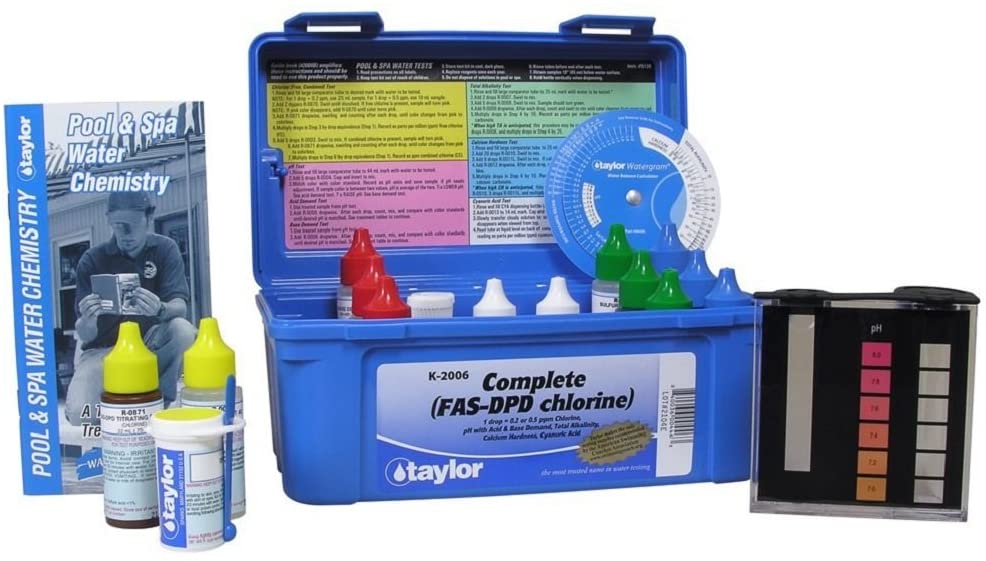
Before you start calculating how much of a chemical you need to add to your pool, though, I do recommend doing a little research to make sure you have all the equipment and chemicals you need to do the required testing. If you are calculating how much salt to add to your pool system, you should buy salt test strips before calculating how much salt to buy. If you are calculating how much chlorine to buy, buy the necessary test kits for pH and all the protective gear and equipment you need for testing the pH before you make your calculations (protective gloves, protective eyewear, 5 gallon buckets and mixing sticks, etc.).

Buy On Amazon – Protective Gloves
Buy On Amazon – Mixing Bucket


Once you have all of your testing strips and kits you require, as well as any protective gear and equipment you will need to do the actual testing, simply go to your computer and make the easy calculations online.

Steps for Calculating Pool Salt

  1. Go to the Pool Salt Calculator
  2. Go to the second tab over on the top of the menu and click on the tab labeled “Salt PPM Calculator”
  3. Drag the slider under “Pool Gallons” to the size pool you have if the pool you have is 20k gallons or less OR click the checkbox labeled “Click here for pools over 20k gallons” to adjust the slider to a size over 20k gallons.
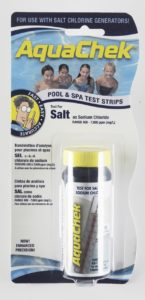
  4. Buy salt test strips (of course, you can skip this step if you already bought your testing equipment and gear you needed before you made the calculations)

    Buy On Amazon – Salt Test Strips

  5. Test your pool with the salt test strips to determine your current salt parts per million (PPM)
  6. Drag the slider under “Current Salt PPM” to  the level  indicated by your test strip.
  7. Check your system for recommended salt PPM levels, which vary by manufacturer. A common desired level of salt for saltwater systems is 3,500 parts per million.
  8. Drag the slider under “Desired Salt PPM” to the level indicated by your salt system recommended salt levels.
  9. Click “CALCULATE”
  10. A calculated salt amount will be displayed on the bottom of your screen in the number of pounds of salt to add to your pool (Example: “Add 29 lbs of Sodium Chloride (Plain Salt No Additives) That’s 0.7 – 40 lb bags of salt”).

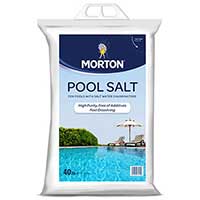
    Buy On Amazon – Salt Calculator Pool Salt

  11. Add the calculated amount of pounds of salt to your pool system.

If you need to calculate any other chemical levels, there is any pool chemical calculator you need on poolchemicalcalculator.com. We make it easy to quickly determine how much of a chemical to add to your pool to meet manufacturer recommended levels, based on your test strip results you can do yourself (before and after adding the chemicals).