
Cloudy Pool Water: Causes, Fixes & Prevention
What Causes Cloudy Pool Water?
Cloudy pool water happens when tiny particles float in suspension and scatter light. These particles might be dirt, minerals precipitating out of solution, dead algae, or organic waste.
Here are the five most common reasons your pool water looks cloudy:
1. Poor Filtration
Your filter removes particles. When your filter doesn’t run long enough, gets clogged, or fails mechanically, particles accumulate faster than they get removed.
Signs your filter is the problem:
- Filter pressure gauge reads 8 to 10 psi above normal
- You’re only running the pump 4 to 6 hours per day
- Your filter media hasn’t been replaced in over 5 years
How to fix it:
Clean or backwash your filter immediately. Run your pump 8 to 12 hours per day during normal operation. While clearing cloudiness, run it 24 hours per day.
If your filter media is old (sand filters over 5 years, cartridges over 3 years), replace it.
2. Imbalanced pH and Alkalinity
When pH climbs above 7.8, calcium and other minerals precipitate out of the water. This creates visible cloudiness. Low alkalinity (under 80 ppm) causes pH to swing, which can trigger the same problem.
Signs this is your issue:
- pH tests above 7.8
- Total alkalinity tests below 80 ppm or above 150 ppm
- Water turned cloudy within hours of adding chemicals
How to fix it:
Test your water with a reliable liquid test kit (not test strips). Lower pH to 7.4 using muriatic acid or sodium bisulfate. Raise alkalinity to 100 ppm using sodium bicarbonate.
Wait 24 hours after adjusting, then test again. Keep pH between 7.4 and 7.6.
3. High Calcium Hardness
Calcium hardness above 400 ppm causes excess calcium to fall out of solution. Your water looks chalky or milky white. This problem is common if you have hard tap water or use calcium-based shock products.
Signs calcium is too high:
- Water has a milky white appearance
- White scale builds up on pool surfaces
- Calcium hardness tests over 400 ppm
How to fix it:
The only way to lower calcium is dilution. Drain 25% to 50% of your pool and refill with fresh water. This reduces calcium concentration.
Use a flocculant to clump the calcium particles together so your filter can trap them. Add a sequestering agent to keep remaining minerals dissolved.
4. Low Chlorine Levels
When free chlorine drops below 1 ppm, organic matter accumulates. Body oils, sunscreen, dead skin, sweat, and algae spores build up in the water. These organic particles create cloudiness.
Low chlorine also lets bacteria and algae start growing, which makes the problem worse.
Signs chlorine is too low:
- Free chlorine tests at 0 to 1 ppm
- Pool has a strong chlorine smell (this actually indicates chloramines, which form when there’s not enough free chlorine)
- Water is cloudy but not green yet
How to fix it:
Shock your pool with calcium hypochlorite or liquid chlorine. Target 10 ppm free chlorine immediately after shocking. Run your filter continuously for 24 to 48 hours.
Test daily and maintain 2 to 4 ppm free chlorine going forward.
5. Post-Shock Cloudiness
If your water turned cloudy right after you shocked the pool, this is temporary and normal. Shock oxidizes dissolved organic waste, which makes it visible before your filter captures it.
This type of cloudiness usually indicates the shock is working correctly.
Signs this is post-shock cloudiness:
- Pool was clear before shocking
- Cloudiness appeared 1 to 6 hours after adding shock
- All other chemistry readings are balanced
How to fix it:
Keep your filter running 24 hours per day. Add a pool clarifier to help bind particles. Wait 24 to 48 hours. The cloudiness will disappear as your filter processes the oxidized waste.
Clean or backwash your filter once the water clears.
—
How to Clear Cloudy Pool Water: Step-by-Step
Use this systematic process to diagnose and fix cloudy pool water:
Step 1: Test Your Water
Grab your test kit and measure these five parameters:
- Free chlorine (target: 2 to 4 ppm)
- pH (target: 7.4 to 7.6)
- Total alkalinity (target: 80 to 120 ppm)
- Calcium hardness (target: 200 to 400 ppm)
- Cyanuric acid (target: 30 to 50 ppm)
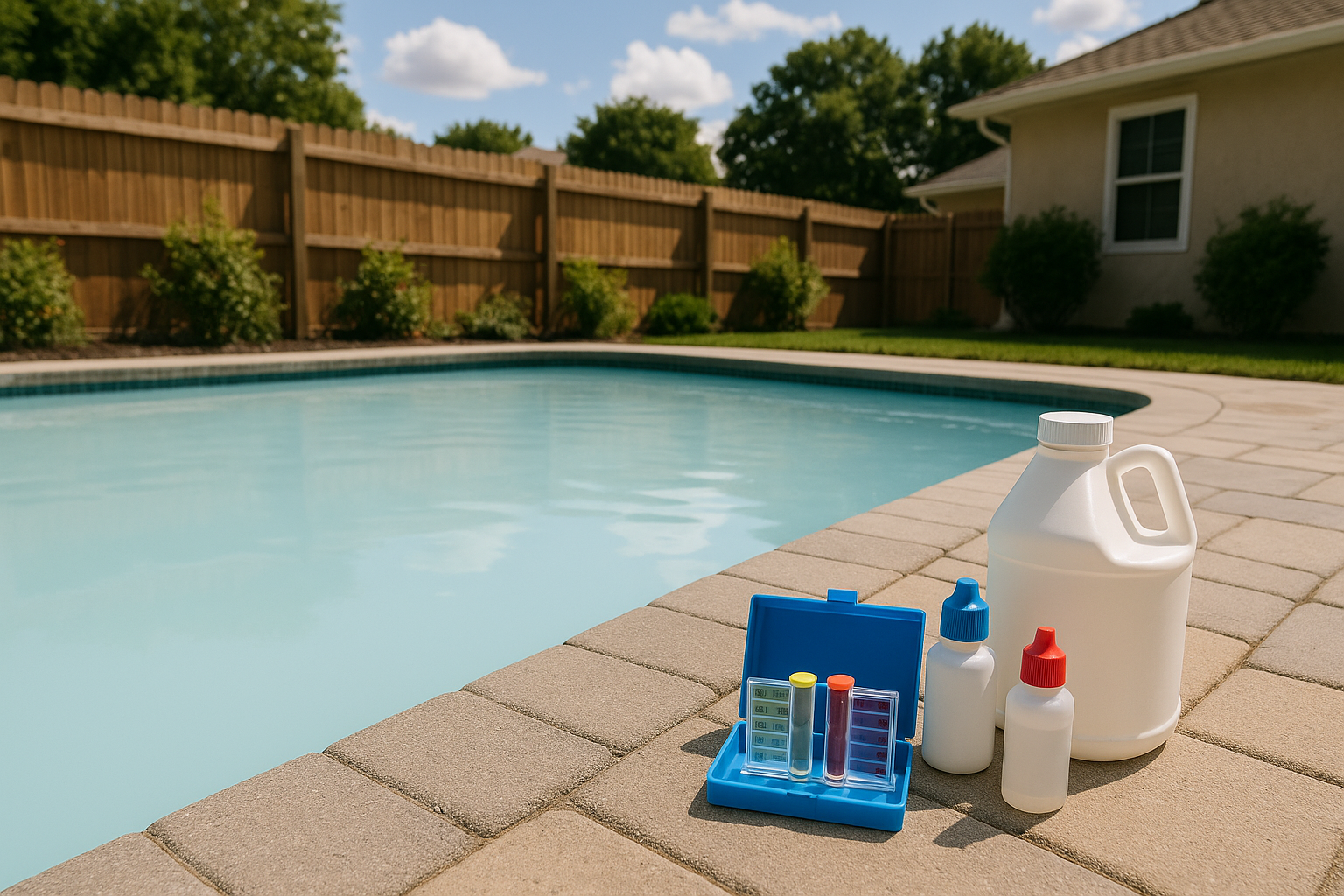
Use a liquid reagent test kit like the Taylor K-2006. Test strips are not accurate enough for troubleshooting.
Step 2: Balance Your Chemistry
Fix imbalances in this specific order:
1. Total alkalinity first (stabilizes pH)
2. pH second (affects chlorine effectiveness)
3. Calcium hardness third (if needed)
4. Chlorine last (only works when pH is correct)
This order matters because alkalinity controls pH stability, and pH controls chlorine effectiveness.
Step 3: Shock the Pool
Even if your chlorine level looks acceptable, shock the pool to oxidize organic contaminants.
Use 1 pound of calcium hypochlorite shock per 10,000 gallons. For heavily contaminated water, use 2 pounds per 10,000 gallons.
Shock in the evening so sunlight doesn’t degrade the chlorine. Run your filter continuously for 24 to 48 hours after shocking.
Step 4: Clean Your Filter
A clogged filter cannot clear cloudy water. Backwash sand or DE filters. Remove and rinse cartridge filters.
After cleaning, run your filter 24 hours per day until the water clears completely.
Step 5: Add Pool Clarifier
Pool clarifier bonds small particles into larger clusters your filter can trap. This speeds up the clearing process by 50% or more.
Follow the product instructions. Most clarifiers take 24 to 48 hours to work.
Step 6: Vacuum and Brush
Manually vacuum your pool to remove settled debris. Brush the walls and floor to knock loose any particles clinging to surfaces.
This gives your filter less work to do.
Step 7: Retest After 48 Hours
Give your pool 48 hours to respond to treatment. Then test your water again.
Make any final adjustments needed to keep chemistry balanced. If water is still cloudy after 48 hours, repeat the shock treatment.
—
???? Recommended Products
As an Amazon Associate, we earn from qualifying purchases. These are products we genuinely recommend for clearing cloudy pool water.
Taylor K-2006 Complete Test Kit (~$90) – Accurate testing is step one. This kit measures all 5 critical parameters with lab-grade precision. Way more accurate than test strips.
In The Swim Cal-Hypo Shock 24-Pack (~$62) – Powerful calcium hypochlorite shock treatment. One pound treats 10,000 gallons. This is your go-to for oxidizing contaminants and clearing cloudy water.
Clorox Pool&Spa Super Water Clarifier (~$12) – Works fast to bind cloudy particles together so your filter can remove them. Compatible with all pool types and filter systems.
HTH Drop Out Flocculant (~$14) – For stubborn cloudiness, flocculant drops particles to the bottom for manual vacuuming. Clears water in 24 hours when used correctly.
Clorox Pool&Spa pH Down (~$13) – Quickly lowers pH when it’s too high (a common cause of cloudy water). Safer and easier to handle than muriatic acid.
Arm & Hammer Baking Soda 15lb (~$15) – The most cost-effective way to raise total alkalinity. Pure sodium bicarbonate with the same active ingredient as expensive alkalinity increaser products.
—
???? Calculate It Instantly with Pool Chemical Calculator
Stop guessing with your pool chemistry. The Pool Chemical Calculator app tells you exactly how much shock, pH down, or alkalinity increaser to add based on your pool’s size and current test results.
✅ Chlorine, pH, Alkalinity, Calcium Hardness & more
✅ Works for all pool types, chlorine, salt water, above ground
✅ Free to download
Download for Android →
Download for iPhone/iPad →
Use Online →
—
How to Prevent Cloudy Pool Water
Once your pool is clear, keep it that way with consistent maintenance:
Run Your Filter Long Enough
Most residential pools need 8 to 12 hours of filtration per day. Larger pools or pools in hot climates may need more.
During peak summer use, run your filter 12 to 16 hours per day. This ensures one complete water turnover every 24 hours.
Test and Balance Weekly
Test your water every 7 days minimum. Test more often during heavy use or after rainstorms.
Adjust chemistry whenever readings fall outside these ranges:
- Free chlorine: 2 to 4 ppm
- pH: 7.4 to 7.6
- Total alkalinity: 80 to 120 ppm
- Calcium hardness: 200 to 400 ppm
Consistent chemistry prevents cloudiness before it starts.
Shock Every 1 to 2 Weeks
Regular shocking oxidizes organic buildup before it becomes visible. Shock your pool every 1 to 2 weeks during swimming season.
Shock more often after heavy use, rainstorms, or hot weather.
Clean Your Filter Monthly
Backwash or clean your filter every 4 weeks during swimming season. Also clean it whenever the pressure gauge reads 8 to 10 psi above your baseline reading.
A clean filter prevents 80% of cloudiness problems.
Brush and Skim Daily
Skim surface debris every day. Brush walls and floor once per week.
This prevents debris from breaking down into microscopic particles your filter struggles to capture.
—
FAQs About Cloudy Pool Water
Can you swim in cloudy pool water?
It depends on what’s causing the cloudiness. If the cloudiness is mild and caused by filtration issues or recent shocking, swimming is generally safe (though not pleasant). However, if cloudiness is caused by low chlorine, bacteria, or algae, swimming could expose you to harmful pathogens. Test your water first. If chlorine is at least 2 ppm and pH is balanced, it’s likely safe. Clear water is always the best indicator of healthy pool conditions.
How long does it take to clear cloudy pool water?
Most cases of cloudy pool water clear within 24 to 48 hours when you address the root cause. Balance your chemistry, shock the pool, and run the filter continuously during this period. Severe cases caused by high calcium hardness or persistent algae can take 3 to 5 days. Using a clarifier speeds up the process significantly.
Will shocking a pool clear cloudy water?
Yes, shocking often clears cloudy water by oxidizing organic contaminants. However, if the cloudiness is caused by poor filtration, high pH, or high calcium hardness, shocking alone won’t fix it. You need to address the underlying chemical imbalance or equipment issue first. Test your water to identify the root cause before shocking.
Why is my pool still cloudy after shocking?
If your pool is still cloudy 48 hours after shocking, check these four things: (1) your filter might not be running long enough or could be clogged, (2) pH or alkalinity might still be out of balance, (3) calcium hardness might be too high, or (4) you didn’t add enough shock. Retest your water chemistry and make sure your filter runs 24/7 until water clears.
Does high pH cause cloudy water?
Yes. When pH rises above 7.8, calcium and other minerals precipitate out of solution. This creates a cloudy or chalky appearance. High pH also reduces chlorine effectiveness by 50% or more, which allows organic particles to accumulate. Lowering pH to 7.4 usually clears this type of cloudiness within 24 hours. Test and adjust pH whenever your water looks cloudy.
—
—
Keep Your Pool Crystal Clear
Cloudy pool water has identifiable causes and straightforward solutions. Test your water to diagnose the problem. Balance your chemistry in the correct order. Shock the pool and run your filter continuously for 24 to 48 hours.
Prevention is simpler than treatment. Test weekly, shock every 1 to 2 weeks, run your filter 8 to 12 hours per day, and clean your filter monthly.
For precise chemical dosing based on your exact pool size and test results, use the Pool Chemical Calculator app. It eliminates guesswork and prevents over-treatment.
Related Articles: