
Pool Water Turns Green Overnight: What Happened and How to Fix It Fast
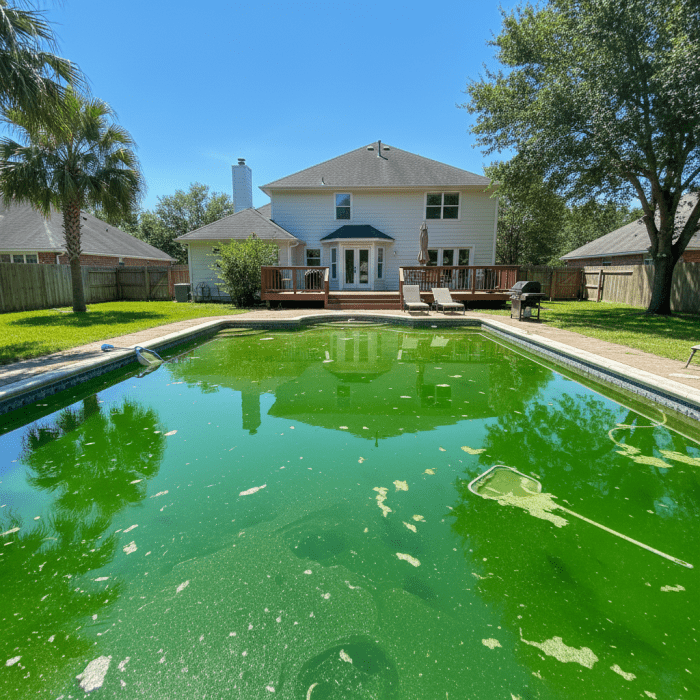
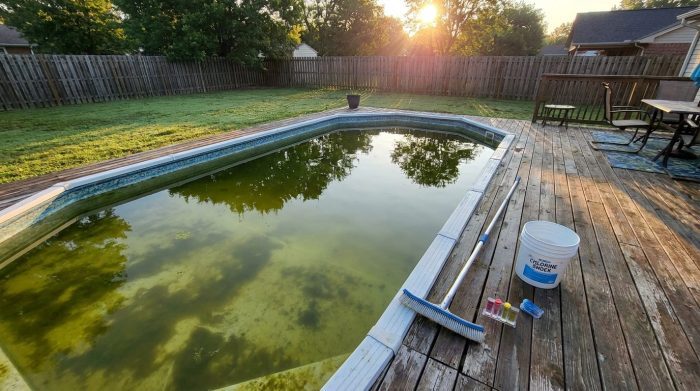
You wake up ready for a morning swim, walk outside with your coffee, and stop dead in your tracks. Your pool water turns green overnight — and not just a little hazy, but full-on swamp monster green. What happened? Yesterday it looked fine!
Quick answer
Pool Water Turns Green Overnight: What Happened and How to Fix It Fast: You wake up ready for a morning swim, walk outside with your coffee, and stop dead in your tracks. Your pool water turns green overnight — and not just a little hazy, but full-on swamp monster green. What happened?.
Take a breath. This is fixable, and you’re not alone. Thousands of pool owners face this exact nightmare every summer, especially after storms, heat waves, or that one weekend you skipped testing. The good news? With the right approach, you can have crystal-clear water within 24-48 hours. The bad news? You’ve got some work ahead of you.
Let’s figure out what went wrong and get your pool back.
Why Your Pool Turned Green So Quickly
Here’s the thing about algae: it doesn’t actually appear overnight. It’s been lurking in your pool for days, invisible to the naked eye. That green explosion you’re seeing? That’s algae’s grand finale — billions of microscopic organisms that finally hit critical mass.
Think of it like bread mold. Those fuzzy green spots didn’t grow in an hour. The spores were there for days, slowly spreading until suddenly they’re visible. Same concept with your pool.
The Science Behind Rapid Algae Blooms
Algae doubles its population every 3-6 hours under ideal conditions. Do the math: if you had 1 million algae cells yesterday morning (invisible to you), you could have 16-64 million by evening, and over 1 billion by the next morning. That’s when green becomes unmissable.
Three factors create “ideal conditions” for algae:
- Low chlorine levels (below 1 ppm)
- Warm water temperature (above 80°F)
- Available nutrients (phosphates, nitrates from debris)
When all three align? Your pool becomes an algae buffet.
Common Causes of Overnight Green Pool Water
Chlorine Crash After Heavy Use
Had a pool party Saturday? Ten swimmers can deplete chlorine levels by 2-3 ppm in just a few hours. Each person introduces sweat, sunscreen, and organic matter that consumes chlorine rapidly. If you didn’t shock after the party, you basically invited algae to take over.
The timeline looks like this:
– Saturday 2pm: Pool party, chlorine at 3 ppm
– Saturday 8pm: Chlorine drops to 0.5 ppm
– Sunday morning: Algae bloom begins (invisible)
– Monday morning: Green pool
Storm Dump
Rain doesn’t just dilute your chlorine — it actively destroys it. Rainwater has a pH around 5.0-5.5 (acidic), which destabilizes chlorine. A heavy 2-inch rainstorm can:
- Drop chlorine by 1-2 ppm
- Lower pH by 0.3-0.5 points
- Introduce phosphates, pollen, and debris
- Wash fertilizer from your lawn into the pool
One bad thunderstorm can undo a week of careful chemistry.
Filtration Failure
Your filter runs 8-12 hours daily for a reason. It circulates water past the chlorine and removes debris before it decays. If your filter pump died overnight — or someone accidentally turned it off — you’ve got stagnant water sitting in 90°F heat. That’s a petri dish.
Check your equipment first. A tripped breaker costs $0 to fix. Assuming it’s always a chemistry problem could waste hours and hundreds of dollars.
Cyanuric Acid Lockup
Here’s one that trips up experienced pool owners: too much stabilizer. Cyanuric acid (CYA) protects chlorine from UV breakdown, but above 70-80 ppm, it starts “locking” chlorine, making it ineffective against algae.
Your test kit might show 3 ppm free chlorine, but if CYA is at 100+ ppm, that chlorine has the killing power of a wet noodle. This is especially common if you’ve used stabilized chlorine tablets for years without ever draining.
Yellow Pollen vs. Green Algae
Quick reality check: is it actually algae? In spring, pine and oak pollen can coat your pool surface, creating a yellow-green film. The difference:
- Pollen floats on top, gathers at skimmer, doesn’t cloud the water
- Algae clouds the entire pool, clings to walls, feels slimy
Rub the pool wall. Slippery? It’s algae. Dry and powdery? Probably pollen. Pollen needs filtration, not shocking.
How to Fix a Green Pool in 24-48 Hours
Alright, it’s definitely algae. Here’s your battle plan.
Step 1: Test Your Water
You can’t fix what you can’t measure. Grab your test kit — and I mean a real kit, not the 2-year-old strips in your garage. You need accurate readings for:
| Parameter | Ideal Range | Green Pool Target |
|---|---|---|
| Free Chlorine | 1-3 ppm | 10-30 ppm (shock level) |
| pH | 7.4-7.6 | 7.2 (for shocking) |
| CYA | 30-50 ppm | Below 50 ppm |
| Total Alkalinity | 80-120 ppm | 80-100 ppm |
Critical: If CYA is above 70 ppm, you’ll need to drain 1/3 to 1/2 of your pool water before shocking. High CYA requires astronomically high chlorine levels to work — we’re talking 20-40 ppm, which is expensive and can damage equipment.
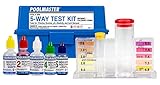
A reliable test kit makes all the difference. The Taylor K-2006 Complete Test Kit gives you accurate readings for everything above and lasts for hundreds of tests.
Step 2: Lower Your pH to 7.2
Chlorine works dramatically better at lower pH levels. At pH 7.2, chlorine is about 65% effective. At pH 7.8, it drops to 32% effective — cutting your killing power in half.
To lower pH, add muriatic acid:
– For a 10,000-gallon pool, add 12 oz of acid to lower pH by 0.2 points
– Pour slowly into the deep end with pump running
– Wait 30 minutes and retest
Don’t skip this step. Shocking at high pH wastes chlorine and your time.
Step 3: Remove Visible Debris
Grab your leaf net and remove every leaf, bug, and floating object you can see. Each piece of debris consumes chlorine as it breaks down. You want all that chemical power attacking algae, not decomposing a pile of leaves.
Brush the walls and floor thoroughly — even if you can’t see the bottom. Algae roots into porous surfaces like plaster and grout. Brushing breaks it loose so chlorine can kill it.
For serious algae situations, a Milliard Heavy-Duty Pool Brush with stainless steel bristles works far better than standard nylon brushes.
If your filter is packed with dead algae after treatment, a dedicated SpaGuard Filter Cleaner or similar cartridge/filter cleaner helps remove the oily residue that plain rinsing leaves behind.
Step 4: Shock Your Pool (And Don’t Be Shy)
Here’s where most people fail: they under-shock. Dumping one bag of shock into a green pool is like throwing a cup of water on a house fire. You need overwhelming force.
Shock dosing for green pools:
| Algae Severity | Chlorine Target | Shock Amount (per 10,000 gal) |
|---|---|---|
| Light green (can see bottom) | 10 ppm | 2 lbs calcium hypochlorite |
| Medium green (can’t see bottom) | 20 ppm | 4 lbs calcium hypochlorite |
| Dark green/black | 30 ppm | 6 lbs calcium hypochlorite |
Important: Always shock at dusk or night. Sunlight destroys chlorine at 1 ppm per hour. Shocking at noon wastes half your chemical before it even starts working.
Broadcast the shock around the pool perimeter with the pump running. Don’t pour it all in one spot — you’ll bleach your liner or plaster.
Step 5: Run Your Filter 24/7
Your filter needs to run continuously until the water clears. We’re talking 24 hours a day, minimum 48-72 hours straight. Yes, your electric bill will notice. It’s still cheaper than draining and refilling.
The filtration process:
1. Hours 1-12: Water stays green, dead algae circulates
2. Hours 12-24: Water turns cloudy gray/white (good sign!)
3. Hours 24-48: Water begins clearing, cloudiness fades
4. Hours 48-72: Crystal clear water returns
Step 6: Backwash or Clean Filter Every 8-12 Hours
This is crucial and often forgotten. Your filter is catching millions of dead algae cells. When it clogs, water bypasses the filter media entirely, and all that dead algae recirculates.
- Sand filter: Backwash for 3 minutes when pressure rises 8-10 PSI above clean baseline
- DE filter: Backwash and add fresh DE
- Cartridge filter: Remove and hose down thoroughly (have a spare cartridge so you can swap without downtime)
You might backwash 3-4 times over 48 hours. That’s normal for a heavy algae kill.
Step 7: Retest and Maintain Shock Level
Here’s the key most people miss: test chlorine every 4-6 hours and re-shock as needed. The algae kill isn’t complete until you achieve OCLT — Overnight Chlorine Loss Test.
Run the OCLT after water looks clear:
1. Test chlorine at sunset (after brush and backwash)
2. Test again at sunrise (before sun hits pool)
3. If you lost more than 1 ppm overnight, algae is still present
Keep shocking until chlorine loss is under 1 ppm overnight. Only then is it safe to return to normal chlorine maintenance.
Preventing Green Pool Disasters
Fixing a green pool costs time, money, and sanity. Prevention costs five minutes a day.
Test Three Times Per Week Minimum
Quick 30-second dip strip tests between major testing sessions. You’re looking for chlorine below 1 ppm — that’s your algae warning sign. Catch it at 0.8 ppm and you can fix it with minor shocking. Wait until 0.2 ppm and you’re fighting a bloom.
Maintain Proper Chlorine Levels
The magic number is 7.5% of your CYA level. If CYA is 40 ppm, you need minimum 3 ppm free chlorine at all times. If CYA is 50 ppm, target 4 ppm chlorine.
This ratio keeps chlorine effective against algae growth. Most “my pool is always green” problems come from chronic low chlorine.
Weekly Shocking
Even when water looks perfect, shock weekly during swim season. This oxidizes organic contamination before it becomes food for algae. Use 1 lb of shock per 10,000 gallons every 7 days as preventative maintenance.
Clean Your Filter Regularly
A dirty filter doesn’t just slow circulation — it becomes a bacterial breeding ground. Clean cartridge filters every 2-4 weeks, backwash sand/DE filters when pressure rises 8-10 PSI.
Address Phosphates
Phosphates are algae fertilizer. They enter your pool from:
– Lawn runoff (fertilizers)
– Dead leaves and debris
– Some municipal water supplies
– Certain algaecides
Test phosphates twice per season. If above 300 ppb, use a phosphate remover before algae gets a foothold.
When to Call a Professional
DIY pool recovery works 90% of the time. But some situations need expert help:
- Black algae: This stubborn variant has deep roots in plaster/concrete. Standard shocking rarely kills it completely. You may need acid washing or professional treatment.
- Mustard algae: Chlorine-resistant and requires specialized algaecide combined with equipment cleaning (including toys, floats, and vacuums).
- Repeated failures: If you’ve shocked three times and water won’t clear, something else is wrong — possibly equipment failure, high CYA, or contaminated fill water.
- Equipment damage: Green water sitting for weeks can damage pump seals, corrode heater elements, and stain pool surfaces. A professional can assess damage.
Pool service runs $150-300 for algae treatment. Compare that to the $80+ in chemicals and 10+ hours you’ll spend doing it yourself. Sometimes the professional is worth it.
Calculating Your Chemical Needs
Here’s where guessing fails and math wins. A 20,000-gallon pool needs exactly twice the chemicals of a 10,000-gallon pool. Eyeballing it leads to under-shocking (algae survives) or over-shocking (wasted money, potential damage).
To get exact measurements for your pool, head to Pool Calculator. Enter your pool volume and current chemical levels, and it’ll tell you precisely how much shock, acid, or other chemicals to add. Takes 60 seconds and eliminates the guesswork that causes most algae treatment failures.
Frequently Asked Questions
Is it safe to swim in a green pool?
No. Green pool water contains millions of bacteria and potentially harmful pathogens that thrive alongside algae. Beyond health risks, you simply can’t see the bottom — creating a drowning hazard. Wait until chlorine drops below 5 ppm and water is crystal clear before swimming.
How long does it take to clear a green pool?
Most green pools clear in 24-72 hours with aggressive treatment. Light green (still see bottom) often clears within 24 hours. Dark green or black-green pools may take 5-7 days of continuous treatment. The biggest variable is your starting chlorine level and whether CYA levels are in check.
Can I use algaecide instead of shocking?
Algaecide alone won’t clear a green pool. It’s designed to prevent algae, not kill active blooms. Think of algaecide as the defensive line and chlorine shock as the offense. You need shock to kill the existing algae, then algaecide to prevent regrowth. Using algaecide first actually coats algae cells, making them harder for chlorine to penetrate.
Why does my pool keep turning green even though I add chlorine?
The most likely culprit is high cyanuric acid (CYA). Test your CYA level — if it’s above 70-80 ppm, chlorine becomes ineffective regardless of concentration. The solution is partial draining (30-50% of pool volume) and refilling with fresh water to dilute CYA. This is the #1 cause of chronic green pools in homes using stabilized chlorine tablets.
How much does it cost to fix a green pool?
Budget $50-150 in chemicals for a DIY fix (10,000-20,000 gallon pool). This includes 4-6 lbs of shock ($25-40), pH adjusters ($10-15), algaecide for prevention ($15-25), and filter cleaner ($10-15). Professional treatment runs $150-300. The real cost is time — expect 4-8 hours of active work spread over 2-3 days.
Need help calculating the right shock dose before your green pool gets worse? Use Pool Chemical Calculator to calculate chlorine, shock, pH, alkalinity, stabilizer, calcium hardness, salt, and more from your exact pool volume and current test results. No guessing, no wasting chemicals, no “dump and pray.”
???? iPhone / iPad: https://itunes.apple.com/us/app/pool-chem-calculator/id1453351222
???? Android: https://play.google.com/store/apps/details?id=com.poolchemicalcalculator.poolcalc
???? Full guide: https://poolchemicalcalculator.com/news/pool-water-turns-green-overnight/
As an Amazon Associate, Pool Chemical Calculator earns from qualifying purchases. Helps prevent algae from returning after brushing, shocking, and correcting circulation. Lowers high pH and helps bring alkalinity down when used carefully. Accurate readings make every chlorine, pH, alkalinity, calcium, and CYA dose safer.Recommended pool supplies


Get exact pool chemical doses
Pool Chemical Calculator turns your test readings, pool volume, and target levels into exact treatment amounts for chlorine, pH, alkalinity, calcium, stabilizer, salt, and more.
Open the Pool Chemical Calculator app or download it from the App Store and Google Play.