
How to Remove a Pool Cover Safely Without Dumping Debris Into the Pool
If you remove a pool cover in the wrong order, months of leaves, dirty rainwater, and fine grit can pour straight into the pool. The safe sequence is simple: clear debris, pump off standing water when the cover allows it, release the cover hardware, fold it without dragging, and clean and dry it before storage. Never let anyone walk on a cover or treat a cover as a substitute for a barrier.
Quick answer
How to Remove a Pool Cover Safely Without Dumping Debris Into the Pool: If you remove a pool cover in the wrong order, months of leaves, dirty rainwater, and fine grit can pour straight into the pool. The safe sequence is simple: clear debris, pump off standing water when the cover allows.
Quick answer
How do you remove a pool cover safely? Keep swimmers and children away, remove leaves with a soft brush or skimmer, pump standing water from a solid cover, then detach the cover and fold it accordion-style with another person. For a mesh or anchored safety cover, follow the cover maker’s instructions; do not use a solid-cover pump rule blindly. Inspect, wash, dry, and store the cover out of sunlight and rodents’ reach.
What you need
- Pool skimmer net or soft pool brush
- Pool cover pump that is suitable for your cover, if standing water must be removed
- Garden hose and a safe discharge point
- Gloves and non-slip footwear
- A clean tarp or storage container
- A second adult for a large or heavy cover
Step-by-step: remove a pool cover safely
Step 1: Make the area safe
Close the pool area to children, pets, and swimmers. Keep the pump cord and hose routed where nobody can trip. If the cover is sagging badly, torn, frozen, or carrying more weight than you can control, stop and call a pool professional. A cover is not a work platform.
Step 2: Identify the cover type
Solid winter covers, mesh safety covers, water-bag covers, and automatic covers do not all drain or detach the same way. Read the cover and pump instructions first. Anchored safety covers generally need their proper removal key or tool, and automatic covers should be operated only according to the owner’s manual.
Step 3: Remove leaves and loose debris
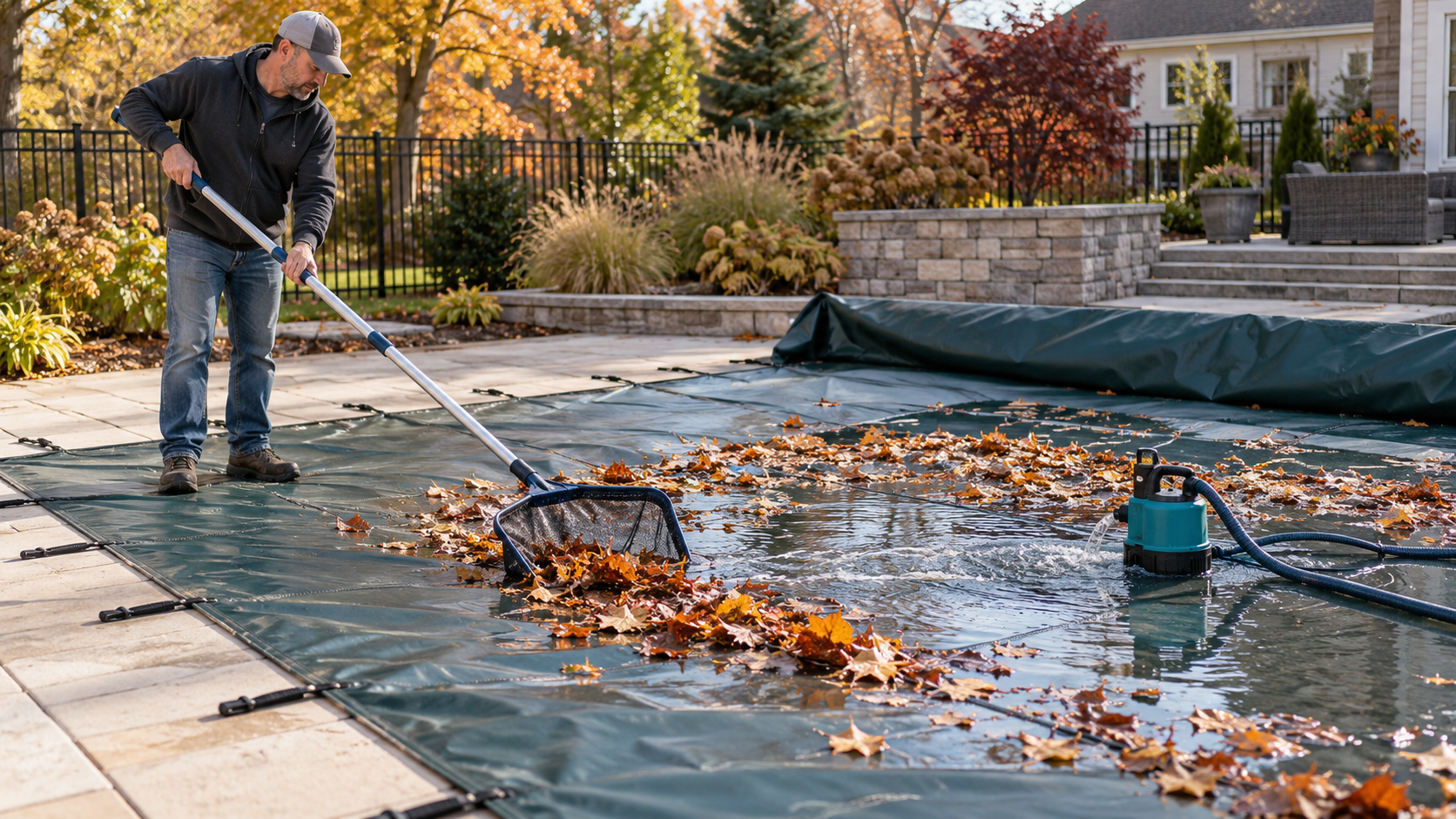
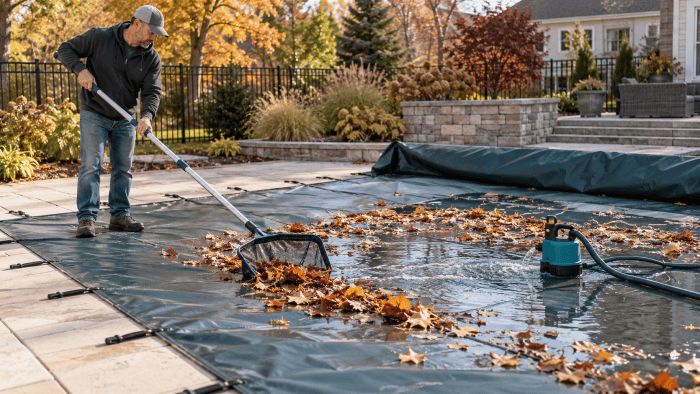
Use a leaf net or soft brush to move debris toward the edge and off the cover. Work from the deck rather than kneeling or leaning across the pool. Do not use a sharp rake, shovel, broom with metal bristles, or anything that can puncture the fabric. Bag wet leaves instead of pushing them into the pool.
Step 4: Pump off standing water when appropriate
For a solid cover designed for pumping, place the cover pump where water has collected and discharge it away from the pool. Keep hands out of the water while electrical equipment is connected, and follow the pump’s instructions. Do not put a pump on a weak, torn, or unstable cover. A mesh cover may be designed to let water drain through; check its instructions instead of forcing water off it.
Step 5: Release the cover hardware
Remove water bags, clips, springs, or straps in the order recommended by the cover manufacturer. Keep small hardware in a labeled container. On an anchored safety cover, relieve tension carefully and keep the deck clear so anchors do not become trip hazards.
Step 6: Fold the cover instead of dragging it
Have a second adult help with large covers. Pull a manageable section onto the deck, fold it back in an accordion or fanfold pattern, and repeat. Do not drag a wet cover across rough concrete, landscaping, or sharp edges. Dragging is a fast way to create pinholes and split seams.
Step 7: Clean, dry, and inspect it
Spread the cover on a clean surface, rinse it with fresh water, and let both sides dry completely. Look for tears, brittle areas, damaged straps, worn seams, and missing hardware. Mark repairs before storage. Never pack a damp cover: trapped moisture encourages mildew and odor.
Step 8: Store it correctly
Fold the dry cover loosely enough that it is not crushed, then put it in a breathable storage bag or clean tote. Store it off the ground in a cool, dry place away from direct sun, sharp objects, chemicals, mice, and insects. Keep the pump and hardware with it, but do not store electrical equipment wet.
!Homeowner safely clearing leaves and pumping water from a pool cover
What to do after the cover is off
Remove debris from the pool with a skimmer, empty the baskets, brush the walls and floor, and start circulation according to your equipment instructions. Test pH, free chlorine, alkalinity, and other relevant levels before adding chemicals. Do not dump in a large dose just because the water looks dull; use the measured volume and test results.
For exact treatment amounts, use the Pool Chemical Calculator app. You can also use the pool volume calculator, free chlorine calculator, and pH calculator before adjusting the water.
Shop Amazon Pools for cover-removal supplies.
Disclosure: Pool Chemical Calculator is an Amazon Associate and may earn from qualifying purchases at no additional cost to you.
Common mistakes to avoid
- Removing the cover while leaves and a layer of water are still on top.
- Pulling a heavy, wet cover by one corner.
- Standing or kneeling on a winter cover.
- Using a pump without checking whether the cover is designed for it.
- Letting dirty cover water drain into the pool when it can be discharged elsewhere.
- Folding the cover while damp.
- Leaving anchors, cords, or water bags where people can trip.
Frequently asked questions
Can I let the water on a solid pool cover fall into the pool?
It is better to pump standing water away from the pool when the cover and pump instructions allow it. Cover water contains dirt, leaves, and concentrated contaminants that can make opening cleanup harder. If the cover is designed to drain into the pool, follow that design and remove debris first.
Can you walk on a pool cover to remove it?
No. A winter or safety cover should not be treated as a walking surface unless the manufacturer specifically rates it for that use and gives a procedure. Walking on a cover can cause drowning, injury, or damage.
How do I remove an anchored safety cover?
Clear debris and standing water as directed, then use the manufacturer’s anchor key or removal tool to release the springs or straps. Work around the perimeter with another adult and keep released hardware organized. If an anchor is seized or the cover is under unusual tension, stop and call a professional.
How should I clean a pool cover before storing it?
Rinse both sides with fresh water, remove remaining debris, and let the cover dry completely in a clean area. Inspect seams and hardware before folding it loosely into a breathable bag or clean storage container.
What should I test after removing a pool cover?
Start with pH and free chlorine, then check total alkalinity, cyanuric acid, and calcium hardness as appropriate for your pool and sanitizer. Test before dosing, circulate after adjustments, and use a calculator based on your actual pool volume.
Recommended pool supplies
As an Amazon Associate, Pool Chemical Calculator earns from qualifying purchases.

Removes leaves and debris before they consume chlorine and stain the pool.
View on Amazon
Raises calcium hardness to reduce corrosive water risk in plaster, concrete, and equipment.
View on Amazon
Raises total alkalinity so pH is less likely to bounce around after treatment.
View on AmazonGet exact pool chemical doses
Pool Chemical Calculator turns your test readings, pool volume, and target levels into exact treatment amounts for chlorine, pH, alkalinity, calcium, stabilizer, salt, and more.
Open the Pool Chemical Calculator app for iOS, Android, or web.