
Pool Chemical Storage Safety: How to Protect Your Family and Keep Your Chemicals Effective
That bucket of chlorine tablets in your garage could be a ticking time bomb. Dramatic? Maybe. But pool chemical storage safety isn’t something to take lightly — improper storage causes thousands of injuries every year, ruins expensive chemicals, and can even start fires. The good news is that safe storage is straightforward once you understand a few basic rules.
Quick answer
Pool Chemical Storage Safety: How to Protect Your Family and Keep Your Chemicals Effective: That bucket of chlorine tablets in your garage could be a ticking time bomb. Dramatic? Maybe. But pool chemical storage safety isn’t something to take lightly — improper storage causes thousands of injuries every year.
I’ve seen pool owners make every mistake in the book. Stacking chlorine on top of acid. Leaving chemicals in direct sunlight until they’re useless. Storing opened bags of shock in the same cabinet as their gas grill. Each of these is a disaster waiting to happen.
Let’s fix that.
Why Pool Chemical Storage Actually Matters
Pool chemicals are designed to kill things — algae, bacteria, contaminants. That same reactive power makes them dangerous when stored improperly.
Here’s what can go wrong:
- Chemical reactions: Mixing certain chemicals (even accidentally through spills or fumes) creates toxic chlorine gas, fires, or explosions
- Degradation: Heat and moisture break down chlorine, reducing its strength by up to 50% in just a few months
- Corrosion: Fumes from pool chemicals corrode metal tools, lawn equipment, and even electrical wiring
- Health hazards: Children and pets can access improperly stored chemicals, leading to poisoning or burns
A 50-lb bucket of chlorine tablets costs around $150-200 these days. Losing half its effectiveness to poor storage is like throwing $100 in the trash. And that’s the best case scenario.
The Golden Rules of Pool Chemical Storage
Keep Chemicals in Their Original Containers
This seems obvious, but people break this rule constantly. Never transfer pool chemicals to food containers, unmarked bottles, or random buckets. The original container has:
- Proper labeling with safety instructions
- Material designed to contain that specific chemical
- Child-resistant caps (in most cases)
- Emergency contact information
I once heard about a homeowner who put granular shock in an old coffee can. His teenager thought it was powdered drink mix. The ER visit was not fun.
Store in a Cool, Dry Location
Temperature matters more than you’d think. Chlorine tablets start degrading faster above 95°F. In a hot garage during summer, temperatures can hit 120°F or higher.
Your ideal storage spot:
- Stays between 50-75°F year-round
- Has zero standing water or high humidity
- Is well-ventilated (not airtight)
- Stays out of direct sunlight
A climate-controlled storage area is perfect. If that’s not possible, a shaded, ventilated shed works. Just avoid storing chemicals against exterior walls that get afternoon sun.
Never Stack Incompatible Chemicals Together
This is the big one. Some pool chemicals react violently when mixed — even through fumes alone.
Keep these separated by at least 8 feet:
| Chemical Type | Examples | Never Store Near |
|————–|———-|——————|
| Chlorine (oxidizers) | Tablets, granular shock, cal-hypo | Acids, ammonia, organics |
| Acids | Muriatic acid, pH Down | Chlorine, alkalis |
| Alkalis | pH Up, soda ash | Acids |
| Algaecides | Copper-based, quat algaecides | Chlorine |
Here’s a scary fact: when chlorine and muriatic acid mix, they create chlorine gas — the same chemical weapon used in World War I. A spill in a poorly organized storage area can hospitalize your entire family.
Building Your Chemical Storage Setup
Choosing the Right Storage Container
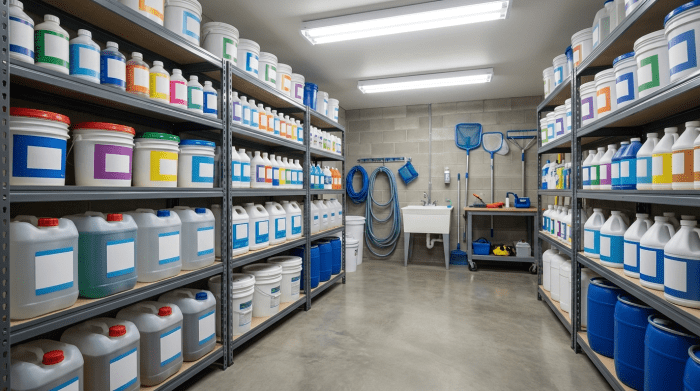
A proper chemical storage cabinet keeps everything organized and separated. Look for:
- Polyethylene or other chemical-resistant material
- Ventilation holes or slots
- Separate compartments for oxidizers and acids
- A lock to keep kids and pets out
- Raised bottom lip to contain spills
The Rubbermaid Outdoor Storage Cabinet works well for smaller chemical collections. It’s weather-resistant, lockable, and keeps everything off the ground.
For larger setups, consider a dedicated chemical shed positioned 15-20 feet from your home.
Organizing Your Chemicals Properly
Think of your storage area like a chemistry lab. Organization prevents accidents.
Top shelf: Dry chemicals like pH Up, calcium increaser, stabilizer (these are the least reactive)
Middle shelf: Chlorine tablets and granular shock in sealed containers
Bottom shelf or separate area: Muriatic acid and other acids (always store acids lowest to prevent dripping onto other chemicals)
Pro tip: Keep a 5-lb box of baking soda near your acid storage. If you spill muriatic acid, baking soda neutralizes it safely.
Ventilation Requirements
Pool chemicals release fumes, even when sealed. Chlorine tablets are especially notorious — that bleach smell means product is escaping.
Your storage area needs:
- At least two ventilation points for cross-breeze
- No air conditioning vents that could spread fumes into your home
- Openings positioned away from pet areas or play zones
Never store pool chemicals in:
- Attached garages (fumes enter your home)
- Basements (poor ventilation, humidity issues)
- Near water heaters or HVAC equipment (corrosion and ignition sources)
Handling and Safety Practices
Personal Protective Equipment
Always wear protection when handling pool chemicals. At minimum:
- Chemical-resistant gloves (not regular rubber gloves)
- Safety glasses or goggles
- Long sleeves when pouring powders or acids
The Chemical Splash Safety Goggles provide proper protection and actually seal around your eyes — regular safety glasses let splashes sneak through gaps.
What to Do After Opening Containers
Once you open a container, degradation accelerates. Here’s how to maximize shelf life:
1. Reseal tightly after every use — don’t leave containers open while treating your pool
2. Use clean, dry scoops — never introduce moisture into chemical containers
3. Have dedicated scoops for each chemical — cross-contamination causes reactions
4. Mark the opening date on each container
5. Plan to use opened chemicals within 12 months
Spill Response Planning
Have a plan before you need it:
1. Keep chemical-specific neutralizers nearby (baking soda for acids, water for chlorine)
2. Have a bag of absorbent material (cat litter works) for liquid spills
3. Post poison control number (1-800-222-1222) in your storage area
4. Keep a working garden hose within reach
5. Know where your outdoor water shutoff is
For chlorine spills, evacuate the area, ventilate, and let the chemical dissipate. Don’t try to sweep up concentrated granular chlorine — it can ignite from friction.
Seasonal Storage Considerations
Summer Storage Challenges
Heat is your enemy. During hot months:
- Check container temperatures weekly (use an infrared thermometer)
- Consider relocating chemicals to cooler areas during heat waves
- Never leave chemicals in your car — even for 30 minutes
- Buy smaller quantities more frequently
Winterizing Your Chemical Storage
If you close your pool for winter:
- Use up opened chemicals before closing season
- Seal everything tightly
- Remove batteries from any test kit electronics (chemical fumes corrode batteries)
- Consider bringing sensitive chemicals indoors to climate-controlled space
Granular chlorine and tablets can last 2-3 years unopened if stored properly. Liquid chlorine? Use it within 6 months — it loses roughly 50% strength even with perfect storage.
Emergency Situations
Signs of Chemical Degradation
Watch for these warning signs:
- Strong chemical odor even when sealed
- Color changes in liquid products
- Caking or clumping in granular products
- Bulging or deformed containers
- Crystals forming around caps
Don’t use degraded chemicals — dispose of them properly through your local hazardous waste program.
When Accidents Happen
If chemicals mix accidentally:
1. Leave the area immediately
2. Don’t attempt cleanup
3. Call 911 if you see smoke, fire, or experience breathing difficulty
4. Ventilate from a safe distance (open doors/windows without entering)
5. Contact poison control for exposure guidance
FAQ
Can I store pool chemicals in my garage?
You can store pool chemicals in a detached garage with good ventilation. Avoid attached garages because fumes will migrate into your home through shared walls and doors. Even small amounts of chlorine fumes corrode metal tools, damage car finishes, and can affect air quality inside your house.
How long do pool chemicals last in storage?
Unopened chlorine tablets last 3-5 years in ideal conditions. Once opened, plan to use them within 12 months. Liquid chlorine degrades fastest — it loses about 10-20% effectiveness per month. Dry chemicals like pH Up, soda ash, and calcium chloride last 5+ years unopened and 2-3 years after opening.
Can I store pool chemicals outside?
Yes, but with precautions. Use a waterproof, vented storage container or cabinet. Position it in full shade — never in direct sunlight. Raise containers off the ground to prevent moisture damage. And secure everything against wind, animals, and curious children.
What should I do if pool chemicals get wet?
It depends on the chemical. Dry chlorine products can ignite or release toxic gas when wet. If a small amount gets damp, spread it on concrete in a well-ventilated area to dry. For large spills involving moisture, evacuate and call your local fire department. Never seal wet chlorine in a container — gas buildup can cause explosions.
Is it safe to store pool chemicals near my pool equipment?
Keep chemicals at least 10 feet from pool pumps, heaters, and electrical equipment. Chemical fumes corrode electrical connections, motor windings, and control boards. They also cause premature failure of pump seals. A storage cabinet positioned across the pool deck works well — close enough for convenience, far enough for safety.
Keep Your Pool Chemistry Dialed In
Safe storage is step one. Step two? Knowing exactly how much of each chemical to add. Too much guessing leads to wasted chemicals and unbalanced water.
Use our free Pool Chemical Calculator to get precise dosing recommendations based on your pool’s actual volume and current chemistry. No more estimating, no more over-treating, no more money down the drain.
Your chemicals will last longer, your water will stay balanced, and your family will swim safely all season.
As an Amazon Associate, Pool Chemical Calculator earns from qualifying purchases. Accurate readings make every chlorine, pH, alkalinity, calcium, and CYA dose safer. Slow-dissolving tablets help keep routine free chlorine steady in floaters or chlorinators. Raises free chlorine quickly without adding stabilizer, which is useful when CYA is already high.Recommended pool supplies


Get exact pool chemical doses
Pool Chemical Calculator turns your test readings, pool volume, and target levels into exact treatment amounts for chlorine, pH, alkalinity, calcium, stabilizer, salt, and more.
Open the Pool Chemical Calculator app or download it from the App Store and Google Play.