
Pool pH Keeps Rising: Why It Happens and How to Fix It Permanently
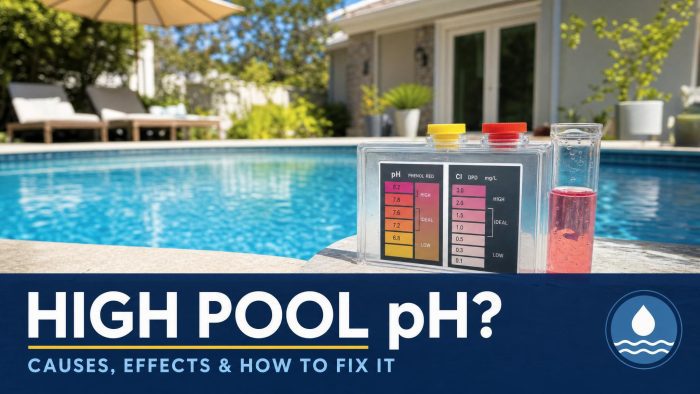
You test your pool on Monday, add some muriatic acid, and get the pH down to a perfect 7.4. By Friday? It’s back up to 8.0. Sound familiar? When your pool pH keeps rising week after week, you’re not just wasting chemicals — you’re fighting a battle you can’t win without understanding the root cause.
Quick answer
Pool pH Keeps Rising: Why It Happens and How to Fix It Permanently: You test your pool on Monday, add some muriatic acid, and get the pH down to a perfect 7.4. By Friday? It’s back up to 8.0. Sound familiar? When your pool pH keeps rising week after week, you’re not just wasting.
Here’s the frustrating truth: constantly adding acid to lower pH is like bailing water from a boat with a hole in it. You can keep bailing, or you can patch the hole. This guide will help you find your hole and patch it for good.
Why pH Rises in the First Place (The Science, Made Simple)
Think of your pool water as a chemistry experiment that never stops running. Every day, multiple forces push your pH upward. Understanding these forces is the first step to fixing the problem.
Carbon Dioxide Loss
Your pool water contains dissolved carbon dioxide (CO2), which acts as a natural acid. When CO2 escapes into the air — a process called outgassing — your water loses its acidic component and pH climbs.
What speeds up CO2 loss?
- Water features like fountains and waterfalls
- Jets pointed toward the surface
- Heavy swimmer activity (splashing and agitation)
- Windy days that disturb the water surface
If you’ve got a waterfall running 8 hours a day, you’re essentially aerating your pool constantly. That’s great for oxygen levels, but it’s pushing your pH up every single hour.
High Total Alkalinity
Total alkalinity (TA) acts as a pH buffer — it resists changes in either direction. But here’s what most pool owners don’t realize: when TA is too high, it doesn’t just buffer pH. It actively pushes pH upward.
The ideal TA range is 80-120 ppm. If yours is sitting at 150 or 180 ppm, your pH will rise stubbornly no matter how much acid you add. You’ll lower it temporarily, but the high alkalinity will push it right back up within days.
Your Sanitizer Might Be the Culprit
Different chlorine products have different pH effects:
| Sanitizer Type | pH Effect |
|---|---|
| Liquid chlorine (sodium hypochlorite) | Raises pH significantly (pH of 13) |
| Cal-hypo shock | Raises pH moderately |
| Dichlor tablets | Nearly neutral |
| Trichlor tablets | Lowers pH |
| Salt chlorine generators | Raises pH |
If you’re using liquid chlorine or have a saltwater pool, your sanitizer itself is contributing to rising pH every single day. A salt cell generates chlorine through electrolysis, which produces sodium hydroxide as a byproduct. Sodium hydroxide is literally lye — one of the strongest bases that exists.
New Plaster or Concrete Surfaces
Got a freshly plastered pool? New concrete or plaster cures over 6-12 months, and during that time it releases calcium hydroxide into your water. This process pushes pH up constantly.
If your pool is less than a year old and you’re fighting rising pH, this is probably your main issue. The good news: it’s temporary. The bad news: you’ll need to be patient and diligent with acid additions until curing completes.
How to Diagnose Your Specific Problem
Before throwing more chemicals at the problem, play detective for a week.
Step 1: Test Everything (Not Just pH)
Grab a reliable test kit — not just strips. You need accurate readings for:
- pH (target: 7.4-7.6)
- Total alkalinity (target: 80-120 ppm)
- Calcium hardness (target: 200-400 ppm)
- Cyanuric acid/stabilizer (target: 30-50 ppm)
The Taylor K-2006 Complete Test Kit gives you lab-quality results at home. It’s what pool professionals use, and it’ll pay for itself in saved chemicals.
Step 2: Track pH Daily for One Week
Test at the same time each day. Write down:
- pH reading
- TA reading
- What chemicals you added
- Water features running? (Yes/No)
- How many swimmers?
- Weather conditions
After a week, you’ll see patterns. Maybe pH spikes after heavy swimming. Maybe it rises faster when your waterfall runs. This data tells you exactly what to target.
Step 3: Check Your Fill Water
Your source water might already have high pH or alkalinity. Fill a bucket from your hose and test it. If your tap water has a pH of 8.2 and TA of 180, you’re adding to the problem every time you top off the pool.
The Permanent Fixes (Not Just Band-Aids)
Now for the part you’ve been waiting for. Here’s how to actually solve this problem instead of constantly treating symptoms.
Fix #1: Lower Your Total Alkalinity
If your TA is above 120 ppm, this is your first priority. Here’s the proper technique:
The Acid Column Method:
- Turn off the pump
- Wait 15 minutes for water to still completely
- Pour muriatic acid slowly in one spot (creates an acid column that sinks)
- Wait 30 minutes
- Turn pump back on
This method lowers alkalinity more than pH because the concentrated acid in that column affects alkalinity disproportionately. You’ll likely need to repeat this process over several days to drop TA from, say, 160 to 100 ppm.
Target TA of 70-80 ppm if you have persistent pH rise. Yes, that’s on the lower end. But slightly low alkalinity won’t cause problems, while high alkalinity will keep your pH elevated forever.
Fix #2: Reduce Aeration
Every bubble that breaks the surface releases CO2 and raises pH. Look at your setup:
Water features: Run them only when you’re actually enjoying the pool, not 24/7. A fountain running 10 hours daily could be raising your pH by 0.2-0.3 points every single day.
Return jets: Angle them downward at 45 degrees, not toward the surface. You want circulation without surface agitation.
Spillovers and waterfalls: These are pH-raising machines. If you can’t live without them, you’ll need to accept more frequent acid additions or consider an automatic acid feeder.
Fix #3: Switch Sanitizers
If you’re using liquid chlorine, consider switching to trichlor tablets for your daily sanitization. Trichlor has a pH around 2.8-3.0, so it counteracts natural pH rise as it dissolves.
Important: Trichlor adds cyanuric acid (stabilizer), so monitor CYA levels. If CYA exceeds 70 ppm, you’ll need to dilute with fresh water.
For saltwater pools, rising pH is simply part of the deal. The electrolysis process will always produce high-pH byproducts. Your options:
- Add muriatic acid weekly (most common approach)
- Install an automatic acid feeder
- Keep TA on the lower end (60-80 ppm) to slow pH rise
Fix #4: Install an Automatic Acid Feeder
If you’ve tried everything and pH still rises persistently — or if you have a salt pool and you’re tired of weekly acid additions — an automatic acid feeder is the permanent solution.
Units like the Pentair IntelliChem monitor pH continuously and inject small amounts of acid as needed. It’s a significant investment ($500-1500 plus installation), but it completely automates pH control.
For saltwater pool owners adding acid weekly, this investment often pays for itself within 2-3 years through chemical savings and time saved.
Fix #5: Use pH Decreaser Strategically
Muriatic acid works great, but it’s dangerous to handle and fumes are harsh. Dry acid (sodium bisulfate) is safer for most homeowners.
A product like pH Decreaser is pre-measured and easier to handle than liquid acid. It’s more expensive per treatment, but many pool owners prefer the convenience and safety.
Dosing tip: Start with 75% of the calculated dose. You can always add more, but adding too much means you’ll be raising pH (and spending more money) to compensate.
The Maintenance Routine That Prevents pH Creep
Once you’ve addressed the root cause, here’s the weekly routine that keeps pH stable:
Monday: Full test — pH, TA, chlorine, CYA. Adjust as needed.
Thursday: Quick pH check. Add acid if above 7.6.
Monthly: Test calcium hardness and do a deep clean of your salt cell (if applicable).
The goal isn’t perfect pH at all times. It’s keeping pH within the acceptable range (7.2-7.8) without constant intervention. If you’re adding acid more than twice a week, you haven’t found the root cause yet.
What Happens If You Ignore Rising pH?
“It’s just a little high — what’s the big deal?”
Actually, it’s a bigger deal than most people realize:
At pH 8.0 and above:
- Chlorine becomes only 21% effective (compared to 66% at pH 7.4)
- Calcium starts precipitating out, causing cloudy water
- Scale forms on your tile line, heater, and salt cell
- Skin and eye irritation increase significantly
Long-term damage:
- Heater elements scale up and fail prematurely (replacement: $400-800)
- Salt cells calcify and lose efficiency (replacement: $300-700)
- Plaster surfaces become rough and discolored
That “little” pH problem costs real money when ignored.
FAQ
Why does my pool pH rise overnight?
pH doesn’t typically change dramatically overnight unless something specific happened. If you notice a jump, look for recent causes: did you shock the pool with calcium hypochlorite? Did the sprinklers run and add high-pH tap water? Did someone run the hot tub and spa spillover? Overnight changes usually have a specific trigger you can identify.
How often should I add muriatic acid to my pool?
In a well-balanced pool, you shouldn’t need acid more than once a week — and often less. If you’re adding acid every 2-3 days, that’s a sign of an underlying issue: high alkalinity, excessive aeration, or your sanitizer type. Address the root cause instead of treating symptoms constantly.
Can I use baking soda if my pH is too low?
Baking soda (sodium bicarbonate) raises alkalinity, which indirectly raises pH over time. But if you need to raise pH quickly without significantly affecting alkalinity, use soda ash (sodium carbonate) instead. Know the difference: baking soda is for TA, soda ash is for pH.
Does rain raise or lower pool pH?
Rainwater typically has a pH between 5.0-5.5 due to dissolved carbon dioxide forming carbonic acid. So rain actually lowers your pH slightly. But heavy rain also dilutes your chemicals and can introduce contaminants. Always test after significant rainfall.
My saltwater pool pH is always high — is this normal?
Yes, it’s a characteristic of salt chlorine generators. The electrolysis process that creates chlorine also produces sodium hydroxide, which has extremely high pH. Most saltwater pool owners add small amounts of acid weekly as standard maintenance. Keeping your TA at 60-80 ppm helps minimize how quickly pH rises.
Ready to calculate exactly how much acid you need? Stop guessing and start dosing accurately. Head over to Pool Chemical Calculator to get precise chemical doses based on your pool size and current readings — or grab the app below.
Download for iPhone | Download for Android
As an Amazon Associate, Pool Chemical Calculator earns from qualifying purchases. Raises total alkalinity so pH is less likely to bounce around after treatment. Lowers high pH and helps bring alkalinity down when used carefully. Raises free chlorine quickly without adding stabilizer, which is useful when CYA is already high.Recommended pool supplies


Get exact pool chemical doses
Pool Chemical Calculator turns your test readings, pool volume, and target levels into exact treatment amounts for chlorine, pH, alkalinity, calcium, stabilizer, salt, and more.
Open the Pool Chemical Calculator app or download it from the App Store and Google Play.