
Pool Pump GPM Calculator: Find Your Perfect Flow Rate in Minutes
Why GPM Matters More Than Horsepower
Walk into any pool store and they’ll ask about horsepower. “You need a 1.5 HP pump for that size pool,” they’ll say. And they’re not wrong — but HP only tells half the story.
Quick answer
Pool Pump GPM Calculator: Find Your Perfect Flow Rate in Minutes: Why GPM Matters More Than Horsepower Walk into any pool store and they'll ask about horsepower. "You need a 1.5 HP pump for that size pool," they'll say. And they're not wrong — but HP only tells half the story.
Horsepower measures how hard your pump can work. GPM measures how much water it actually moves through your specific plumbing system. A 1.5 HP pump might deliver 80 GPM through 2-inch pipes but only 45 GPM through 1.5-inch pipes with a dirty filter.
Think of it like a car engine. A 300-horsepower engine sounds impressive. But if you’re stuck in traffic, you’re still only doing 5 mph. Your pool’s plumbing is the “traffic” that determines real-world performance.
The Real-World Impact of Wrong GPM
Too Low GPM:
- Dead spots where algae thrives
- Poor chemical distribution
- Cloudy water despite proper chemistry
- Filter can’t catch fine particles
- Skimmers barely pull surface debris
Too High GPM:
- Wasted electricity (flow resistance increases exponentially)
- Filter damage from excessive pressure
- Shortened pump lifespan
- Unnecessarily high utility bills
- Noise complaints from neighbors
Step-by-Step: Calculate Your Required Pump GPM
Let’s walk through this properly. Grab a calculator — or use the Pool Chemical Calculator app to skip the math.
Step 1: Determine Your Pool Volume
You can’t calculate GPM without knowing how many gallons you’re working with. Here’s the quick formula for rectangular pools:
Length × Width × Average Depth × 7.5 = Gallons
Example: 30 ft × 15 ft × 5 ft average depth × 7.5 = 16,875 gallons
For irregular shapes, kidney pools, or pools with varying depths, our volume calculator handles the complexity.
Step 2: Choose Your Target Turnover Time
Turnover time is how long it takes to circulate your entire pool volume through the filter once. Industry standards recommend:
| Pool Type | Recommended Turnover |
|———–|———————|
| Residential pool | 8-12 hours |
| Pool with heavy use | 6-8 hours |
| Hot tub/spa | 15-30 minutes |
| Commercial pool | 4-6 hours |
For most backyard pools, 8 hours works well. Heavy bather loads, lots of trees nearby, or warm climates? Go with 6 hours.
Learn more about optimal circulation: Pool turnover rate guide
Step 3: Apply the Formula
GPM = Pool Volume ÷ Turnover Hours ÷ 60
Let’s calculate for three common scenarios:
Small Pool (10,000 gallons, 8-hour turnover):
10,000 ÷ 8 ÷ 60 = 20.8 GPM minimum
Average Pool (20,000 gallons, 8-hour turnover):
20,000 ÷ 8 ÷ 60 = 41.7 GPM minimum
Large Pool (30,000 gallons, 6-hour turnover):
30,000 ÷ 6 ÷ 60 = 83.3 GPM minimum
Step 4: Add Your Safety Margin
Take your calculated GPM and multiply by 1.15 to 1.20 (15-20% buffer).
For that 20,000-gallon pool: 41.7 × 1.15 = 48 GPM recommended
This accounts for:
- Filter resistance as it loads with debris
- Minor pipe obstructions
- Slightly undersized equipment
- Seasonal changes in water viscosity
How to Measure Your Actual GPM
Calculating required GPM is one thing. Knowing what your pump actually delivers is another. Here’s how to check.
Method 1: Use a Flow Meter (Most Accurate)
A dedicated pool flow meter installs inline and gives you real-time GPM readings. This is the gold standard for accuracy.
Recommended: Pentair Flow Meter — installs easily and shows instant flow readings. Worth every penny if you’re serious about efficiency.
Method 2: The Bucket Test
This works for checking approximate flow through return jets:
- Get a 5-gallon bucket
- Hold it at a return jet (underwater)
- Time how long it takes to fill
- Calculate: 5 gallons ÷ seconds × 60 = GPM from that jet
If your pool has 4 return jets and one fills 5 gallons in 15 seconds:
5 ÷ 15 × 60 = 20 GPM per jet × 4 jets = 80 GPM total (approximate)
Method 3: Pump Curve Charts
Every pump has a performance curve showing GPM at different resistance levels (measured in “feet of head”). Find your pump’s curve online, estimate your system’s total head pressure, and find where they intersect.
This method requires knowing your total dynamic head — not simple, but accurate when done right.
Troubleshooting Low Actual GPM
Your calculations say you need 45 GPM. Your flow meter shows 28 GPM. Where’d the flow go? Here’s your diagnostic checklist.
Check 1: Dirty Filter
The most common culprit. A clogged filter can cut flow by 30-50%.
The fix: Clean or backwash your filter. For cartridge filters, filter cleaner spray breaks down oils and gunk that hosing alone won’t remove.
Prevention: Note your “clean filter” pressure reading. When pressure rises 8-10 PSI above that baseline, it’s cleaning time.
Check 2: Clogged Pump Basket
Hair, leaves, and debris collect in your pump strainer basket. A half-full basket restricts flow significantly.
The fix: Empty the basket weekly during swimming season. Check it after storms.
Pro tip: Skimmer socks catch fine debris before it reaches your pump basket. They’re cheap and save serious cleaning time.
Check 3: Air Leaks on Suction Side
Air bubbles in your pump basket or shooting from return jets indicate a suction leak. Air takes up space that should be water.
Common leak points:
- Pump lid O-ring (dry, cracked, or dirty)
- Union connections before the pump
- Drain plugs not fully tightened
- Cracked suction pipe underground
The fix: Inspect O-rings, apply pool-grade lubricant, and tighten connections. For underground leaks, you’ll need a pressure test.
Check 4: Undersized Plumbing
Your pump might be fine. Your pipes might be the bottleneck.
Older pools often have 1.5-inch plumbing, which maxes out around 40-45 GPM before velocity causes problems. If you’re upgrading to a larger pump, you might need to upgrade plumbing too.
Rule of thumb:
- 1.5-inch pipe: 40-45 GPM maximum
- 2-inch pipe: 70-80 GPM maximum
- 2.5-inch pipe: 110-120 GPM maximum
Check 5: Impeller Problems
A clogged or damaged pump impeller can’t move water efficiently.
Signs of impeller issues:
- Pump sounds normal but flow is weak
- Debris visible through pump strainer
- Pump worked fine, then suddenly didn’t
The fix: Turn off power, remove pump housing, and inspect the impeller. Clear debris or replace if damaged.
Matching GPM to Filter Size
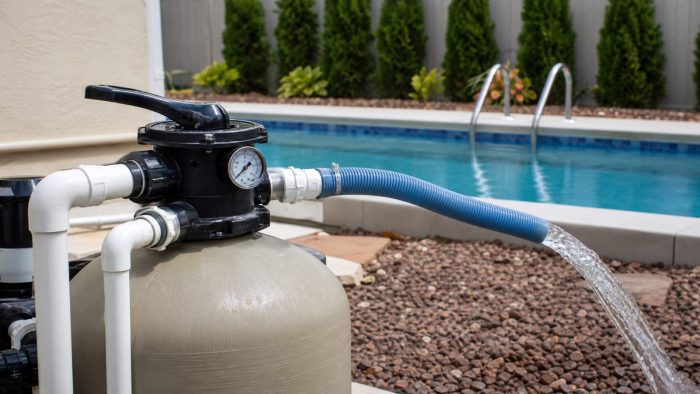
Here’s something pool stores don’t always mention: your filter has a maximum GPM rating too. Push more water through than it’s designed for, and filtration suffers.
Filter GPM ratings (approximate):
| Filter Size | Maximum GPM |
|————-|————-|
| 100 sq ft cartridge | 35-40 GPM |
| 200 sq ft cartridge | 70-80 GPM |
| 300 sq ft cartridge | 100-110 GPM |
| 24″ sand filter | 35-50 GPM |
| 30″ sand filter | 50-70 GPM |
| 36″ sand filter | 80-100 GPM |
The takeaway: If your calculated GPM exceeds your filter’s rating, you need a bigger filter — not a bigger pump.
Variable Speed Pumps and GPM
Variable speed pumps complicate GPM calculations in the best way possible. Instead of one flow rate, you get a range.
A typical variable speed pump might deliver:
- 120 GPM at 3,450 RPM (high speed)
- 60 GPM at 2,400 RPM (medium speed)
- 30 GPM at 1,200 RPM (low speed)
How to use this: Run at low speed for daily circulation (18-24 hours) and high speed for vacuuming or when pool chemistry needs quick mixing.
Calculate run time for your desired turnover: Pump run time calculator
GPM Requirements for Pool Features
Extra features need extra flow. Factor these into your calculations:
| Feature | Additional GPM Needed |
|———|———————-|
| Spa jets (each) | 12-15 GPM |
| Pool cleaner | 10-15 GPM |
| Water feature/waterfall | 30-60 GPM |
| Solar heater | 20-40 GPM |
| In-floor cleaning system | Varies by system |
Example: 20,000-gallon pool (42 GPM base) + waterfall (40 GPM) = 82 GPM total when waterfall runs.
You don’t need 82 GPM continuously. But your pump needs to deliver it when those features operate.
The Energy Cost Connection
Here’s where GPM calculations save real money.
Running a pump at 60 GPM instead of required 40 GPM doesn’t make your pool 50% cleaner. But it does use roughly 50% more electricity. Over a 6-month season, that’s hundreds of dollars wasted.
The sweet spot: Calculate your actual required GPM, then run the minimum flow rate that achieves proper turnover. Variable speed pumps make this easy. Single-speed pumps… less so.
Calculate Your Pool’s GPM Now
Skip the manual math. The Pool Chemical Calculator app handles GPM calculations, chemical dosing, and more — all from your phone, poolside.
Accurate water testing matters too. You can’t maintain proper chemistry without knowing your current levels. Grab some reliable test strips to stay on top of chlorine, pH, and alkalinity.
Frequently Asked Questions
What GPM do I need for a 15,000-gallon pool?
For an 8-hour turnover: 15,000 ÷ 8 ÷ 60 = 31.25 GPM minimum. Add 15% safety margin for 36 GPM recommended. For a 6-hour turnover (heavy use), you’d need 42 GPM minimum or about 48 GPM with buffer.
How do I know if my pump GPM is too low?
Signs include: cloudy water despite proper chemistry, visible algae in corners or steps, debris sitting on the pool floor instead of reaching the skimmer, and skimmer baskets that barely collect anything. If your pool takes more than 12 hours to turn over, GPM is definitely too low.
Does pipe size affect pump GPM?
Absolutely. Undersized pipes create flow resistance that reduces GPM regardless of pump power. A 1 HP pump pushing through 1.5-inch pipes might deliver 30 GPM. The same pump through 2-inch pipes might deliver 45 GPM. Plumbing is often the limiting factor in older pools.
What’s the difference between pump GPM and filter GPM?
Pump GPM is how much water your pump moves. Filter GPM is the maximum flow rate your filter can handle while still effectively cleaning water. Your pump GPM should never exceed your filter’s rated GPM, or particles will pass through unfiltered. Always match (or slightly undersize) pump to filter capacity.
Can I increase my pool’s GPM without buying a new pump?
Yes, several ways: clean or replace your filter, clear debris from pump and skimmer baskets, fix any suction-side air leaks, remove obstructions from return lines, and ensure valves are fully open. A dirty system can reduce flow by 30% or more. Regular maintenance often restores lost GPM.
Ready to optimize your pool’s circulation? Use our free Pool Calculator app to calculate GPM, run times, and chemical doses in seconds.
Recommended pool supplies
As an Amazon Associate, Pool Chemical Calculator earns from qualifying purchases.
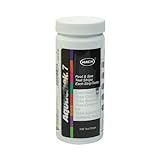
Fast daily checks between full liquid tests, especially during heavy swim season.
View on Amazon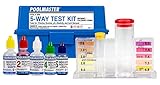
Accurate readings make every chlorine, pH, alkalinity, calcium, and CYA dose safer.
View on Amazon
A clean cartridge improves circulation and helps cloudy water clear faster.
View on AmazonGet exact pool chemical doses
Pool Chemical Calculator turns your test readings, pool volume, and target levels into exact treatment amounts for chlorine, pH, alkalinity, calcium, stabilizer, salt, and more.
Open the Pool Chemical Calculator app for iOS, Android, or web.