Pool Shock Not Working? Here’s Why and How to Fix It
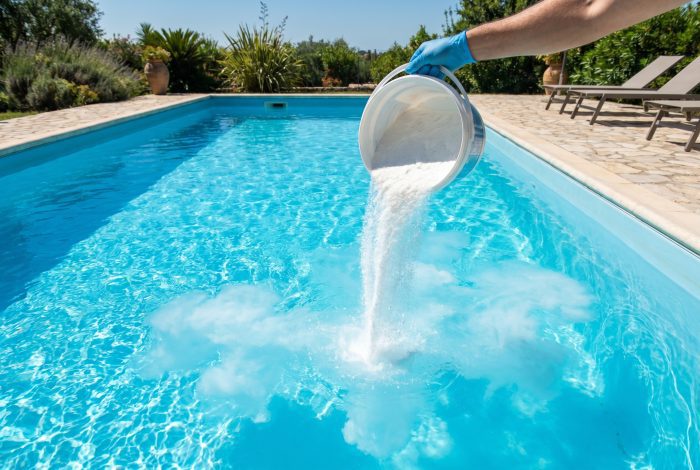
You shocked your pool. You waited. And your water still looks cloudy, green, or the chlorine reading barely moved. Sound familiar?
Quick answer
Pool Shock Not Working? Here’s Why and How to Fix It: You shocked your pool. You waited. And your water still looks cloudy, green, or the chlorine reading barely moved. Sound familiar? Pool shock not working is one of the most frustrating problems a pool owner can face —.
Pool shock not working is one of the most frustrating problems a pool owner can face — especially when you’ve already spent money on chemicals. The good news: there’s almost always a fixable reason. This guide walks through every common cause and exactly how to correct it.
What “Pool Shock Not Working” Actually Means
When shock works correctly, your free chlorine (FC) should spike significantly within a few hours and then gradually return to normal levels (1–3 ppm) as it does its job. If you test your water after shocking and FC is barely elevated — or it drops back to near zero within hours — something is actively consuming or blocking your chlorine.
That “something” is usually one of the causes below.
Cause #1: Cyanuric Acid (Stabilizer) Is Too High
This is the #1 reason pool shock doesn’t work, and most pool owners don’t know about it.
Cyanuric acid (CYA) is a stabilizer that protects chlorine from UV degradation. At the right level (30–50 ppm), it’s helpful. Above 70–80 ppm, it starts “locking” chlorine so tightly that the chlorine can’t sanitize effectively — even when your test kit shows a normal FC reading.
This is called chlorine lock or over-stabilization.
How to check: Test your CYA level with a test kit or strips. If it’s above 80 ppm, that’s almost certainly your problem.
How to fix:
- If CYA is 80–100 ppm: Partially drain and refill the pool (replacing 25–50% of the water dilutes the CYA)
- If CYA is above 100 ppm: A larger drain and refill is needed — often 50% or more
- Once CYA is back in range (30–50 ppm), reshock with the correct dose
Note: Using trichlor tablets (the common 3-inch tablets) constantly adds CYA over time. Switching to unstabilized chlorine or calcium hypochlorite shock helps keep CYA from climbing.
Cause #2: pH Is Out of Range
Chlorine’s effectiveness is directly tied to pH. At a pH of 7.2, chlorine is roughly 65% active. At pH 7.8, it drops to around 30%. At pH 8.0+, you’ve essentially neutralized most of your shock before it can do anything.
How to check: Test pH with a reliable test kit. Target range is 7.2–7.6, with 7.4 being ideal for shocking.
How to fix:
- If pH is above 7.6: Add muriatic acid or dry acid to bring it down before or simultaneously with shocking
- If pH is below 7.2: Add sodium carbonate (soda ash) to raise it
- Always adjust pH before adding shock for best results
This single step dramatically improves how well your shock performs.
Cause #3: You Shocked During the Day
UV rays from the sun destroy unstabilized chlorine rapidly — up to 1 ppm per hour in direct sunlight. If you’re using calcium hypochlorite (cal-hypo) or non-stabilized shock and you add it at noon on a sunny day, a significant portion of it will burn off before it can work.
How to fix:
- Always shock in the evening or at night
- Run your pump through the night to circulate the shock throughout the pool
- By morning, the chlorine will have done its work with minimal UV loss
Stabilized shock products (like dichlor) are slightly more UV-resistant but still perform better at night.
Cause #4: You Didn’t Use Enough Shock
Most packaging directions are based on a clean, well-maintained pool. If your pool has algae, heavy bather load, or has been neglected for weeks, you need significantly more shock than the label suggests.
A standard shock dose raises FC to around 10–15 ppm. But to break algae or kill a heavy contamination, you may need to reach 20–30 ppm or higher — called “breakpoint chlorination.”
How to calculate the right dose:
Use the Pool Chemical Calculator to figure out exactly how much shock your pool needs based on its volume, current FC level, and target FC. Guessing leads to underdosing, which wastes money and doesn’t solve the problem.
General guidelines:
- Lightly cloudy water: 1 lb cal-hypo per 10,000 gallons
- Green algae: 2–3 lbs per 10,000 gallons
- Black algae or severe contamination: 3–4 lbs per 10,000 gallons, repeated as needed
Cause #5: Heavy Algae Load Is Consuming the Chlorine
If you have visible green, yellow, or black algae, the chlorine demand is enormous. Every bit of shock you add gets consumed fighting the algae rather than building up a free chlorine residual. This is why your FC reads near zero even after adding shock — the algae is eating it as fast as you add it.
How to fix:
1. Brush the pool walls and floor thoroughly to break up algae colonies and expose them to the chlorine
2. Shock aggressively — 2–3x the normal dose for green algae
3. Run the filter continuously until the water clears
4. Backwash or clean the filter after treatment (dead algae clogs filters fast)
5. Test FC every 12 hours and re-shock if it drops back to zero
6. Once algae clears, add an algaecide as a maintenance dose to prevent regrowth
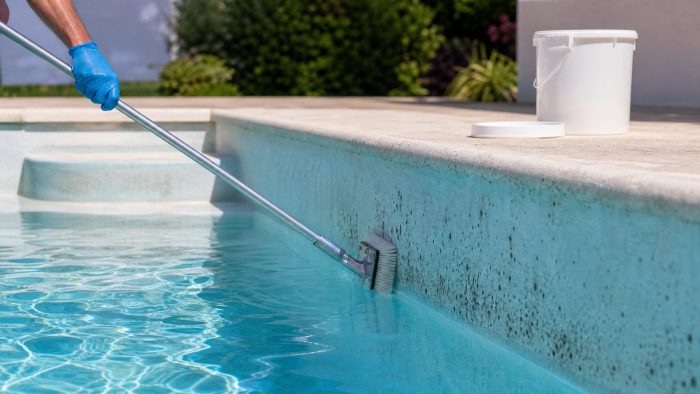
For black algae specifically, brushing with a stainless steel brush and direct application of trichlor tablets to affected spots (pressed against the surface) helps break through the protective layer.
Cause #6: The Shock Product Is Old or Improperly Stored
Pool shock has a shelf life. Calcium hypochlorite degrades significantly after 1–2 years, especially if it’s been exposed to moisture, heat, or open air. A bag that’s been sitting in your garage since last summer may have lost 20–50% of its active chlorine content.
How to check:
- Old cal-hypo often smells musty instead of sharp/chlorine-like
- The powder may have clumped or turned grayish
- If it doesn’t bubble when dropped in water, it’s likely degraded
How to fix: Use fresh shock product from a reputable source. Store sealed, in a cool, dry place away from sunlight and other chemicals.
Cause #7: Poor Circulation or Dead Spots
If your pump, filter, or return jets aren’t working properly, shock won’t distribute evenly. Chemical-dead zones form — especially in corners, behind ladders, and around steps — where algae and bacteria hide untouched.
How to fix:
- Make sure your pump is running on full circulation during and after shocking
- Point return jets to maximize circulation (slightly downward and to one side creates a circular flow)
- Brush dead zones manually before and after shocking
- Check that your filter is clean — a clogged filter severely limits circulation
When to Drain and Refill
Sometimes the chemistry is too far gone to shock your way out. Consider a partial or full drain and refill if:
- CYA is above 100 ppm and you’ve been adding shock with no effect
- Total dissolved solids (TDS) are above 3,000 ppm (for chlorine pools) or 5,000–6,000 ppm (for salt pools)
- You have persistent combined chlorine (chloramines) that won’t clear even with heavy shocking
- The pool has been severely neglected with thick algae coating surfaces
A 50% drain and refill effectively dilutes all dissolved chemistry by half, giving you a fresh starting point that’s much easier to balance.
The Right Shocking Process: Step by Step
To give your shock the best chance of working:
1. Test water first — check FC, pH, CYA, and alkalinity
2. Adjust pH to 7.2–7.4 using muriatic acid if needed
3. Calculate the correct dose using the Pool Chemical Calculator based on your pool volume
4. Pre-dissolve cal-hypo in a bucket of water before adding to the pool (prevents bleaching of liners)
5. Add shock in the evening or at night
6. Run the pump for at least 8 hours
7. Brush the pool walls and floor if algae is present
8. Test FC 8–12 hours later — it should be elevated; if not, diagnose the cause above
Maintaining Shock Effectiveness Long-Term
Once you’ve got your pool back in balance, prevention is everything:
- Keep CYA between 30–50 ppm
- Maintain pH at 7.2–7.6 consistently
- Shock weekly during heavy use and after rain or storms
- Use the Pool Chemical Calculator app to track your chemistry over time — it takes the guesswork out of dosing and alerts you when levels drift
The Pool Chemical Calculator is free to use on any device and handles the math for 24 different pool chemistry scenarios, including shock dosing based on your exact pool size.
Bottom Line
Pool shock not working almost always comes down to one of these fixable issues: CYA too high, pH off, dosing at the wrong time, underdosing, or a heavy algae load soaking up the chlorine. Work through each cause systematically, use the right amount of product, and shock at night — and you’ll get your pool back to crystal clear faster than you think.
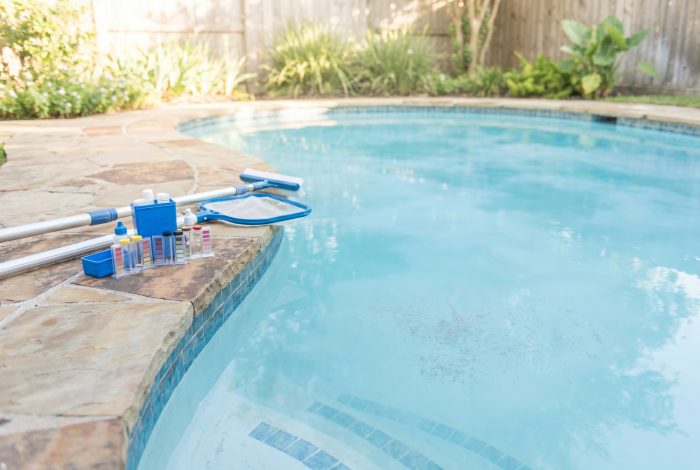
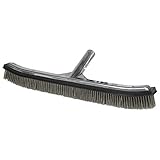
As an Amazon Associate, Pool Chemical Calculator earns from qualifying purchases. Accurate readings make every chlorine, pH, alkalinity, calcium, and CYA dose safer. Useful for algae cleanup, cloudy water, high bather load, and weekly oxidation routines. Brushing breaks up algae films, dead spots, and wall buildup so chemicals and filtration work.
Recommended pool supplies

Get exact pool chemical doses
Pool Chemical Calculator turns your test readings, pool volume, and target levels into exact treatment amounts for chlorine, pH, alkalinity, calcium, stabilizer, salt, and more.
Open the Pool Chemical Calculator app or download it from the App Store and Google Play.