
Liquid Pool Stabilizer vs Granular: Which One Should You Actually Use?
Keyword: liquid pool stabilizer vs granular
Quick answer
Liquid Pool Stabilizer vs Granular: Which One Should You Actually Use?: Keyword: liquid pool stabilizer vs granular Quick Answer For most pool owners, granular cyanuric acid (CYA) is the better choice. It's cheaper per pound, easier to store, and dissolves predictably when added correctly.
Quick Answer
For most pool owners, granular cyanuric acid (CYA) is the better choice. It’s cheaper per pound, easier to store, and dissolves predictably when added correctly. Liquid stabilizer works faster and mixes more evenly, but you’ll pay 2-3 times more for the same amount of active ingredient. Choose liquid if you need quick results or have a small pool. Choose granular for routine maintenance and larger pools.
When you’re comparing liquid pool stabilizer vs granular for your swimming pool, you’re really comparing two delivery methods for the same chemical: cyanuric acid. This compound shields your chlorine from the sun’s UV rays, extending its lifespan from a few hours to several days. Without it, you’re essentially throwing money into your pool and watching it evaporate.
But here’s where pool owners get stuck. Walk into any pool supply store, and you’ll find both liquid cyanuric acid conditioner and granular cyanuric acid stabilizer sitting on the shelf. The liquid costs more. The granular takes longer to dissolve. Which one actually makes sense for your pool?
I’ve helped thousands of pool owners figure this out through our Pool Chemical Calculator, and the answer depends on your specific situation. Let’s break down exactly when to use each form, how much you’ll need, and how to add them without making a mess or damaging your pool.
Understanding the Basics: What Stabilizer Actually Does
Cyanuric acid works like sunscreen for your chlorine. When sunlight hits unstabilized pool water, UV radiation destroys free chlorine at a rate of about 75-90% within two hours. That’s not an exaggeration — it’s chemistry.
CYA molecules bond temporarily with chlorine, creating a protective shield. The chlorine still sanitizes your water, but it’s released gradually instead of getting zapped by the sun all at once.
Target CYA levels:
- Outdoor pools: 30-50 ppm
- Salt water pools: 70-80 ppm
- Indoor pools: 0-20 ppm (minimal sun exposure)
You can check your current levels with CYA test strips before adding anything. Testing takes 30 seconds and prevents overdosing — which matters because CYA doesn’t evaporate or break down naturally.
Liquid Stabilizer: Pros, Cons, and Best Uses
What Is Liquid Pool Stabilizer?
Liquid stabilizer is cyanuric acid pre-dissolved in water, typically at concentrations between 10-13% active ingredient. The rest is just water. That’s why it costs more — you’re paying for convenience and the weight of the liquid.
Advantages of Liquid Stabilizer
Fast dissolution: Pour it in, and it’s working within minutes. No waiting for granules to break down.
Even distribution: Liquid disperses throughout your pool water almost immediately, reducing the risk of concentrated spots that can damage vinyl liners.
Easy measuring: Most bottles have graduated markings. Pour the amount you need directly into the pool.
Safe for all pool types: Lower concentration means less risk of etching plaster or fading vinyl if it contacts surfaces.
Disadvantages of Liquid Stabilizer
Higher cost: You’ll pay $25-40 per gallon for liquid pool stabilizer, but that gallon only contains 1-1.3 pounds of actual cyanuric acid. Granular gives you 4 pounds for similar money.
Heavy and bulky: A gallon weighs about 9 pounds. Shipping costs add up, and storing multiple containers takes space.
Lower concentration: You need significantly more liquid to achieve the same CYA increase as granular.
When to Choose Liquid Stabilizer
- You have a small pool (under 10,000 gallons)
- You need to raise CYA quickly before a pool party
- Your pool has a vinyl liner and you’re concerned about granules settling
- You prefer simplicity over cost savings
Granular Stabilizer: Pros, Cons, and Best Uses
What Is Granular Cyanuric Acid?
Granular CYA is pure cyanuric acid in crystalline form, typically 99-100% active ingredient. It looks like white powder or small crystals and dissolves slowly in water.
Advantages of Granular Stabilizer
Cost-effective: A 4-pound bag of granular cyanuric acid costs $20-30 and raises CYA levels significantly in most residential pools. That’s 3-4 times more product for your dollar compared to liquid.
Long shelf life: Stored dry, granular CYA lasts indefinitely. No expiration concerns.
Concentrated power: Less product to handle, store, and transport.
Standard choice: Most pool professionals use granular because it’s economical for regular maintenance.
Disadvantages of Granular Stabilizer
Slow dissolution: Granular CYA takes 2-7 days to fully dissolve, depending on water temperature and circulation. You won’t see immediate results.
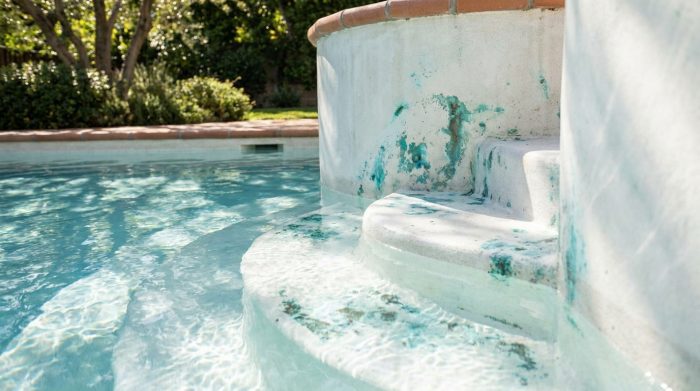
Requires pre-dissolving or sock method: You can’t just dump it in. Granules that settle on pool surfaces can cause damage or leave white marks.
Slight hassle factor: The extra step of using a filter sock or bucket adds 10-15 minutes to the process.
When to Choose Granular Stabilizer
- You have a medium to large pool (15,000+ gallons)
- You’re doing seasonal pool opening and can wait for results
- Cost matters more than convenience
- You’re raising CYA by more than 10 ppm
Dosing: How Much Stabilizer Do You Actually Need?
Here’s where math saves you money. The amount of stabilizer you need depends on three things: your pool’s volume, your current CYA level, and your target CYA level.
Dosing Formula
Granular CYA: Add 13 ounces (about 0.8 pounds) per 10,000 gallons to raise CYA by 10 ppm.
Liquid Stabilizer (13% concentration): Add 1 gallon per 10,000 gallons to raise CYA by approximately 10 ppm.
Quick Dosing Chart (per 10,000 gallons)
| CYA Increase Needed | Granular CYA | Liquid Stabilizer (13%) |
|———————|————–|————————|
| 10 ppm | 13 oz | 1 gallon |
| 20 ppm | 26 oz (1.6 lbs) | 2 gallons |
| 30 ppm | 39 oz (2.4 lbs) | 3 gallons |
| 40 ppm | 52 oz (3.25 lbs) | 4 gallons |
Don’t know your pool’s volume? Use our Pool Volume Calculator to get an accurate measurement. Guessing leads to overdosing or underdosing — both waste money.
For precise dosing based on your specific pool, our Stabilizer Calculator does the math automatically.
Cost Comparison: The Real Numbers
Let’s compare the cost of raising CYA by 30 ppm in a 20,000-gallon pool:
Granular CYA:
- Amount needed: approximately 4.8 pounds
- Average cost: $6-8 per pound
- Total cost: $29-38
Liquid Stabilizer (13%):
- Amount needed: approximately 6 gallons
- Average cost: $25-35 per gallon
- Total cost: $150-210
That’s a 4-5x price difference for the same result. For a one-time adjustment, liquid might be worth the convenience. For ongoing maintenance or larger pools, granular wins every time.
Step-by-Step: How to Add Stabilizer Safely
Adding Granular Cyanuric Acid (Recommended Method)
What you’ll need:
- Granular CYA (measured amount)
- Old sock, pantyhose, or filter bag
- String or zip tie
- 5-gallon bucket (optional)
Step 1: Calculate the Exact Amount
Use our Stabilizer Calculator to find the exact amount needed.
Step 2: Load the Granular CYA Into a Sock
Place the measured granular CYA inside a clean sock or filter bag.
Step 3: Put the Sock in Moving Water
Tie the sock closed and hang it in front of a return jet, or place it in the skimmer basket.
Step 4: Run the Pump for 48-72 Hours
Run your pump continuously for 48-72 hours. Squeeze the sock occasionally to help dissolution.
Step 5: Wait Before Retesting
Wait 5-7 days before retesting. CYA tests can read inaccurately while granules are still dissolving.
Step 6: Adjust Free Chlorine
Adjust chlorine levels accordingly — higher CYA means you need slightly higher free chlorine. Our Chlorine Calculator helps you find the right balance.
Adding Liquid Stabilizer
Step 1: Calculate the exact amount needed.
Step 2: With the pump running, pour the liquid stabilizer around the perimeter of your pool. Avoid pouring in one spot.
Step 3: Continue running the pump for at least 4 hours to ensure even distribution.
Step 4: Retest after 24 hours and adjust if necessary.
Important Safety Tips
Never mix stabilizer with other chemicals. Add CYA separately from chlorine, acid, or any other pool chemicals.
Protect yourself. Granular CYA is an eye and skin irritant. Wear gloves and avoid breathing the dust.
Don’t overdose. CYA levels above 100 ppm cause “chlorine lock,” where chlorine becomes ineffective at sanitizing. The only fix is draining and diluting your pool water.
Add gradually. When raising CYA significantly, split the dose over several days. This gives you a chance to test and adjust.
Frequently Asked Questions
Can I pour granular stabilizer directly into my pool?
Technically yes, but I don’t recommend it. Undissolved granules sink and can sit on your pool floor or settle in corners. On vinyl liners, this can cause bleaching or damage. On plaster, it can leave temporary white marks. The sock method takes an extra 5 minutes and prevents these problems entirely.
How long does it take for stabilizer to work?
Liquid stabilizer works almost immediately — within 30-60 minutes, your chlorine has protection. Granular CYA takes longer: expect 2-3 days for noticeable effects and 5-7 days for full dissolution and accurate test readings.
Can I use too much stabilizer?
Absolutely. CYA above 80-100 ppm reduces chlorine’s effectiveness significantly. Your chlorine is still there, but it can’t kill bacteria and algae properly. The only practical solution is partial water replacement. Test before adding, and never guess.
Does stabilizer expire?
Granular CYA stored in a dry, sealed container lasts indefinitely. Liquid stabilizer has a shelf life of 2-3 years but can degrade faster if exposed to temperature extremes. Check for clumping or discoloration before using old product.
Should I add stabilizer before or after shocking my pool?
Add stabilizer first, wait 24 hours, then shock. Shocking first is wasteful — the sun destroys unstabilized chlorine before it can finish the job. Get your CYA level right, then add your shock treatment.
The Bottom Line
For most pool owners, granular cyanuric acid makes the most sense. It costs less, stores easily, and works just as well as liquid — you just need patience. Use the sock method, wait a week, and retest.
Choose liquid stabilizer when you need fast results, have a smaller pool, or simply prefer the convenience of pouring and walking away.
Either way, accurate dosing matters more than which form you choose. Too little stabilizer wastes chlorine. Too much creates bigger problems than it solves.
Ready to calculate exactly how much stabilizer your pool needs? Our free Pool Chemical Calculator takes your pool’s volume and current CYA level, then tells you precisely how much to add. No guessing, no math, no overdosing. Try it now and get your pool chemistry dialed in.
Recommended pool supplies
As an Amazon Associate, Pool Chemical Calculator earns from qualifying purchases.
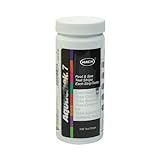
Fast daily checks between full liquid tests, especially during heavy swim season.
View on Amazon
Accurate readings make every chlorine, pH, alkalinity, calcium, and CYA dose safer.
View on Amazon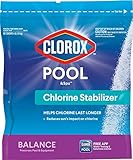
Protects chlorine from sunlight, especially in outdoor pools with low stabilizer.
View on AmazonGet exact pool chemical doses
Pool Chemical Calculator turns your test readings, pool volume, and target levels into exact treatment amounts for chlorine, pH, alkalinity, calcium, stabilizer, salt, and more.
Open the Pool Chemical Calculator app for iOS, Android, or web.