
Pool Equipment Freeze Damage Prevention: Pumps, Pipes, and Filters
Quick answer
The reliable way to prevent pool equipment freeze damage is to choose one complete strategy before temperatures drop: keep an open pool circulating under a working freeze-protection system, or fully winterize the equipment and plumbing. Insulation alone is not enough. Confirm water level, pump prime, valve positions, power, and actual return flow. If power fails or circulation cannot be trusted, turn off the breaker and follow the equipment manuals for draining and winterizing. Never restart frozen equipment until it has thawed and been inspected.
Quick answer
Pool Equipment Freeze Damage Prevention: Pumps, Pipes, and Filters: Quick answer The reliable way to prevent pool equipment freeze damage is to choose one complete strategy before temperatures drop: keep an open pool circulating under a working freeze-protection system, or fully.
Why pool equipment freezes
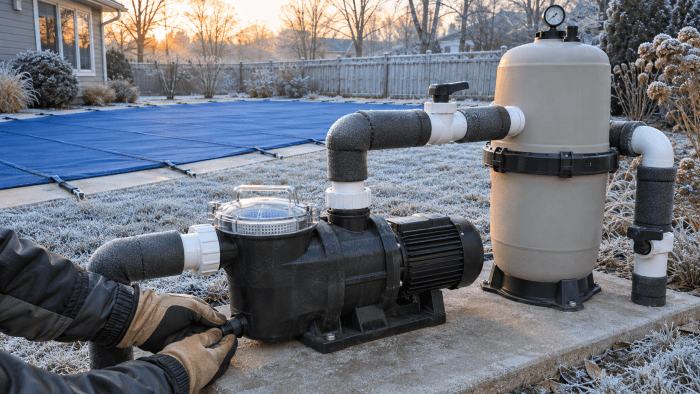
Water trapped in a pump housing, filter tank, heater, salt cell, valve, or exposed pipe expands as it freezes. That expansion can split plastic bodies, crack fittings, distort seals, and create leaks that only appear after the system starts again. The pool itself is usually less vulnerable than the small volumes of water trapped above ground at the equipment pad.
Short freezes and prolonged hard freezes require different decisions. For a pool that stays open, moving water can reduce risk when the pump, valves, power supply, and automation are all working. For a seasonal closure or an extended outage, circulation cannot protect the system. Full winterization is the safer path.
Pentair’s current winter-weather guidance similarly emphasizes keeping water moving during a brief freeze, while its outage guidance says to shut off breakers and assess the equipment before power returns. Always use the manual for your exact pump, filter, heater, salt system, and automation panel.
Choose the right freeze strategy
Open pool with dependable power
Use the manufacturer’s freeze-protection mode or schedule. Confirm the trigger temperature, the circuits assigned to freeze protection, and that the pump maintains prime. Some systems circulate only selected bodies of water or equipment, so do not assume every line is protected.
Seasonal pool closure
Use the complete closing procedure for your climate. Balance the water, clean the pool, lower water only as instructed, blow water from lines, install plugs, drain above-ground equipment, and protect the cover and exposed plumbing. Pool-grade antifreeze belongs only where the equipment or manufacturer specifically allows it. Do not improvise with automotive antifreeze.
Imminent outage or failed circulation
If the pump has lost prime, a breaker is tripping, a valve is stuck, or a storm may remove power, treat the system as unprotected. Follow the emergency shutdown and drain procedure in the equipment manuals. A blanket over the pad can buy time from wind and precipitation, but it does not remove water from a pump or pipe.
Freeze-damage prevention checklist
Complete these checks before the first hard freeze:
- Verify the pool water is high enough for the pump to remain primed, but follow the closing instructions for a winterized pool.
- Clean the pump basket and filter so restricted flow does not defeat freeze protection.
- Check that valves are in the normal operating position and that returns produce visible flow.
- Confirm freeze protection is enabled and the correct pump or circuits are assigned.
- Compare the controller’s air-temperature reading with a shaded thermometer near the equipment pad.
- Inspect exposed plumbing, hose bibs, autofill lines, and backflow devices for cracks or leaks.
- Install outdoor-rated pipe insulation where the manufacturer or local climate guidance supports it. Keep heater exhaust and electrical equipment clear.
- Locate drain plugs, unions, filter drains, and the equipment disconnect before bad weather arrives.
- Keep chemicals dry and away from motors, controllers, heaters, and electrical panels.
- Photograph the equipment pad and record model numbers before winter service.
How to protect an open pool during a freeze
Step 1: Check the weather and system type
Determine whether the event is a short overnight freeze or a sustained hard freeze. Read the controller and pump manuals. Do not change a freeze threshold just because a generic online recommendation uses a different temperature.
Step 2: Confirm water and flow
Check the water level, pump basket, pressure gauge, return jets, and visible leaks. A pump that is running without prime is not providing freeze protection. Stop a dry-running pump and troubleshoot the cause.
Step 3: Test freeze protection before the cold arrives
Confirm the freeze feature is enabled, the air sensor reads plausibly, and the assigned pump starts when called. Check separate spa, water-feature, cleaner, solar, or heat-pump circuits as specified by the controller manual.
Step 4: Insulate vulnerable exposed lines
Use weather-resistant insulation on appropriate exposed plumbing. Keep insulation away from hot exhaust, moving parts, and electrical components. Insulation slows heat loss, but it does not replace circulation or full winterization.
Step 5: Monitor during the freeze
Look for return flow, normal pump sound, stable pressure, and an intact water level. Do not walk on an icy cover or touch wet electrical equipment. If the system stops, move to the outage procedure instead of repeatedly resetting a breaker.
What to do if power fails
Turn off the pool-equipment breakers if it is safe to do so. This prevents equipment from starting unexpectedly when power returns. Do not use a generator near wet equipment or connect it in a way that can backfeed the home.
If freezing conditions will continue, drain the pump, filter, heater, chlorinator, and other above-ground components according to their manuals. Many systems require opening specific drains or unions, and some lines must be blown out and plugged. If the equipment sits below pool water level, closing valves or installing plugs incorrectly can release water unexpectedly. Call a pool professional when the procedure is unclear.
After power returns, wait until the equipment and plumbing have thawed. Inspect for cracks, bulges, leaks, and displaced plugs before restoring power. Never run a pump against a frozen line or with a damaged housing.
Chemical care during winter
Freeze protection is primarily a circulation and equipment problem, but water balance still matters. Test before a cold event and avoid adding chemicals by guesswork. Use the pool volume calculator, chlorine calculator, and pH calculator for measured adjustments. The Pool Chemical Calculator app keeps those calculations available when you are working outside.
Do not pour chemicals into a frozen pool, mix products at the equipment pad, or store oxidizers and acids beside a motor or electrical panel. Follow the label and local disposal rules.
Useful winter protection supplies
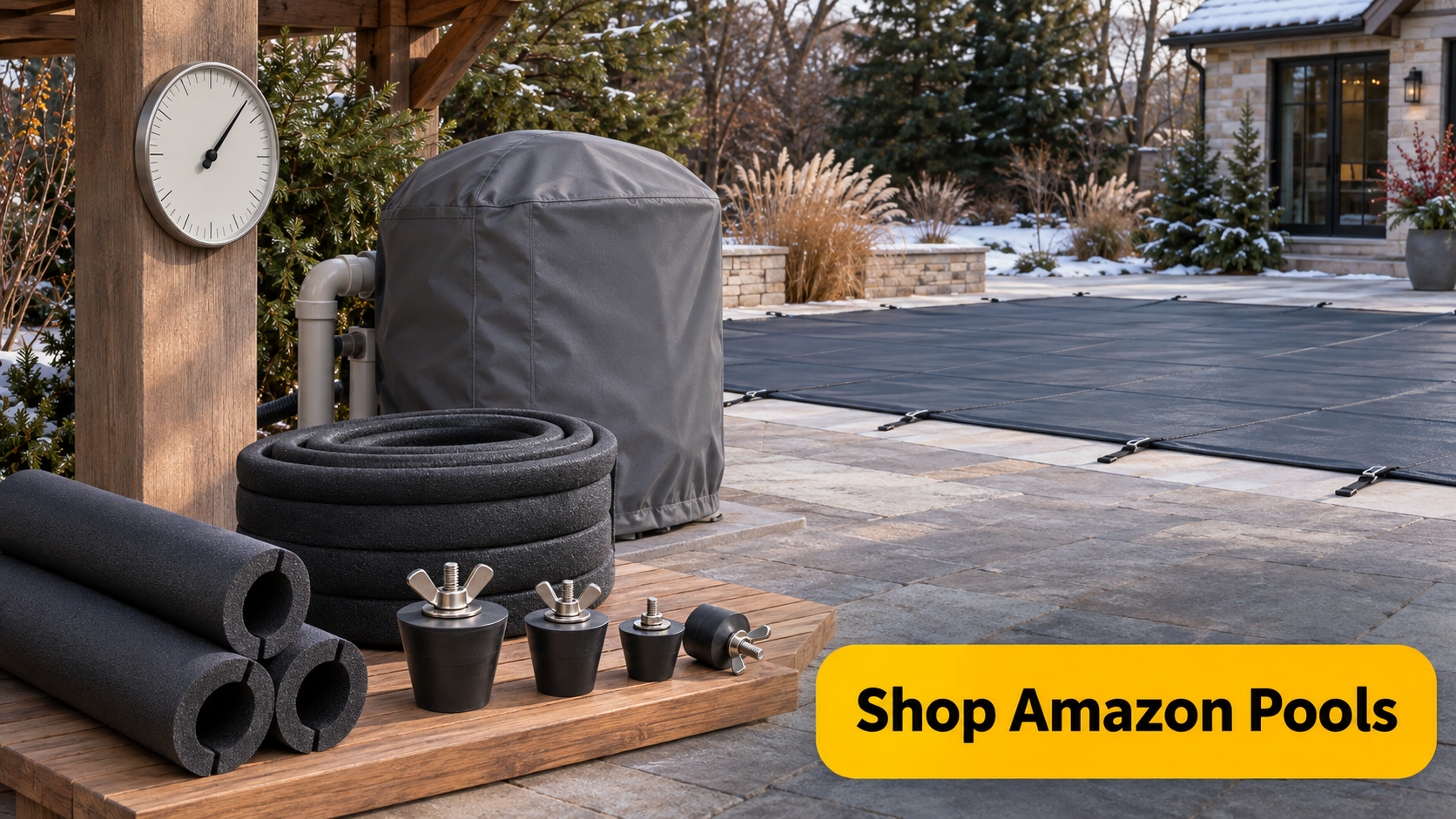
For pipe insulation, approved winterizing plugs, a shaded thermometer, or an equipment cover, compare pool freeze-protection supplies on Amazon. As an Amazon Associate, Pool Chemical Calculator may earn from qualifying purchases.
Affiliate disclosure: As an Amazon Associate, Pool Chemical Calculator may earn from qualifying purchases.
FAQ
Does running the pool pump prevent freeze damage?
It can reduce risk during a brief freeze when the pump has power, remains primed, and circulates every vulnerable line. It is not protection against a power outage, blocked plumbing, failed equipment, or a prolonged freeze.
Should I cover my pool equipment with a blanket?
A breathable, weather-appropriate cover can reduce wind and precipitation exposure, but it must not block ventilation, heater exhaust, controls, or access to electrical disconnects. Covering equipment does not drain trapped water.
Should I turn on the pool heater during a freeze?
Not unless the manufacturer specifically says to use it for that purpose. Freeze protection normally relies on circulation, and a heater cannot protect a system with no flow or power. Follow the heater and automation manuals.
What should I do if pool equipment already froze?
Turn off power, do not force valves or start the pump, and let the system thaw naturally. Inspect the pump housing, filter, heater, salt cell, unions, and exposed pipes for cracks or leaks. Have a qualified technician assess hidden damage before operation.
Is pipe insulation enough for pool freeze protection?
No. Insulation slows heat loss but does not remove trapped water or restore circulation. Use it as one part of an open-pool plan, or fully drain and winterize the system for a seasonal closure or unreliable power.
Bottom line
Prevent pool equipment freeze damage by deciding early whether the pool will remain open with verified circulation or be fully winterized. Check flow, sensors, valves, water level, exposed plumbing, and power before the freeze. If circulation or power fails, shut down safely, drain according to the manuals, and inspect everything before restarting.
Recommended pool supplies
As an Amazon Associate, Pool Chemical Calculator earns from qualifying purchases.

Accurate readings make every chlorine, pH, alkalinity, calcium, and CYA dose safer.
View on Amazon
Slow-dissolving tablets help keep routine free chlorine steady in floaters or chlorinators.
View on Amazon
A clean cartridge improves circulation and helps cloudy water clear faster.
View on AmazonGet exact pool chemical doses
Pool Chemical Calculator turns your test readings, pool volume, and target levels into exact treatment amounts for chlorine, pH, alkalinity, calcium, stabilizer, salt, and more.
Open the Pool Chemical Calculator app for iOS, Android, or web.