
Pool Freeze Protection Sensor: Testing, Placement, and Replacement Guide
Quick answer
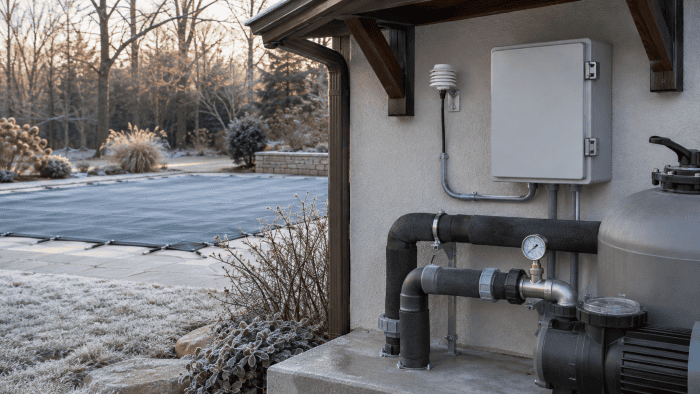
A pool freeze-protection sensor is usually an air-temperature sensor mounted near the equipment pad. It tells the automation controller when to start circulation, often around the mid-to-upper 30s °F. If freeze protection is not activating, compare the controller’s reading with a shaded thermometer, inspect the sensor cable and connector, confirm the sensor is assigned and enabled, and test the pump without opening energized equipment. Replace a sensor only with the model approved for your controller; a generic outdoor thermometer is not a control sensor.
Quick answer
Pool Freeze Protection Sensor: Testing, Placement, and Replacement Guide: Quick answer A pool freeze-protection sensor is usually an air-temperature sensor mounted near the equipment pad. It tells the automation controller when to start circulation, often around the mid-to-upper 30s °F. If.
What a pool freeze-protection sensor does
The sensor measures outdoor air near the plumbing and equipment most at risk. When the measured temperature reaches the controller’s freeze threshold, the automation system can start an assigned pump or valve circuit. Circulation can reduce risk, but it cannot protect equipment during a power outage, a blocked line, a failed pump, or a prolonged hard freeze.
Do not confuse an air sensor with a water-temperature probe. The correct sensor type, location, wiring, and menu assignment depend on the automation brand and installation.
Sensor symptoms and likely causes
| Symptom | Likely cause | Safe next check |
|—|—|—|
| Controller reads much warmer than outside | Sensor is in sun, near warm equipment, loose, or failing | Compare with a shaded thermometer and inspect only accessible wiring |
| Freeze protection never starts | Feature disabled, wrong threshold, unassigned pump, or bad sensor | Review the freeze-protection menu and saved circuit assignment |
| Freeze protection starts at the wrong time | Sensor calibration, placement, or threshold problem | Record both readings and follow the controller manual |
| Reading jumps or shows an error | Damaged cable, corroded connection, or failed probe | Turn off power before any service and call a technician if unsure |
| Pump runs but plumbing still freezes | No prime, closed valve, blocked line, or insufficient flow | Check visible return flow; never let a pump run dry |
How to test a pool freeze sensor
Step 1: Protect people first
Do not remove automation-panel covers or touch wiring in wet conditions. If breakers trip, wires are damaged, or equipment smells hot, stop and call a qualified professional.
Step 2: Find the displayed air temperature
Use the controller or pump interface, not the pool-water temperature screen.
Step 3: Measure nearby air correctly
Put a reliable thermometer in shade near the equipment pad, away from the motor, heater exhaust, house wall, and direct sun. Allow it to stabilize.
Step 4: Compare readings
A persistent, clearly implausible difference suggests placement, wiring, calibration, or sensor failure. The exact acceptable tolerance is controller-specific.
Step 5: Check settings
Confirm freeze protection is enabled, the trigger temperature is saved, and the filter pump is assigned. Check separate spa, water-feature, solar, or cleaner circuits according to the manufacturer’s instructions.
Step 6: Check for actual flow
When the system calls for protection, confirm the pump starts, stays primed, and produces normal return flow. A status message alone does not prove circulation.
Step 7: Document before replacing
Record the controller model, sensor part number, displayed temperature, outdoor reading, and any error code. This prevents buying an incompatible probe.
Sensor placement matters
The probe should be exposed to representative outdoor air and protected from direct sun, heater discharge, motor heat, and trapped heat inside an enclosure. It should not be buried under insulation or pressed against a hot wall. Follow the equipment manufacturer’s mounting instructions because moving a sensor can change when protection starts.
Do not relocate a sensor simply to make the automation start earlier. If exposed plumbing freezes before the sensor responds, the installation may need additional insulation, a different approved sensor location, a lower threshold, or full winterization.
Replacing the sensor safely
Use the exact replacement specified for the automation system. Turn equipment power off using the manufacturer’s shutdown procedure before disconnecting any user-serviceable connector. Route the new cable away from high-voltage conductors, sharp edges, heater exhaust, and standing water. Restore power, confirm the reading is plausible, and test the assigned freeze circuit before the next freeze.
If the sensor is hard-wired inside an automation enclosure, the pump repeatedly trips a breaker, or you cannot positively identify the disconnect, hire a qualified pool technician or electrician. A freeze sensor is a control component, not a good place for trial-and-error wiring.
What to do during an imminent freeze
Keep the pool water at the level required for safe skimmer operation and follow the controller’s freeze-protection instructions. Watch for real return flow and unusual pump noise. If power will be out, the pump cannot prime, or the pool is already being closed, circulation cannot protect the plumbing; use the manufacturer’s complete drain, blow-out, and plug procedure instead.
Use the pool volume calculator before making water-balance adjustments, and use the chlorine calculator and pH calculator for measured doses. The Pool Chemical Calculator app keeps the calculations available on your phone.
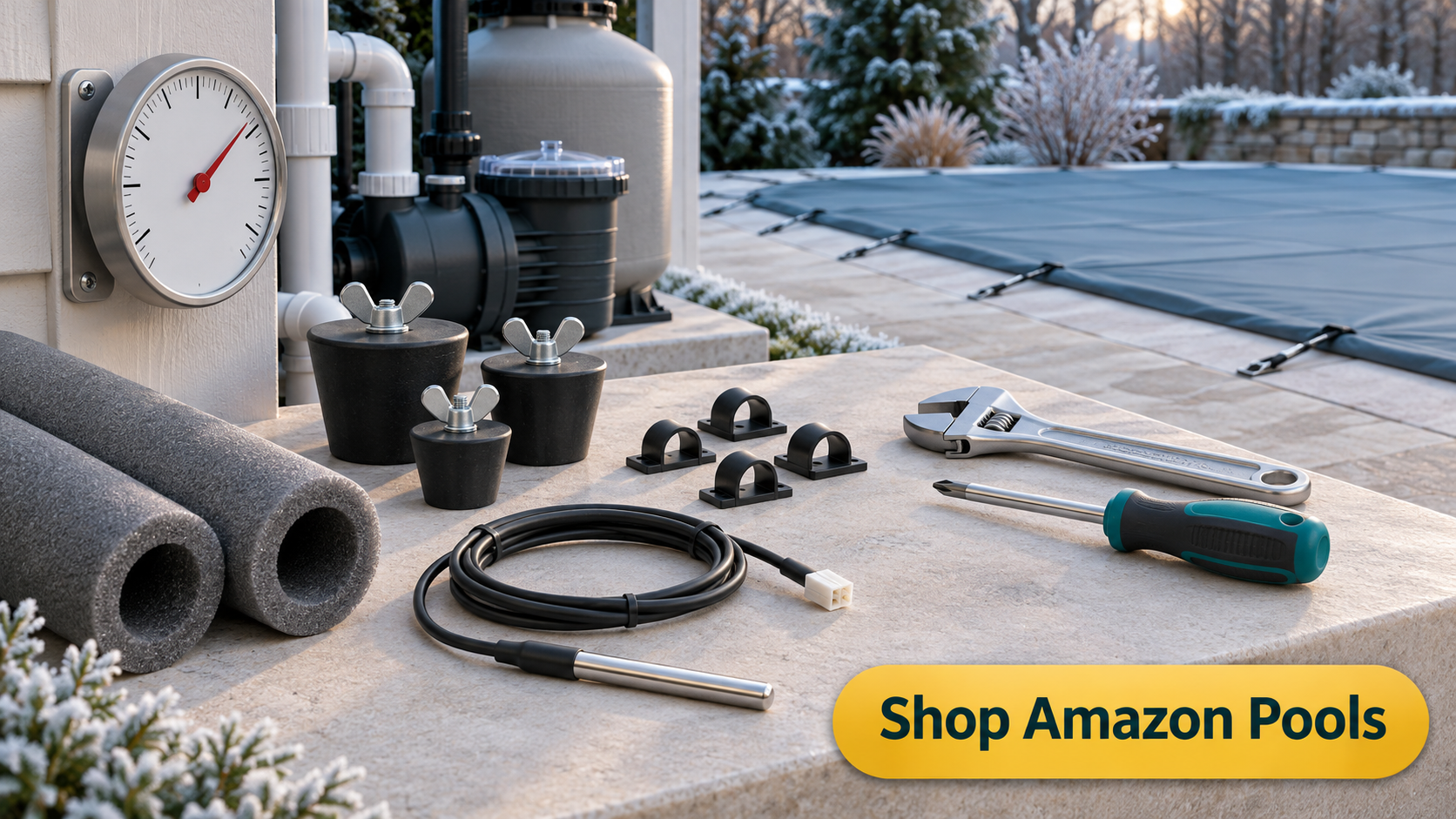
Useful freeze-protection supplies
For a shaded outdoor thermometer, approved replacement sensor, pipe insulation, winterizing plugs, or equipment cover, compare pool freeze-protection supplies on Amazon. As an Amazon Associate, Pool Chemical Calculator may earn from qualifying purchases.
Affiliate disclosure: As an Amazon Associate, Pool Chemical Calculator may earn from qualifying purchases.
FAQ
Where should a pool freeze sensor be mounted?
Usually in representative shaded outdoor air near the equipment pad, away from sun, heater exhaust, motor heat, and enclosed heat. Follow the controller manufacturer’s placement instructions.
Can I use a regular outdoor thermometer as a freeze sensor?
No. A thermometer can help you compare readings, but the automation system needs its approved sensor and electrical interface to control equipment.
What temperature should a freeze sensor trigger?
Many systems use a threshold in the mid-to-upper 30s °F, but the correct value depends on the controller, sensor location, exposed plumbing, and local conditions. Use the manufacturer’s setting.
Does a new sensor guarantee that pipes will not freeze?
No. The pump still needs power, prime, open valves, and adequate flow. A prolonged outage or closed/winterized pool requires a complete winterization procedure.
How do I know the sensor is bad?
Compare its stabilized reading with a shaded thermometer and look for implausible, jumping, or error readings. Confirm the feature and circuit assignment first; a good sensor cannot fix disabled settings or a failed pump.
Bottom line
Test a pool freeze-protection sensor by comparing its stabilized air reading in shade, confirming the controller settings and circuit assignment, and verifying real pump flow. Use the approved replacement for your automation system, and switch to full winterization when power or circulation cannot be trusted.
Recommended pool supplies
As an Amazon Associate, Pool Chemical Calculator earns from qualifying purchases.

Accurate readings make every chlorine, pH, alkalinity, calcium, and CYA dose safer.
View on Amazon
Removes leaves and debris before they consume chlorine and stain the pool.
View on Amazon
Useful for algae cleanup, cloudy water, high bather load, and weekly oxidation routines.
View on AmazonGet exact pool chemical doses
Pool Chemical Calculator turns your test readings, pool volume, and target levels into exact treatment amounts for chlorine, pH, alkalinity, calcium, stabilizer, salt, and more.
Open the Pool Chemical Calculator app for iOS, Android, or web.