
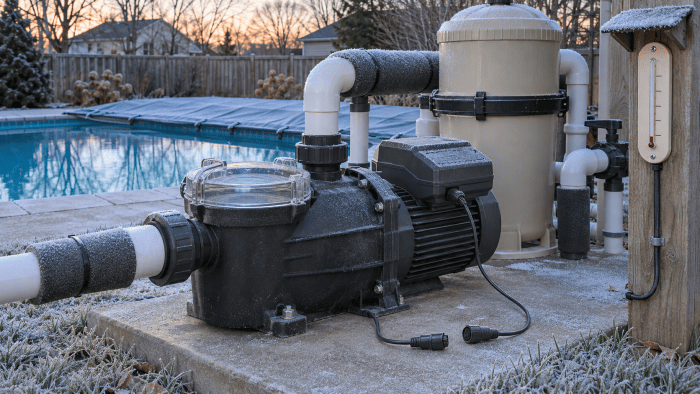
Pool Pump Freeze Protection Not Working: Troubleshooting Guide
Quick answer
If pool pump freeze protection is not working, first verify the displayed air temperature, freeze-protection setting, circuit assignment, power supply, water level, pump prime, and valve position. A controller can say “freeze protect active” while the pump still fails to start because the sensor is inaccurate, the pump is in service/stop mode, a breaker or GFCI has tripped, the pump is not assigned to freeze protection, or a variable-speed pump is being commanded below a reliable circulation speed. Do not run a pump dry or open energized equipment. If a hard freeze is approaching and circulation cannot be restored, use the manufacturer’s emergency winterization procedure or call a pool professional.
Quick answer
Pool Pump Freeze Protection Not Working: Troubleshooting Guide: Quick answer If pool pump freeze protection is not working, first verify the displayed air temperature, freeze-protection setting, circuit assignment, power supply, water level, pump prime, and valve position. A.
Freeze protection is short-term insurance for an open, water-filled pool system. It is not a guarantee against a prolonged outage, a failed sensor, blocked plumbing, or a pool that should have been fully drained and winterized.
What to check first
| Check | What you should see | If it fails |
|—|—|—|
| Air sensor | A temperature close to a reliable outdoor thermometer | Calibrate or replace the sensor according to the controller manual. |
| Freeze setting | Enabled, with a trigger commonly in the mid-to-upper 30s °F | Re-enable it and confirm the saved setting. |
| Protected circuits | Filter pump and any water-filled spa, cleaner, or water-feature circuit that needs circulation | Assign the missing circuit in the automation menu. |
| Power | No tripped breaker, GFCI, disconnect, or service switch | Reset only equipment you can safely access; call an electrician for repeated trips. |
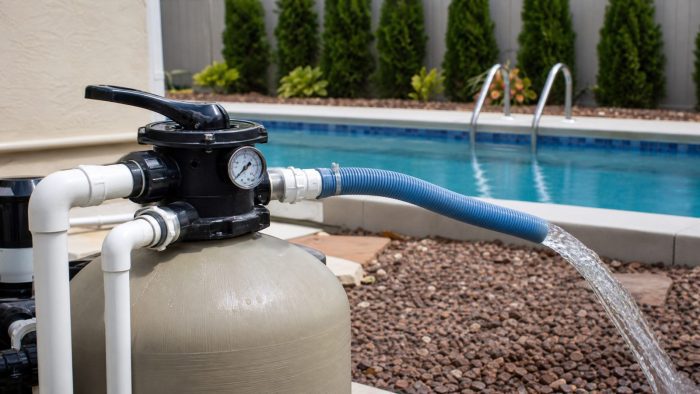
| Water flow | Full pump basket, normal pressure, and visible return flow | Shut down before the pump runs dry and find the suction, valve, or prime problem. |
| Controller mode | Auto/remote operation rather than service, stop, or manual-off mode | Return the system to its normal automatic mode. |
Why pool freeze protection fails
The air-temperature sensor is wrong
Most automation systems use an air sensor to decide when to activate freeze protection. A sensor that reads too warm will not trigger when it should. A loose connection, damaged cable, corrosion, bad calibration, or a sensor mounted near a heat source can all produce a misleading reading. Compare the controller’s air temperature with a shaded outdoor thermometer at the equipment pad. Do not put your hand on the sensor or assume the pool-water temperature is the same as the air temperature.
Some systems display an explicit air-sensor error. Treat an error, an implausible reading, or a rapidly jumping temperature as a control failure until the sensor and wiring are checked.
Freeze protection is disabled or assigned incorrectly
The main filter pump is commonly assigned by default, but that is not universal across controllers and installations. A previous service visit, factory reset, or configuration change may have removed the assignment. Check the freeze-protection menu, not just the normal daily schedule. If a spa pump, booster pump, spillover, solar loop, or water feature contains water that can freeze, confirm how the manufacturer says to protect that circuit.
Jandy documentation describes freeze protection as an equipment-assignment feature and warns that using the spa during a freeze can leave other protected equipment without circulation. Pentair and other systems use their own menus, sensors, and pump-speed rules, so use the manual for the exact controller.
The system has no usable power
Freeze protection cannot run a pump during a power outage. Check the equipment-pad breaker, GFCI, disconnect, timer, automation panel, and pump display from outside the service area. A breaker that trips again is a fault, not an invitation to keep resetting it. Do not remove electrical covers or work on live equipment in wet weather.
For a prolonged outage, follow the equipment manufacturer’s emergency drain or winterization instructions. Circulation-based freeze protection is not a substitute for removing water from vulnerable equipment and plumbing when power will not return.
The pump is in the wrong control mode
Service mode, stop mode, a local pump override, a disabled schedule, or a communication fault can prevent an automation command from reaching the motor. Look for messages such as “service,” “offline,” “pump stopped,” “communication error,” or “freeze protect active” without actual motor operation. If the pump can be started manually from the approved user controls but not automatically, the fault is likely in the controller, assignment, sensor, or communications path.
The pump starts but cannot circulate water
A freeze command is not proof of flow. Low pool water, a blocked skimmer, a full pump basket, a closed valve, a suction-side air leak, a stuck check valve, or a failed motor can leave the pump unable to maintain prime. Stop the pump if the basket is not filling or the motor is running dry. Inspect only user-serviceable baskets and valves with power off, then prime the system according to the pump manual.
The variable-speed pump is set too slowly
A variable-speed pump may show that freeze protection is active while running at a speed that does not move enough water through the protected plumbing. Use the lowest freeze-protection speed that maintains prime and visible return flow through the required paths. If a heater, spa loop, or water feature is assigned, the needed speed may be higher. Never exceed the pump, filter, heater, or plumbing limits to force flow.
Step-by-step troubleshooting
1. Protect people and equipment first
If the pump is smoking, making a grinding sound, leaking electricity, repeatedly tripping protection, or running without water, turn it off using the safe user control and get professional help. Do not open the motor, controller, breaker panel, or energized automation enclosure.
2. Compare the air reading
Place a reliable thermometer in the shade near the equipment pad. Compare it with the controller reading after it has stabilized. If the controller reads several degrees warm or shows an error, freeze protection may not trigger. Follow the controller manual for sensor calibration, wiring checks, or replacement.
3. Confirm the trigger and assignment
Open the freeze-protection settings and confirm that the feature is enabled, the activation temperature is saved, and the filter pump is assigned. Check separate pool and spa settings. Assign only equipment the manufacturer says should circulate during a freeze; an incorrect valve sequence can create a different hazard.
4. Confirm automatic operation and power
Return the controller and pump to the normal automatic mode. Check the display for a service or stop state, then inspect the accessible breaker, GFCI, disconnect, and pump status. If power returns briefly and immediately trips again, stop testing and call a qualified electrician or pool technician.
5. Verify prime and flow
With power safely available, check whether the pump basket remains full of water, the filter pressure is in its normal range, and return jets visibly move water. A low water level, blocked basket, closed valve, or air leak must be corrected before freeze protection can do its job. Never leave a pump running dry.
6. Test before the next freeze
Do not wait for a hard freeze to discover the problem. Use the approved controller test or diagnostic mode, observe the first automatic cycle, and confirm that the pump starts, valves move as expected, and water circulates. Record the normal air reading, filter pressure, pump speed, and protected circuits for future troubleshooting.
What to do if freezing weather is imminent
If the system is an open pool and the pump can circulate safely, keep the required circuits protected according to the manufacturer’s instructions and monitor the equipment during the freeze. Keep the water level high enough for the skimmer to maintain suction, but do not allow a cover or drain setup to block the system.
If the pump cannot run, power is expected to be out, or the pool is already being closed, do not improvise by running a dry pump. Shut down and drain, blow out, and plug the vulnerable equipment and lines only with the correct winterization procedure for that pool and filter type. A qualified pool professional is the safest option when the procedure is unfamiliar.
Use the pool volume calculator to confirm the pool size, then use the chlorine calculator and pH calculator for cold-weather water-balance decisions. The Pool Chemical Calculator app keeps the measurements and doses available from your phone.
Affiliate disclosure: As an Amazon Associate, Pool Chemical Calculator may earn from qualifying purchases.
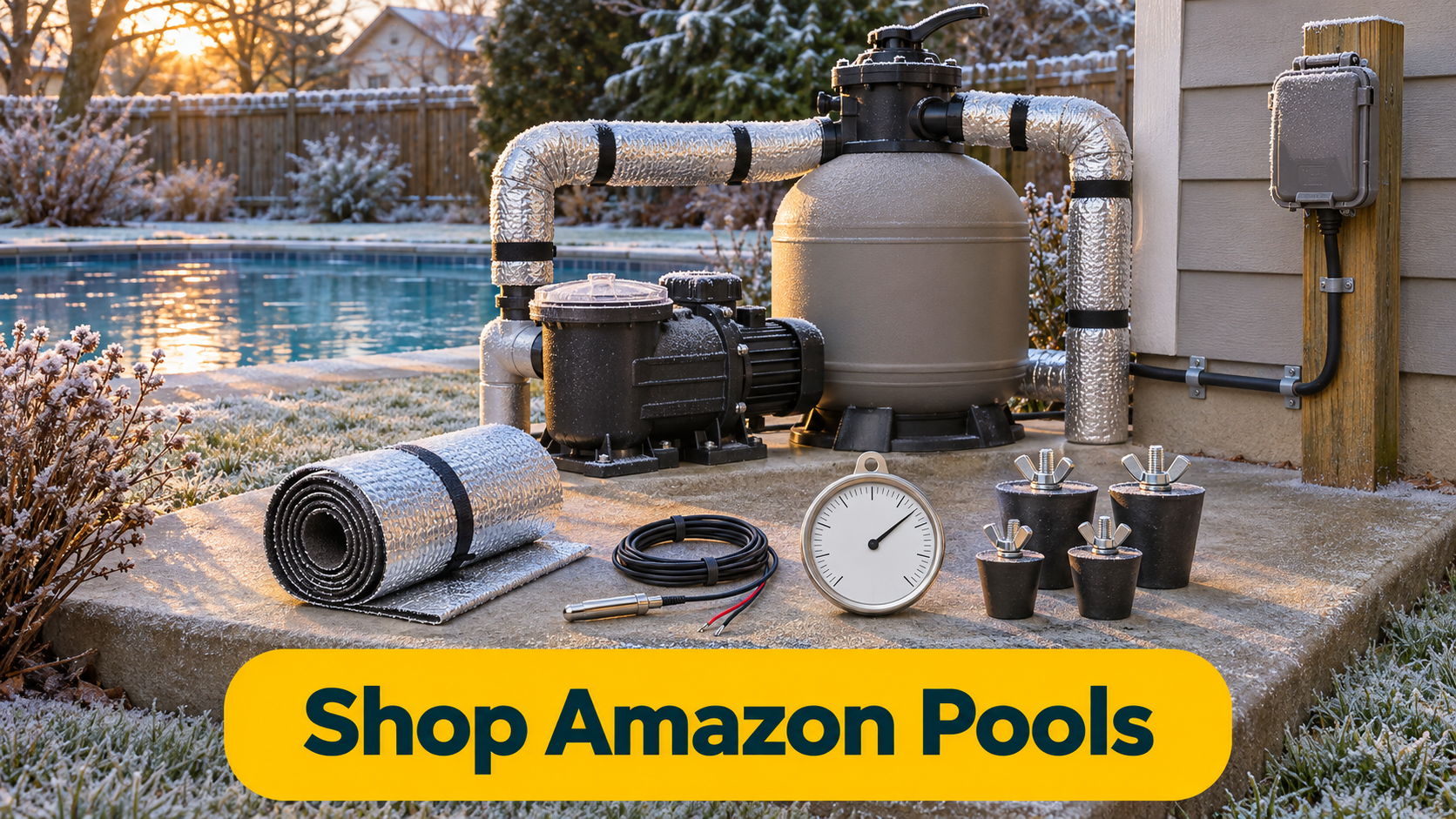
Useful freeze-protection supplies
For an outdoor thermometer, replacement sensor, pipe insulation, winterizing plugs, or a backup cover pump, compare pool freeze-protection supplies on Amazon. As an Amazon Associate, Pool Chemical Calculator may earn from qualifying purchases.
FAQ
Why does my pool say freeze protection is active but the pump is off?
Check the pump’s actual status, service/stop mode, circuit assignment, controller communication, breaker, and motor fault display. The message confirms that the logic engaged, not that the motor successfully started or that water is flowing.
What temperature should pool freeze protection start?
Many systems use a trigger in the mid-to-upper 30s °F, but the correct setting depends on the controller, sensor location, exposed plumbing, and local conditions. Follow the exact equipment manual rather than copying a generic number.
Can freeze protection work during a power outage?
No. It requires power, a working sensor, a functioning controller, and a pump that can maintain prime. Use the manufacturer’s emergency winterization procedure for a prolonged outage.
Should I reset a breaker if the freeze-protection pump keeps tripping it?
No. One safe reset may identify a temporary trip, but repeated trips indicate an electrical or equipment fault. Leave it off and call a qualified electrician or pool technician.
Does freeze protection protect every pool pipe and accessory?
Not automatically. It normally protects only assigned, water-filled circuits that actually circulate. Valves, dead legs, heaters, cleaners, booster pumps, and water features may need separate assignment or winterization.
Bottom line
When pool pump freeze protection is not working, verify the sensor, settings, circuit assignment, power, control mode, prime, valves, and actual return flow in that order. If the pump cannot circulate safely or a power outage is expected, stop troubleshooting before damage occurs and winterize the vulnerable equipment using the manufacturer’s procedure.
Recommended pool supplies
As an Amazon Associate, Pool Chemical Calculator earns from qualifying purchases.

Accurate readings make every chlorine, pH, alkalinity, calcium, and CYA dose safer.
View on Amazon
A clean cartridge improves circulation and helps cloudy water clear faster.
View on Amazon
Fast daily checks between full liquid tests, especially during heavy swim season.
View on AmazonGet exact pool chemical doses
Pool Chemical Calculator turns your test readings, pool volume, and target levels into exact treatment amounts for chlorine, pH, alkalinity, calcium, stabilizer, salt, and more.
Open the Pool Chemical Calculator app for iOS, Android, or web.