
Pool Water Freezing Under Cover: What to Do Safely
Quick answer
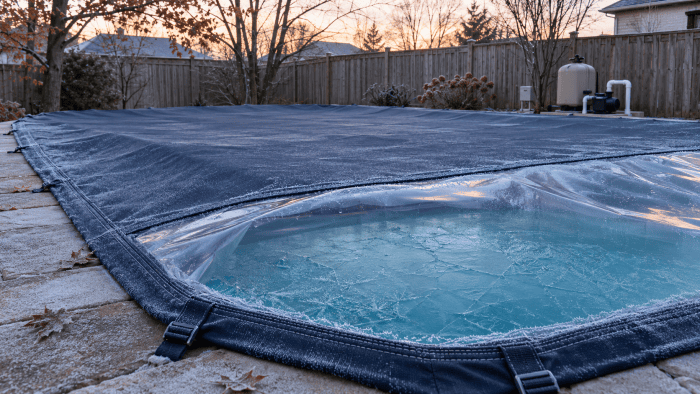
Pool water can form a thin surface ice layer under a winter cover during a freeze, especially in shallow areas, but the cover does not make the pool safe to walk on or protect the equipment automatically. Do not break the ice, walk on the cover, pump blindly, or restart frozen equipment. Check the weather, water level, cover condition, and equipment from the deck. Keep the pool closed according to the manufacturer instructions, and call a professional if ice is thick, the cover is under strain, plumbing is frozen, or the cover has shifted.
Quick answer
Pool Water Freezing Under Cover: What to Do Safely: Quick answer Pool water can form a thin surface ice layer under a winter cover during a freeze, especially in shallow areas, but the cover does not make the pool safe to walk on or protect the equipment automatically.
Why pool water freezes under a cover
A winter cover slows heat loss, but it is not a heated barrier. Cold air, wind, shallow water, low water level, and long nights can cool the top layer until ice crystals form. An opaque cover can also hide the first signs of freezing. The water below may remain liquid while the surface develops a thin sheet of ice.
The cover itself can reduce wind mixing and evaporation, which usually helps, but a cover is not designed to carry a person or a large ice load. The risk is higher when the water level is too low, the cover has sagged, or snow and ice accumulate on top. Ice expansion can also press against a vinyl liner, skimmer, steps, or an automatic cover housing.
Is pool water freezing under cover dangerous?
Thin surface ice is not automatically an emergency. The danger comes from treating it like a solid platform or disturbing the pool system without knowing what is frozen. Never step onto a winter cover, even if the ice looks thick. A cover can tear, shift, or collapse under a person before the ice appears weak.
Do not throw salt, rock salt, hot water, or random chemicals onto the ice. Salt can damage metal and concrete, hot water can shock a liner or cover, and breaking ice with a pole can puncture the cover or liner. Leave the surface alone unless the cover manufacturer or a qualified pool professional gives you a specific procedure.
What to check from the deck
Use a safe, dry viewing position and inspect these items without climbing onto the cover:
- Look for a thin, uniform ice layer versus heavy ice, snow, or water collecting on top.
- Check whether the cover remains anchored, centered, and free of torn straps or loose clips.
- Look for exposed liner, displaced water bags, damaged springs, or gaps along the edge.
- Compare the water level with the manufacturer’s recommended winter level.
- Inspect visible plumbing and the equipment pad for frost, bulging, cracks, or leaks.
- Check whether an automatic cover is fully closed and whether its housing is clear of ice and debris.
- Keep children, pets, and visitors away from the covered pool area.
If the cover is pulling away from the coping, the water level has fallen sharply, or the structure is damaged, contact a pool professional before trying to correct it.
How to handle a frozen pool cover safely
Step 1: Confirm the weather pattern
A brief overnight freeze is different from several days below freezing. Check the local forecast and wind exposure. Do not rely on an indoor thermostat or an unshielded sensor beside a warm wall. A shaded outdoor thermometer near the pool equipment gives a better comparison, but follow the instructions for your equipment’s own sensor.
Step 2: Leave the ice intact
Do not chip, drill, sweep, or pull at the ice. Ice bonded to a cover can tear the fabric when it moves. If snow must be removed, use only a method approved for the specific cover, and have a pool professional handle heavy or frozen accumulation. Never use a roof rake, shovel, or motorized tool on a pool cover unless the manufacturer expressly permits it.
Step 3: Verify the cover and water level
From the deck, confirm that anchors, springs, straps, water bags, or clips are in position. Do not add water bags to a cover that is already under abnormal tension. If the cover is sagging because the pool water is low, do not guess at the correction. The proper level depends on the pool, cover type, climate, and closing instructions.
Step 4: Protect the equipment separately
The pool cover does not protect the pump, filter, heater, salt cell, valves, or exposed plumbing from freezing. For an open pool, confirm the freeze-protection mode is enabled and that the pump is primed and moving water. For a winterized pool, do not turn on the pump just because the weather changed. A frozen line or housing can crack when the motor starts.
Step 5: Wait for a natural thaw before inspection
When temperatures rise above freezing, let the ice melt naturally. Then inspect the cover, water level, liner, skimmer, returns, and equipment. Look for leaks, cracked fittings, displaced plugs, torn seams, and water trapped where it should not be. If the pump, filter, or plumbing is still frozen, keep power off and arrange an inspection.
What if the pool cover is full of water?
A small amount of rain or meltwater may be normal for some cover systems, but a large pond of water adds weight and can stress the cover and anchors. Do not walk onto the cover to operate a pump. Use a cover pump from the deck only if it is rated for the conditions, the power connection is dry and protected, and the hose will discharge somewhere safe without refreezing against the pool.
If the pump runs but no water moves, stop it and check for a frozen intake, blocked hose, or frozen discharge. Do not keep resetting a tripped breaker. Electrical equipment, extension cords, and wet surfaces are a dangerous combination. If water is rising rapidly or the cover is close to failure, call a professional.
Winter chemistry after a freeze
Once the water is liquid and it is safe to test, measure before adding anything. A cover does not eliminate chlorine demand, and winter dilution from rain or snow can change the balance. Use the pool volume calculator, chlorine calculator, and pH calculator for measured adjustments. The Pool Chemical Calculator app can keep the calculations accessible during cold-weather maintenance.
Never add chemicals onto ice, mix products on the cover, or open a container beside wet electrical equipment. Follow the product label, your closing plan, and local disposal rules. If the pool is fully winterized, follow the winter maintenance schedule rather than repeatedly adding chemicals by guesswork.
Winter cover supplies that help
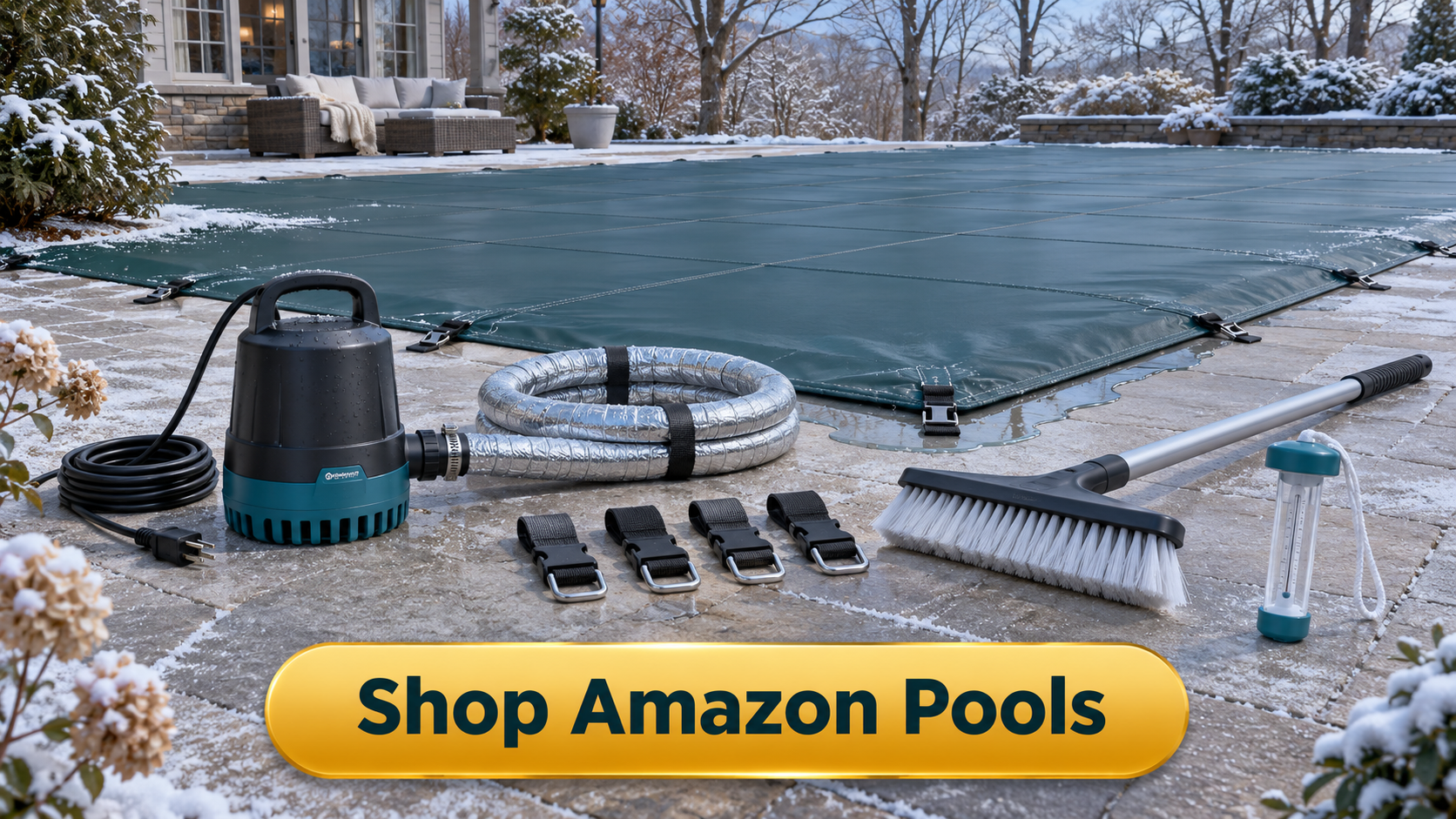
For a cover pump, replacement clips, a shaded thermometer, or a winter brush, compare pool winter cover supplies on Amazon. As an Amazon Associate, Pool Chemical Calculator may earn from qualifying purchases.
Affiliate disclosure: As an Amazon Associate, Pool Chemical Calculator may earn from qualifying purchases.
FAQ
Can pool water freeze solid under a winter cover?
A thin surface layer can freeze during sustained cold, especially in shallow water. A whole pool freezing solid is less common, but the risk depends on climate, depth, exposure, water level, and duration. Treat any ice as unsafe to walk on.
Should I break ice on my pool cover?
No. Breaking ice can tear the cover, damage the liner, and send sharp pieces into the pool. Let it thaw naturally unless the cover manufacturer or a qualified professional provides a specific safe method.
Can I run a cover pump when the hose is frozen?
No. Turn it off and inspect from a safe position. A frozen intake or discharge can make the pump overheat or trip a breaker. Resume only when the pump and hose are thawed, the electrical connection is dry, and the setup is safe.
Should I add chlorine while the pool is frozen?
Do not pour chemicals onto ice or add them by estimate. Wait until the water is liquid and can be tested, then follow the closing plan and product label. Ask a pool professional if the pool was winterized and the chemistry is uncertain.
How do I know if ice damaged my pool cover?
After thawing, inspect seams, straps, clips, springs, water bags, edges, and any areas that were under heavy weight. Look for tears, stretched fabric, shifted anchors, and unusual sagging. Do not use a damaged cover until it has been repaired or replaced.
Bottom line
Pool water freezing under cover usually calls for patience, distance, and a careful inspection after thawing. Keep people off the cover, do not chip the ice, protect the equipment with the correct open-pool or winterization strategy, and handle frozen pumps or electrical equipment as a professional service issue. Measure water chemistry only after the pool is safe to access.
Recommended pool supplies
As an Amazon Associate, Pool Chemical Calculator earns from qualifying purchases.

Useful for algae cleanup, cloudy water, high bather load, and weekly oxidation routines.
View on Amazon
Accurate readings make every chlorine, pH, alkalinity, calcium, and CYA dose safer.
View on Amazon
Removes leaves and debris before they consume chlorine and stain the pool.
View on AmazonGet exact pool chemical doses
Pool Chemical Calculator turns your test readings, pool volume, and target levels into exact treatment amounts for chlorine, pH, alkalinity, calcium, stabilizer, salt, and more.
Open the Pool Chemical Calculator app for iOS, Android, or web.