
Pool Heater Calculator: How to Size Your Heater and Estimate Heating Time
Step 1: Calculate Your Pool Volume
Before you can size a heater, you need to know exactly how much water you’re heating. Guessing leads to expensive mistakes.
Quick answer
Pool Heater Calculator: How to Size Your Heater and Estimate Heating Time: Step 1: Calculate Your Pool Volume Before you can size a heater, you need to know exactly how much water you're heating. Guessing leads to expensive mistakes. Rectangular Pools Formula: Length × Width × Average Depth ×.
Rectangular Pools
Formula: Length × Width × Average Depth × 7.5 = Gallons
Example: A 16′ × 32′ pool with an average depth of 5 feet:
- 16 × 32 × 5 × 7.5 = 19,200 gallons
Oval Pools
Formula: Length × Width × Average Depth × 5.9 = Gallons
Example: An 18′ × 33′ oval pool with 4.5-foot average depth:
- 18 × 33 × 4.5 × 5.9 = 15,772 gallons
Round Pools
Formula: Diameter × Diameter × Average Depth × 5.9 = Gallons
Example: A 24-foot round pool with 4-foot depth:
- 24 × 24 × 4 × 5.9 = 13,594 gallons
Quick Reference: Common Pool Sizes
| Pool Dimensions | Shape | Avg Depth | Gallons |
|—————–|——-|———–|———|
| 12′ × 24′ | Rectangle | 5′ | 10,800 |
| 16′ × 32′ | Rectangle | 5′ | 19,200 |
| 18′ × 36′ | Rectangle | 5.5′ | 26,730 |
| 20′ × 40′ | Rectangle | 5.5′ | 33,000 |
| 15′ × 30′ | Oval | 4′ | 10,620 |
| 24′ diameter | Round | 4′ | 13,594 |
Need exact calculations for your specific pool shape? The Pool Chemical Calculator app handles irregular shapes too.
Step 2: Determine Your Temperature Rise Requirement
Temperature rise is the difference between your current water temperature and where you want it. This number dramatically affects heater sizing and operating costs.
Typical Temperature Rise Scenarios
- Mild climate, spring swimming: 10-15°F rise (water at 70°F, want 80-85°F)
- Moderate climate, season extension: 15-20°F rise
- Cool climate or early/late season: 20-30°F rise
- Spa heating from cold: 30-40°F rise
Why This Matters
Every degree of temperature rise requires energy. Doubling your temperature rise requirement doubles your heating costs and time. A pool in Phoenix needing a 10°F boost operates completely differently than one in Minnesota needing 30°F.
Step 3: Calculate Total BTU Requirement
Here’s where the real math happens. You need to know how many BTUs it takes to heat your specific pool to your desired temperature.
The Formula
Total BTUs Needed = Pool Gallons × 8.34 × Temperature Rise
The 8.34 represents the weight of one gallon of water in pounds. Water’s specific heat capacity means it takes 1 BTU to raise 1 pound of water by 1°F.
Example Calculation
Scenario: 20,000-gallon pool, raising temperature from 65°F to 82°F (17°F rise)
- 20,000 × 8.34 × 17 = 2,835,600 BTUs total
That’s the total energy needed. But here’s the thing — you also lose heat constantly through evaporation, radiation, and convection. Your heater fights against these losses while trying to raise the temperature.
Step 4: Size Your Pool Heater (BTU/hr Rating)
Pool heaters are rated in BTU per hour. The size you need depends on how fast you want to heat your pool and how much heat loss you’re fighting.
The Surface Area Method (Quick Sizing)
Formula: Pool Surface Area × 12 = Minimum BTU/hr
This assumes average conditions and provides a baseline.
Example: 16′ × 32′ pool = 512 sq ft surface area
- 512 × 12 = 61,440 BTU/hr minimum
But this is just the minimum. Most pool owners want faster heating and need to account for wind, shade, and ambient temperatures.
The Comprehensive Method
For accurate sizing, factor in:
- Desired heating time (how fast you want results)
- Heat loss rate (varies by location and conditions)
- Efficiency of heater type
Practical BTU/hr Guidelines by Pool Size:
| Pool Volume | Surface Area (approx) | Recommended Gas Heater | Heat Pump |
|————-|———————-|————————|———–|
| 10,000 gal | 300 sq ft | 200,000 BTU/hr | 95,000 BTU/hr |
| 15,000 gal | 400 sq ft | 300,000 BTU/hr | 120,000 BTU/hr |
| 20,000 gal | 500 sq ft | 400,000 BTU/hr | 140,000 BTU/hr |
| 30,000 gal | 650 sq ft | 400,000-500,000 BTU/hr | 140,000+ BTU/hr |
Oversizing vs. Undersizing
Undersized heater problems:
- Takes 24+ hours to heat pool
- Never reaches desired temperature on cold days
- Runs constantly, wearing out faster
- Higher operating costs (fighting heat loss longer)
Oversized heater considerations:
- Higher upfront cost
- Faster heating (the main benefit)
- Doesn’t hurt efficiency — gas heaters work at rated efficiency regardless of run time
- Better for occasional users who heat on-demand
My recommendation? Size up one level from the minimum. That 400,000 BTU heater for your 20,000-gallon pool beats a 300,000 BTU unit. You’ll heat faster and spend less on operating costs per swim session.
Step 5: Estimate Heating Time
Now for the question everyone actually cares about: “How long until I can swim?”
Heating Time Formula
Hours to Heat = Total BTUs Needed ÷ (Heater BTU/hr × Efficiency)
Important: This assumes no heat loss during heating. Real-world times run 20-50% longer due to losses.
Gas Heater Efficiency
Modern gas heaters run 80-95% efficiency. Standard units hit about 82%, while high-efficiency models reach 95%.
Example: Gas Heater
Scenario:
- 20,000 gallons
- 17°F temperature rise
- 400,000 BTU/hr heater
- 82% efficiency
Calculation:
- Total BTUs: 20,000 × 8.34 × 17 = 2,835,600 BTUs
- Effective output: 400,000 × 0.82 = 328,000 BTU/hr
- Base time: 2,835,600 ÷ 328,000 = 8.6 hours
- With heat loss (add 30%): 11-12 hours realistic
Heat Pump Timing
Heat pumps work differently. They’re rated for specific air temperatures and deliver about 50,000-140,000 BTU/hr depending on conditions.
Same 20,000-gallon pool with 120,000 BTU heat pump:
- Base time: 2,835,600 ÷ 120,000 = 23.6 hours
- With losses and varying air temps: 24-36 hours realistic
Heat pumps work best for maintaining temperature rather than rapid heating.
Step 6: Calculate Operating Costs
The right heater isn’t just about BTUs — it’s about what you’ll pay monthly to run it.
Gas Heater Operating Cost
Formula: (Total BTUs ÷ 100,000) × Cost per Therm ÷ Efficiency
Example: Heating our 20,000-gallon pool 17°F with natural gas at $1.50/therm:
- (2,835,600 ÷ 100,000) × $1.50 ÷ 0.82 = $51.86 per heating cycle
Propane costs roughly 2-3× more than natural gas. At $3.00 per gallon (about 91,500 BTUs):
- 2,835,600 ÷ 91,500 × $3.00 ÷ 0.82 = $113.26 per heating cycle
Heat Pump Operating Cost
Heat pumps run on electricity but deliver 3-7 BTUs per watt used (depending on air temperature). This “COP” (coefficient of performance) makes them much cheaper to operate.
Same heating scenario with heat pump at COP of 5 and $0.15/kWh:
- BTUs needed: 2,835,600
- Watts needed: 2,835,600 ÷ 5 = 567,120 watt-hours (567 kWh)
- Cost: 567 × $0.15 = $85.08
Wait — that’s more expensive than gas? Here’s the catch: heat pumps excel at maintaining temperature. Once heated, keeping your pool warm might cost $5-15 per day versus $30-50 with gas. For regular swimmers who keep their pool heated, heat pumps save serious money over a season.
Solar Heater Costs
Solar panels cost nothing to operate once installed. But they add 5-10°F on sunny days and can’t heat on demand or at night. Perfect for extending your season in sunny climates, not for heating a cold pool Friday night for Saturday’s party.
Choosing the Right Heater Type
Gas Heaters: The Fast Option
Best for:
- Occasional use (heating for weekend parties)
- Any climate
- Quick temperature boosts
- Spas and hot tubs
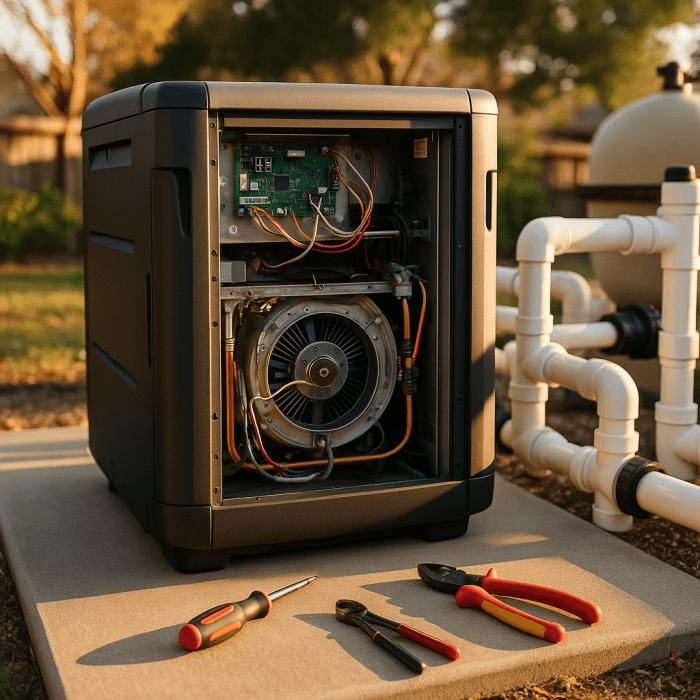
Consider this: The Hayward H400FDN Universal H-Series delivers 400,000 BTU/hr and heats most residential pools in under 12 hours. It’s the workhorse of the industry.
Pros:
- Heats fast regardless of air temperature
- Lower upfront cost than heat pumps
- Works in any weather
Cons:
- Higher operating costs
- Shorter lifespan (5-10 years)
- Requires gas line installation
Heat Pumps: The Efficient Option
Best for:
- Regular swimmers (3+ times weekly)
- Warm climates (air temp above 50°F)
- Season extension
- Lower monthly costs
Pros:
- 50-80% lower operating costs than gas
- Longer lifespan (10-20 years)
- Eco-friendly
Cons:
- Slow heating (24-72 hours)
- Doesn’t work in cold air (below 50°F)
- Higher upfront cost ($3,000-6,000)
Solar Heaters: The Free-to-Run Option
Best for:
- Sunny climates
- Pool owners with roof space
- Budget-conscious seasonal swimmers
- Environmental priority
Pros:
- Zero operating costs
- Longest lifespan (15-25 years)
- No ongoing fuel expenses
Cons:
- Can’t heat on demand
- Requires significant roof/ground space
- Won’t work on cloudy days or at night
- Initial installation costs vary widely
Reduce Heat Loss and Save Money
Whatever heater you choose, reducing heat loss cuts costs dramatically.
Use a Solar Cover
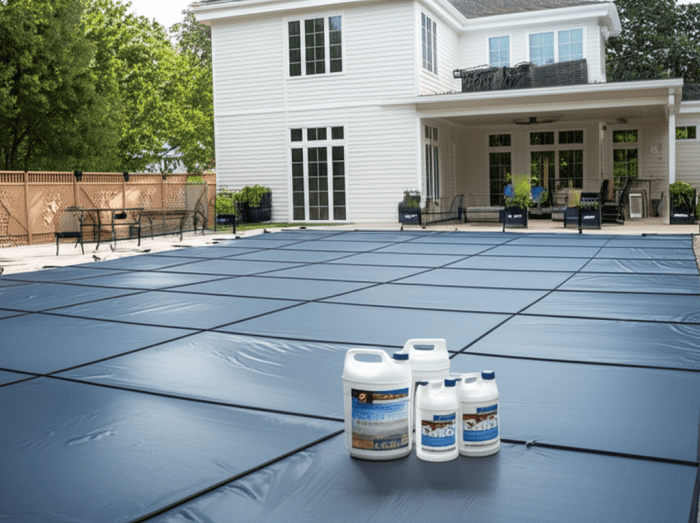
A solar cover reduces heat loss by 50-70%. That means your heater runs half as long. The Sun2Solar Blue Solar Cover pays for itself within the first month of heating season.
This isn’t optional — it’s essential. Every pool owner heating their water needs a solar cover. Period.
Liquid Solar Blankets
Don’t want to wrestle with a cover? Liquid solar blankets create an invisible barrier on the water surface. They’re less effective than physical covers (10-15% heat retention) but better than nothing.
Wind Barriers
Wind dramatically increases evaporation and heat loss. A fence, hedge, or privacy screen on the windward side of your pool can reduce heat loss by 25%.
Optimal Thermostat Settings
Don’t overheat. Each degree above 80°F increases energy costs by 10-15%. Set your pool to 82°F instead of 86°F and save 40% on heating.
Putting It All Together: Real-World Examples
Example 1: The Weekend Warrior (Arizona)
Pool: 18,000 gallons
Current temp: 72°F
Desired temp: 84°F (12°F rise)
Usage: Heats pool Friday, swims Saturday and Sunday
Recommendation: 400,000 BTU gas heater
- Total BTUs: 18,000 × 8.34 × 12 = 1,801,440
- Heating time: ~7 hours with losses
- Cost per weekend: ~$32 (natural gas)
- Annual cost (20 weekends): $640
Example 2: The Daily Swimmer (Florida)
Pool: 22,000 gallons
Goal: Maintain 82°F from March through November
Usage: Swims 5 days per week
Recommendation: 140,000 BTU heat pump
- Initial heating: 24-30 hours
- Maintenance cost: $8-15/day
- Monthly cost: $240-450
- Annual cost: $1,200-2,000
Compare to gas for maintenance: $50-80/day, or $4,500+/season. Heat pump wins here by a landslide.
Example 3: The Season Extender (Ohio)
Pool: 15,000 gallons
Goal: Swim May through September instead of June through August
Current heating: None
Recommendation: 300,000 BTU gas heater + solar cover
- Spring heating (30°F rise): 15,000 × 8.34 × 30 = 3,753,000 BTUs
- Heating time: ~14 hours
- Cost to heat initially: ~$68
- With solar cover, maintenance costs drop to $15-25/day
Track Your Pool Heating With the Right Tools
Accurate water temperature monitoring helps you optimize heating cycles and catch problems early. A reliable thermometer like the ThermoPro Floating Pool Thermometer gives you precise readings without guessing.
For complete pool management — including volume calculations, chemical dosing, and heating estimates — use the Pool Chemical Calculator app. It handles the math so you can focus on swimming.
Frequently Asked Questions
How many BTU pool heater do I need for a 15,000-gallon pool?
For a 15,000-gallon pool, you’ll usually want a 250,000-300,000 BTU/hr gas heater or a 110,000-125,000 BTU/hr heat pump. Go larger if you want weekend-only heating, have windy conditions, or need to raise the pool more than 15°F. A smaller heater can work, but it’ll take longer and may struggle during cool nights.
How do I calculate how long it takes to heat my pool?
Use this formula: pool gallons × 8.34 × desired temperature rise ÷ effective heater output. Effective heater output means BTU/hr multiplied by efficiency. For example, a 20,000-gallon pool with a 17°F rise needs 2,835,600 BTUs. With a 400,000 BTU gas heater at 82% efficiency, the base heating time is about 8.6 hours, and real-world time is usually 11-12 hours after heat loss.
Is a bigger pool heater always better?
Not always, but undersizing is usually the bigger mistake. A larger gas heater heats faster and can be more convenient for occasional swimming because it spends less time fighting overnight heat loss. For heat pumps, bigger is helpful too, but climate matters more because performance drops when air temperature falls below about 50°F.
What is the cheapest way to heat a pool?
For regular swimming, a heat pump plus a solar cover is usually the cheapest day-to-day setup. For occasional weekend heating, a gas heater can make more sense because it heats quickly and you don’t have to maintain warm water all week. Solar heating has the lowest operating cost, but it depends heavily on sun, roof space, and weather.
Do I need a solar cover if I have a pool heater?
Yes, if you care about cost. Most heat loss comes from evaporation, especially at night. A solar cover can reduce heat loss by 50-70%, which can cut heating time and fuel use dramatically. Heating without a cover is like running the air conditioner with the windows open.
Can the Pool Chemical Calculator app size my heater?
The Pool Chemical Calculator app helps with the measurements that drive heater sizing: pool volume, water temperature targets, and related pool maintenance calculations. Use it alongside this guide to avoid guessing at gallons, then plug your volume and temperature rise into the heater formulas above.
Bottom Line
A good pool heater calculator starts with three numbers: pool gallons, desired temperature rise, and heater BTU/hr. For most backyard pools, that points to a 250,000-400,000 BTU gas heater for fast heating or a 110,000-140,000 BTU heat pump for efficient maintenance heating.
Before you buy, calculate your pool volume, decide how fast you need the water warm, and budget for a solar cover. Then use the Pool Chemical Calculator app to keep the rest of your pool care dialed in while your heater does its job.
Recommended pool supplies
As an Amazon Associate, Pool Chemical Calculator earns from qualifying purchases.

Accurate readings make every chlorine, pH, alkalinity, calcium, and CYA dose safer.
View on Amazon
Useful for algae cleanup, cloudy water, high bather load, and weekly oxidation routines.
View on Amazon
Protects chlorine from sunlight, especially in outdoor pools with low stabilizer.
View on AmazonGet exact pool chemical doses
Pool Chemical Calculator turns your test readings, pool volume, and target levels into exact treatment amounts for chlorine, pH, alkalinity, calcium, stabilizer, salt, and more.
Open the Pool Chemical Calculator app for iOS, Android, or web.