
Pool Water Cloudy But Chemicals Are Balanced: Here’s Why (And How to Fix It)
Pool Water Cloudy But Chemicals Are Balanced? Here’s What’s Actually Going On
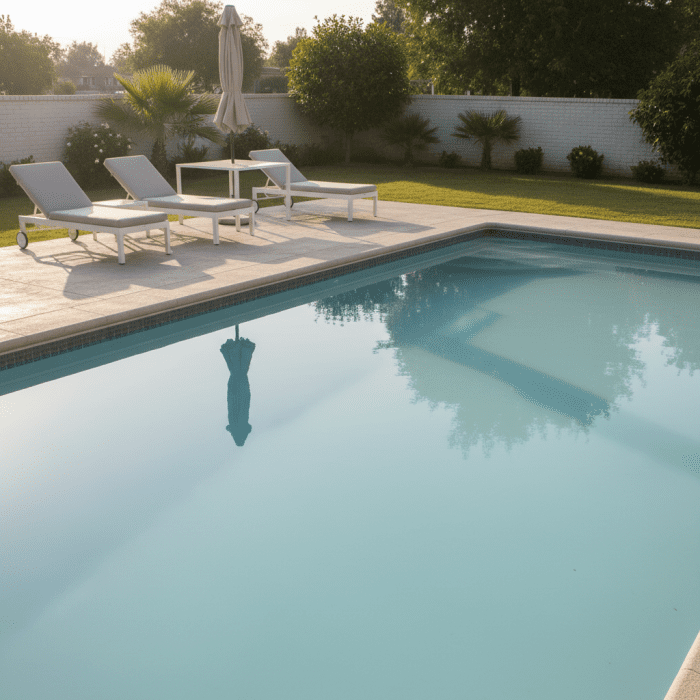
You’ve tested your water three times. Chlorine sits at 2.5 ppm. pH reads a perfect 7.4. Alkalinity is right at 100 ppm. And yet you’re staring at a pool that looks like someone dumped a gallon of milk into it. When your pool water is cloudy but chemicals are balanced, it’s one of the most frustrating problems you can face as a pool owner. Your test kit says everything’s fine, but your eyes tell a completely different story.
Quick answer
Pool Water Cloudy But Chemicals Are Balanced? Here’s What’s Actually Going On You’ve tested your water three times. Chlorine sits at 2.5 ppm. pH reads a perfect 7.4. Alkalinity is right at 100 ppm. And yet you’re.
Here’s the thing: balanced chemicals don’t guarantee clear water. They’re just one piece of a much bigger puzzle. And I’ve seen this exact scenario hundreds of times — homeowners ready to dump more chlorine into water that doesn’t need it, wasting money and sometimes making the problem worse.
Let’s figure out what’s really causing your cloudy pool and fix it for good.
Cloudy water usually means something is off—but guessing makes it worse. Enter your pool size and test results in Pool Chemical Calculator to get the exact next dose for chlorine, pH, alkalinity, calcium, and stabilizer.
>
—
Why Balanced Chemicals Don’t Always Mean Clear Water
Think of your pool like a fish tank. You could have perfect water chemistry, but if the filter’s clogged or debris keeps falling in, that tank’s going to look murky. The same principle applies to your pool.
- Water clarity depends on three things working together:
- Chemical balance (which you’ve already nailed)
- Filtration efficiency (often the hidden culprit)
- Circulation patterns (frequently overlooked)
When your chemicals check out but your water doesn’t, the problem almost always lives in categories two or three. Or sometimes, it’s something your standard test kit can’t even measure.
The 6 Real Reasons Your Balanced Pool Looks Cloudy
1. Your Filter Isn’t Doing Its Job
This is the number one cause of cloudy water when chemistry looks good. And it’s not always obvious.
Sand filters lose effectiveness over time. The sand inside gradually wears down from sharp granules to smooth, rounded particles that can’t trap debris. If your sand is more than 5-7 years old, it might look fine but perform terribly. The filter might also have developed channels — pathways where water flows through without actually getting filtered.
Cartridge filters clog between deep cleanings. You might rinse yours every few weeks, but microscopic particles embed themselves deep in the pleats. A cartridge that looks clean can still be 40% blocked.
DE filters can have torn grids or insufficient DE powder. If you backwash without adding fresh DE, you’re running water through a screen door.
What to Do:
2. Dead Spots Are Creating Cloudy Pockets
Your return jets push water, and your skimmer pulls it. But what happens in the corners? Behind the ladder? Under the diving board?
These dead spots collect particles that never reach your filter. Over time, they become little cloudy zones that mix back into your pool when swimmers jump in.
Walk around your pool and watch the surface. You should see movement everywhere. If any section looks still, you’ve found a dead spot.
The Fix:
3. Particles Too Small for Your Filter to Catch
- Standard pool filters catch particles down to certain sizes:
- Sand filters: 20-40 microns
- Cartridge filters: 10-15 microns
- DE filters: 2-5 microns
For reference, a human hair is about 70 microns wide. So even a good DE filter can miss particles smaller than 2 microns — and those tiny particles scatter light, making your water look cloudy.
These ultra-fine particles come from body oils, sunscreen, pollen, fine dust, and even dissolved metals that have started to precipitate out of the water.
The Solution: Pool Clarifier vs. Flocculant
Clarifiers work like tiny magnets. They cause small particles to clump together into larger ones your filter can actually catch. Add clarifier, run your pump for 24-48 hours, and watch your water improve. A quality pool water clarifier handles most mild-to-moderate cloudiness without affecting your chemistry.
Flocculants work faster but require more work. They cause ALL particles to clump and sink to the bottom. You then vacuum them out on the “waste” setting (bypassing your filter). This wastes water but provides faster results. For a reliable option, check out this pool flocculant that works with all pool types.
For mild cloudiness, use clarifier. For a pool you can’t see the bottom of, go with flocculant.
4. High Calcium Hardness (Even When “In Range”)
Your test kit might show calcium at 350 ppm — technically within the 200-400 ppm acceptable range. But here’s what the range doesn’t tell you: the relationship between calcium, pH, and temperature matters more than the number alone.
When your water is warm (above 85°F) and your calcium sits at the higher end of acceptable, precipitation happens. Calcium carbonate forms tiny white particles suspended in your water. Your chemistry still reads “balanced,” but your pool looks like chalk water.
- This is especially common in:
- Heated pools and spas
- Regions with hard tap water
- Pools that recently had pH spikes (even if corrected)
What to Do:
5. The Pollen and Environmental Debris Problem
During spring and early summer, pollen counts can dump millions of microscopic particles into your pool daily. Same goes for fine dust, wildfire smoke particles, and airborne pollution.
These particles are organic but don’t always trigger chlorine demand you can measure. They float, they scatter light, and they make your water look hazy even when chlorine’s doing its job.
Your Game Plan:
6. Early-Stage Algae (Yes, Even with Good Chlorine)
Here’s a hard truth: you can have 2-3 ppm chlorine and still have algae starting to bloom.
How? Your stabilizer (cyanuric acid) might be too high.
At 30 ppm CYA, a chlorine level of 2 ppm works great. But at 80 ppm CYA? That same 2 ppm chlorine is effectively weakened by about 75%. Algae spores laugh at it.
Standard test kits don’t show you this relationship. They just show individual numbers that look fine on their own.
The Reality Check:
The 48-Hour Clear Water Protocol
When your chemicals are balanced but water’s cloudy, follow this step-by-step process:
- Hour 0:
- Deep clean your filter (backwash sand/DE, soak cartridge in cleaning solution)
- Check and clean skimmer and pump baskets
- Brush entire pool surface toward main drain
- Hour 1:
- Add appropriate dose of water clarifier based on pool volume
- Adjust return jets for maximum circulation
- Set pump to run continuously for next 48 hours
- Hour 12:
- Vacuum any visible debris on the bottom
- Check filter pressure — clean again if elevated
- Hour 24:
- Test water chemistry again
- Add second clarifier dose if cloudiness persists
- Continue running pump
- Hour 48:
- Assess results
- Clean filter one more time
- Return to normal pump schedule
In 90% of cases, this protocol produces noticeably clearer water within two days.
When to Call a Professional
Some cloudiness indicates problems beyond DIY fixing:
- Water has a green or yellow tint along with cloudiness
- You smell a strong chlorine odor (indicates chloramines, not excess chlorine)
- Cloudiness returns within 48 hours of clearing
- You’re losing more than 1/4 inch of water daily (leak bringing in groundwater)
- Your filter pressure doesn’t drop after cleaning
These situations might involve plumbing issues, underground contamination, or equipment failure that requires expert diagnosis.
Cloudy water usually means something is off—but guessing makes it worse. Enter your pool size and test results in Pool Chemical Calculator to get the exact next dose for chlorine, pH, alkalinity, calcium, and stabilizer.
>
—
FAQ
Can I swim in cloudy pool water if the chemicals are balanced?
Technically, if your sanitizer levels are adequate, the water is sanitary. But swimming in cloudy water is not recommended because you can’t see the bottom clearly, creating a safety hazard. You won’t spot a struggling swimmer or an obstacle, and whatever’s causing the cloudiness isn’t something you want on your skin and in your eyes.
How long does it take for a cloudy pool to clear up?
With proper treatment, minor cloudiness clears in 24-48 hours. Moderate cloudiness takes 2-4 days. Severe cloudiness may need a full week of treatment or a flocculant-and-vacuum approach. Running your filter continuously speeds up every timeline.
Should I add more chlorine to clear cloudy water?
Not if your chlorine is already at 1-3 ppm. Adding more won’t help if the problem is filtration, circulation, or particles too small for your filter. Only add chlorine if testing shows you need it or if you’re doing a shock treatment because you suspect early algae.
Why does my pool get cloudy after rain?
Rain introduces dust, pollen, pollutants, and can dilute your sanitizer while lowering pH. After heavy rain, test your water, adjust chemicals as needed, run your filter for an extra 4-6 hours, and add clarifier if cloudiness develops.
Can too much chlorine make pool water cloudy?
Yes, but it’s rare. Extremely high chlorine levels above 10 ppm can sometimes cause temporary cloudiness. More commonly, shocking pools to kill algae causes the dead algae itself to create cloudiness until filtered out. After shocking, give your filter 48-72 hours of continuous operation.
Get Your Water Crystal Clear
Stop guessing and start knowing exactly what your pool needs.
Cloudy water usually means something is off—but guessing makes it worse. Enter your pool size and test results in Pool Chemical Calculator to get the exact next dose for chlorine, pH, alkalinity, calcium, and stabilizer.
Download for iPhone | Download for Android
Because balanced chemicals are just the starting point. Clear water is the goal.
As an Amazon Associate, Pool Chemical Calculator earns from qualifying purchases. Accurate readings make every chlorine, pH, alkalinity, calcium, and CYA dose safer. A clean cartridge improves circulation and helps cloudy water clear faster. Useful for algae cleanup, cloudy water, high bather load, and weekly oxidation routines.Recommended pool supplies


Get exact pool chemical doses
Pool Chemical Calculator turns your test readings, pool volume, and target levels into exact treatment amounts for chlorine, pH, alkalinity, calcium, stabilizer, salt, and more.
Open the Pool Chemical Calculator app or download it from the App Store and Google Play.