
Pool Shock vs Chlorine Tablets: What to Use and When
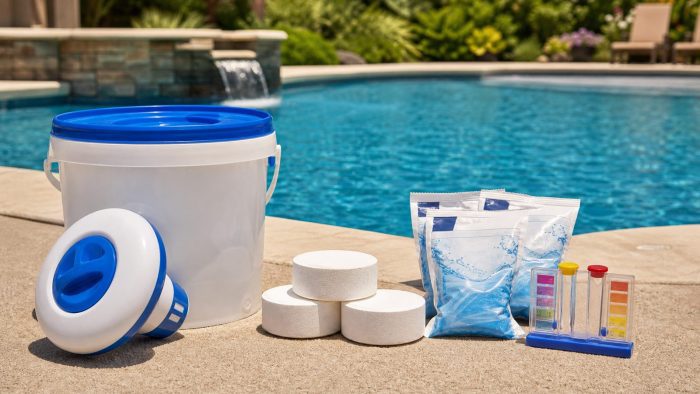
You’ve probably stood in the pool supply aisle staring at bags of shock and buckets of chlorine tablets, wondering if you really need both. Here’s the truth about pool shock vs chlorine tablets: they’re not interchangeable, and understanding the difference will save you money, time, and a whole lot of green water headaches.
Quick answer
Pool Shock vs Chlorine Tablets: What to Use and When: You’ve probably stood in the pool supply aisle staring at bags of shock and buckets of chlorine tablets, wondering if you really need both. Here’s the truth about pool shock vs chlorine tablets: they’re not.
Think of it this way. Chlorine tablets are your pool’s daily multivitamin — slow, steady, reliable. Pool shock is emergency surgery — fast, aggressive, and necessary when things go sideways. You wouldn’t take a daily vitamin to cure food poisoning, and you wouldn’t undergo surgery for a minor cold. Same logic applies to your pool.
Let’s break down exactly when to use each product, how much you need, and how to stop wasting money on the wrong sanitizer at the wrong time.
Understanding What Chlorine Actually Does in Your Pool
Before we compare products, you need to understand how chlorine works. When you add any chlorine product to your pool, it creates hypochlorous acid — the active sanitizer that kills bacteria, algae, and other nasty organisms.
But here’s what most pool owners don’t realize: chlorine exists in three forms in your water.
Free chlorine is the good stuff. It’s active, available, and ready to kill contaminants. This is what your test kit measures when you check chlorine levels.
Combined chlorine (also called chloramines) is chlorine that’s already reacted with contaminants like sweat, urine, sunscreen, and body oils. It’s used up. Spent. And it’s what causes that strong “chlorine smell” and eye irritation. Ironically, a pool that smells strongly of chlorine often needs more chlorine, not less.
Total chlorine is simply free chlorine plus combined chlorine.
Your goal? Keep free chlorine between 1-3 ppm while keeping combined chlorine below 0.5 ppm. When combined chlorine climbs above 0.5 ppm, shocking becomes necessary.
Chlorine Tablets: Your Pool’s Slow-Release Workhorse
How Chlorine Tablets Work
Chlorine tablets (also called trichlor tabs or 3-inch pucks) dissolve slowly over 3-7 days, providing a consistent chlorine level. Most homeowners use them in a floating dispenser, automatic chlorinator, or skimmer basket.
The active ingredient — trichloroisocyanuric acid — contains about 90% available chlorine and includes built-in cyanuric acid (stabilizer). That stabilizer protects chlorine from UV breakdown, which is why tablets work well for outdoor pools.
One 8-ounce tablet treats roughly 5,000 gallons of water for about a week under normal conditions.
When to Use Chlorine Tablets
Use tablets for:
– Daily/weekly chlorine maintenance
– Keeping chlorine levels stable between uses
– Vacation periods when you can’t monitor daily
– Any time you need “set it and forget it” sanitation
A typical maintenance schedule looks like this:
– 10,000-gallon pool: 2 tablets per week
– 15,000-gallon pool: 3 tablets per week
– 20,000-gallon pool: 4 tablets per week
Adjust based on bather load, temperature, and rainfall. Hot weeks with heavy use might require double the normal amount.
The Hidden Cost of Tablets: Cyanuric Acid Buildup
Here’s something tablet users learn the hard way. Because trichlor tablets contain 50-55% cyanuric acid by weight, they continuously raise your CYA levels.
Ideal cyanuric acid range: 30-50 ppm.
When CYA climbs above 70-80 ppm, chlorine becomes less effective. At 100+ ppm, you’re basically swimming in a chemistry experiment where chlorine can’t do its job — a phenomenon called “chlorine lock.”
The only fix? Drain and refill a portion of your pool. Typically, you’ll need to replace 1/3 to 1/2 of your water when CYA gets out of control.
Pro tip: Test CYA levels at the start and middle of each season. If you’re above 50 ppm already, consider switching to unstabilized chlorine sources (like liquid chlorine or cal-hypo shock) to prevent further buildup.
Recommended Product: Chlorine Tablets
For reliable, cost-effective tablets, I recommend In The Swim 3-Inch Stabilized Chlorine Tablets. They dissolve evenly, contain 90% available chlorine, and come in 25-pound buckets that last most homeowners an entire season.
Pool Shock: The Heavy Artillery
What Pool Shock Actually Is
“Shock” isn’t a specific chemical — it’s a process. Shocking means raising chlorine levels to 10x the combined chlorine reading (or a minimum of 10-30 ppm free chlorine) to oxidize contaminants and kill algae.
You can shock with several different products:
Calcium Hypochlorite (Cal-Hypo): The most common granular shock. Contains 65-75% available chlorine with no cyanuric acid. Requires dissolving before adding. Raises calcium hardness slightly.
Sodium Dichlor: Granular shock with 55-62% available chlorine. Contains cyanuric acid (so it adds to CYA levels). Can be added directly to water.
Potassium Monopersulfate (Non-Chlorine Shock): Oxidizes contaminants without adding chlorine. Great for weekly maintenance but won’t kill algae.
Liquid Chlorine (Sodium Hypochlorite): Pool-grade bleach at 10-12.5% concentration. No additives, no residue, no CYA contribution. My personal favorite for regular shocking.
When to Shock Your Pool
Shock when:
– Opening the pool for the season
– Closing the pool for winter
– Combined chlorine exceeds 0.5 ppm
– After heavy pool parties (more than 8-10 swimmers)
– Following rainstorms that dilute chemical levels
– Algae appears (green, yellow, or black)
– Water looks cloudy despite proper filtration
– Anyone has a “bathroom accident” in the pool
– Every 1-2 weeks as preventive maintenance
How Much Shock Do You Need?
This depends on your situation and pool size.
For routine maintenance shocking:
– 1 pound of cal-hypo per 10,000 gallons raises chlorine approximately 10 ppm
– Liquid chlorine: 1 gallon per 10,000 gallons raises chlorine approximately 10 ppm
For algae treatment:
– Green algae: 2 pounds cal-hypo per 10,000 gallons
– Yellow/mustard algae: 3 pounds cal-hypo per 10,000 gallons
– Black algae: 4 pounds cal-hypo per 10,000 gallons (plus brushing and algaecide)
Example: Your 15,000-gallon pool turned light green overnight. You’d need approximately 3 pounds of cal-hypo shock (2 lbs per 10,000 gallons × 1.5).
The Right Way to Shock Your Pool
Timing matters. Always shock at dusk or night. UV light destroys unstabilized chlorine within hours. Shocking at 2 PM on a sunny day wastes half your product before it can work.
Step-by-step process:
- Test current chlorine and pH levels
- Adjust pH to 7.2-7.4 (chlorine works better at lower pH)
- Calculate shock amount based on pool volume and current chlorine
- For granular shock: dissolve in a 5-gallon bucket of pool water first
- Pour dissolved shock around pool perimeter with pump running
- Run pump for 8-12 hours minimum
- Don’t swim until chlorine drops below 5 ppm (usually 8-24 hours)
Recommended Product: Pool Shock
For shock treatment, DryTec Calcium Hypochlorite Chlorinating Shock delivers consistent results. It’s 68% available chlorine, dissolves quickly, and comes in 1-pound bags that make dosing easy.
Head-to-Head Comparison: Tablets vs Shock
| Factor | Chlorine Tablets | Pool Shock |
|---|---|---|
| Purpose | Daily maintenance | Problem-solving & prevention |
| Dissolution rate | 3-7 days | Immediate |
| Adds cyanuric acid | Yes (trichlor) | Depends on type |
| Frequency | Continuous | Weekly or as-needed |
| Can kill established algae | No | Yes |
| Swim-safe after adding | Yes (when dissolved properly) | No (wait 8-24 hours) |
| Cost per week | $3-5 for average pool | $4-8 per treatment |
| Best for | Steady sanitation | Crisis intervention |
Common Mistakes That Cost Pool Owners Money
Mistake #1: Using Shock in Your Tablet Feeder
Never put shock granules in your chlorinator or floater. The concentration destroys plastic components and creates dangerous chlorine gas when mixed with trichlor tablets. I’ve seen chlorinators melt from this mistake.
Mistake #2: Relying Only on Tablets
Tablets maintain chlorine levels — they don’t raise them quickly. If algae starts growing, adding more tablets won’t fix it. You need shock’s immediate chlorine spike.
Mistake #3: Shocking During Daylight
UV rays destroy unstabilized chlorine. Shocking at noon means 50% of your product vanishes within 2 hours. Always shock after sunset.
Mistake #4: Not Testing Combined Chlorine
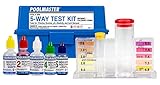
Most pool owners test total or free chlorine only. But if your combined chlorine exceeds 0.5 ppm, you need to shock — even if total chlorine looks fine. Buy a test kit that measures all three: free, combined, and total.
Mistake #5: Using Dichlor Shock Weekly
Dichlor contains cyanuric acid. Using it every week builds CYA levels fast. Reserve dichlor for specific situations (hot tubs, initial pool treatment) and use cal-hypo or liquid chlorine for routine shocking.
Creating Your Perfect Sanitization Schedule
Here’s a realistic schedule for a 15,000-gallon pool during swim season:
Daily:
– Check water clarity visually
– Empty skimmer baskets
Twice Weekly:
– Test pH and free chlorine
– Add tablets as needed (typically 3 per week)
– Run pump 8-12 hours daily
Weekly:
– Test combined chlorine and shock if above 0.5 ppm
– Preventive shock even if combined chlorine looks good
Monthly:
– Test cyanuric acid, calcium hardness, total alkalinity
– Adjust CYA if climbing above 50 ppm
Seasonally:
– Opening shock treatment (2-4x normal dose)
– Closing shock treatment
– Deep equipment cleaning
The Bottom Line: You Really Do Need Both
Chlorine tablets and pool shock aren’t competing products — they’re teammates. Tablets handle the boring daily work of maintaining sanitation. Shock handles the crises, the heavy lifting, and the weekly reset that prevents problems from developing.
Trying to maintain a pool with only tablets leads to cloudy water, algae blooms, and that unmistakable chloramine smell. Trying to maintain with only shock means constant monitoring and inconsistent chlorine levels between treatments.
The winning combination? Use tablets for steady, hands-off chlorine levels. Shock weekly as prevention. And have extra shock on hand for those inevitable pool emergencies — the summer party with 15 kids, the raccoon that fell in overnight, or the thunderstorm that dumped 2 inches of rain into your water.
Frequently Asked Questions
Can I use shock and tablets at the same time?
Yes, but don’t mix them directly — that creates toxic chlorine gas. Add your tablets to the floater or chlorinator as normal, then broadcast dissolved shock into the pool separately. The products work fine together once diluted in pool water.
How long after shocking can I add tablets?
You can add tablets immediately after shocking. The products don’t interfere with each other in diluted form. Just wait to swim until free chlorine drops below 5 ppm (typically 8-24 hours after shocking).
Why does my pool turn cloudy after shocking?
Several reasons. Dead algae particles create temporary cloudiness — run your filter continuously and backwash when pressure rises 8-10 psi. High calcium hardness combined with cal-hypo shock can also cause cloudiness. And sometimes shocking reveals particles that were always there but invisible. Give it 24-48 hours of filtration before worrying.
Is liquid chlorine better than granular shock?
For regular shocking, liquid chlorine (pool-grade, not household bleach) works great. It’s unstabilized, leaves no residue, and doesn’t raise calcium hardness or CYA levels. The downsides: it’s heavy to carry (10 pounds per gallon), degrades quickly in storage, and costs more per pound of available chlorine. For algae treatments, granular cal-hypo delivers more chlorine faster.
How do I know if my pool needs shock or just more tablets?
Test your water. If free chlorine is low but the pool looks clear, add tablets and test again tomorrow. If free chlorine reads normal but water is cloudy, combined chlorine is high, or you see any green tint — shock immediately. When in doubt, shock. Over-chlorinating temporarily beats under-chlorinating and watching algae take over.
Calculate Your Exact Chemical Needs
Stop guessing how much shock or how many tablets your pool actually requires. Pool Chemical Calculator gives you precise measurements based on your pool volume, current chemistry readings, and specific goals. Enter your test results, and you’ll know exactly what to add — no wasting money on chemicals you don’t need and no under-dosing your way into algae.
???? iPhone / iPad: https://itunes.apple.com/us/app/pool-chem-calculator/id1453351222
???? Android: https://play.google.com/store/apps/details?id=com.poolchemicalcalculator.poolcalc
???? Full guide: https://poolchemicalcalculator.com/news/pool-shock-vs-chlorine-tablets/
As an Amazon Associate, Pool Chemical Calculator earns from qualifying purchases. Slow-dissolving tablets help keep routine free chlorine steady in floaters or chlorinators. Raises free chlorine quickly without adding stabilizer, which is useful when CYA is already high. Accurate readings make every chlorine, pH, alkalinity, calcium, and CYA dose safer.Recommended pool supplies


Get exact pool chemical doses
Pool Chemical Calculator turns your test readings, pool volume, and target levels into exact treatment amounts for chlorine, pH, alkalinity, calcium, stabilizer, salt, and more.
Open the Pool Chemical Calculator app or download it from the App Store and Google Play.