
Can You Put Algaecide and Shock in Pool at the Same Time? Here’s What Actually Happens
You’ve got green water staring back at you, and you’re ready to throw everything at it. So can you put algaecide and shock in pool at the same time? The short answer: no, and here’s why that matters for your wallet and your weekend.
Quick answer
Can You Put Algaecide and Shock in Pool at the Same Time? Here's What Actually Happens: You've got green water staring back at you, and you're ready to throw everything at it. So can you put algaecide and shock in pool at the same time? The short answer: no, and here's why that matters for your wallet and.
Adding these two chemicals together is like paying for a gym membership and never going. You’ll waste money, the algaecide won’t work, and you’ll still have green water mocking you from the backyard. The high chlorine levels from shock oxidize and destroy the active ingredients in algaecide before they can do anything useful.
But timing these treatments correctly? That’s the difference between a sparkling pool by Saturday and a swamp that ruins your barbecue plans.
What We Analyzed: Shock & Algaecide Timing Decision Framework
To help you figure out exactly what to do and when, I’ve built a decision framework based on common pool scenarios. This isn’t guesswork — it’s based on how chlorine dissipates and how different algaecide types interact with shock.
Methodology: This framework uses standard chlorine dissipation rates and manufacturer guidelines for algaecide application. Results assume average conditions: outdoor pool, moderate sunlight, pump running 8+ hours daily, and stabilized water (CYA 30-50 ppm).
Limitations: Your actual wait times will vary based on sunlight intensity, water temperature, CYA levels, and specific product formulations. Always test your free chlorine before adding algaecide — don’t just watch the clock.
Decision Scenarios Table
| Pool Condition | Last Chemical Added | Current FC Level | Algaecide Type | Recommended Action | Wait Time Before Next Step | Target FC Before Algaecide | Key Considerations |
|—————-|——————–|——————–|—————-|——————-|—————————|—————————|———————|
| Visible green algae | None | 0-3 ppm | Polyquat | Brush pool, then shock | 24-48 hours | Below 5 ppm | Run pump continuously; retest FC before adding algaecide |
| Cloudy water, mild algae | Shock (12 hrs ago) | 8 ppm | Polyquat | Wait and retest FC | 12-24 more hours | Below 5 ppm | Don’t add algaecide yet — chlorine still too high |
| Clear water, preventative | Shock (36 hrs ago) | 3 ppm | Copper-based | Add algaecide now | N/A — ready to add | Below 1 ppm ideal | Copper stains if FC too high; err on lower FC |
| Green pool, heavy bloom | Algaecide (added first by mistake) | 0.5 ppm | Unknown | Shock pool now | 24-48 hours before re-adding algaecide | Below 5 ppm | Previous algaecide was likely wasted; treat as fresh start |
| Post-storm, debris present | None | 1 ppm | Polyquat | Skim/vacuum first, then shock | 24 hours | Below 5 ppm | Balance pH to 7.2-7.6 before shocking |
| Recurring algae problem | Shock (48 hrs ago) | 4 ppm | Copper-based | Wait 12 more hours | 12 hours | Below 1 ppm | Copper algaecides need lower FC to avoid staining |
How to use this: Find your current situation in the left columns, then follow the recommended action. The target FC column tells you exactly what your test strip should show before you add algaecide.
Why Shock and Algaecide Don’t Play Nice Together
Think of shock like a demolition crew — it destroys everything organic in its path. Algae? Gone. Bacteria? Eliminated. But it also obliterates the active compounds in your algaecide.
Here’s what happens chemically: shock treatments (whether calcium hypochlorite, sodium dichlor, or non-chlorine oxidizers) create extremely high oxidation levels. These same oxidation reactions that kill algae also break down the quaternary ammonium compounds in polyquat algaecides and precipitate the copper ions in metal-based formulas.
The result? You’ve just poured $15-30 worth of algaecide into water that immediately neutralizes it. That’s money literally down the drain — or more accurately, oxidized into nothing.
The Money Math
A typical algaecide bottle treats 10,000-20,000 gallons and costs $15-25. If you add it while chlorine is above 5 ppm, you’ll need to buy another bottle in a few days when it’s actually time to add algaecide. Over a season, this mistake can cost $50-100 in wasted product.
The Correct Order: Shock First, Algaecide Second
Every pool professional follows the same sequence. Here’s exactly how to do it:
Step 1: Balance Your Water Chemistry First
Before adding anything, test and adjust:
- pH: 7.2-7.6 (shock works best at 7.2)
- Alkalinity: 80-120 ppm
- CYA (stabilizer): 30-50 ppm for outdoor pools
If pH is above 7.6, your shock efficiency drops dramatically. At pH 8.0, only about 20% of your chlorine is in the active form that kills algae.
Step 2: Brush the Pool Thoroughly
Algae has a protective biofilm layer. Brushing breaks this coating so shock can actually reach and kill the algae cells. Spend 10-15 minutes hitting walls, floors, steps, and especially shaded corners where algae loves to hide.
A good algae brush makes this faster: POOLAZA Pool Brush Head — the stainless steel bristles work on concrete and gunite without wearing out after one season.
Step 3: Shock at Dusk
Add shock after sunset. UV light destroys chlorine rapidly — you can lose 1 ppm per hour in direct sunlight. Evening application gives the shock 8-10 hours to work before the sun fights back.
Dosing for algae: Use 2-3 pounds of calcium hypochlorite shock per 10,000 gallons for visible algae. Clear water maintenance? One pound per 10,000 gallons weekly.
Step 4: Run Your Pump Continuously
Keep circulation going for 24-48 hours after shocking. This distributes the chlorine evenly and filters out dead algae. Yes, your electric bill will notice. But a 48-hour pump run costs about $5-10 in electricity, while draining and refilling a green pool costs $100+ in water alone.
Step 5: Test Before Adding Algaecide
This is where most people mess up. They wait 24 hours and assume it’s algaecide time. Instead, test your free chlorine level. You need:
- Below 5 ppm for polyquat algaecides
- Below 1 ppm for copper-based algaecides (to prevent staining)
A reliable test kit is non-negotiable here. The Taylor K-2006 Complete Kit gives accurate FC readings that strips often miss by 1-2 ppm.
Step 6: Add Algaecide as Prevention
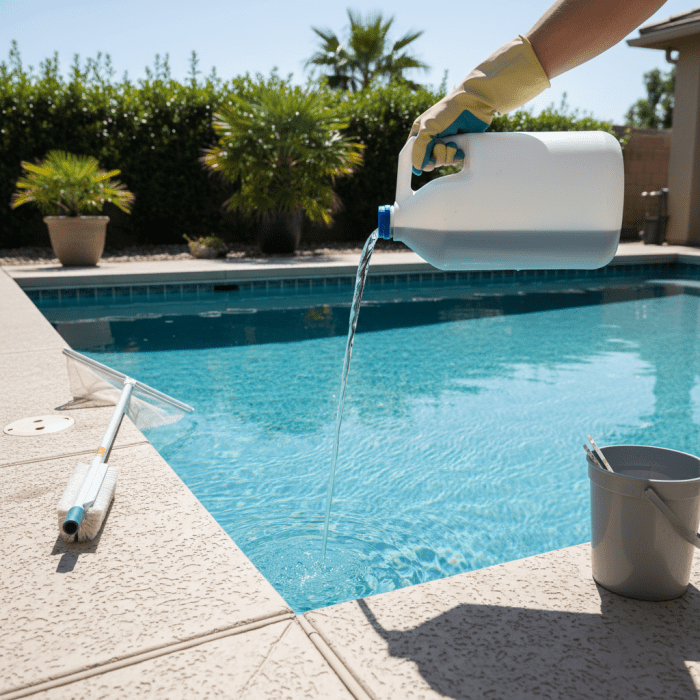
Once FC is in the safe range, add your algaecide according to package directions. Walk around the pool’s perimeter, pouring slowly. The algaecide works as a preventative layer — it stops new algae spores from taking hold.
How Long Does It Actually Take for Chlorine to Drop?
This is the question nobody answers well. Here’s what affects your wait time:
Factors that speed up chlorine dissipation:
- Direct sunlight (biggest factor)
- Higher water temperature
- Low CYA levels (unstabilized pools)
- Heavy bather load
- Organic debris in water
Factors that slow it down:
- Cloud cover or shade
- Higher CYA levels (50+ ppm)
- Cooler water temperature
- Covered pool
Realistic Timeline Estimates
For a typical outdoor pool with CYA around 30-40 ppm:
| Starting FC After Shock | Estimated Time to Reach 5 ppm | Estimated Time to Reach 1 ppm |
|————————|——————————|——————————|
| 10 ppm | 12-24 hours | 36-48 hours |
| 15 ppm | 24-36 hours | 48-72 hours |
| 20 ppm | 36-48 hours | 72-96 hours |
| 30 ppm (heavy algae dose) | 48-72 hours | 96+ hours |
Important: These are estimates. Test, don’t guess. High CYA levels (above 70 ppm) can significantly slow chlorine loss and extend your wait by 50% or more.
What If You Already Mixed Them?
Okay, so you didn’t read this article first. You dumped both chemicals in together. Now what?
Don’t panic. Your pool won’t explode. The water won’t turn toxic. You’ve just wasted the algaecide, that’s all.
Here’s your recovery plan:
- Let the shock do its job — it will still work on the algae
- Wait 24-48 hours and test your FC
- Once FC drops below the appropriate level, add a fresh dose of algaecide
- Consider this a $20 lesson in pool chemistry timing
The only real risk comes with copper-based algaecides added during high chlorine. The rapid oxidation can cause copper to precipitate and potentially stain light-colored plaster. If you have a white or light blue plaster pool and added copper algaecide with shock, keep an eye out for greenish-blue stains near returns or in corners.
Polyquat vs. Copper Algaecide: Does Type Matter?
Yes, and more than most articles explain.
Polyquat Algaecides (Quaternary Ammonium)
Pros:
- Won’t stain surfaces
- Won’t affect water chemistry
- Safe at FC levels up to 5 ppm
- Non-foaming formulas available
Cons:
- Less effective on heavy algae blooms
- Needs more frequent application
- Higher cost per treatment
Best for: Regular maintenance, vinyl liner pools, pools with automatic covers (no staining risk)
Copper-Based Algaecides
Pros:
- More powerful algae killing
- Longer-lasting residual protection
- Often cheaper per treatment
Cons:
- Can stain plaster, grout, and blonde hair (yes, really)
- Requires FC below 1 ppm to add safely
- Can interfere with some test kit readings
- Copper accumulates over time
Best for: Stubborn algae problems, pools with no staining concerns, darker plaster colors
For most homeowners, a quality polyquat like In The Swim Super Algaecide offers the best balance of effectiveness and ease of use. It’s non-staining and non-foaming, so you won’t wake up to a bubble bath in your backyard.
Do You Even Need Algaecide If You Shock Regularly?
Here’s an honest take: many pools don’t.
If you maintain proper chlorine levels (1-3 ppm), shock weekly, brush regularly, and keep your filter clean, algae rarely gets a foothold. Algaecide becomes insurance rather than necessity.
You probably need algaecide if:
- You’ve had recurring algae problems
- Your pool gets heavy shade (algae loves low-light areas)
- You struggle to maintain consistent chlorine
- You’re opening a pool that sat dormant
- Phosphate levels run high (algae food)
You can skip algaecide if:
- Your chlorine stays consistently 1-3 ppm
- You test and shock weekly
- You’ve never had an algae problem
- You run your pump adequate hours daily (8+ for most pools)
The choice comes down to how much mental energy you want to spend worrying about algae versus how much you want to spend on chemicals. A monthly algaecide maintenance dose costs about $3-5 and buys peace of mind.
FAQ
How long should I wait between shocking my pool and adding algaecide?
Wait until your free chlorine (FC) level drops below 5 ppm for polyquat algaecides, or below 1 ppm for copper-based algaecides. This typically takes 24-48 hours after shocking, but always test rather than relying on time alone. Factors like sunlight, CYA levels, and water temperature significantly affect how quickly chlorine dissipates.
What happens if I accidentally add algaecide and shock at the same time?
The high chlorine from shock will oxidize and neutralize the active ingredients in your algaecide, making it ineffective. You won’t damage your pool or create dangerous reactions — you’ve just wasted the algaecide. Wait for chlorine levels to drop, then add a fresh dose of algaecide.
Can I add shock if I already added algaecide first?
Yes, you can still shock. The shock will work on algae and contaminants normally. However, the algaecide you already added will be destroyed by the high chlorine levels. Once the shock dissipates (FC below 5 ppm), you’ll need to add algaecide again if you want that preventative protection.
Is it better to use shock or algaecide for green pool water?
Shock first, always. Shock is your corrective treatment — it kills existing algae. Algaecide is primarily preventative — it stops new algae from growing. For a green pool, you need the killing power of shock. Add algaecide 24-48 hours later (once FC drops) to prevent the algae from returning.
Why does copper-based algaecide require lower chlorine levels than polyquat?
High chlorine levels rapidly oxidize copper ions in the algaecide, causing them to precipitate out of solution. This precipitated copper can deposit on pool surfaces, creating blue-green stains that are difficult and expensive to remove. Waiting until FC drops below 1 ppm prevents this oxidation and staining risk.
Sources
- Can You Add Algaecide And Shock At The Same Time — Detailed explanation of chemical interactions between shock and algaecide
- Right Order To Add Pool Chemicals — Comprehensive guide on proper chemical sequencing for pool maintenance
- Incompatible Pool Chemicals — Leslie’s Pool overview of which pool chemicals shouldn’t be mixed
Calculate Your Exact Chemical Doses
Stop guessing and start swimming. Our free calculator tells you exactly how much shock, algaecide, and other chemicals your specific pool needs based on your current test results and pool volume.
Get your custom pool chemical calculations →
Recommended pool supplies
As an Amazon Associate, Pool Chemical Calculator earns from qualifying purchases.

Accurate readings make every chlorine, pH, alkalinity, calcium, and CYA dose safer.
View on Amazon
Useful for algae cleanup, cloudy water, high bather load, and weekly oxidation routines.
View on Amazon
Helps prevent algae from returning after brushing, shocking, and correcting circulation.
View on AmazonGet exact pool chemical doses
Pool Chemical Calculator turns your test readings, pool volume, and target levels into exact treatment amounts for chlorine, pH, alkalinity, calcium, stabilizer, salt, and more.
Open the Pool Chemical Calculator app for iOS, Android, or web.