
Pool Algaecide vs Shock: Which One Actually Kills Your Algae?
Quick answer: Use pool shock first when you already see algae because chlorine does the heavy killing and oxidation. Use algaecide mainly as a backup or preventive treatment after water is balanced, brushed, shocked, and filtered. Never mix chemicals together outside the pool, and follow the product label.
Quick answer
Pool Algaecide vs Shock: Which One Actually Kills Your Algae?: Quick answer: Use pool shock first when you already see algae because chlorine does the heavy killing and oxidation. Use algaecide mainly as a backup or preventive treatment after water is balanced, brushed, shocked.
You wake up, coffee in hand, ready for a morning swim — and your pool looks like a swamp. Now you’re standing in the pool aisle staring at bottles of algaecide and bags of shock, wondering which one you actually need. Here’s the truth about pool algaecide vs shock: they do different jobs. Shock is your heavy hitter that kills active algae through oxidation. Algaecide is more like insurance — it prevents algae from coming back or helps finish off weakened cells. Most pool owners need both, but timing and order matter more than most people realize.
I’ve watched hundreds of homeowners dump algaecide into a green pool and wonder why nothing happened. Or shock their pool three times without brushing first. Let’s fix that confusion right now.
What We Analyzed: Algaecide vs Shock Decision Matrix
Before buying anything, you need to match your treatment to your actual problem. I built this decision framework based on algae type, current water chemistry, and visible severity.
Methodology: This matrix compares common algae symptoms against residential pool chemistry targets — pH 7.2-7.6 before shocking, free chlorine matched to your cyanuric acid level, and continuous filtration during treatment. The recommendations follow manufacturer guidance and chemistry principles.
Limitations: This is a homeowner troubleshooting framework. It doesn’t replace product label directions, local health codes, or professional diagnosis for severe contamination, equipment problems, or persistent staining.
Decision Matrix: What to Use and When
| Pool Symptom | Free Chlorine Status | pH Range | Recommended First Treatment | Follow-Up Treatment | When to Skip Algaecide |
|————-|———————|———-|—————————|——————–|———————–|
| Light green tint, slippery walls | Below 1 ppm | 7.2-7.6 | Double shock (2 lbs per 10,000 gal) | Algaecide 24-48 hrs after chlorine drops below 5 ppm | If chlorine is still above 5 ppm |
| Dark green, can’t see bottom | 0 ppm | Needs adjustment | Triple shock (3 lbs per 10,000 gal) after pH correction | Algaecide only after water clears and chlorine normalizes | During active shock treatment; high chlorine destroys algaecide |
| Yellow/mustard spots on walls | Any level | Any | Brush thoroughly, then yellow algae-specific shock treatment | Mustard algaecide after shocking | If using copper-based product with metals already in water |
| Black spots (embedded) | Any level | 7.2-7.4 | Direct brushing + granular chlorine on spots | Repeat shock; algaecide has minimal effect on black algae | Black algae has protective layers; algaecide won’t penetrate |
| Recurring algae every 2-3 weeks | Normal (1-3 ppm) | Normal | Check CYA levels, inspect filtration | Weekly maintenance dose of algaecide | If problem is actually low chlorine or poor circulation |
How to Use This Matrix
- Test your water first. You need current free chlorine, pH, and ideally cyanuric acid levels.
- Find your symptom in the left column.
- Check if your chemistry matches the conditions.
- Follow the treatment order exactly — shock first, algaecide later.
The biggest mistake? Adding algaecide while chlorine is still elevated from shocking. You’re literally wasting money.
How Shock Actually Works
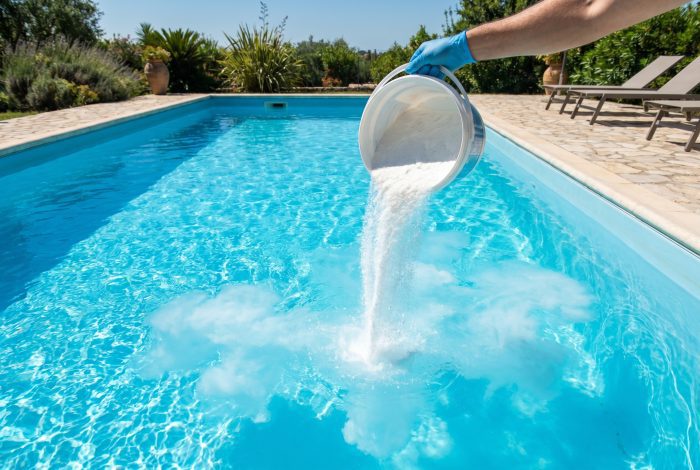
Pool shock is concentrated chlorine — either calcium hypochlorite, sodium dichlor, or non-chlorine oxidizer. When you “shock” your pool, you’re raising free chlorine to 10-30 ppm temporarily. At those levels, chlorine destroys algae cell walls through oxidation.
Think of it like this: regular chlorine levels (1-3 ppm) handle daily contamination from swimmers, dust, and debris. Shock is the nuclear option. It overwhelms everything organic in the water.
Types of Shock and When to Use Each
Calcium Hypochlorite (Cal-Hypo)
The most common type. Contains 65-75% available chlorine. Works fast but adds calcium to your water. If your calcium hardness is already above 400 ppm, you might want a different option.
A solid cal-hypo option for most pools: In The Swim Cal-Hypo Pool Shock — 68% strength, dissolves quickly.
Sodium Dichlor
Contains cyanuric acid (stabilizer), so it’s better for outdoor pools where you need UV protection. But it adds CYA with every dose. If your CYA is already above 50 ppm, repeated dichlor shocking will make chlorine less effective over time.
Non-Chlorine Shock (Potassium Monopersulfate)
Oxidizes contaminants but doesn’t kill algae. Use this for weekly maintenance when you don’t have an algae problem — never for active green water.
The Right Shock Dosage for Algae
Here’s where specific numbers matter:
- Light green water: 2 lbs cal-hypo per 10,000 gallons
- Medium green (bottom barely visible): 3 lbs per 10,000 gallons
- Dark green/black (can’t see past 6 inches): 4 lbs per 10,000 gallons
These are starting points. Stubborn algae might need repeat treatments 24 hours apart.
How Algaecide Works (And Why It’s Not a Substitute)
Algaecide doesn’t oxidize like chlorine. Instead, it disrupts algae cell membranes or interferes with photosynthesis, depending on the type. It’s effective against weakened algae and excellent at prevention. But against a full bloom? Algaecide alone won’t cut it.
Types of Algaecide
Quaternary Ammonium (Quats)
The cheapest option. Works okay for prevention but causes foaming in some pools. Requires higher doses, which means more chemicals overall.
Polyquat (Polymer-based)
Won’t foam, won’t affect water balance significantly. More expensive but better for regular maintenance. A reliable polyquat option: Pool Mate Algaecide 60 Plus.
Copper-Based Algaecide
The strongest type. Copper ions are toxic to algae cells. But there’s a catch: copper can stain pool surfaces and turn blonde hair green if your pH drifts or you overdose. Never use copper algaecide if:
- Your water already has metals present
- You have a fiberglass or vinyl liner (higher staining risk)
- Your pH isn’t balanced
Sodium Bromide (for Yellow/Mustard Algae)
Converts to bromine when you shock. Specifically targets mustard algae that resists normal treatment.
Should You Shock First or Add Algaecide First?
Shock first. Every time. Here’s why:
High chlorine levels (above 5 ppm) destroy most algaecides. If you dump algaecide into freshly shocked water, you’re flushing money down the drain. The chlorine oxidizes the algaecide before it can work on remaining algae cells.
The Correct Order of Operations
Step 1: Test your water
Know your current pH, free chlorine, alkalinity, and ideally cyanuric acid before adding anything. Guessing at this stage usually leads to wasted shock or wasted algaecide.
Step 2: Balance pH to 7.2-7.4
Chlorine works best in slightly acidic conditions. Above 7.8, you’ll need much more shock for the same algae-killing effect.
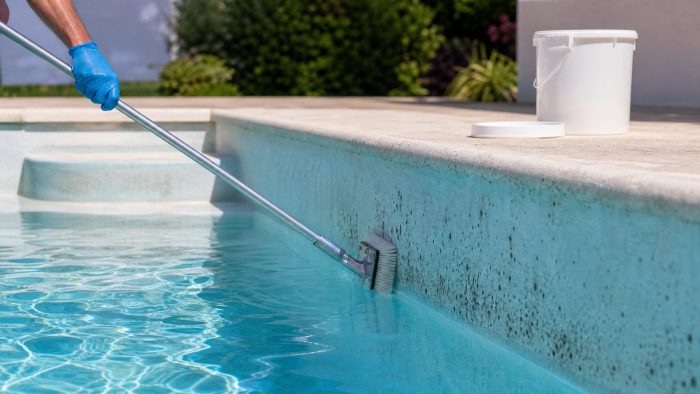
Step 3: Brush all surfaces
Algae clings to walls, ladders, steps, and shady corners. Brushing breaks that protective layer so chlorine can reach the growth instead of only treating the water around it.
Step 4: Add shock at dusk
UV light degrades chlorine, so evening shock gives you several hours of maximum kill time. Match the dose to the severity of the bloom and your pool volume.
Step 5: Run your filter continuously
Keep the pump running 24/7 until the water clears. Backwash or clean the filter every 8-12 hours during heavy algae treatment so dead algae does not keep recirculating.
Step 6: Wait for chlorine to drop below 5 ppm
This usually takes 24-48 hours. Test before moving on because high chlorine can break down many algaecides before they help.
Step 7: Add algaecide
Follow the label dose exactly and pour it around the pool perimeter with the pump running. Use algaecide as the follow-up or prevention step, not the main kill step.
Step 8: Continue filtering
Run the system for at least another 24 hours, then retest chlorine, pH, alkalinity, and water clarity before swimming or adding more chemicals.
When NOT to Use Algaecide
Algaecide isn’t always the answer. Skip it if:
Your Water Is Just Cloudy (No Visible Algae)
Cloudy water without green tint is usually dead algae, fine particles, or chemistry imbalance. You need clarifier or flocculant, not algaecide. Adding algaecide here does nothing except add more chemicals.
Chlorine Is Still High
Wait until free chlorine drops below 5 ppm. Test before adding.
You Have Metal Staining Issues
If you’re fighting copper or iron stains, copper-based algaecides will make everything worse. Use a polyquat instead or skip algaecide entirely and rely on proper chlorine maintenance.
Black Algae Is Your Problem
Black algae embeds into plaster and concrete with root-like structures. Algaecide can’t penetrate those layers. Your treatment plan: aggressive brushing with a stainless steel brush, direct application of granular chlorine to spots, and repeat shocking. This is one case where elbow grease matters more than chemicals.
What If Algae Keeps Coming Back?
Recurring algae means something in your system is failing. The algae isn’t super-powered — you’re missing a root cause.
Check These First
Cyanuric Acid (CYA) Level
If CYA is above 70-80 ppm, your chlorine becomes sluggish. It’s still “there” on your test, but it’s bound up and can’t kill effectively. The only fix for high CYA is draining and refilling part of your water.
Filter Condition
A dirty or damaged filter recirculates algae spores constantly. When did you last deep clean your cartridge? Replaced your sand? DE filters need annual breakdown and inspection.
Dead Spots
Poor circulation means some areas never see treated water. Aim your return jets to create surface movement across the entire pool. Check that your skimmer isn’t clogged.
Phosphate Levels
Phosphates are algae food. They don’t cause algae directly, but high phosphate levels (above 500 ppb) make blooms harder to control. Consider a phosphate remover if you’ve addressed everything else.
For testing both chlorine and pH before any treatment, grab a reliable kit like the Taylor K-2006 Test Kit. It measures everything you need for algae troubleshooting.
Maintenance Dosing: Preventing Algae Long-Term
Once you’ve cleared an algae bloom, prevent the next one with:
- Weekly chlorine maintenance matching your CYA level (use the FC/CYA chart)
- Weekly brushing of walls, steps, and corners
- Bi-weekly algaecide at maintenance dose (typically 2-4 oz per 10,000 gallons for polyquat)
- Monthly phosphate check if you have trees, fertilized lawn nearby, or lots of swimmers
Prevention is cheaper than treatment. A $15 bottle of algaecide used for maintenance over 6 weeks beats spending $80 on shock and chemicals for a single bloom.
FAQ
Can I use algaecide instead of shock to kill algae?
No. Algaecide prevents and weakens algae but can’t kill an active bloom on its own. Shock raises chlorine high enough to destroy algae cells through oxidation. Use shock for killing, algaecide for preventing.
How long after shocking can I add algaecide?
Wait 24-48 hours and test your water. Add algaecide only when free chlorine drops below 5 ppm. Higher chlorine levels will neutralize most algaecides, wasting your money.
Does algaecide kill all types of algae?
Different algaecides work better on different types. Standard polyquat and quat algaecides handle green algae well. Yellow/mustard algae needs sodium bromide-based products. Black algae requires physical brushing plus repeated shocking — algaecide has minimal impact because it can’t penetrate the protective layers.
Why does my pool keep getting algae even though I add algaecide weekly?
Recurring algae usually indicates a chemistry problem, not an algaecide problem. Check your cyanuric acid level (should be 30-50 ppm), verify your filter is clean and running enough hours daily, and make sure chlorine is actually reaching all areas of your pool. High CYA is the most common hidden cause.
Is copper algaecide safe for my pool?
Copper algaecide is effective but carries staining risk. Avoid it if your pH fluctuates, you have a fiberglass or vinyl liner, or your water already contains metals. When used correctly in balanced water, copper algaecide is safe — but many pool owners find polyquat algaecides easier to manage.
Sources
- CDC Healthy Swimming: Pool Chemical Safety — Guidelines for safe handling and application of pool treatment chemicals
- EPA Disinfectants for Pools and Spas — Registration requirements and safety standards for pool sanitizers
- Pool Calculator Chlorine Calculator — Calculate exact shock dosages for your pool volume
- Pool Calculator pH Calculator — Balance pH before shocking for maximum effectiveness
Get Your Pool Chemistry Right the First Time
Stop guessing at chemical doses. Head over to Pool Chemical Calculator to calculate exactly how much shock, algaecide, and other chemicals your specific pool needs. Plug in your test results, get precise dosages, and clear that water faster.
Recommended pool supplies
As an Amazon Associate, Pool Chemical Calculator earns from qualifying purchases.

Helps prevent algae from returning after brushing, shocking, and correcting circulation.
View on Amazon
Useful for algae cleanup, cloudy water, high bather load, and weekly oxidation routines.
View on Amazon
Accurate readings make every chlorine, pH, alkalinity, calcium, and CYA dose safer.
View on AmazonGet exact pool chemical doses
Pool Chemical Calculator turns your test readings, pool volume, and target levels into exact treatment amounts for chlorine, pH, alkalinity, calcium, stabilizer, salt, and more.
Open the Pool Chemical Calculator app for iOS, Android, or web.