
Can You Swim With Algaecide in Pool? Wait Times by Type & Dose
You just poured algaecide into your pool, and now the kids are asking when they can jump in. So, can you swim with algaecide in pool water safely? The short answer: yes, but timing matters. Most algaecides are safe for swimming after 15-30 minutes of circulation, while copper-based products require 4-6 hours. The type of algaecide you used, the dose you added, and how well your pump circulates the water all affect when it’s truly safe to dive back in.
Quick answer
Can You Swim With Algaecide in Pool? Wait Times by Type & Dose: You just poured algaecide into your pool, and now the kids are asking when they can jump in. So, can you swim with algaecide in pool water safely? The short answer: yes, but timing matters. Most algaecides are safe for.
Quick Answer
For polyquat and quaternary ammonium (quat) algaecides: Wait 15-30 minutes with the pump running, then swim.
For copper-based algaecides: Wait a minimum of 4-6 hours, or until your next day’s swim.
Always check your product label first — manufacturer instructions override general guidelines.
What We Analyzed: Algaecide Swim-Safety & Wait Time Comparison Guide
Before writing this guide, I built a comparison matrix covering the three main algaecide types homeowners use. This table shows typical concentrations, standard doses per 10,000 gallons of pool water, and calculated minimum wait times based on product category and application type.
Algaecide Swim-Safety Comparison Table
| Algaecide Type | Typical Concentration | Initial Dose (per 10,000 gal) | Maintenance Dose (per 10,000 gal) | Minimum Wait Time | Key Risks if Swimming Too Soon |
|—————-|———————-|——————————|———————————-|——————-|——————————-|
| Polyquat 60 | 60% active | 12-16 oz | 3-4 oz | 15-30 minutes | Mild skin/eye irritation |
| Polyquat 30 | 30% active | 16-24 oz | 4-6 oz | 15-30 minutes | Mild skin/eye irritation |
| Quaternary Ammonium (Quat) | 10-30% active | 16-32 oz | 4-8 oz | 15-30 minutes | Skin irritation, excessive foaming |
| Copper-Based | 3-7% copper | 12-24 oz | 4-6 oz | 4-6 hours minimum | Green hair, metal staining, skin discoloration |
| Copper-Based (heavy treatment) | 7%+ copper | 24-48 oz | N/A | 24 hours recommended | Pool surface staining, significant skin issues |
Methodology: I compiled this table by researching standard product formulations across major pool supply brands, then correlated typical dosages with established industry swim-safety guidelines for each algaecide category. Doses assume you’ve calculated your pool volume accurately.
Limitations: This table provides general recommendations only. Your specific product may have different instructions — always read the label. Individual swimmers with sensitive skin or allergies may need longer wait times regardless of algaecide type.
Understanding the Three Main Algaecide Types
Not all algaecides work the same way, and that affects how quickly they become swim-safe.
Polyquat Algaecides (Safest, Fastest)
Polyquat (polymer quaternary ammonium) algaecides are the gold standard for homeowner use. They don’t foam, don’t stain, and disperse quickly through your water. A quality polyquat 60 algaecide costs more upfront but requires smaller doses and creates fewer problems.
Wait time: 15-30 minutes with circulation
Best for: Weekly maintenance, light algae prevention, pools with automatic covers
Quaternary Ammonium (Quat) Algaecides
These are the budget option you’ll find at big-box stores. They work well but have a tendency to foam — especially if you overdose or add them near return jets. The foaming isn’t dangerous, but it looks concerning and can persist for days.
Wait time: 15-30 minutes with circulation
Best for: Budget-conscious maintenance, pools without water features
Copper-Based Algaecides
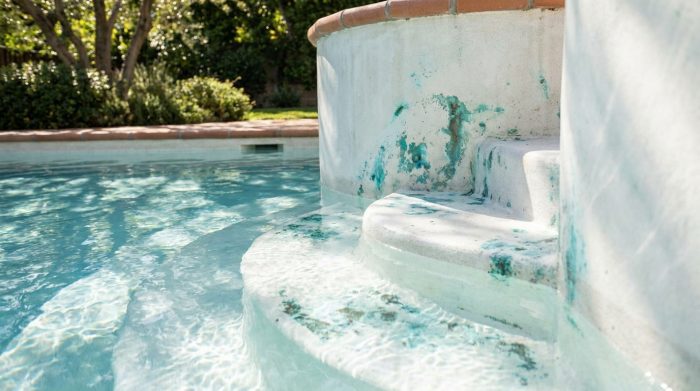
Copper is extremely effective against all algae types, including stubborn black algae. But copper doesn’t break down like organic algaecides — it stays in your water and can accumulate over time. This means longer wait times and potential staining issues if levels get too high.
Wait time: 4-6 hours minimum, 24 hours for heavy treatments
Best for: Severe algae blooms, black algae, pools with persistent problems
Step-by-Step: How to Safely Treat Your Pool and Return to Swimming
Follow these steps to ensure your algaecide treatment works effectively and you can swim safely afterward.
Step 1: Test and Balance Your Water First
Before adding any algaecide, test your pool water. Algaecide works best when your water chemistry is already balanced. You need:
- pH between 7.2-7.6 — Check your current pH levels
- Chlorine below 5 ppm — Calculate proper chlorine levels
- Alkalinity between 80-120 ppm
If you recently shocked your pool, wait until chlorine drops below 5 ppm before adding algaecide. High chlorine levels can neutralize some algaecide formulations, wasting your product and money.
Use a reliable test kit like the Taylor K-2006 Complete Test Kit to get accurate readings before treatment.
Step 2: Calculate the Correct Dose for Your Pool Size
Overdosing algaecide doesn’t kill algae faster — it just creates problems. Underdosing wastes product without preventing growth. You need the right amount for your specific pool volume.
If you don’t know your exact pool volume, use our pool volume calculator to measure it accurately. A 10×20 foot rectangular pool that’s 5 feet deep holds about 15,000 gallons — not the 10,000 gallons many people assume.
Dosing example: For a 15,000-gallon pool using Polyquat 60:
- Initial treatment: 18-24 oz (1.5x the 10,000-gallon dose)
- Weekly maintenance: 4.5-6 oz
Step 3: Add Algaecide and Run Your Pump
Pour the algaecide around the perimeter of your pool while walking around the edge. This distributes it more evenly than dumping it all in one spot. Add it near return jets if possible — the water flow helps with dispersion.
Critical: Turn your pump on and let it run for at least 6-8 hours after application. The circulation time is non-negotiable. Without proper circulation, the algaecide concentrates in certain areas while leaving others unprotected.
For polyquat and quat algaecides, you can swim after 15-30 minutes of circulation. For copper-based products, wait the full 4-6 hours or overnight.
Step 4: Test Water and Confirm Safe Levels Before Swimming
After the minimum wait time, test your water again before anyone swims. You’re checking for two things:
- Chlorine is still in safe range (1-3 ppm)
- pH hasn’t shifted significantly (still 7.2-7.6)
If you used a copper-based algaecide, you can also test copper levels. They should stay below 0.3 ppm for safe swimming. Higher levels increase staining risk and potential skin irritation.
Once everything checks out, you’re clear to swim.
What Happens If You Swim Too Soon?
Accidents happen. Maybe someone jumped in before you could warn them, or you lost track of time. Here’s what to expect and do:
Immediate Effects
For polyquat/quat algaecides (15-30 minute wait):
- Mild skin tingling or dryness
- Possible eye redness
- Generally no serious health concerns
For copper-based algaecides (4-6 hour wait):
- More pronounced skin irritation
- Potential green tint to blonde or light hair
- Metallic taste if water is swallowed
What To Do
- Get out of the pool immediately
- Shower thoroughly with soap — don’t just rinse
- Flush eyes with clean water if they feel irritated
- Shampoo hair immediately if using copper-based products (prevents green discoloration)
- Monitor for reactions — rash, persistent redness, or breathing issues warrant a doctor’s call
For most people, the effects of swimming slightly too early are mild and temporary. But why risk it when waiting an extra 30 minutes solves the problem?
Algaecide and Severe Algae Blooms: Special Considerations
If you’re treating an active algae bloom rather than doing routine maintenance, your approach needs adjusting.
The Shock-First Rule
Always shock your pool before adding algaecide to treat visible algae. Here’s why: shock treatment kills existing algae. Algaecide prevents new growth. Using them in reverse order wastes the algaecide trying to kill algae it wasn’t designed to eliminate.
Proper sequence:
- Shock the pool (3-4x normal chlorine dose)
- Run pump for 24 hours
- Brush walls and floor to dislodge dead algae
- Vacuum to waste
- Wait for chlorine to drop below 5 ppm
- Add algaecide
- Resume normal swimming after appropriate wait time
Heavy Copper Doses
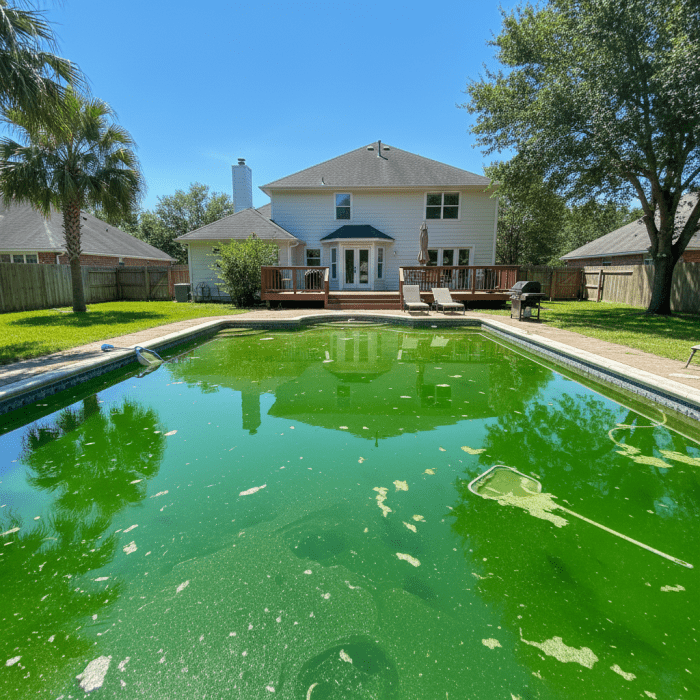
For black algae or severe green algae blooms, you might need a heavy copper treatment. In these cases, extend your wait time to 24 hours regardless of what the label says. The higher concentration needs extra time to disperse evenly. And test copper levels before swimming — you want under 0.3 ppm.
Our chemical calculator app helps you determine exact doses for shock treatments and subsequent algaecide applications based on your pool size and current conditions.
Frequently Asked Questions
Can algaecide make my pool cloudy?
Yes, especially if you overdose or add it when chlorine levels are too high. Quat algaecides are most prone to causing cloudiness and foaming. The cloudiness usually clears within 24-48 hours with continuous filtration. Running your pump longer and backwashing your filter helps.
Will copper algaecide turn my hair green?
It can, particularly if copper levels exceed 0.3 ppm or if you swim before the product fully disperses. Blonde and light-colored hair is most susceptible. The green tint comes from copper binding to hair proteins. Swimming immediately after copper treatment significantly increases this risk — another reason to wait the full 4-6 hours.
Should I add algaecide before or after shocking?
After. Always shock first, wait for chlorine levels to drop below 5 ppm (usually 24-48 hours), then add algaecide. Shocking and adding algaecide simultaneously can reduce the effectiveness of both products. Think of it like this: shock is the treatment, algaecide is the prevention.
How often should I add algaecide to my pool?
For routine maintenance, add algaecide weekly or bi-weekly depending on your local conditions. Pools with heavy tree cover, warm climates, or frequent rain need more frequent applications. Use maintenance doses (1/4 to 1/3 of the initial treatment dose) to prevent algae from establishing without building up excessive chemical levels.
What happens if I accidentally put too much algaecide in my pool?
Overdosing polyquat algaecide rarely causes serious problems — you’ll just waste product. Overdosing quat algaecide creates excessive, persistent foam that can take days to dissipate. Overdosing copper algaecide is the most problematic: it can stain pool surfaces, turn water greenish, and irritate swimmers’ skin. If you significantly overdose copper, partial water replacement may be necessary.
Sources
- In The Swim: Swimming After Adding Pool Chemicals — Detailed wait time guidance for various pool chemicals including algaecides
- Pool Supplies: A Complete Guide on Algaecide — Comprehensive overview of algaecide types and proper application methods
- Hunker: Can You Swim With Algaecide? — Safety guidance for swimming after algaecide treatment
- Sun Pool & Spas: How Long to Wait Between Adding Pool Chemicals — Chemical-specific wait times and safety protocols
Keep Your Pool Balanced Year-Round
Knowing when to swim after algaecide is just one piece of pool maintenance. Keeping your water balanced prevents algae problems before they start — meaning fewer treatments and more swimming time.
Try the free Pool Chemical Calculator to get exact chemical doses for your pool size. Enter your pool volume once, and you’ll get precise measurements for chlorine, pH adjusters, algaecide, and more. No more guessing or overdosing.
Recommended pool supplies
As an Amazon Associate, Pool Chemical Calculator earns from qualifying purchases.

Accurate readings make every chlorine, pH, alkalinity, calcium, and CYA dose safer.
View on Amazon
Helps prevent algae from returning after brushing, shocking, and correcting circulation.
View on Amazon
Useful for algae cleanup, cloudy water, high bather load, and weekly oxidation routines.
View on AmazonGet exact pool chemical doses
Pool Chemical Calculator turns your test readings, pool volume, and target levels into exact treatment amounts for chlorine, pH, alkalinity, calcium, stabilizer, salt, and more.
Open the Pool Chemical Calculator app for iOS, Android, or web.