
How to Close a Saltwater Pool: Step-by-Step Winter Guide
Quick answer
To close a saltwater pool, clean the pool, balance pH, alkalinity, calcium hardness, stabilizer, salt, and chlorine, then shock the water while the pump can still circulate. Turn the salt chlorine generator off for winter, inspect the salt cell, clean it only if scale is visible, lower the water to the right winter level, drain or blow out the equipment and plumbing, add winter algaecide, plug the lines, and secure the cover. Do not count on the salt cell for winter chlorine because most salt systems stop producing in cold water.
Quick answer
How to Close a Saltwater Pool: Step-by-Step Winter Guide: Quick answer To close a saltwater pool, clean the pool, balance pH, alkalinity, calcium hardness, stabilizer, salt, and chlorine, then shock the water while the pump can still circulate. Turn the salt chlorine.
Closing a saltwater pool is mostly the same as closing a chlorine pool, with one expensive difference: the salt chlorine generator and cell need special attention. If you leave water trapped in the cell, let scale sit on the plates, or keep the system trying to produce chlorine in cold water, spring can start with a damaged cell and a green pool.
The goal is simple. Put the water away balanced, oxidized, and clean, then protect every piece of equipment that can freeze.
What We Analyzed: Saltwater Pool Closing Scenarios
Most winterizing advice says to “balance the water” and “add closing chemicals.” That is directionally right, but it does not tell you what that looks like for a real pool. So we modeled common saltwater pool sizes and the closing adjustments a homeowner is likely to make after a late-season test.
Methodology: The table below uses common pool-care dosing assumptions: non-chlorine shock at 1 lb per 10,000 gallons, 60% polyquat algaecide at 16 oz per 10,000 gallons, alkalinity increaser at roughly 1.5 lb per 10,000 gallons to raise total alkalinity by 10 ppm, and pH adjustment based on modest end-of-season correction. Product labels vary, so treat this as a planning table, not a replacement for your bottle label.
Limitations: Salt cell brands have different winter instructions. Hayward, Pentair, Jandy, CircuPool, and other systems do not all remove, drain, or clean the same way. Always check the manual for your exact salt chlorine generator before disconnecting or acid-cleaning the cell.
| Pool Size | Common End-of-Season Problem | Balance Before Closing | Shock Dose | 60% Polyquat Algaecide | Salt System Action |
|—|—|—|—|—|—|
| 10,000 gallons | pH 7.8, TA 70, salt in range | Lower pH to 7.4-7.6, raise TA if needed | 1 lb | 16 oz | Turn generator off, inspect cell |
| 15,000 gallons | pH 7.2, TA 60, low free chlorine | Raise TA first, then pH to 7.4-7.6 | 1.5 lb | 24 oz | Turn off, clean cell only if scaled |
| 20,000 gallons | Calcium scale on cell plates | Balance pH/CSI, clean visible scale carefully | 2 lb | 32 oz | Remove or drain cell per manual |
| 25,000 gallons | High salt warning after summer top-offs | Do not add salt before closing unless below manual range | 2.5 lb | 40 oz | Power off, protect cell from freeze |
Before you dose anything, use the Pool Chemical Calculator volume calculator if you are not sure of gallons. Then run your test results through the pH calculator, alkalinity calculator, calcium hardness calculator, stabilizer calculator, and chlorine calculator. The Pool Chemical Calculator app is the easier field version when you are standing next to the equipment pad.
Saltwater Pool Closing Supplies
Disclosure: As an Amazon Associate, Pool Chemical Calculator may earn from qualifying purchases.
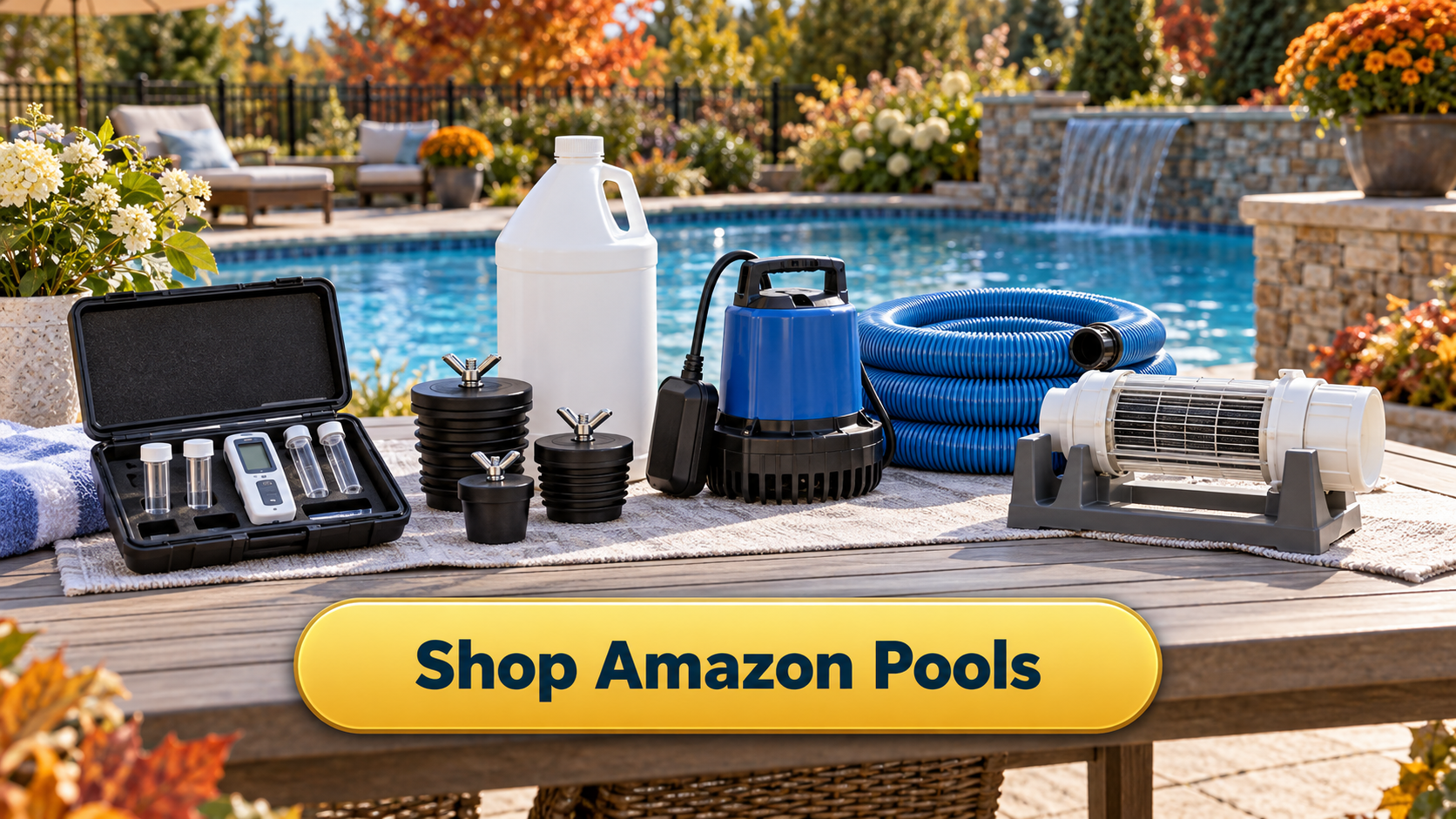
Useful closing supplies include a reliable salt/pool test kit, non-chlorine shock or chlorine shock, 60% polyquat algaecide, winter plugs, a cover pump, a winter cover, and the parts your salt cell manual recommends. If you need to restock, start with saltwater pool test kits, pool winterizing kits, winter plugs, and pool cover pumps.
When Should You Close a Saltwater Pool?
Close when the water temperature is consistently below 65°F, but before hard freezes are likely. That usually lands in late September through October for much of the U.S., later in warmer regions.
Salt pools have one extra timing problem: many salt chlorine generators reduce or stop chlorine production in cold water. Pentair IntelliChlor documentation, for example, says the unit goes into cold-water standby around 52°F, plus or minus a few degrees. That is useful protection for the cell, but it also means you cannot assume the generator will keep sanitizing the water through winter.
If your pool is still warm and sunny, keep it open a little longer or watch chlorine closely. If freezing weather is coming, close the equipment even if you need to make final chemistry adjustments quickly.
Step-by-Step: How to Close a Saltwater Pool
Step 1: Clean the pool completely
Skim the surface, brush the walls, vacuum the floor, clean the skimmer basket, and backwash or clean the filter. Saltwater does not make debris harmless. Leaves and dirt still consume chlorine, stain surfaces, and feed algae under the cover.
Pay extra attention to steps, corners, ladders, and the waterline. If your salt cell has been fighting a dirty pool all fall, closing over debris only makes spring harder.
Step 2: Test every major water parameter
Use a drop-based kit or reliable digital/salt test. At minimum, test free chlorine, combined chlorine, pH, total alkalinity, calcium hardness, cyanuric acid, and salt.
Good closing targets for most saltwater pools are:
- pH: 7.4-7.6
- Total alkalinity: 80-120 ppm
- Calcium hardness: 200-400 ppm for plaster, lower acceptable ranges for many vinyl/fiberglass pools
- Cyanuric acid: usually 30-60 ppm for closing
- Free chlorine: 1-3 ppm before shock, then shock according to product label
- Salt: within the generator manufacturer’s normal range, but do not add salt just because winter is coming
If your salt is a little low but the generator is about to be turned off, adding a full bag of salt often does nothing useful. Save that adjustment for spring unless your manual specifically says otherwise.
Step 3: Balance alkalinity and pH first
Adjust total alkalinity before fine-tuning pH. Low alkalinity lets pH swing during winter. High pH encourages scale, especially inside a salt cell. Low pH can corrode heaters, ladders, light rings, and metal fittings.
This is where the calculator earns its keep. Guessing on acid, soda ash, or baking soda is how people overshoot one number while trying to fix another.
Step 4: Inspect the salt cell
Turn off power to the salt system before touching the cell. Open or remove the cell only according to the manual.
Look for white, crusty calcium scale on the plates. If the cell is clean, rinse it and leave it alone. Unnecessary acid cleaning shortens cell life. If scale is visible, clean it using the manufacturer’s recommended dilution and contact time, then rinse thoroughly.
Do not scrape the plates with metal tools. A salt cell is too expensive for heroics.
Step 5: Shock the pool while circulation is still available
Shock before you drain or disconnect equipment. The pump needs time to move oxidizer through the pool.
Use the chlorine calculator to bring free chlorine to the target on your product label, or use non-chlorine shock at the label rate if you prefer not to raise chlorine before adding algaecide. Run the pump long enough for full circulation, usually overnight.
If the water is green, cloudy, or losing chlorine overnight, do not close yet. Fix the water first.
Step 6: Add winter algaecide after shock has done its job
Add 60% polyquat algaecide after chlorine has circulated and drifted back toward a normal range. High chlorine can break down some algaecides, so do not dump shock and algaecide in at the exact same time unless the product label says it is compatible.
Run the pump for several hours after adding algaecide. Then move to draining and equipment winterization.
Step 7: Turn off the salt chlorine generator for winter
Set the generator output to 0% or winter/off mode if it has one, then shut power down as your system requires. If your automation controls the salt system, confirm the schedule will not restart it after closing.
Cold water can make a salt system stop producing anyway, but “standby” is not the same as winterized. You still need to protect the cell and plumbing from trapped water and freeze expansion.
Step 8: Lower the water to the right level
For many inground pools with a solid cover, lower the water about 4-6 inches below the skimmer. For mesh covers or severe winter regions, your installer may recommend a different level. Above ground salt pools often follow the same approach as standard above ground pools: lower below the skimmer or use a skimmer winter plate based on the cover setup.
Do not drain the pool too low. Water supports the liner, cover, and pool structure. If you are unsure, follow the cover manufacturer’s instructions before the internet’s loudest opinion.
Step 9: Drain or blow out plumbing and equipment
Drain the pump, filter, heater, chlorinator, salt cell vessel, and any low points that can trap water. Remove drain plugs and store them in the pump basket so they are not missing in spring.
In freeze climates, blow out skimmer lines, return lines, cleaner lines, and water features with the right blower or compressor setup, then install winter plugs while air is still pushing water out. Add pool-grade antifreeze only where your closing method and local climate call for it. Never use automotive antifreeze.
Step 10: Protect or remove the salt cell
Some salt cells stay plumbed in after they are fully drained. Others can be removed and stored indoors with a dummy cell or bypass pipe installed. The correct answer depends on your model and plumbing.
If you remove the cell, let it dry, protect the unions and O-rings, and store it somewhere above freezing. If you leave it installed, make sure no water is trapped in the cell body or flow switch area.
Step 11: Install plugs, skimmer protection, and the winter cover
Install return plugs, a skimmer plug or Gizzmo, and any cover hardware. Then secure the winter cover so it cannot flap in wind. A loose cover is not just annoying; it lets debris and sunlight reach the water.
If you use a solid cover, place a cover pump where water collects and check it after heavy rain. For mesh covers, keep an eye on the pool water level through winter so it does not rise into the skimmer.
Common Saltwater Pool Closing Mistakes
Leaving the salt generator active
Once the pool is closed, the generator should not be trying to make chlorine. Low flow, cold water, low salt, or stagnant plumbing can trigger errors and shorten equipment life.
Acid-cleaning the salt cell every year no matter what
Acid cleaning is for visible scale, not routine polishing. Rinse first. Acid only when needed.
Adding salt right before closing
Salt does not disappear over winter the way chlorine does. If the generator is being turned off, a small low-salt reading can usually wait until spring. The exception is when your manual or local closing method requires a specific range.
Closing with active algae
Winter algaecide is prevention, not a miracle cleanup. If the pool is green, brush, shock, filter, and clear it before closing.
Forgetting the heater and salt-cell unions
Equipment pads often have small pockets that hold water. A cracked union or cell housing in spring can cost more than all your closing chemicals combined.
Sources
- Pentair IntelliChlor installation and user guide
- Pentair pool winterizing guidance
- Hayward salt chlorinator winterizing FAQ
- Lowe’s pool closing guide
Frequently Asked Questions
Do you need special chemicals to close a saltwater pool?
Usually no. A saltwater pool still uses chlorine, so the closing chemicals are similar: pH and alkalinity adjusters, shock, winter algaecide, and sometimes stain and scale preventer. The special step is protecting the salt chlorine generator and salt cell.
Should I remove my salt cell for winter?
Remove it only if your manufacturer or local winterizing method recommends it. In freezing climates, many owners either remove the cell and store it indoors or make absolutely sure the cell body is drained. The key is preventing trapped water from freezing inside the cell or flow switch.
Should I clean the salt cell before closing?
Inspect it before closing, but clean it with acid only if you see calcium scale. Routine acid cleaning can shorten the life of the cell coating. If the plates look clean, a gentle rinse is enough.
Can I use my salt system to shock the pool before closing?
Do not rely on the salt system for closing shock. Use liquid chlorine, granular shock, or non-chlorine shock according to your pool needs and product label. Salt generators are designed for steady production, not fast winter closing oxidation.
What should the salt level be when closing a saltwater pool?
Keep salt within the manufacturer’s normal operating range if the pool is still running, but do not add salt right before closing unless the reading is clearly below range and your manual calls for correction. Because the generator will be off, spring is often the better time to fine-tune salt.
Is closing a saltwater pool harder than closing a chlorine pool?
Not much harder. The cleaning, balancing, shocking, draining, plumbing, and covering steps are nearly the same. The difference is that a saltwater pool has a cell and control system that need to be turned off, inspected, and protected from freeze damage.
Final Takeaway
The right way to close a saltwater pool is to treat it like a normal winter closing plus a salt-cell protection job. Balance the water, shock while circulation still works, shut down the generator, protect the cell from scale and freezing, and cover the pool clean. Use the Pool Chemical Calculator app before you pour anything so every dose matches your actual pool volume and test readings.
Recommended pool supplies
As an Amazon Associate, Pool Chemical Calculator earns from qualifying purchases.

Raises free chlorine quickly without adding stabilizer, which is useful when CYA is already high.
View on Amazon
Useful for algae cleanup, cloudy water, high bather load, and weekly oxidation routines.
View on Amazon
Accurate readings make every chlorine, pH, alkalinity, calcium, and CYA dose safer.
View on AmazonGet exact pool chemical doses
Pool Chemical Calculator turns your test readings, pool volume, and target levels into exact treatment amounts for chlorine, pH, alkalinity, calcium, stabilizer, salt, and more.
Open the Pool Chemical Calculator app for iOS, Android, or web.