
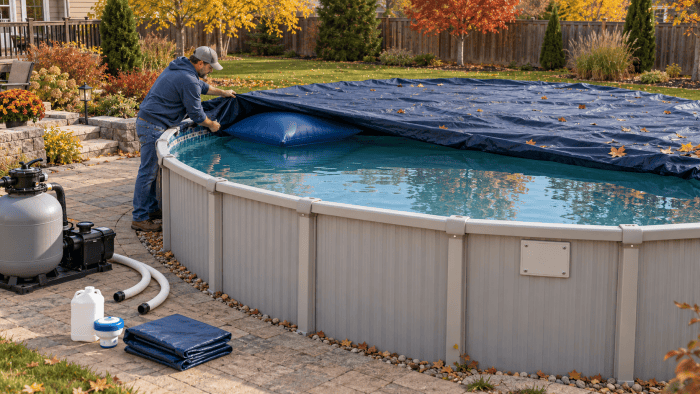
How to Close an Above Ground Pool: Step-by-Step Winter Guide
Quick answer
To close an above ground pool, clean it, balance the water, add winter chemicals, lower the water 4-6 inches below the skimmer, disconnect and drain the pump and filter, plug the return and skimmer, add an air pillow, and secure a winter cover with a cable and winch. Do the chemistry first, and do not close while the water is still above 65°F unless you want to fight algae in spring.
Quick answer
How to Close an Above Ground Pool: Step-by-Step Winter Guide: Quick answer To close an above ground pool, clean it, balance the water, add winter chemicals, lower the water 4-6 inches below the skimmer, disconnect and drain the pump and filter, plug the return and skimmer, add an.
There’s a bittersweet moment every fall when you realize it’s time to close your above ground pool. The good news? Spending 3-4 hours now saves you from a green, slimy nightmare come spring. Learning how to close an above ground pool properly isn’t complicated, but skipping steps or guessing on chemicals can turn a $5,000 pool into an expensive headache.
I’ve seen pool owners rush through closing weekend, only to spend $400+ on algae treatment and new equipment the following May. Don’t be that person. This guide walks you through every step, including the exact chemical calculations most articles skip over.
What We Analyzed: Winterizing Chemical Dosage Calculations
Most closing guides tell you to “add winterizing chemicals” without explaining how much. That’s like a recipe saying “add some flour.” Not helpful.
We calculated dosages for common above ground pool sizes using standard product concentrations. These numbers give you a starting point—always check your specific product labels, since formulations vary between brands.
Methodology: Calculations are based on standard chemical dosing rates: pH increaser at 1.5 lbs per 10,000 gallons to raise pH by 0.2, alkalinity increaser at 1.5 lbs per 10,000 gallons to raise TA by 10 ppm, 60% polyquat algaecide at 16 oz per 10,000 gallons, and non-chlorine shock at 1 lb per 10,000 gallons. We assumed pools need moderate adjustments from typical end-of-season readings.
Limitations: Your actual needs depend on your current water chemistry, specific product strengths, and local water conditions. Test your water first, then adjust these recommendations accordingly.
| Pool Size (Gallons) | Current pH | pH Increaser Needed | Alkalinity Increaser (to raise 20 ppm) | 60% Polyquat Algaecide | Non-Chlorine Shock | Stain & Scale Preventer |
|———————|————|———————|—————————————-|————————|——————-|————————|
| 5,000 (12′ round) | 7.0 | 1.5 lbs | 1.5 lbs | 8 oz | 0.5 lbs | 8 oz |
| 7,500 (15′ round) | 7.2 | 1.1 lbs | 2.25 lbs | 12 oz | 0.75 lbs | 12 oz |
| 10,000 (18′ round) | 7.0 | 3 lbs | 3 lbs | 16 oz | 1 lb | 16 oz |
| 13,500 (24′ round) | 7.2 | 2 lbs | 4 lbs | 22 oz | 1.35 lbs | 22 oz |
| 18,000 (15’x30′ oval) | 7.0 | 5.4 lbs | 5.4 lbs | 29 oz | 1.8 lbs | 29 oz |
To calculate your pool’s volume: Round pools = diameter × diameter × depth × 5.9. Oval pools = length × width × depth × 5.9. If you want the fast version, use the Pool Chemical Calculator volume calculator, then use the chlorine calculator, pH calculator, and alkalinity calculator to dial in the closing dose.
The Pool Chemical Calculator app keeps those calculations on your phone while you are standing next to the pool, which is exactly where you need them during closing.
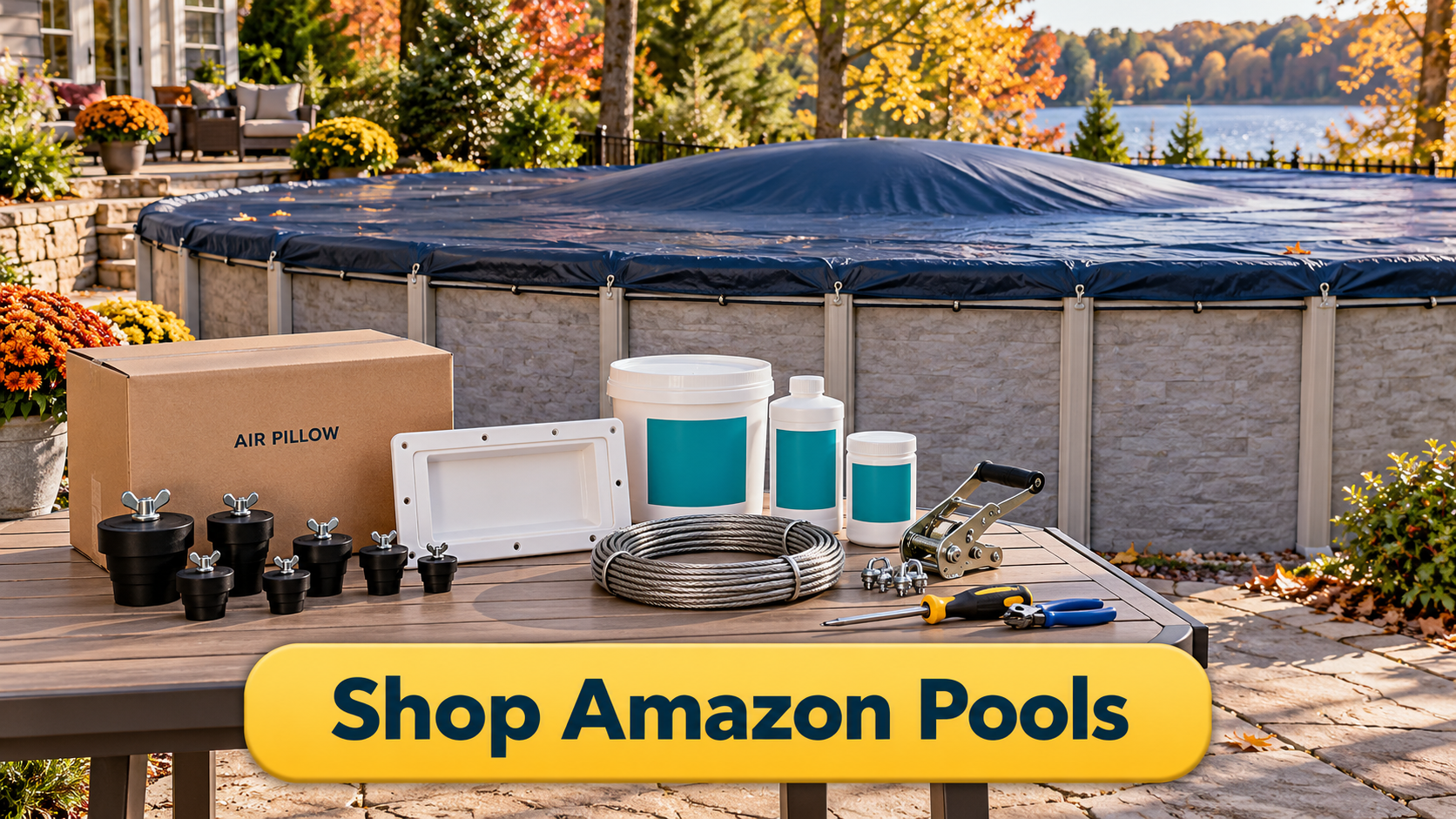
Above Ground Pool Closing Supplies
Disclosure: As an Amazon Associate, Pool Chemical Calculator may earn from qualifying purchases.
When Should You Close Your Above Ground Pool?
Timing matters more than most people realize. Close too early, and algae grows under your cover during warm days. Close too late, and you’re wrestling with frozen equipment.
The sweet spot: when water temperature stays consistently below 65°F. For most of the U.S., that means late September through mid-October. In the South, you might wait until November. Up North, early September isn’t too soon.
Here’s the thing—water temperature, not air temperature, is what matters. Algae goes dormant below 60°F. Close while it’s still warm, and you’re creating a greenhouse for algae under that cover.
Step-by-Step: Closing Your Above Ground Pool
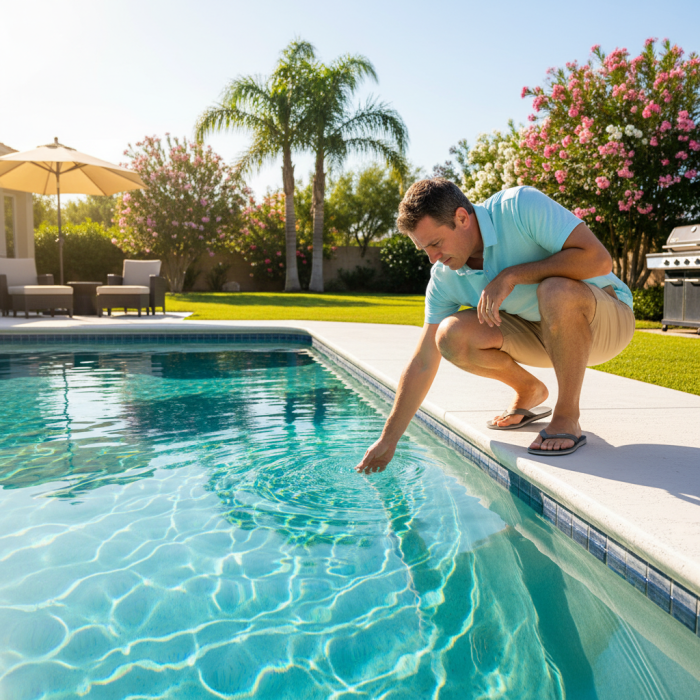
Step 1: Test and Balance Your Water Chemistry
Start here. Always. Unbalanced water spends all winter attacking your liner, corroding metal parts, and creating the perfect environment for spring algae blooms.
Target ranges for closing:
- pH: 7.4-7.6
- Total Alkalinity: 80-120 ppm
- Calcium Hardness: 200-400 ppm
- Chlorine: 1-3 ppm (before adding shock)
A basic test kit like the Taylor K-2006 Complete Test Kit gives you accurate readings. Those cheap test strips? They’ll get you in the ballpark, but you want precision before your pool sits untouched for 5-6 months.
If your pH is low (acidic), add pH increaser. If alkalinity is low, add alkalinity increaser first—it affects pH, so address it before fine-tuning pH.
Step 2: Clean Everything Thoroughly
Debris doesn’t just sit there over winter. It decomposes, stains your liner, and feeds algae.
Your cleaning checklist:
- Skim all leaves, bugs, and floating debris
- Brush walls and floor, especially the waterline
- Vacuum the bottom (manually or with an automatic cleaner)
- Clean the skimmer basket
- Backwash or clean your filter
Pay extra attention to corners and around the ladder. That’s where organic matter loves to hide.
Step 3: Add Winterizing Chemicals in the Correct Order
Order matters because some chemicals react with each other. Add them wrong, and you’ve wasted money and potentially created a chemical mess.
The correct sequence:
- Stain and scale preventer (if using): Add first, run pump for 2 hours
- Adjust pH and alkalinity: Run pump for 4 hours after adjustments
- Shock the pool: Use 1 lb of non-chlorine shock per 10,000 gallons. Run pump overnight.
- Algaecide: Add the morning after shocking. Wait at least 24 hours after chlorine shock to prevent the chlorine from destroying the algaecide.
Don’t add all chemicals at once. Shocking and algaecide in particular need separation time.
Step 4: Lower the Water Level
This step confuses a lot of people. You need water low enough to protect equipment but high enough to support your cover and liner.
Lower the water 4-6 inches below the skimmer opening. That’s it. Going lower risks your cover falling in and stressing the liner.
Some people drain below the return jets too. This depends on your setup—if your return jets are close to skimmer height, draining below the skimmer handles both.
Use your pump to lower water, or rent a submersible pump if your filter pump isn’t suited for the task.
Step 5: Drain and Store Equipment
Water freezes. Ice expands. Expansion cracks pumps, filters, heaters, and chlorinators. It’s physics, and physics doesn’t care how much your equipment cost.
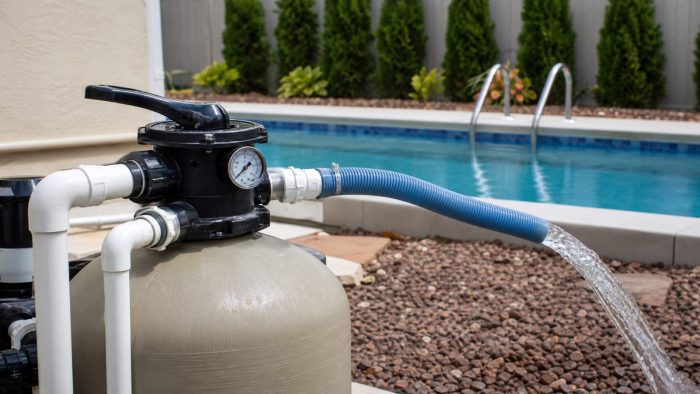
Pump and filter:
- Disconnect hoses
- Drain all water from the pump housing
- Remove drain plugs from filter tank (store plugs in the pump basket so you don’t lose them)
- If you have a sand filter, set the multiport valve to “winterize” position
- Store indoors if possible—a garage works fine
Ladder and accessories:
- Remove completely
- Clean with mild detergent
- Store indoors
Heater (if applicable):
- Follow manufacturer’s drain procedure
- Most have multiple drain points
For cartridge filters, remove the cartridge, clean it with filter cleaner, let it dry completely, and store it flat. A wet cartridge stored in a cold garage becomes a moldy cartridge.
Step 6: Protect Your Skimmer and Return Lines
Freezing water in these lines can crack plastic fittings and damage your pool wall.
For the skimmer:
- Install a skimmer cover plate (also called a winter plate or Gizzmo)
- A Gizzmo is a hollow plastic device that absorbs ice expansion inside the skimmer
- Standard skimmer plates cost $8-15 and work well
For return jets:
- Install threaded winter plugs
- Hand-tighten—don’t crank with pliers
If you’re in an area with brutal winters (I’m looking at you, Minnesota), some people blow out the lines with a shop vac first. But for most above ground pools with short, simple plumbing, proper draining and plugging does the job.
Step 7: Install Your Air Pillow
Yes, you need one. The air pillow sits in the center of your pool and serves two purposes:
- Absorbs ice expansion so pressure goes toward the pillow, not your walls
- Creates a peak so rain and snow slide off your cover instead of pooling
Inflate it to about 60-80% capacity. Over-inflating increases the chance it pops from cold-weather pressure. Under-inflating defeats the purpose.
Position it in the center using string tied to opposite sides of the pool wall. Some people use two smaller pillows for larger pools.
The Robelle Deluxe 4×8 Air Pillow is a solid option that holds up well in freezing temps.
Step 8: Install and Secure the Winter Cover
This is where the whole operation comes together—or falls apart.
Choosing the Right Cover
| Cover Type | Pros | Cons | Best For |
|————|——|——|———-|
| Solid vinyl | Blocks all sunlight, prevents algae | Requires pump on top for rain/snow | Cold climates, heavy algae history |
| Mesh | Drains automatically, lighter weight | Some sunlight penetration, more debris | Mild climates, less hands-on maintenance |
| Leaf net | Catches debris, used with main cover | Not a standalone option | Areas with heavy tree coverage |
For most above ground pool owners, a quality solid winter cover is worth the investment. The Robelle Super Winter Cover comes in multiple sizes and includes a cable and winch for securing.
Securing Your Cover
- Lay the cover evenly, with overlap extending past the pool edge
- Thread the cable through the grommets around the entire perimeter
- Use the winch to tighten until snug—not drum-tight, but no major slack
- Add cover clips every 3-4 feet for extra security against wind
Wind is your enemy. A cover that comes loose in December means you’re dealing with frozen problems you can’t fix until spring. Check cover tightness monthly if you can.
Troubleshooting Common Closing Problems
Algae That Won’t Die Before Closing
If you’re battling algae a few days before you planned to close, don’t close yet. Extra shock treatment now beats opening to a swamp.
Triple-shock the pool (3 lbs chlorine shock per 10,000 gallons), run the filter 24/7 for 48 hours, brush twice daily, and wait until water clears before closing. Closing with active algae guarantees spring problems.
Cover Sags and Fills with Water
Pump it off. A small cover pump ($30-50) removes water before it becomes an ice block. Check weekly during fall rains.
If the pillow deflated, the cover loses its peak and water pools. Some people add a second pillow as backup.
Persistent Low pH Despite Treatment
High carbon dioxide levels from decomposing leaves and debris can keep pushing pH down. Clean more aggressively before closing, and consider adding extra pH increaser.
DIY vs. Professional Closing: What’s the Real Cost?
| Factor | DIY Closing | Professional Service |
|——–|————-|———————|
| Chemical cost | $40-80 | Included |
| Equipment/supplies | $50-100 (first year) | Included |
| Time investment | 3-4 hours | 0 hours |
| Total cost | $90-180 + your time | $150-300 |
| Learning curve | Moderate first time | None |
For most homeowners, DIY makes sense after the first year when you have supplies on hand. If your time is extremely limited or you’re uncomfortable with chemical handling, professional closing runs $150-300 depending on location and pool size.
Frequently Asked Questions
What chemicals do I need to close an above ground pool?
You need a water testing kit, pH adjuster (increaser or decreaser based on your test), alkalinity increaser, pool shock (non-chlorine is preferred for closing), winter algaecide (60% polyquat recommended), and optionally stain and scale preventer. Total chemical cost runs $40-80 for an average 15,000-gallon pool.
Is an air pillow absolutely necessary for closing?
Technically no, but practically yes. Without an air pillow, ice expansion pushes directly against your pool walls, which can cause wall damage or liner tears. The pillow costs $15-25 and protects thousands of dollars in pool structure. That’s a worthwhile trade.
Can I leave my pool pump outside during winter?
Not recommended. Even with proper draining, residual water can freeze and crack pump housings. Temperature swings also degrade plastic and rubber components faster. Store your pump in a garage, basement, or shed where temperatures stay above freezing.
How much water should I drain for winter?
Drain to 4-6 inches below the skimmer opening. This protects the skimmer from ice damage while leaving enough water to support the cover and liner. Going lower stresses the liner and makes cover installation harder.
When should I add algaecide when closing my pool?
Add algaecide at least 24 hours after shocking. Chlorine from shock treatment will destroy algaecide if they mix directly. Shock the pool, let it run overnight, then add algaecide the next morning before shutting everything down.
Your Pool’s Winter Protection Starts Now
Closing your above ground pool correctly takes half a day but protects months of potential problems. Follow these steps, don’t skip the chemical balancing, and secure that cover properly.
Need help calculating exactly how much of each chemical your specific pool needs? Head over to Pool Chemical Calculator or open the Pool Chemical Calculator app to get personalized dosing recommendations based on your pool’s volume and current water chemistry. No more guessing—just accurate numbers that make opening next spring a breeze.
Sources
- Closing An Above Ground Pool – The Pool Factory
- 10 Steps To Winterize Above Ground Swimming Pools – In The Swim
- How To Close An Above Ground Pool – HTH Pools
- How To Properly Close Your Pool – Watson’s
Recommended pool supplies
As an Amazon Associate, Pool Chemical Calculator earns from qualifying purchases.
Raises low pH to protect swimmers, plaster, liners, heaters, and metal equipment.
View on Amazon
Accurate readings make every chlorine, pH, alkalinity, calcium, and CYA dose safer.
View on Amazon
Fast daily checks between full liquid tests, especially during heavy swim season.
View on AmazonGet exact pool chemical doses
Pool Chemical Calculator turns your test readings, pool volume, and target levels into exact treatment amounts for chlorine, pH, alkalinity, calcium, stabilizer, salt, and more.
Open the Pool Chemical Calculator app for iOS, Android, or web.