
The Complete Pool Closing Checklist: Winterize Your Pool Right the First Time
Affiliate disclosure: As an Amazon Associate, Pool Chemical Calculator may earn from qualifying purchases.
Quick answer
The Complete Pool Closing Checklist: Winterize Your Pool Right the First Time: Affiliate disclosure: As an Amazon Associate, Pool Chemical Calculator may earn from qualifying purchases. Frequently Asked Questions How much does it cost to professionally close a pool? Professional pool closing.
Frequently Asked Questions
How much does it cost to professionally close a pool?
Professional pool closing services typically run $150-$300 for standard pools, depending on your location and pool size. Complex setups with water features or extensive plumbing may cost more. DIY closing costs $50-$100 in chemicals and supplies — plus your time.
Can I close my pool with a green tint in the water?
No. Closing a pool with any algae present is asking for a nightmare in spring. Address the algae completely first — shock heavily, brush, vacuum to waste, and run the filter until the water is crystal clear. Then proceed with closing.
Do I need to drain my pool for winter?
Never completely. Lower the water level according to your pool and cover type, but always leave enough water to support the cover and protect the structure. Empty pools can shift, crack, or even pop out of the ground.
How long do winterizing chemicals last under the cover?
Properly dosed winterizing chemicals should remain effective for 4-6 months. If you’re in a climate where winter lasts longer, consider doing a mid-winter check (carefully lifting the cover to add chemicals if needed) around the 4-month mark.
What happens if I skip the pool closing and just cover it?
You’re gambling. Without proper chemical treatment, algae will likely take hold. Without draining equipment, you risk freeze damage to pumps, heaters, filters, and plumbing. The money you “save” by skipping steps usually comes back as expensive repairs.
Sources
- Leslie’s Pool Supplies: Pool Closing Guide — Comprehensive overview of winterization steps for various pool types
- In The Swim: 10 Steps to Winterize an Inground Pool — Detailed inground-specific closing procedures
- [The Pool Factory: Winterizing Your Above Ground Pool](https://www.thepoolfactory.
Related Calculators
Confirm your water volume with the pool volume calculator, then use the pH calculator, alkalinity calculator, calcium hardness calculator, and chlorine calculator before closing.
Step-by-Step Pool Closing Checklist
1. Test and balance the water
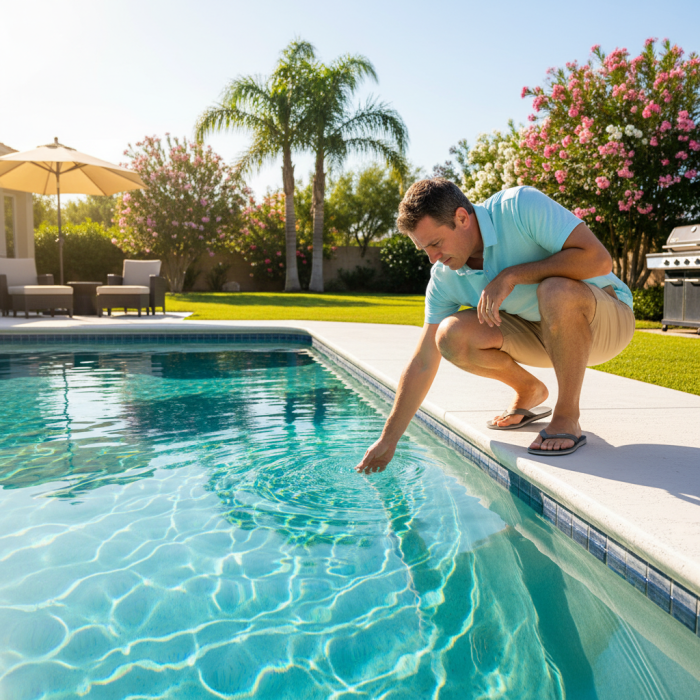
Test pH, total alkalinity, calcium hardness, stabilizer, and sanitizer. Adjust pH to 7.2-7.6 and alkalinity to 80-120 ppm before adding winter chemicals.
2. Clean the pool completely
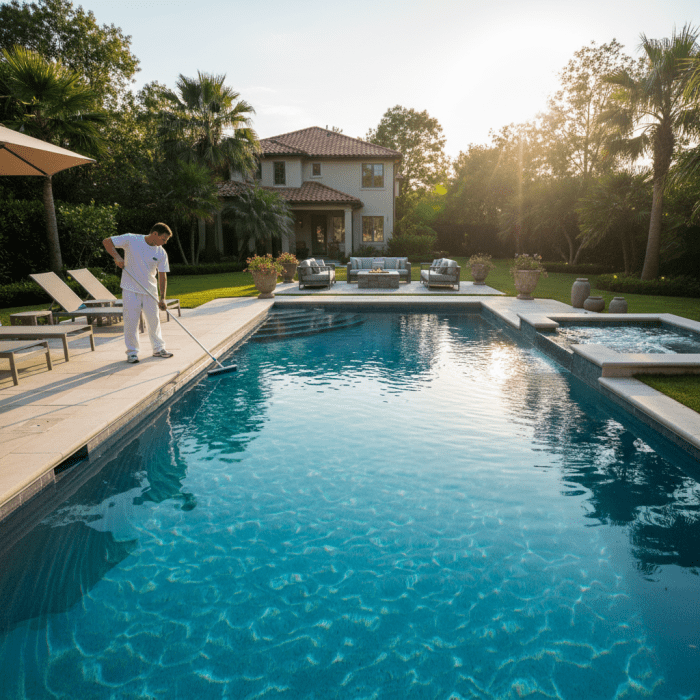
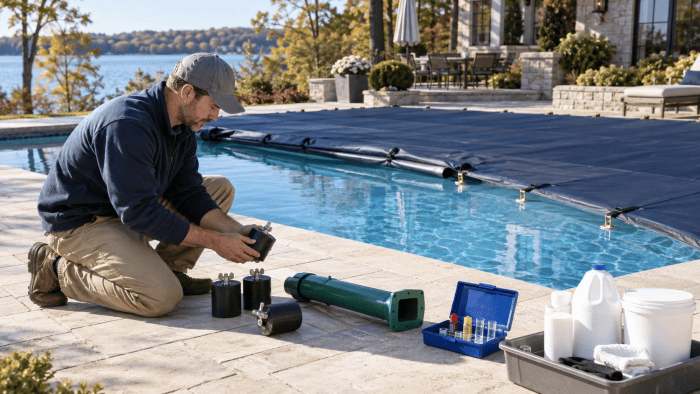
Skim leaves, brush walls, vacuum the floor, empty skimmer and pump baskets, and clean the waterline so winter chemicals are not fighting debris.
3. Add winter chemicals in order
Add stain and scale preventer first, then shock, then algaecide after the label-recommended waiting period. Circulate each product long enough to mix.
4. Lower water and winterize plumbing
Lower water only as required for your cover and fitting type. Blow out lines, plug returns and skimmers, and add pool-safe antifreeze where your climate and plumbing layout require it.
5. Shut down equipment and secure the cover
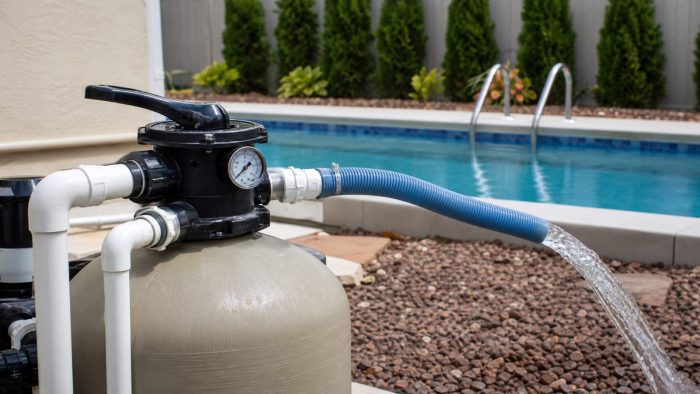
Clean the filter, drain pumps/heaters/filter tanks, store removable plugs and gauges, install the cover tightly, and check that cover pump or water bags are positioned correctly.
Recommended pool supplies
As an Amazon Associate, Pool Chemical Calculator earns from qualifying purchases.

Raises calcium hardness to reduce corrosive water risk in plaster, concrete, and equipment.
View on Amazon
Raises total alkalinity so pH is less likely to bounce around after treatment.
View on Amazon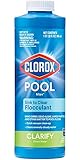
Drops suspended particles to the floor for vacuuming to waste when water is severely cloudy.
View on AmazonGet exact pool chemical doses
Pool Chemical Calculator turns your test readings, pool volume, and target levels into exact treatment amounts for chlorine, pH, alkalinity, calcium, stabilizer, salt, and more.
Open the Pool Chemical Calculator app for iOS, Android, or web.