
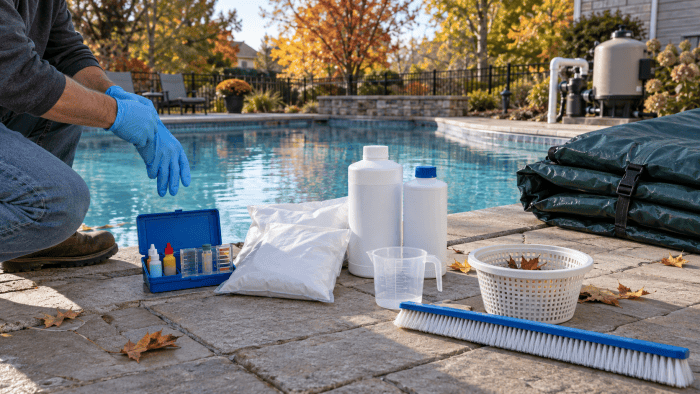
Pool Closing Chemical Kit: What to Buy, What to Skip, and How to Use It
Quick answer
A good pool closing chemical kit should include non-chlorine shock, winter algaecide, stain and scale preventer, and clear dosage instructions for your pool size. It does not replace water balancing. Before you add closing chemicals, test and adjust pH to 7.2-7.6, total alkalinity to 80-120 ppm, and calcium hardness to the right range for your surface. For exact dosage math, use the Pool Chemical Calculator app with your pool volume and current test readings.
Quick answer
Pool Closing Chemical Kit: What to Buy, What to Skip, and How to Use It: Quick answer A good pool closing chemical kit should include non-chlorine shock, winter algaecide, stain and scale preventer, and clear dosage instructions for your pool size. It does not replace water balancing.
Most pre-packaged kits are convenient if your water is already balanced and your pool size matches the kit. Buy individual chemicals if your pool is between kit sizes, you need larger doses, or you already have some closing products on hand.
What We Analyzed: Chemical Dosage and Cost Comparison
Before you buy anything, you need to understand exactly how much of each chemical your specific pool requires. I calculated dosages and estimated costs for three common pool sizes with different starting water conditions.
Methodology: These calculations use standard dosing guidelines from major chemical manufacturers and average retail prices from national pool supply retailers (as of late 2024). Your actual costs may vary based on brand, retailer, and regional pricing.
Limitations: Prices fluctuate seasonally and by region. These estimates assume you’re purchasing individual chemicals at typical retail prices-bulk buying or sales can reduce costs significantly.
Pool Closing Chemical Dosage & Cost Matrix
| Pool Size | Starting Conditions | Winterizing Shock | Algaecide | Stain & Scale | pH Adjusters | Estimated Total |
|———–|———————|——————-|———–|—————|————–|—————–|
| 10,000 gal | pH 7.4, TA 100, CH 200 (balanced) | 1 lb non-chlorine shock ($8) | 1 qt 60% algaecide ($15) | 16 oz ($12) | None needed | $35-45 |
| 15,000 gal | pH 8.0, TA 140, CH 150 (high pH/TA, low CH) | 1.5 lb non-chlorine shock ($12) | 1.5 qt 60% algaecide ($22) | 24 oz ($18) | 1.5 lb pH decreaser + 4 lb calcium ($14) | $66-80 |
| 25,000 gal | pH 7.2, TA 80, CH 250 (low TA) | 2.5 lb non-chlorine shock ($20) | 2 qt 60% algaecide ($30) | 32 oz ($24) | 3 lb alkalinity increaser ($9) | $83-100 |
Key Finding: A pre-packaged kit for a 15,000-gallon pool typically costs $45-65 but assumes your water is already balanced. If you’re starting with the “high pH/TA, low CH” scenario above, you’d need an additional $14+ in balancing chemicals anyway-making individual purchases potentially more cost-effective.
Before buying, confirm your pool gallons with the pool volume calculator. Then use the pH calculator, alkalinity calculator, calcium hardness calculator, and chlorine calculator to size the balancing chemicals that kits usually leave out.
Chemical Order of Application
Getting the sequence right matters more than most guides emphasize:
- Balance pH and alkalinity (wait 4-6 hours, retest)
- Adjust calcium hardness (wait 2-4 hours)
- Add stain and scale preventer (wait 1 hour, circulate)
- Add winterizing shock (run pump 2-4 hours)
- Add winterizing algaecide (add last, 15-30 minutes before shutdown)
The 8 Chemicals You Actually Need (And 2 You Probably Don’t)
Essential Winterizing Chemicals
1. Non-Chlorine Shock (Potassium Monopersulfate)
Skip the chlorine shock when closing. Why? Chlorine attacks copper-based algaecides, making them less effective. It also fades vinyl liners over winter when there’s no circulation to distribute it evenly.
Non-chlorine shock oxidizes contaminants without the drawbacks. Use 1 pound per 10,000 gallons. The In The Swim Non-Chlorine Pool Shock is a solid option that dissolves quickly.
2. Winterizing Algaecide (60% Concentration)
This is your main defense against green water come spring. Standard algaecide (10-30% concentration) won’t last through winter. You need a 60% polyquat or copper-free formula rated for 4-6 months of protection.
Add 1 quart per 15,000 gallons. And here’s a tip most guides miss: pour it around the pool’s perimeter, not in one spot. Distribution matters when your pump is off.
3. Stain and Scale Preventer (Metal Sequestrant)
This prevents dissolved metals from staining your pool surfaces and stops calcium scale from forming on tile lines. Even if your water looks clear, metals from well water, corroded pipes, or cheap algaecides are often hiding in there.
Use 1 ounce per 1,000 gallons.
4. pH Decreaser or Increaser
Your target pH for closing: 7.2-7.6. On the lower end of normal is ideal because pH tends to drift upward in stagnant water.
If your pH reads 8.0, you’ll need about 1 pound of pH decreaser (sodium bisulfate) per 10,000 gallons to drop it 0.2-0.4 points.
5. Total Alkalinity Increaser
Target: 80-120 ppm. Low alkalinity causes pH bounce. High alkalinity makes pH stubborn to adjust. Get this right before touching pH.
Sodium bicarbonate (yep, baking soda works) at 1.5 pounds per 10,000 gallons raises TA by about 10 ppm.
6. Calcium Hardness Increaser
Target: 175-250 ppm for vinyl, 200-275 ppm for plaster. Low calcium makes water “hungry”-it’ll pull minerals from your plaster surfaces, causing etching.
Calcium chloride at 1.25 pounds per 10,000 gallons raises CH by approximately 10 ppm.
7. Pool Antifreeze (For Plumbing Lines)
If you live where temperatures drop below 32°F, antifreeze in your plumbing lines prevents cracked pipes. Use pool-specific propylene glycol antifreeze-never automotive antifreeze, which is toxic.
You’ll need 1-2 gallons per plumbing line, depending on pipe length.
8. Enzyme Treatment (Optional but Worth It)
Enzymes digest organic matter like body oils, leaves, and pollen throughout winter. This reduces the gross brown organic ring you’d otherwise scrub off your waterline in spring.
Add according to pool size, typically 16-32 oz for most residential pools.
What You Probably Don’t Need
Chlorine Floater: Many kits include these. The problem? Uneven distribution in stagnant water leads to bleached spots on vinyl and concentrated attacks on whatever equipment the floater drifts toward.
Clarifier: Won’t help under a cover with no filtration. Save your money for spring.
Affiliate disclosure: As an Amazon Associate, Pool Chemical Calculator may earn from qualifying purchases.
Kit vs. Individual Chemicals: Which Makes Sense for You?
Pre-packaged closing kits typically include shock, algaecide, stain & scale preventer, and sometimes a floater. They’re sized for specific pool volumes (usually 7,500, 15,000, or 30,000 gallons).
Buy a kit if:
- Your water is already balanced (pH 7.2-7.6, TA 80-120, CH 175-250)
- Your pool size matches a standard kit size closely
- You value convenience over cost optimization
Buy individual chemicals if:
- Your water chemistry needs significant adjustment
- Your pool falls between kit sizes (a 20,000-gallon pool gets awkward)
- You already have some chemicals on hand from the season
- You want higher-quality algaecide than kit brands typically include
The Pool Mate Pool Closing Kit works well for above-ground pools up to 15,000 gallons and includes the basics at a reasonable price point.
Step-by-Step: The Right Order for Closing Your Pool
Week Before Closing
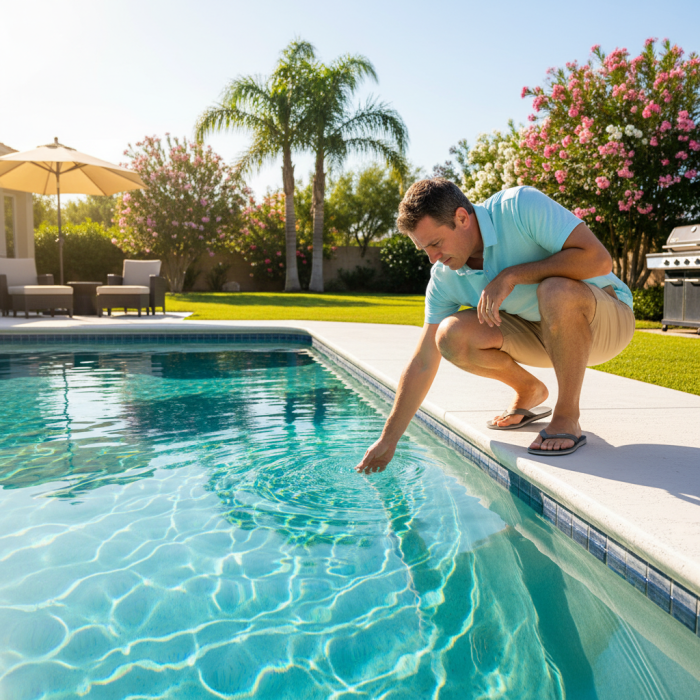
Test your water. Seriously, don’t skip this. Knowing your exact pH, TA, and CH levels tells you exactly which balancing chemicals you need. Test strips work fine; a liquid test kit is more accurate.
Clean everything. Vacuum the floor, brush the walls, skim the surface. Any debris left behind becomes food for bacteria and algae.
Closing Day Sequence
Morning:
- Run your pump and add pH adjusters if needed
- Wait 4-6 hours, retest pH
- Add alkalinity or calcium adjusters if required
- Let pump run another 2-4 hours
Afternoon/Evening:
- Add stain and scale preventer, circulate 1 hour
- Add winterizing shock, circulate 2-4 hours
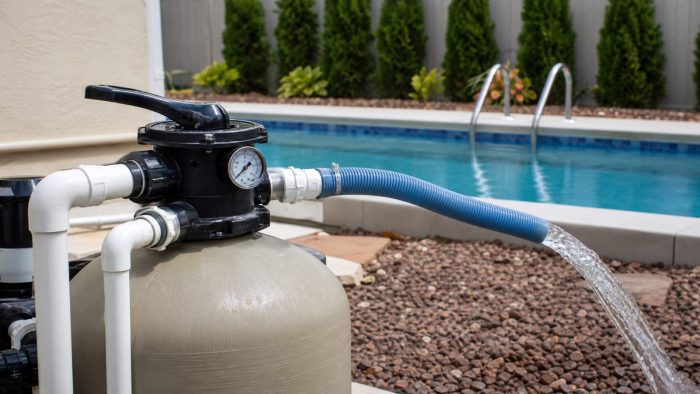
- Backwash or clean your filter
- Lower water level (if applicable for your cover type)
Final Steps:
- Blow out plumbing lines with a shop vac or air compressor
- Add pool antifreeze to skimmers, returns, and main drain line
- Plug all openings with winterizing plugs
- Add winterizing algaecide-this goes in last
- Install your winter cover
1. Test and balance the water
Test pH, total alkalinity, calcium hardness, and sanitizer before adding any closing kit chemicals. Bring pH to 7.2-7.6, total alkalinity to 80-120 ppm, and calcium hardness to the right range for your pool surface.
2. Clean the pool before adding chemicals
Brush the walls, skim the surface, vacuum the floor, and remove leaves from baskets. Closing chemicals work better when they are not fighting a load of organic debris.
3. Add stain and scale preventer
Dose stain and scale preventer first, usually around 1 ounce per 1,000 gallons unless the label says otherwise. Circulate for at least one hour before adding shock.
4. Add winterizing shock
Use non-chlorine shock at about 1 pound per 10,000 gallons. Run the pump for 2-4 hours so it mixes through the entire pool.
5. Blow out and protect plumbing lines
Lower the water if your cover type requires it, blow out lines with air, add pool antifreeze where needed, and install winter plugs. Never use automotive antifreeze.
6. Add winter algaecide last
Pour winter algaecide around the pool perimeter 15-30 minutes before final shutdown. Install the winter cover after the chemical has had a short circulation window.
Above-Ground vs. Inground Differences
Above-ground pools face extra challenges. The walls can buckle from ice expansion if water levels drop too low. Keep water at normal levels and install an air pillow under your cover-it absorbs ice pressure and prevents cover damage.
Inground pools with main drains need special attention. Blow out the main drain line thoroughly and plug it. A cracked main drain pipe means a major repair.
How Long Do Winterizing Chemicals Last?
Quality winterizing chemicals provide 4-6 months of protection. That’s enough for most northern climates, but barely covers the 6-7 month winters in Minnesota or Maine.
Extend effectiveness by:
- Using a solid winter cover instead of mesh (blocks sunlight that degrades chemicals)
- Removing debris from the cover monthly
- Checking water level periodically-too much evaporation dilutes everything
If your area has a particularly long winter, consider a mid-winter chemical boost. Pull back part of your cover in February, test the water, and add half doses of shock and algaecide if chlorine has dropped to zero.
Sources
- In The Swim: What Chemicals Are Needed To Close A Pool – Comprehensive guide to winterizing chemical purposes and dosages
- Leslie’s Pool Supplies: Pool Closing Guide – Step-by-step closing procedures and timing
- Loop-Loc: 8 Chemicals Needed To Close Your Pool – Detailed chemical breakdown with specific applications
Frequently Asked Questions
Should I use chlorine or non-chlorine shock when closing my pool?
Non-chlorine shock (potassium monopersulfate) is the better choice. Chlorine shock degrades copper-based algaecides, can bleach vinyl liners in stagnant water, and adds cyanuric acid that accumulates over time. Non-chlorine shock oxidizes contaminants without these drawbacks and works alongside your winterizing algaecide instead of against it.
What are the ideal chemical levels for closing my pool?
Aim for pH between 7.2-7.6 (lower end is better), total alkalinity at 80-120 ppm, and calcium hardness at 175-250 ppm for vinyl pools or 200-275 ppm for plaster. Chlorine can be at zero since you’re adding shock, but make sure combined chlorine (chloramines) is below 0.5 ppm before closing.
How much antifreeze do I need for my pool plumbing?
Plan for 1-2 gallons of pool-specific propylene glycol antifreeze per plumbing line. A typical inground pool with two skimmers, three returns, and a main drain needs 7-12 gallons total. Pour antifreeze after blowing out lines with air-it protects any remaining water in low spots from freezing.
Are pool closing kits worth the money?
They’re worth it if your water is already balanced and your pool size matches the kit. For a 15,000-gallon pool with balanced water, a $50 kit beats buying chemicals individually (which runs $70+). But if you need pH adjusters, calcium, or alkalinity products anyway, buying chemicals separately lets you get exactly what you need without overpaying.
When is the best time to close my pool for winter?
Wait until water temperature consistently stays below 65°F-typically late September through mid-October in most northern states. Closing too early while water is warm encourages algae growth under your cover. Closing too late risks freeze damage to equipment and plumbing.
Take the Guesswork Out of Pool Closing
Want precise chemical calculations for your specific pool? Open the Pool Chemical Calculator app to get exact dosages based on your pool volume and current water test results. No more estimating, no more over-buying chemicals you won’t use.
Your spring self will thank you.
Recommended pool supplies
As an Amazon Associate, Pool Chemical Calculator earns from qualifying purchases.

Raises total alkalinity so pH is less likely to bounce around after treatment.
View on Amazon
Accurate readings make every chlorine, pH, alkalinity, calcium, and CYA dose safer.
View on Amazon
Fast daily checks between full liquid tests, especially during heavy swim season.
View on AmazonGet exact pool chemical doses
Pool Chemical Calculator turns your test readings, pool volume, and target levels into exact treatment amounts for chlorine, pH, alkalinity, calcium, stabilizer, salt, and more.
Open the Pool Chemical Calculator app for iOS, Android, or web.