
Pool Closing Chemicals: Your Complete Guide to Winterizing Right
Quick answer
Pool closing chemicals should be added after the water is clean and balanced: adjust alkalinity, pH, and calcium first, then add shock, stain and scale preventer, winter algaecide, and pool antifreeze if your plumbing can freeze. For most pools, target pH 7.2-7.6, total alkalinity 80-120 ppm, calcium hardness 175-275 ppm depending on surface, and use a non-staining polyquat algaecide for winter protection. Use the Pool Chemical Calculator app to calculate exact doses for your pool volume, and double-check pH with the pH calculator and total alkalinity with the alkalinity calculator before adding closing chemicals.
Quick answer
Pool Closing Chemicals: Your Complete Guide to Winterizing Right: Quick answer Pool closing chemicals should be added after the water is clean and balanced: adjust alkalinity, pH, and calcium first, then add shock, stain and scale preventer, winter algaecide, and pool antifreeze if.
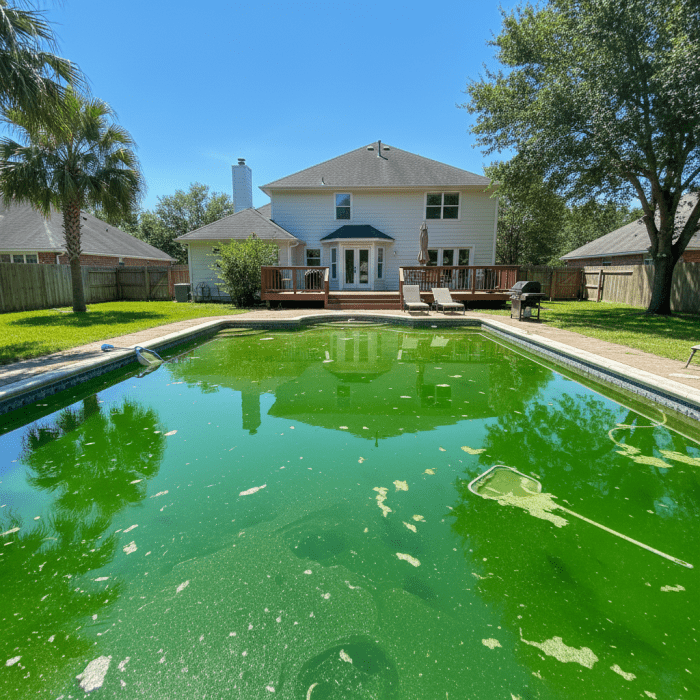
Fall leaves are dropping, temperatures are dipping, and your pool is giving you that look: the one that says “don’t forget about me.” Using the right pool closing chemicals now determines whether you’ll open your pool next spring to crystal-clear water or a green mess. And trust me, nobody wants to spend their first warm Saturday battling algae instead of swimming.
Here’s the thing most guides won’t tell you: the specific brand matters less than the concentration of what you’re buying. A 50% algaecide works differently than a 60% version, and non-chlorine shock behaves nothing like calcium hypochlorite when it sits in your pool all winter. Let’s break down exactly what you need, how much to add, and the order that actually works.
What We Analyzed: Pool Closing Chemical Dosages by Product Strength
Before we get into the step-by-step process, here’s something that’ll save you money and frustration. We calculated dosage requirements for common winterizing chemicals based on pool volume and product strength. This matters because that “one bottle treats up to 20,000 gallons” claim on the label assumes specific concentrations.
Methodology: We used standard pool chemistry formulas to determine dosages based on pool volume, then compared requirements across different product strengths. Dosages follow manufacturer guidelines for winterizing applications — not regular maintenance doses.
Limitations: These are estimates. Always check your specific product’s label, as formulations vary between manufacturers. Your actual needs may differ based on current water conditions, debris load, and local climate severity.
Winterizing Chemical Dosage Comparison (Per 10,000 Gallons)
| Chemical Type | Product Strength | Dosage Per 10,000 Gallons | Notes |
|————–|——————|—————————|——-|
| Polyquat Algaecide | 50% | 16 oz | Most common strength, won’t stain |
| Polyquat Algaecide | 60% | 12-14 oz | More concentrated, better value long-term |
| Copper-Based Algaecide | 7.4% | 4-6 oz | Effective but can stain light surfaces |
| Non-Chlorine Shock (Potassium Monopersulfate) | 43% active | 2 lbs | Won’t bleach covers, oxidizes contaminants |
| Dichlor Shock | 56% available chlorine | 1 lb | Provides residual chlorine protection |
| Calcium Hypochlorite Shock | 65-73% available chlorine | 1 lb | Most aggressive, dissolve completely first |
| Sequestering Agent (Metal Control) | Standard | 32 oz initial dose | Prevents staining from iron/copper |
| Stain & Scale Preventer | Standard | 32 oz | Protects surfaces, especially plaster |
| Pool Antifreeze | Propylene glycol | 1 gallon per 10 ft of plumbing | Non-toxic formula only |
Sample Calculation: 18,000-Gallon In-Ground Pool
Inputs:
- Pool volume: 18,000 gallons
- Current pH: 7.2
- Current alkalinity: 90 ppm
- Presence of metals: Yes (well water)
- Selected algaecide: 60% Polyquat
- Selected shock: Non-chlorine
- Climate: Moderate freeze zone
Calculated Outputs:
- pH adjustment: Add 12 oz pH increaser to reach 7.4-7.6
- Alkalinity: Already in range (80-120 ppm target)
- Algaecide (60% Polyquat): 22-25 oz
- Non-Chlorine Shock: 3.6 lbs
- Metal Sequestrant: 48 oz (due to well water)
- Antifreeze: 4-5 gallons for typical plumbing runs
The Essential Pool Closing Chemicals Checklist
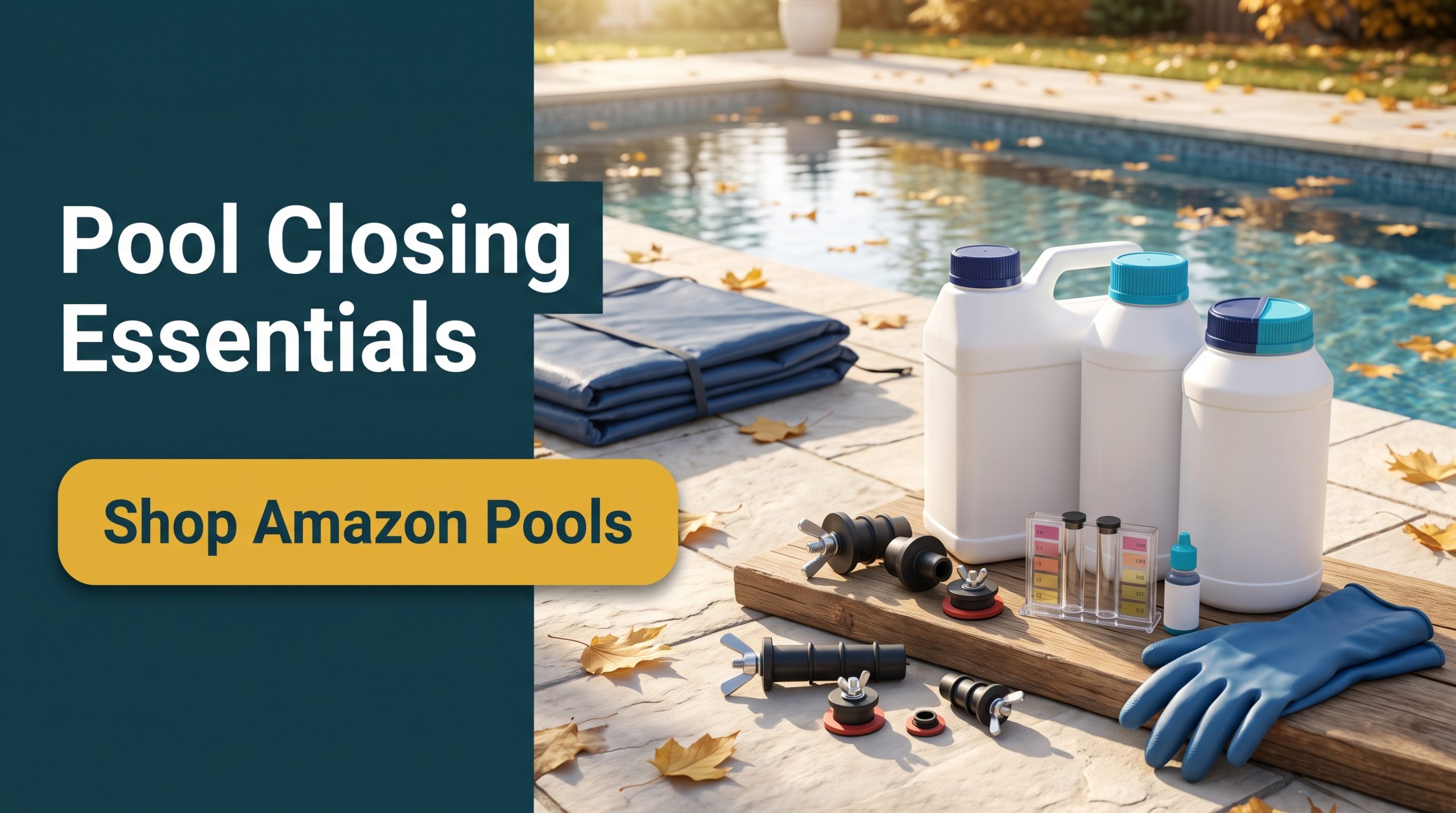
You don’t need twenty products. You need the right five or six, properly applied. Here’s your actual shopping list:
1. Water Balancers (pH, Alkalinity, Calcium)
Get your water balanced before adding winterizing chemicals. Unbalanced water degrades other chemicals faster and can damage pool surfaces over a 4-6 month closure.
Target levels for closing:
- pH: 7.2-7.6
- Total Alkalinity: 80-120 ppm
- Calcium Hardness: 175-225 ppm (vinyl pools) or 200-275 ppm (plaster/concrete)
Why slightly different than swim season? You want pH stable and slightly elevated to reduce corrosion on equipment, and calcium in range to prevent scaling or etching under the cover.
2. Winterizing Shock Treatment
Shock oxidizes organic contaminants — body oils, sunscreen, leaves, whatever’s accumulated. But the type matters more at closing than during the season.
Non-chlorine shock (like potassium monopersulfate) is often preferred because:
- It won’t bleach your winter cover
- Works at any pH level
- Doesn’t add calcium or cyanuric acid to your water
- Oxidizes without leaving aggressive chlorine residue
The HTH Pool Care Shock Advanced is a solid non-chlorine option that handles winterizing well.
Chlorine-based shock still works fine if:
- You wait 24-48 hours before covering
- You brush and circulate after adding
- You test to confirm chlorine drops below 5 ppm before covering
3. Winter Algaecide
This is your insurance policy. Algaecide creates a hostile environment for algae spores that find their way under your cover through spring.
Polyquat algaecides (quaternary ammonium compounds) are your best bet for winterizing:
- Non-foaming
- Non-staining
- Compatible with all surface types
- Longer lasting than copper-based formulas
The In The Swim Pool Algaecide 60 Plus is a 60% polyquat that provides strong winter protection without the staining risk of metallic algaecides.
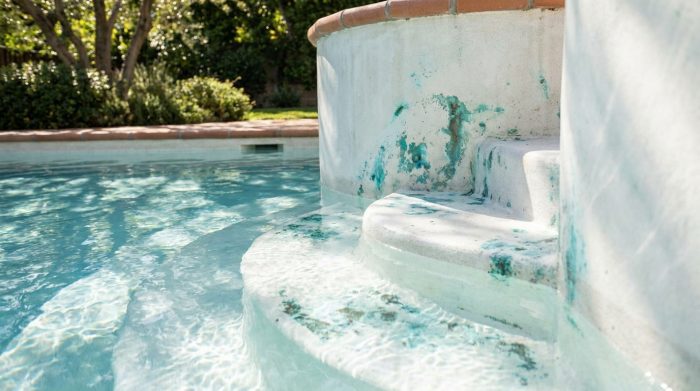
Avoid copper-based algaecides on light-colored plaster or vinyl unless you’re confident in your sequestrant levels. Copper works great against algae but can leave blue-green stains on pool surfaces during long closures.
4. Stain and Scale Preventer
Even if you’ve never had staining issues, winter changes things. Water sits undisturbed for months. Metals precipitate. Calcium deposits where it shouldn’t.
A good sequestering agent binds to dissolved metals (iron, copper, manganese) and keeps them in solution instead of bonded to your pool walls.
Add this especially if:
- You have well water
- Your fill water is hard
- You’ve noticed any rust-colored staining before
- Your pool has a heater (copper heat exchangers shed trace metals)
5. Pool Antifreeze (Cold Climates Only)
If you live where ground freezes, you need antifreeze in your plumbing lines. Water expands when it freezes, and a cracked pipe underground costs thousands to repair.
Critical: Use only pool-specific antifreeze (propylene glycol, non-toxic). Automotive antifreeze is ethylene glycol — toxic to humans, pets, and wildlife. It also damages pool equipment seals.
Plan for roughly 1 gallon per 10 feet of plumbing line. A typical in-ground pool with standard equipment setup needs 3-5 gallons.
The Correct Order for Adding Pool Closing Chemicals
Order matters. Adding chemicals in the wrong sequence reduces their effectiveness and wastes money. Here’s the proven sequence:
Step 1: Clean First, Chemistry Second
Remove debris with a skimmer net. Brush walls and floor. Vacuum thoroughly. Run your filter for 24 hours. Why? Dirty water consumes chemicals fighting existing contaminants instead of preventing new growth.
Step 2: Balance Water Chemistry
Test your water (or bring a sample to your local pool store). Adjust in this order:
- Total Alkalinity first — it stabilizes pH
- pH second — once alkalinity is set, pH adjusts more predictably
- Calcium Hardness last — won’t affect the others
Wait 4-6 hours between adjustments and retest before adding more chemicals.
Step 3: Add Shock Treatment
With balanced water, add your shock. Broadcast it across the deep end while the pump runs. Brush to distribute evenly.
Timing note: If using chlorine shock, wait 24-48 hours before covering. Non-chlorine shock allows same-day covering after 4-6 hours of circulation.
Step 4: Add Stain and Scale Preventer
While the pump still runs, pour sequestering agent around the pool perimeter. This disperses the chemical and begins protecting your surfaces immediately.
Step 5: Add Winter Algaecide
Wait 24 hours after shocking if you used chlorine (high chlorine levels destroy algaecide). With non-chlorine shock, you can add algaecide after 2-4 hours.
Pour algaecide slowly around the pool’s perimeter with the pump running. Let it circulate for at least 2 hours.
Step 6: Lower Water Level
Drop water 4-6 inches below the skimmer for mesh covers, or 12-18 inches below the tile line for solid covers (to allow rain/melt water accumulation space).
Step 7: Add Antifreeze (If Needed)
After blowing out lines with a shop vac or air compressor, pour antifreeze into skimmers, return lines, and main drain line. Plug all lines with winterizing plugs.
Step 8: Install Winter Cover
Secure tightly. A loose cover lets in debris, light (which feeds algae), and animals.
Pool Closing Kits: Worth It or Not?
Pre-packaged winterizing kits typically include algaecide, shock, stain preventer, and sometimes a floating chemical dispenser. They’re convenient, but here’s the honest breakdown:
Kits make sense if:
- Your pool is average size (15,000-20,000 gallons)
- You want everything in one box
- You’re new to pool closing
Buy separately if:
- Your pool is larger than 20,000 gallons (kits often underdose)
- You have specific concerns (heavy metals, history of algae)
- You want higher-quality products than kit-grade
Most kits are formulated for pools up to 15,000-20,000 gallons. If your pool is 25,000 gallons, a single kit won’t cut it — and buying two kits costs more than buying quality individual products in the right quantities.
Chemical Considerations by Pool Type
Vinyl Liner Pools
- Use only non-staining algaecides (polyquat, no copper)
- Pre-dissolve granular chemicals in a bucket before adding
- Keep calcium hardness on the lower end (175-225 ppm) to prevent scaling on the liner
Plaster/Concrete Pools
- Can tolerate copper-based algaecides if desired
- Maintain higher calcium hardness (200-275 ppm) to protect the plaster surface
- Stain and scale preventer is essential to prevent calcium deposits
Fiberglass Pools
- Similar to vinyl — avoid copper algaecides
- Maintain balanced calcium to prevent cobalt spotting (purple staining)
- Non-chlorine shock is gentler on gelcoat finish
How Long Before Covering Should You Add Chemicals?
This depends on what you’re adding:
| Chemical Type | Minimum Wait Before Covering |
|————–|——————————|
| Water balancers | 4-6 hours with circulation |
| Non-chlorine shock | 4-6 hours with circulation |
| Chlorine shock | 24-48 hours (until chlorine drops below 5 ppm) |
| Algaecide | 2-4 hours with circulation |
| Stain preventer | 2-4 hours with circulation |
| Antifreeze | Cover immediately after adding |
Pro tip: Close your pool on a calm day when no rain is forecast for 48 hours. Rain dilutes your freshly-added chemicals and can throw off pH immediately.
Sources
- In The Swim: What Chemicals Are Needed To Close A Pool — Comprehensive overview of essential winterizing chemicals and application guidelines.
- Leslie’s Pool: Winterizing an In-Ground Pool for Freezing Conditions — Detailed guidance on cold-climate pool closing procedures.
- Pool Operation Management: Pool Chemicals for Winter Maintenance — Professional-level insights on chemical selection and dosing.
- Arm & Hammer: Steps for Closing and Winterizing a Pool — Step-by-step winterizing process for homeowners.
Frequently Asked Questions
Can I close my pool without chemicals?
Technically yes, but you’ll regret it. Without winter algaecide and shock, you’re giving algae a 4-6 month head start. Spring opening becomes a multi-week, expensive battle. The $30-50 you’d save on chemicals easily becomes $200+ in spring recovery products and effort.
Will winterizing chemicals damage my pool equipment?
Not if you follow two rules: balance your water first (especially pH between 7.2-7.6), and only use pool-specific antifreeze in plumbing lines. Properly balanced water with appropriate chemicals actually protects equipment from corrosion and scaling during the off-season.
How do I know if I need antifreeze?
If temperatures in your area regularly drop below 32°F (0°C) and stay there for extended periods, you need antifreeze in your plumbing lines. Even if you blow out lines with air, residual moisture can freeze and expand. Antifreeze provides insurance against cracked pipes. If you’re in a mild climate where freezes are rare and brief, you can often skip it.
What’s the difference between 50% and 60% algaecide?
The percentage indicates the concentration of active ingredient. 60% algaecide contains more algae-fighting compound per ounce, so you need less product for the same protection. For a 20,000-gallon pool, you’d use about 32 oz of 50% strength versus roughly 24-28 oz of 60% strength. The higher concentration typically costs a bit more per bottle but offers better value per treatment.
Should I shock my pool right before closing or a few days before?
Shock 1-3 days before your planned closing date if using chlorine shock. This gives chlorine levels time to drop below 5 ppm, which prevents cover bleaching and allows algaecide to work properly. If using non-chlorine shock, you can shock the same day you close — just wait 4-6 hours with the pump running before covering.
Ready to Calculate Your Exact Chemical Needs?
Don’t guess on dosages. Open the Pool Chemical Calculator app to get precise measurements for your specific pool size and current water chemistry. Enter your numbers, get your answers, and close your pool with confidence from iOS, Android, or the web.
A few minutes of calculation now saves hours of work next spring. Your future self will thank you.
Recommended pool supplies
As an Amazon Associate, Pool Chemical Calculator earns from qualifying purchases.

Removes leaves and debris before they consume chlorine and stain the pool.
View on Amazon
Raises calcium hardness to reduce corrosive water risk in plaster, concrete, and equipment.
View on Amazon
Raises total alkalinity so pH is less likely to bounce around after treatment.
View on AmazonGet exact pool chemical doses
Pool Chemical Calculator turns your test readings, pool volume, and target levels into exact treatment amounts for chlorine, pH, alkalinity, calcium, stabilizer, salt, and more.
Open the Pool Chemical Calculator app for iOS, Android, or web.