
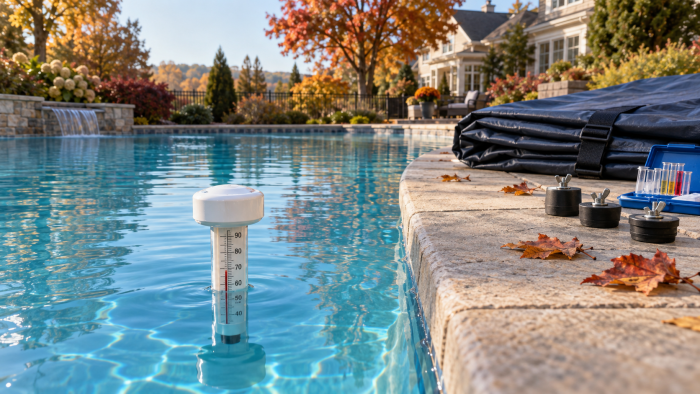
When Should I Close My Pool? The 65°F Water Temperature Rule Explained
Quick answer
Close your pool when the water has stayed below 65°F for 5-7 straight days and the next 7-10 day forecast does not show a warm rebound. In cold climates, do not wait past the first hard-freeze risk just to chase the perfect temperature. Test and balance pH, alkalinity, calcium hardness, and sanitizer first, then use the Pool Chemical Calculator app to size the exact closing doses for your pool volume.
Quick answer
When Should I Close My Pool? The 65°F Water Temperature Rule Explained: Quick answer Close your pool when the water has stayed below 65°F for 5-7 straight days and the next 7-10 day forecast does not show a warm rebound. In cold climates, do not wait past the first hard-freeze risk just to.
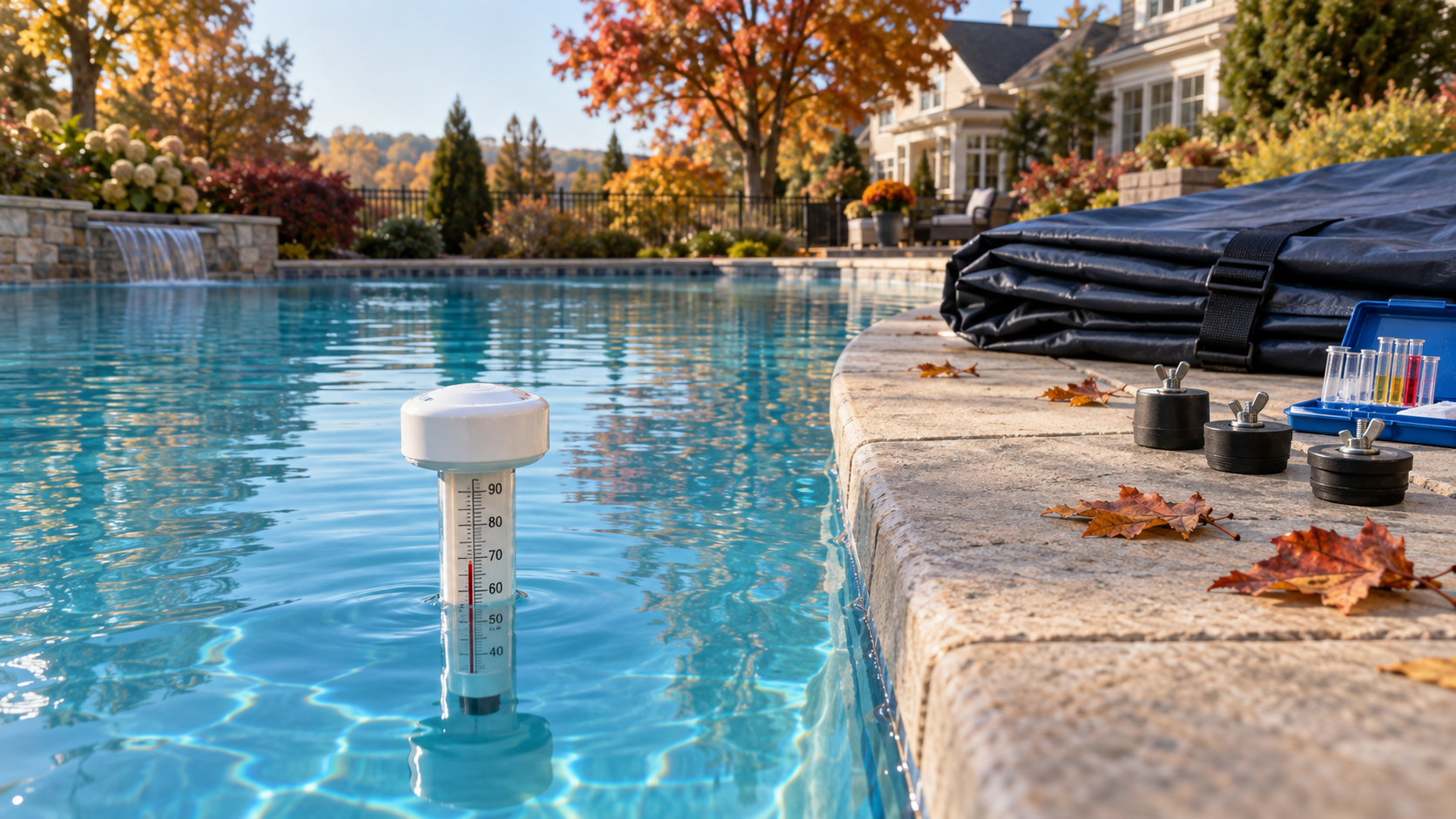
That crisp fall morning hits different when you’re a pool owner. You’re standing there with your coffee, staring at water that’s too cold to swim in but too warm to winterize. Sound familiar? The question of when to close your pool based on water temperature — specifically that magic 65-degree threshold — confuses thousands of homeowners every autumn.
Close too early, and you’re fighting algae under the cover all winter. Close too late, and you’re gambling with frozen pipes and cracked equipment. The sweet spot exists, and it’s more nuanced than just watching your thermometer hit 65°F once.
Here’s the thing: that single temperature reading isn’t enough. You need consistency, context, and a plan. Let’s break down exactly how to nail your closing timing this year.
What We Analyzed: Pool Winterization Timing Decision Framework
Before we get into the details, I built a decision framework that combines water temperature, weather forecasts, and your geographic location. This isn’t guesswork — it’s a systematic approach to finding your optimal closing window.
Framework Inputs
The framework uses five key variables:
- Current pool water temperature (in °F)
- Average daily air temperature forecast for the next 7 days
- Minimum nighttime air temperature forecast for the next 7 days
- Geographic region (Northern US, Mid-Atlantic, Southern US, Southwest)
- Risk tolerance (Conservative, Balanced, or Extended Season)
Sample Scenario Comparisons
| Scenario | Water Temp | 7-Day Avg Air Temp | 7-Day Min Night Temp | Region | Risk Tolerance | Recommendation |
|———-|———–|——————-|———————|——–|—————|—————-|
| A | 62°F | 58°F | 42°F | Northern US | Conservative | Close within 3-5 days. Temps trending down, freeze risk within 2 weeks. Chemical effectiveness will hold through winter. |
| B | 67°F | 65°F | 50°F | Mid-Atlantic | Balanced | Wait 7-10 days. Monitor closely. Water still warm enough for algae. Wait for consistent sub-65°F readings before closing. |
| C | 70°F | 72°F | 58°F | Southern US | Extended Season | Continue swimming 2-3 weeks. Warm spell predicted. Closing now wastes chemicals and invites algae. Reassess weekly. |
| D | 64°F | 55°F | 38°F | Northern US | Balanced | Close within 48 hours. First freeze imminent. Prioritize equipment protection over extended season. |
| E | 68°F | 60°F | 45°F | Southwest | Conservative | Close within 5-7 days. Desert nights drop fast. Water will cool rapidly. Begin prep now, execute closing by weekend. |
Methodology
The framework triggers closure consideration when water drops below 65°F. From there, it weighs freeze risk (using nighttime lows) against algae risk (using daytime highs). Geographic region establishes baseline expectations for first freeze dates. Your risk tolerance shifts the recommendation earlier (Conservative) or later (Extended Season).
Limitations
This framework assumes accurate temperature readings and reliable 7-day forecasts. Regional categories are broad — a pool in the Colorado mountains faces different conditions than one in Denver proper. It also doesn’t account for existing water chemistry problems or equipment-specific vulnerabilities. Use it as a guide, not gospel.
Why 65°F Is the Magic Number (And When It Isn’t)
You’ve probably heard “close when the water hits 65 degrees” from every pool store employee and internet forum. But why that specific number?
Algae growth slows dramatically below 65°F. The organisms responsible for green, cloudy water become sluggish when water temperatures drop into the low 60s. By 50°F, they’re dormant. This matters because the chemicals you add during closing need to last 4-6 months under that cover.
Here’s where most advice falls short: a single 65°F reading means almost nothing.
What “Consistently Below 65°F” Actually Means
Your pool water should stay below 65°F for 5-7 consecutive days before you close. One cool morning doesn’t count. Neither does a chilly week followed by an 80-degree weekend.
Water temperature lags behind air temperature by 2-3 days. So when you see your water thermometer hit 64°F after a cold snap, it might bounce right back up when that warm front moves through. This is the trap that catches early closers.
Check your forecast. If the 10-day outlook shows several days above 75°F, hold off. Your winterizing chemicals will burn through faster under a warm cover than they would in an open pool.
The Real Costs of Getting It Wrong
Nobody talks about this with real numbers. Let me fix that.
Closing Too Early (Water Above 65°F)
When you winterize warm water, here’s what happens:
- Algae bloom under the cover: Treatment cost in spring = $150-400 in chemicals, plus 2-3 days of filter running
- Chlorine burnoff: Your shock treatment depletes 3x faster in 70°F water than 55°F water
- Staining: Organic debris breaks down faster, leaving tannin stains that require $100+ in specialty removers
- Extended spring opening: Budget an extra 8-12 hours of labor cleaning up the mess
Closing Too Late (After First Hard Freeze)
This is where it gets expensive:
- Cracked PVC pipes: Repair cost = $200-800 depending on location and accessibility
- Damaged pump housing: Replacement = $400-1,200 for the pump alone
- Cracked filter tank: Replacement = $300-600
- Heater damage: Repair or replacement = $500-2,500
- Cracked pool tile or coping: Repair = $500-3,000+
The math is clear. Closing a week early costs you maybe $200 in spring chemicals and labor. Closing a week late can cost $2,000+ in equipment damage. When in doubt, lean toward closing sooner.
How to Measure Pool Water Temperature Accurately
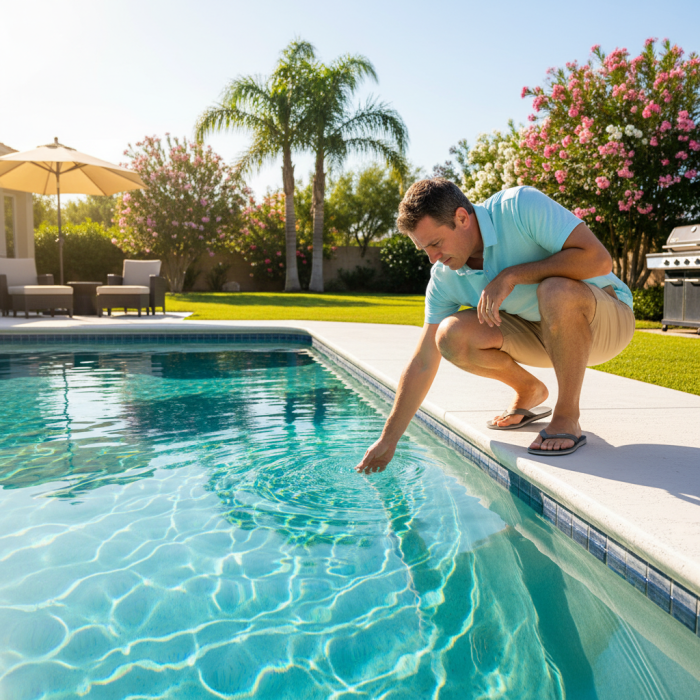
Your pool surface temperature and your pool’s actual temperature are two different things. Surface water can read 60°F in the morning and 72°F by afternoon. Neither number tells the full story.
Best Practices for Accurate Readings
Take readings 12-18 inches below the surface. Surface water fluctuates wildly with sun exposure and air temperature. Deeper water gives you stability.
Measure at the same time daily. I recommend early morning, around 7-8 AM, before the sun heats things up. This gives you the most conservative (coldest) reading.
Use a dedicated pool thermometer. A floating thermometer like the Milliard Floating Pool Thermometer stays in the water 24/7 and gives readings from below the surface. Or go digital with something like the Inkbird Wireless Pool Thermometer that sends readings to your phone — handy for tracking trends over multiple days.
Track for at least a week. Create a simple log. Date, time, water temp, air temp. After 7 days, you’ll see the pattern clearly.
Regional Closing Windows: What Works Where
General guidelines exist, but your specific location matters more than your state.
Northern US (Minnesota, Wisconsin, Michigan, Northern New York, New England)
Typical closing window: September 15 – October 15
First freeze risk: Mid-October to early November
Key indicator: When nighttime air temps consistently drop below 50°F, your water will follow within a week
Pools in this region face the tightest window. You might go from swimming weather to frost advisory in two weeks. Start monitoring water temperature by Labor Day. Have your closing supplies ready by mid-September.
Mid-Atlantic (Pennsylvania, New Jersey, Maryland, Virginia, Southern New York)
Typical closing window: October 1 – October 31
First freeze risk: Late October to mid-November
Key indicator: Post-leaf fall is usually safe — when trees are 75% bare, temps have stabilized
You have more flexibility here, but October warm spells are common. The “Indian Summer” phenomenon tricks a lot of pool owners into closing during a random cool week, only to regret it when temps bounce back to 75°F.
Southern US (Georgia, Alabama, Tennessee, North Carolina, Texas panhandle)
Typical closing window: November 1 – December 15
First freeze risk: Late November to January (varies widely)
Key indicator: Watch for the first sustained cold front that brings lows below 40°F
Many Southern pool owners don’t close at all — they maintain year-round. But if you’re winterizing, don’t rush it. Your season extends well past Northern pools.
Southwest US (Arizona, Nevada, New Mexico, Southern California)
Typical closing window: November 15 – January 15 (if at all)
First freeze risk: December to February in desert areas, rare in coastal zones
Key indicator: Desert nights drop fast once autumn arrives — 40-degree swings between day and night are normal
Water temperature can be deceiving here. That 68°F afternoon reading might become 58°F by morning. Monitor nighttime lows carefully.
The “Soft Close” Strategy: Flexibility When You’re Unsure
Can’t commit to a full winterization? Try a soft close.
A soft close means you’re 80% winterized but can reverse course if needed. Here’s how it works:
- Balance your water chemistry (pH 7.2-7.6, alkalinity 80-120 ppm, calcium hardness 200-400 ppm)
- Lower the water level to just below the skimmer
- Clean the pool thoroughly — vacuum, brush, skim
- Add winterizing chemicals at half the normal dose
- Run the pump 2-4 hours daily instead of shutting down completely
- Cover the pool loosely or use a leaf net instead of a winter cover
This approach works for 2-3 weeks max. It buys you time when the forecast is uncertain. But it’s not a substitute for proper winterization — just a bridge.
If temperatures stabilize above 65°F, remove the cover and resume normal operation. If temps continue dropping, complete the full winterization process.
The Complete Closing Checklist: When You’re Ready to Commit
Once water temperature holds below 65°F for a week and the forecast shows consistent sub-60°F air temps, it’s time.
3-5 Days Before Closing
- Test and balance water chemistry
- Clean or backwash the filter
- Check all equipment for existing damage
- Order any supplies you’re missing
Closing Day
- Remove ladders, rails, and accessories
- Lower water 4-6 inches below the skimmer (for mesh covers) or 12-18 inches (for solid covers)
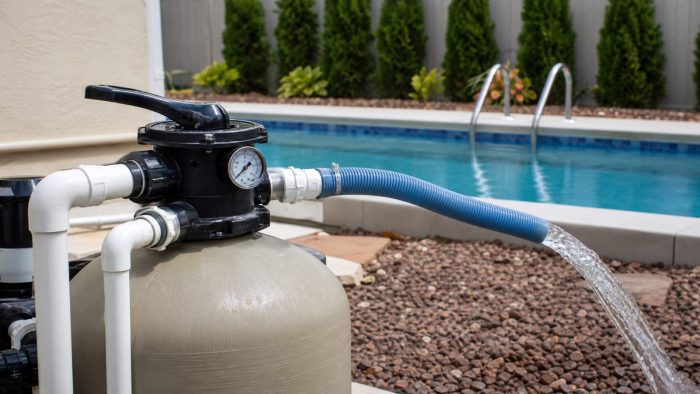
- Blow out plumbing lines with a shop vac or air compressor
- Add pool antifreeze to lines (use Pool Antifreeze — non-toxic formula safe for pools)
- Drain pump, filter, heater, and chlorinator
- Add winterizing chemical kit (algaecide + oxidizer)
- Install winter plugs in return jets and skimmer
- Cover the pool securely
Cover Type Matters for Timing
Mesh covers allow water and fine debris through but block leaves. They’re more forgiving of slightly warmer closing temps because some evaporation continues.
Solid covers trap everything. They retain heat longer, which accelerates chemical depletion in warm water. If using a solid cover, wait until water is solidly below 60°F — not just 65°F.
Step-by-step pool closing timing check
Step 1: Measure water temperature below the surface
Use a floating or digital pool thermometer and read the water 12-18 inches below the surface. Take the reading at the same time every morning so one sunny afternoon does not skew your decision.
Step 2: Confirm the 5-7 day trend
Do not close from one cold reading. Wait until your pool water stays below 65°F for 5-7 consecutive days, unless a hard freeze is approaching sooner.
Step 3: Compare the 10-day forecast
If the forecast shows several days above 75°F, wait. If nights are headed toward freezing, start closing even if the water is slightly above the ideal range.
Step 4: Balance the water before winter chemicals
Test pH, total alkalinity, calcium hardness, free chlorine, and stabilizer. Use the Pool Chemical Calculator app to calculate exact adjustments from your pool volume and current readings.
Step 5: Close only after cleaning and circulation
Brush, vacuum, clean the filter, add closing chemicals in the right order, circulate long enough to mix them, then lower the water and winterize plumbing before installing the cover.
As an Amazon Associate, Pool Chemical Calculator earns from qualifying purchases.
Frequently Asked Questions
How many days should my pool water stay below 65°F before closing?
Wait for 5-7 consecutive days of water temperature readings below 65°F. A single cool day doesn’t count — water temperature fluctuates, and one reading below the threshold can easily bounce back after a warm afternoon. Track temps at the same time each morning for consistency.
What if temperatures drop below 65°F but a warm spell is coming?
Check your forecast. If the warm spell shows highs above 75°F for more than 3-4 days, hold off on closing. Your pool will heat back up, and the chemicals you add will deplete faster under a cover in warm conditions. Wait for the sustained cold to return before winterizing.
Is it worse to close too early or too late?
Closing too late is significantly more expensive. Early closing might cost you $150-400 in spring algae treatment and extra labor. Late closing risks freeze damage to pipes, pumps, filters, and heaters — repairs that can easily exceed $2,000. When uncertain, lean toward closing sooner.
Should I consider nighttime or daytime temperatures when deciding?
Both matter, but for different reasons. Daytime highs above 70°F indicate algae risk — your chemicals will work harder. Nighttime lows below 35°F indicate freeze risk — your equipment is in danger. Ideally, wait until daytime highs stay below 65°F and nighttime lows stay above 40°F for your closing window.
Can I winterize my pool myself or should I hire a professional?
Most homeowners can handle pool closing with the right supplies and a few hours of time. The main considerations: Do you have an air compressor or shop vac for blowing lines? Are you comfortable draining equipment? If you have an in-ground pool with extensive plumbing or a heater with complicated winterization requirements, a professional might be worth the $150-300 investment — especially if they’ll guarantee against freeze damage.
Sources
- Pool Scouts: The Best Time To Close Your Pool — Covers temperature thresholds and regional timing considerations for pool winterization.
- Fiesta Pools and Spas: When Is The Right Time To Winterize Your Pool — Discusses risks of early vs. late closing and chemical preparation.
- Doheny’s: How To Know When It’s Time To Close Your Pool — Practical guidance on temperature monitoring and closing indicators.
Calculate Your Perfect Pool Chemistry Before Closing
Getting water balance right before winterization makes spring opening dramatically easier. Use the free Pool Chemical Calculator app to dial in your pH, alkalinity, calcium hardness, and chlorine levels before adding your winterizing chemicals. Takes 30 seconds, saves hours of headaches in April.
Recommended pool supplies
As an Amazon Associate, Pool Chemical Calculator earns from qualifying purchases.

Raises calcium hardness to reduce corrosive water risk in plaster, concrete, and equipment.
View on Amazon
Accurate readings make every chlorine, pH, alkalinity, calcium, and CYA dose safer.
View on Amazon
Raises total alkalinity so pH is less likely to bounce around after treatment.
View on AmazonGet exact pool chemical doses
Pool Chemical Calculator turns your test readings, pool volume, and target levels into exact treatment amounts for chlorine, pH, alkalinity, calcium, stabilizer, salt, and more.
Open the Pool Chemical Calculator app for iOS, Android, or web.