
Pool Closing Cost: What You’ll Actually Pay for Professional Winterization vs. DIY
DIY Pool Closing: Real Supply Costs
Going the DIY route? Here’s what you’ll actually spend on supplies and equipment.
Quick answer
Pool Closing Cost: What You'll Actually Pay for Professional Winterization vs. DIY: DIY Pool Closing: Real Supply Costs Going the DIY route? Here's what you'll actually spend on supplies and equipment. Chemical Kit Costs A quality winterizing chemical kit runs $30–$70 depending on pool size. For a.
Chemical Kit Costs
A quality winterizing chemical kit runs $30–$70 depending on pool size. For a 20,000-gallon pool, you’ll typically need:
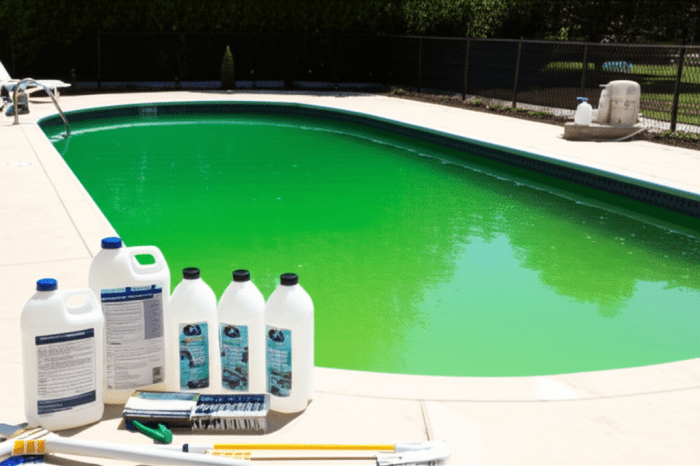
- Winterizing chemical kit (shock, algaecide, stain preventer): $35–$60
- Pool antifreeze (2–4 gallons): $12–$24
- Winter plugs (if replacing): $15–$30
The In The Swim Pool Winterizing Kit covers pools up to 35,000 gallons and includes everything you need chemically—shock, algaecide, and stain control.
Essential Equipment Investments
This is where DIY gets expensive fast. If you don’t already own these items:
Air blower or shop vac (blower function): $100–$250
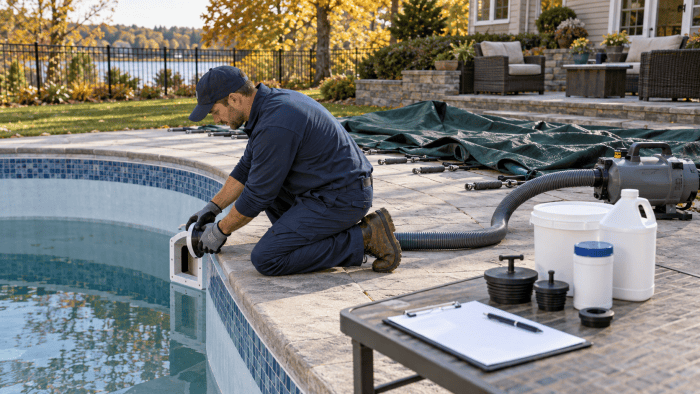
You absolutely need to blow water out of your plumbing lines. A standard shop vac won’t cut it for most inground pools—you need something that moves serious air volume. The Cyclone Pool Line Blower is purpose-built for this job.
Winter cover (if needed): $75–$300
Safety covers cost more ($800–$2,000+) but last 10–15 years. Standard winter covers run $75–$200 but need replacement every 3–5 years.
Air pillow (above-ground): $15–$30
Prevents ice from pushing against pool walls.
Cover clips/cables/water bags: $20–$60
You need something to secure that cover.
Time Investment: The Hidden DIY Cost
Here’s what nobody tells you about DIY pool closing: it takes significantly longer than you expect.
Professional time: 1–3 hours depending on pool complexity
DIY time (first attempt): 4–8 hours
You’ll spend time watching YouTube tutorials, making supply runs for things you forgot, figuring out your specific plumbing layout, and troubleshooting equipment you’ve never used.
DIY time (experienced): 2–4 hours
Once you’ve done it a few times, you’ll get faster. But that first year? Block out most of a Saturday.
If you value your time at $25/hour, that first DIY closing “costs” $100–$200 in labor alone—on top of supplies and equipment.
Step-by-step: How to estimate your pool closing cost
1. Identify your pool type and equipment
List whether the pool is above-ground or inground, then note every add-on that must be winterized: heater, attached spa, salt cell, water feature, automation valve, extra pump, or cleaner line. Each added system can add labor and risk.
2. Price professional closing locally
Ask two or three local pool companies for written quotes. Confirm whether chemicals, cover installation, heater winterization, spa winterization, and salt cell removal are included or billed separately.
3. Price the true DIY supply list
Add up closing chemicals, pool antifreeze, winter plugs, cover clips or water bags, a cover pump if needed, and any missing tools. Do not compare a pro quote against chemicals only if you still need a line blower.
4. Add your risk premium
If freeze damage could crack underground plumbing, a heater exchanger, or a variable-speed pump housing, add that risk to the decision. One failed line blowout can cost more than several years of professional closings.
5. Choose the lower-risk option
DIY is usually reasonable for simple above-ground pools and owners with prior experience. Professional closing is the better value for most inground pools in freezing climates, especially when expensive equipment is attached.
Affiliate disclosure: As an Amazon Associate, Pool Chemical Calculator may earn from qualifying purchases.
When to Hire a Pro: The Decision Framework
DIY isn’t for everyone. And honestly? For many pool owners, it’s not the smartest financial decision either.
Hire a Professional If:
Your pool has complex plumbing
Multiple return jets, water features, spa combinations, and separate pump systems multiply the places where water can freeze and crack. Pros know how to trace and clear every line.
You have expensive equipment
That $3,000 variable-speed pump and $4,000 heater deserve proper winterization. One mistake costs more than years of professional closing fees.
You live in a severe freeze zone
If you regularly see temperatures below 20°F, there’s less margin for error. Water expands about 9% when it freezes—and it finds every weak point in your plumbing.
You’ve never done it before
Learning curve mistakes are expensive with pool winterization. The cost of one cracked underground pipe ($500–$1,500 repair) exceeds 3–5 years of professional service.
You’re physically unable to handle the work
Pool closing involves lifting heavy covers, kneeling on concrete, and working with awkward equipment. Be realistic about your capabilities.
DIY Makes Sense If:
You have a simple above-ground pool
Basic equipment, easy-to-access plumbing, and lower stakes make these ideal DIY candidates.
You already own the necessary equipment
If you have an adequate blower and all the supplies from previous years, your annual cost drops to just chemicals and antifreeze.
You’re mechanically comfortable
If you handle your own basic home repairs and aren’t intimidated by following detailed instructions, you can learn pool closing.
Your pool has straightforward plumbing
Single skimmer, couple of return jets, basic pump and filter? That’s manageable for a motivated DIYer.
Timing Your Pool Closing (And Why It Matters for Cost)
The Sweet Spot: Water Below 65°F
Close your pool when water temperature stays consistently below 65°F. In most northern states, that’s late September through mid-October.
Close too early, and you’re fighting algae growth with no circulation. Close too late, and you’re risking freeze damage—plus paying premium pricing when every pool company is slammed.
Booking Strategy for Professional Service
Schedule your closing appointment in August or early September. Seriously.
Pool companies operate on first-come, first-served scheduling. By October, their calendars are packed, and you’ll either:
- Pay rush fees ($50–$100 extra)
- Get stuck with an inconvenient time
- Risk being pushed past the first hard freeze
Early birds also sometimes get discounts—ask if the company offers off-peak pricing.
Common DIY Mistakes (And What They Cost to Fix)
Incomplete Line Blowing: $500–$2,500
The #1 DIY disaster. If water remains in your plumbing lines and freezes, you’re looking at:
- Cracked PVC pipes (underground repair): $500–$1,500
- Damaged pump housing: $200–$600
- Cracked filter tank: $300–$800
- Heater core replacement: $500–$2,000
Wrong Water Level: $200–$1,000
Too high? Ice expansion damages your skimmer and tile line. Too low? Your cover can collapse into the pool and tear.
Proper level: 4–6 inches below the skimmer for mesh covers, 1–2 inches below for solid covers.
Insufficient Chemical Treatment: $100–$500
Skimp on winterizing chemicals, and you’ll open to an algae swamp. The spring cleanup cost (extra chemicals, extended filtration, possible professional treatment) erases any fall savings.
Forgetting the Antifreeze: $300–$1,500
Antifreeze goes in your skimmer lines and return lines as a safety backup—even after blowing them out. It’s $12–$24 of insurance against freeze damage.
FAQ: Pool Closing Costs
How much does it cost to close an inground pool with a heater and spa?
Expect $350–$500+ for professional service. The heater adds $50–$75 to the base price, and an attached spa adds $75–$150. DIY would run $100–$175 in supplies plus $200–$400 in tools if you’re starting from scratch.
Is it worth paying a professional to close an above-ground pool?
For simple above-ground pools, DIY makes financial sense if you’re comfortable with basic mechanical tasks. Professional closing runs $150–$200, while DIY supplies cost $50–$80. The complexity and risk are lower than inground pools, making this a good candidate for DIY.
What’s the most expensive mistake people make when closing their pool?
Not completely removing water from plumbing lines. Frozen water in underground pipes can cause cracks that cost $500–$1,500 to repair—often requiring deck or patio excavation. This single mistake costs more than 3–5 years of professional winterization.
When should I schedule my pool closing?
Schedule the service for when water temperature stays consistently below 65°F—typically late September to mid-October in northern states. But call to book your appointment in August or early September to avoid the rush and potential premium pricing.
What tools do I need to close my pool myself?
At minimum: an air blower powerful enough to clear your plumbing lines (not a standard shop vac), winter plugs, expansion plugs, and basic hand tools. For inground pools, expect to spend $150–$300 on a proper line blower if you don’t own one.
Sources
- HomeAdvisor: Cost to Close a Pool — Comprehensive pricing data for professional pool closing services
- Bob Vila: Best Pool Closing Kits — DIY supply costs and product recommendations
- Aquatech Utah: Can I Hire Someone to Close My Pool — Professional service details and regional pricing factors
Get Your Pool Chemistry Right Before Closing
Proper water chemistry before closing prevents spring headaches. Use the free Pool Chemical Calculator to balance your water perfectly before winterization—whether you’re going DIY or just want to verify what the pros did.
Recommended pool supplies
As an Amazon Associate, Pool Chemical Calculator earns from qualifying purchases.

Useful for algae cleanup, cloudy water, high bather load, and weekly oxidation routines.
View on Amazon
Helps prevent algae from returning after brushing, shocking, and correcting circulation.
View on Amazon
Accurate readings make every chlorine, pH, alkalinity, calcium, and CYA dose safer.
View on AmazonGet exact pool chemical doses
Pool Chemical Calculator turns your test readings, pool volume, and target levels into exact treatment amounts for chlorine, pH, alkalinity, calcium, stabilizer, salt, and more.
Open the Pool Chemical Calculator app for iOS, Android, or web.