
Pool Cover Pump Guide: How to Choose, Use, and Troubleshoot the Right Pump for Your Pool
Types of Pool Cover Pumps: Which One Do You Actually Need?
Automatic Submersible Pumps
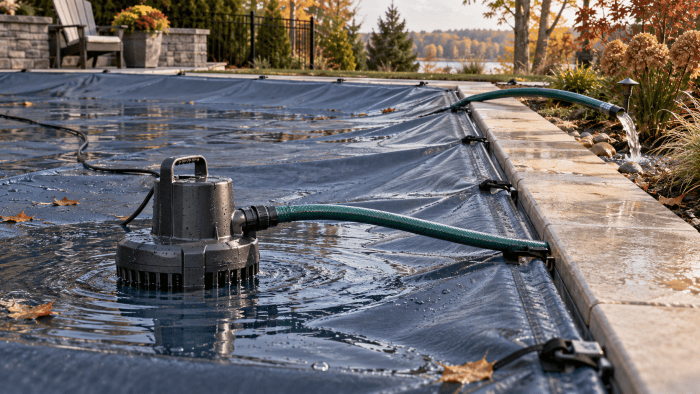
These are the “set it and forget it” option. A float switch or sensor detects water accumulating on your cover and kicks the pump on automatically. When water drops below the sensor level, it shuts off.
Quick answer
Pool Cover Pump Guide: How to Choose, Use, and Troubleshoot the Right Pump for Your Pool: Types of Pool Cover Pumps: Which One Do You Actually Need? Automatic Submersible Pumps These are the "set it and forget it" option. A float switch or sensor detects water accumulating on your cover and kicks the pump.
Best for: Homeowners who travel, areas with unpredictable weather, anyone who doesn’t want to babysit their pool cover.
Watch out for: Cheaper auto pumps sometimes have unreliable sensors. Spend more than $35 to avoid frustration.
The Little Giant 577301 Automatic Pool Cover Pump runs 1,200 GPH and has solid reviews for reliability. It’s the pump I recommend most often for typical residential pools.
Manual Submersible Pumps
You plug it in when needed, unplug when done. Simpler mechanics mean fewer things to break. But you have to remember to use it.
Best for: Budget-conscious buyers, people who are home frequently, backup pumps.
Watch out for: If you forget to turn it on before a storm, you’ll come home to a sagging, damaged cover.
Utility/Transfer Pumps
These aren’t specifically designed for pool covers but can work in a pinch. They’re typically more powerful (2,000+ GPH) but bulkier and not designed to handle the shallow water depths on covers.
Best for: Homeowners who already own one for other purposes.
Step-by-Step: Setting Up Your Pool Cover Pump
What You’ll Need
- Pool cover pump (automatic recommended)
- Garden hose (25-50 feet, depending on drainage location)
- Flat surface or pump base (optional but helpful)
- Power source within cord reach
Setup Instructions
Step 1: Find the low point
Walk around your covered pool. Water naturally collects at the lowest spot—this is where your pump goes. For covers that sag in the center, that’s usually near the middle. For covers with a slight slope toward one side, place the pump there.
Step 2: Connect your discharge hose
Attach a standard garden hose to the pump outlet. Run the hose to a drainage area away from your pool. You don’t want to pump water right back toward the pool deck where it’ll seep under the cover.
Step 3: Position the pump
Place the pump flat on the cover, intake screen facing down. Some pumps include a base plate—use it. This prevents the pump from tipping and ensures the intake stays submerged as water levels drop.
Step 4: Power up
Plug the pump into a GFCI-protected outdoor outlet. Never use extension cords rated lower than the pump’s amperage (check the pump label—most need 15A-rated cords). For automatic pumps, you’re done. For manual pumps, wait until you have 1-2 inches of water before turning on.
Pro tip: Run the pump before the first heavy rain to confirm it works. Nothing worse than discovering a dead pump during a downpour.
How to Choose the Right GPH for Your Pool
GPH (gallons per hour) determines how fast your pump removes water. Too low, and water accumulates faster than it drains. Here’s the math:
A 20×40 foot pool cover that collects 1 inch of rain holds approximately 500 gallons of water. A 600 GPH pump removes this in under an hour. But during a heavy storm dropping 2+ inches per hour, that same pump can’t keep up.
Rule of thumb: Take your cover’s square footage, divide by 100, and multiply by 75. That’s your minimum GPH for moderate conditions.
- 300 sq ft cover → 225 GPH minimum (go 600+ for safety margin)
- 500 sq ft cover → 375 GPH minimum (go 1,000+ realistically)
- 800 sq ft cover → 600 GPH minimum (go 1,500+ for heavy rain areas)
Double these numbers if you live somewhere with frequent heavy rainfall or rapid snowmelt.
Troubleshooting: Why Your Pool Cover Pump Isn’t Working
Problem: Pump Won’t Turn On
Check these first:
- Is the outlet working? Plug in a phone charger or lamp to test.
- Did the GFCI trip? Reset the outlet.
- Is the power cord damaged? Look for cracks, cuts, or rodent damage.
- For automatic pumps: Is there enough water to trigger the float switch? Most need 1-2 inches minimum.
Still nothing? The motor may be burned out. Pumps left running dry (even for 10-15 minutes) can overheat and die. Time for a replacement.
Problem: Pump Runs But Doesn’t Move Water
This is almost always debris clogging the intake screen.
- Unplug the pump (safety first).
- Remove from cover.
- Clear leaves, twigs, and sludge from the intake screen.
- Check the hose for kinks or blockages.
- Prime the pump by submerging it completely before restarting.
For areas with heavy debris, consider the Wayne WAPC250 Automatic Cover Pump, which has a larger intake screen designed for leaf-heavy environments.
Problem: Pump Runs Constantly (Never Shuts Off)
For automatic pumps, this usually means:
- Float switch is stuck (tap it gently or clean debris from around it)
- Water is seeping onto the cover faster than the pump drains it (check for drainage issues around the pool deck)
- Sensor calibration is off (some pumps have adjustable sensitivity)
Problem: Pump Cycles On/Off Rapidly
The water level is right at the sensor threshold. This wastes electricity and wears out the motor. Add a platform under the pump to raise it slightly, or adjust the sensor if possible.
Maintenance: Making Your Pump Last
A well-maintained pool cover pump lasts 5-8 seasons. A neglected one dies after 1-2 years.
Monthly during cover season:
- Clear debris from intake screen
- Inspect power cord for damage
- Test run the pump to confirm function
At season end:
- Drain all water from pump and hose
- Clean exterior with fresh water
- Store indoors, away from freezing temperatures
- Coil cord loosely (tight coils damage wires)
Pool Cover Pump vs. Sump Pump: What’s the Difference?
People ask this all the time. Here’s the short version:
Pool cover pumps are designed for shallow water (1-3 inches) on horizontal surfaces. They have low-profile intakes and auto-shutoff to prevent dry running.
Sump pumps are designed for deep water in pits/basins (6+ inches). They’re more powerful but won’t work well on a pool cover because they need deeper submersion to prime.
Can you use a sump pump on your pool cover? Technically yes, but you’ll damage it running dry. Stick with a pump designed for the job.
Energy Costs: What Does Running a Cover Pump Actually Cost?
Most residential pool cover pumps draw 50-120 watts. Running a 100-watt pump for 4 hours costs roughly $0.05-0.08 (at average electricity rates of $0.12-0.15/kWh).
Over a 6-month cover season with average usage (maybe 20 hours total runtime), you’re looking at $2-4 in electricity. Not exactly budget-breaking. The cover you’re protecting cost $300-800. The pump pays for itself by extending cover life even one extra season.
How Debris Type Affects Pump Performance
Not all leaves are created equal.
Fine debris (pollen, silt, dust): Clogs mesh screens gradually. You won’t notice until flow drops significantly. Clean screens bi-weekly during heavy pollen season.
Large leaves: Block intake rapidly but visibly. Easy to clear but needs frequent attention. Look for pumps with raised or protected intakes.
Twigs and acorns: Can jam impellers entirely. If your pool is under oak or walnut trees, invest in a pump with an external debris basket you can empty without touching the pump itself.
The Superior Pump 91250 Cover Pump handles debris well and is priced affordably for homeowners dealing with heavy leaf fall.
Affiliate disclosure: As an Amazon Associate, Pool Chemical Calculator may earn from qualifying purchases.
Related Pool Chemical Calculator tools
- Use the pool volume calculator before dosing after heavy rain or spring opening.
- Use the chlorine calculator when rain dilution leaves sanitizer low.
- Use the pH calculator after pumping cover water off and reopening.
- Use the smart app link at the pool: Pool Chemical Calculator app.
FAQ
Can I leave my automatic pool cover pump on the cover all winter?
Yes, but with conditions. The pump should be rated for continuous outdoor use, and the power cord needs GFCI protection. In freezing climates, pumps can ice up and fail. Either remove the pump during hard freezes or choose a model with freeze protection.
How often should I run my pool cover pump?
Automatic pumps handle this for you—they run when needed. For manual pumps, check your cover after every rainstorm and run the pump whenever you see 1-2 inches of standing water. During heavy rain seasons, daily checks aren’t overkill.
What’s the minimum water depth for a pool cover pump to work?
Most need 1-2 inches to prime properly. Auto sensors typically trigger around 2 inches. Some low-profile models work down to ¼ inch, but these cost more. Always check manufacturer specs for your specific pump.
My pool has a mesh safety cover. Do I still need a pump?
Mesh covers let water pass through, so most rainfall drains directly into the pool. You might still want a small pump for heavy downpours that temporarily overwhelm the mesh, or if debris blocks the mesh and causes pooling.
How do I prevent the pump from freezing?
Remove the pump before hard freeze events, or purchase a pump with built-in thermal protection. Never leave water standing in the pump or hose—it expands when frozen and cracks housings.
Keep Your Pool Chemistry Dialed In
Once your cover comes off, your water chemistry needs attention. After months under cover, pH drifts, chlorine dissipates, and algae waits to bloom. Don’t guess—calculate.
Use our free Pool Chemical Calculator to get exact dosing for your pool’s size and current chemistry. Takes 60 seconds and saves you money on chemicals.
Sources
- Bob Vila: Best Pool Cover Pumps — Product comparisons and buying recommendations
- Pool Parts To Go: Ultimate Guide to Pool Cover Pumps — Selection, usage, and maintenance guidance
- Pool Supplies: All You Need to Know About Cover Pumps — Comprehensive overview and troubleshooting
- Pool Magazine: Best Pool Cover Pumps of 2024 — Current product reviews
Recommended pool supplies
As an Amazon Associate, Pool Chemical Calculator earns from qualifying purchases.

Useful for algae cleanup, cloudy water, high bather load, and weekly oxidation routines.
View on Amazon
Accurate readings make every chlorine, pH, alkalinity, calcium, and CYA dose safer.
View on Amazon
Removes leaves and debris before they consume chlorine and stain the pool.
View on AmazonGet exact pool chemical doses
Pool Chemical Calculator turns your test readings, pool volume, and target levels into exact treatment amounts for chlorine, pH, alkalinity, calcium, stabilizer, salt, and more.
Open the Pool Chemical Calculator app for iOS, Android, or web.