
Pool Freeze Protection: What to Do Before a Cold Snap Hits
Quick answer
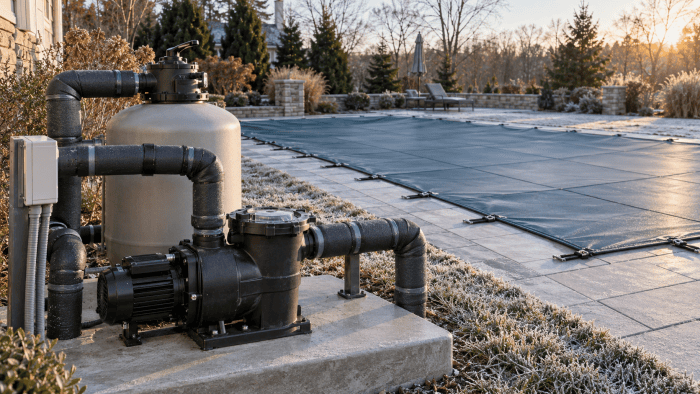
Pool freeze protection means keeping water from freezing inside your pump, filter, heater, chlorinator, valves, and plumbing. If your pool is open, run the pump continuously during freezing weather, open every valve path that needs circulation, and protect exposed equipment from wind. If the pool is closed or power may fail, drain the equipment and blow out or winterize the lines instead of depending on circulation. The expensive mistake is assuming “freeze mode” protects everything when one closed valve, clogged skimmer, tripped breaker, or un-drained heater can still split a part overnight.
Quick answer
Pool Freeze Protection: What to Do Before a Cold Snap Hits: Quick answer Pool freeze protection means keeping water from freezing inside your pump, filter, heater, chlorinator, valves, and plumbing. If your pool is open, run the pump continuously during freezing weather, open.
The rule is simple: moving water is safer than still water, but drained equipment is safer than equipment you cannot keep moving.
What we analyzed: freeze-risk action matrix
Most freeze advice says “run the pump,” but that is not enough detail. The right move depends on temperature, wind, power reliability, and whether the pool is open or winterized.
| Situation | Main risk | Best action | What to check |
|—|—:|—|—|
| 31-34F for a few hours | Light surface ice, exposed pipes | Run pump, keep valves open, confirm flow | Skimmer flow, return flow, automation freeze setting |
| 25-30F overnight | Pump/filter/heater freeze damage | Run pump continuously and circulate all equipment paths | Breaker, pump basket water level, heater bypass, chlorinator |
| Below 25F or multi-day freeze | Ice expansion inside equipment | Drain equipment if circulation is uncertain | Pump drain plugs, filter drain, heater drain plugs |
| Power outage during freeze | Still water in full equipment | Open drain plugs and relieve pressure immediately | Pump, filter, heater, chlorinator, exposed PVC |
| Closed winterized pool | Water left in lines or equipment | Verify plugs, antifreeze where appropriate, and cover condition | Returns, skimmers, pump, filter, heater, cover water |
Methodology: This matrix compares common residential pool freeze scenarios by temperature range, circulation reliability, and equipment exposure. It is a decision framework, not a weather forecast.
Limitations: Freeze timing depends on wind, pipe exposure, water movement, equipment-pad layout, and how long the cold lasts. A shaded equipment pad with exposed PVC can freeze faster than a protected pad at the same air temperature.
Why freeze damage gets expensive fast
Water expands when it freezes. Inside pool equipment, that expansion has nowhere friendly to go. A cracked pump housing, split filter tank, broken heater manifold, cracked salt cell, or ruptured PVC line can cost far more than a careful 20-minute cold-weather check.
The most vulnerable spots are:
- Pump housing and pump lid area
- Filter tank, pressure gauge, air relief, and drain assembly
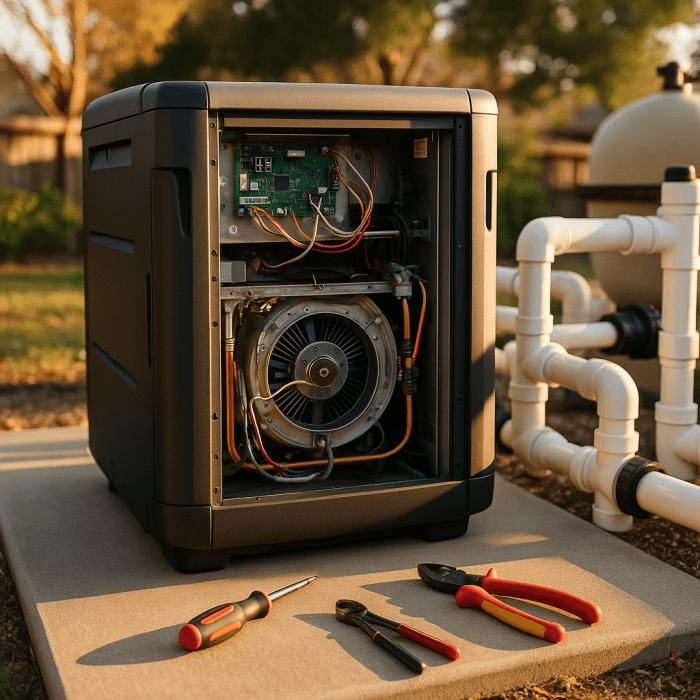
- Pool heater headers, heat exchanger plumbing, and bypass valves
- Salt cell unions and flow switch
- Check valves, chlorinators, actuators, and exposed PVC elbows
- Skimmer throats and shallow suction lines
Use the Pool Chemical Calculator app after the freeze event to rebalance water that has been diluted by rain, refill water, or emergency draining.
Step-by-step: open pool freeze protection
Use this when the pool is still open and you expect freezing weather but still have reliable power.
Step 1: Turn the pump on early
Do not wait until ice forms. Run the pump continuously until the air temperature is safely above freezing.
Step 2: Open circulation paths
Make sure water is moving through skimmers, main drain if available, returns, and any exposed equipment loop that needs protection.
Step 3: Confirm actual flow
Look for water returning to the pool, a full pump basket, normal filter pressure, and no air surging through the returns.
Step 4: Protect exposed pipes from wind
Wrap vulnerable above-ground PVC, unions, and valves with outdoor-rated pipe insulation or temporary towels covered by waterproof material.
Step 5: Check automation freeze mode
Freeze mode helps only if the pump starts, valves are positioned correctly, and the system still has power.
Step 6: Do not run the heater unless needed and safe
Many heaters can be damaged by poor flow, improper bypass settings, or freezing water left inside after shutdown. Follow the heater manual.
Step 7: Watch the breaker and GFCI
A tripped breaker turns freeze protection into still water. Recheck during the coldest part of the night if conditions are severe.
Step 8: Inspect before normal operation
After the freeze, look for leaks, cracked lids, split unions, dripping heater headers, and unusual pump noise.
What to do if power goes out during a freeze
If the pump cannot run, protect the equipment by draining it. Do this only if you can work safely.
- Turn off power to the equipment pad.
- Remove pump drain plugs and open the pump lid.
- Open the filter air relief and remove the filter drain plug.
- Drain the heater according to the manufacturer’s instructions.
- Open chlorinator, salt cell, and check-valve unions if they hold trapped water.
- Leave valves in positions that do not trap water in a closed section.
- Keep removed drain plugs in the pump basket so they are not lost.
If you are unsure how to drain a gas heater, heat pump, or automation-controlled pad, call a pool pro. A heater is not the place to guess.
Closed pool freeze protection checklist
For a winterized pool, the goal is different. You are not trying to circulate water. You are verifying that trapped water was removed or protected.
- Confirm the pump and filter are drained.
- Verify return plugs and skimmer protection are still seated.
- Check that the pool water level has not risen into the skimmer if your closing method required it below the skimmer.
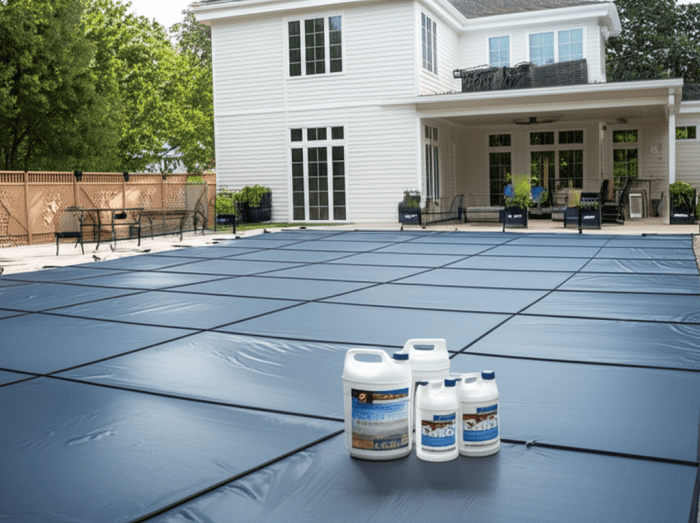
- Remove standing water from solid covers before it stresses anchors, water bags, or cover fabric.
- Keep the equipment pad clear enough that you can inspect it after storms.
- If using pool antifreeze, use only pool-safe antifreeze and follow the closing method for your plumbing. Do not pour automotive antifreeze into pool plumbing.
For exact water-volume and chemical calculations after emergency draining or refill, use the pool volume calculator, chlorine calculator, and pH calculator.
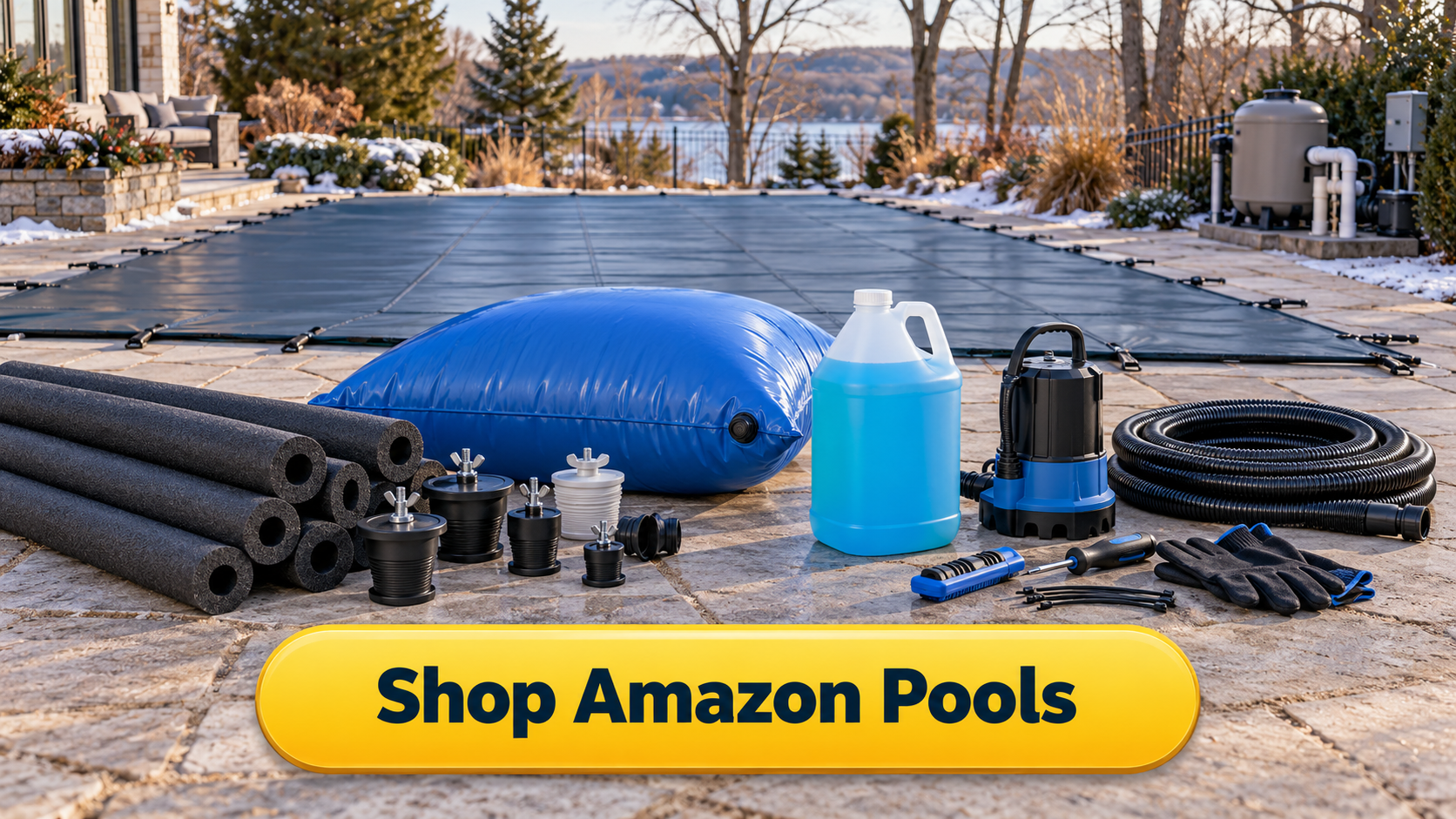
Useful supplies for pool freeze protection
These are practical items to keep on hand before the first cold snap:
- Outdoor-rated pipe insulation for exposed PVC
- Replacement pump and filter drain plugs
- Skimmer plugs or winterizing plugs
- Pool-safe antifreeze for winterized plumbing when appropriate
- Waterproof tape or zip ties for temporary insulation
- A cover pump for removing water from solid winter covers
- A flashlight for equipment-pad checks at night
You can compare winter pool supplies on Amazon. As an Amazon Associate, Pool Chemical Calculator may earn from qualifying purchases.
Common mistakes that still crack equipment
Trusting freeze mode without checking flow
Automation freeze protection is useful, but it is not magic. If a valve is closed, a pump loses prime, the breaker trips, or the equipment path is bypassed, water can still freeze.
Forgetting the heater
Heaters often hold water in places that are not obvious from the outside. A heater can crack even when the pump and filter survive. Drain or protect it according to the manual.
Letting one dead-end pipe sit full
Water must move through the plumbing section you are protecting. A capped, isolated, or closed-off section can freeze even while the main pump is running.
Draining the pool too low
Lowering water may be part of winterizing, but over-draining can damage liners, covers, and pool structure. Lower only as much as your cover type and closing method require.
Affiliate disclosure: As an Amazon Associate, Pool Chemical Calculator may earn from qualifying purchases.
FAQ
At what temperature should I run my pool pump for freeze protection?
Run the pool pump whenever air temperature is expected to stay at or below freezing, especially overnight. Many owners start circulation around 34-36F to give the system a safety margin.
Does moving pool water freeze?
Moving water can still freeze in extreme or prolonged cold, but it freezes much more slowly than still water. Circulation is a short-term protection method, not a substitute for winterizing in severe climates.
Should I drain my pool equipment before a freeze?
Drain equipment if the pool is closed, the pump cannot run, power is unreliable, or temperatures will be severely below freezing for an extended period. An open pool with reliable circulation may not need full draining for a short cold snap.
Does freeze protection mode protect my heater?
Only if water is actually moving through the heater and the heater is configured correctly. Some setups bypass the heater, and some heaters require specific drain or winterizing steps.
Can I use antifreeze in pool plumbing?
Use only pool-safe antifreeze, and only as part of a proper winterizing process. Never use automotive antifreeze in pool plumbing.
Sources
- Pentair pool winterization and freezing weather guidance
- Hayward pool closing and winterizing guidance
- Leslie’s pool freeze protection advice
- Pool Chemical Calculator app
Get exact pool doses after freeze weather
Cold snaps often lead to emergency draining, refill water, rain dilution, or delayed circulation. Before you add chemicals, test the water and calculate the dose for your actual pool volume. Get the Pool Chemical Calculator app here: https://poolchemicalcalculator.com/app.
Recommended pool supplies
As an Amazon Associate, Pool Chemical Calculator earns from qualifying purchases.

Accurate readings make every chlorine, pH, alkalinity, calcium, and CYA dose safer.
View on Amazon
Removes leaves and debris before they consume chlorine and stain the pool.
View on Amazon
Slow-dissolving tablets help keep routine free chlorine steady in floaters or chlorinators.
View on AmazonGet exact pool chemical doses
Pool Chemical Calculator turns your test readings, pool volume, and target levels into exact treatment amounts for chlorine, pH, alkalinity, calcium, stabilizer, salt, and more.
Open the Pool Chemical Calculator app for iOS, Android, or web.