
Pool Pump Won’t Turn Off? How to Fix a Timer That Keeps Running
Why Your Pool Pump Timer Isn’t Shutting Off
Your pool timer is a mechanical traffic cop. It tells your pump when to run and when to rest. When that cop stops directing traffic, your pump just keeps going — 24/7, racking up your electric bill and wearing out expensive equipment.
Quick answer
Pool Pump Won't Turn Off? How to Fix a Timer That Keeps Running: Why Your Pool Pump Timer Isn't Shutting Off Your pool timer is a mechanical traffic cop. It tells your pump when to run and when to rest. When that cop stops directing traffic, your pump just keeps going — 24/7.
A pump running non-stop can add $50-150 per month to your electricity costs, depending on your pump size and local rates. And here’s the thing: continuous operation doesn’t make your pool cleaner. Most pools only need 8-12 hours of filtration daily based on their volume.
Let’s figure out what’s broken and get it fixed.
Diagnosing the Problem
Before grabbing tools, spend two minutes narrowing down the cause. This saves you from replacing parts you don’t need.
Check #1: Is the Timer in “On” Override?
Look at your timer dial. Most Intermatic timers have a small lever or switch that toggles between “Timer” and “On.” If someone flipped it to manual override (maybe during maintenance or a party), the pump runs continuously until you switch it back.
This sounds obvious, but it accounts for about 20% of “my timer is broken” calls to pool techs.
Check #2: Are the Trippers Installed and Positioned Correctly?
Those little plastic tabs around the timer dial? They’re called trippers, and they physically push against a switch to turn the pump on and off. Check if:
- Both ON and OFF trippers are present (they sometimes break or fall off)
- They’re positioned at the times you actually want
- They’re pushed firmly into the dial’s slots
- The ON tripper comes BEFORE the OFF tripper when the dial rotates clockwise
Check #3: Is the Timer Motor Running?
Put your ear close to the timer (don’t touch it yet). You should hear a faint humming or ticking — that’s the timer motor advancing the dial. If you hear nothing and the dial hasn’t moved in hours, the motor is dead.
If you hear buzzing or clicking sounds, that’s a different problem worth investigating.
Check #4: Does the Dial Move But the Pump Ignores It?
Watch the dial pass over the OFF tripper. If the dial moves, the tripper clicks the switch, but the pump keeps running — your contacts are stuck closed. This is the most common mechanical failure in pool timers.
Step-by-Step Troubleshooting Guide
Now that you’ve narrowed things down, here’s how to fix each issue.
Step 1: Turn Off Power and Verify It’s Dead
Go to your main electrical panel and flip off the breaker labeled “Pool” or “Pool Pump.” It’s usually a double-pole 20-30 amp breaker.
Return to the timer and use a non-contact voltage tester on the wires inside the timer box. Test multiple spots — the line side (incoming power) and load side (outgoing to pump). The tester should show no voltage anywhere.
Why both locations? Because sometimes people wire things wrong. Don’t trust that the breaker killed everything until you verify it yourself.
Step 2: Inspect and Replace Worn Trippers
Open your timer box (usually one or two screws on the front panel). Look at the trippers on the dial:
Signs of tripper problems:
- Plastic is cracked or broken
- Tripper is loose and wobbles
- Metal contact point is worn flat or missing
- Tripper has fallen into the bottom of the timer box
If your trippers are damaged, replacement is cheap and easy. A pack of Intermatic trippers costs under $10 and takes about 30 seconds to install. Just pull out the old ones and push in new ones at your desired on/off times.
Pro tip: Set your OFF tripper about 15 minutes past when you want the pump to stop. The mechanical switch has some play in it, and this ensures a clean shutoff.
Step 3: Test the Timer Motor
With power still off, look at the position of the dial. Note the time it shows. Turn power back on at the breaker, wait 15-20 minutes, then check the dial position again.
If the dial moved, your timer motor works. If it’s frozen in the same position, the motor has failed.
Replacing a timer motor is moderately difficult — you’ll need to remove the dial, unscrew the motor housing, and transfer wires. For most Intermatic T100 series timers, a replacement motor runs about $30-50.
But honestly? If your timer is more than 10 years old and the motor died, consider replacing the entire timer. A new timer costs $60-80 and gives you fresh contacts, a new motor, and another decade of reliability.
Step 4: Check for Stuck or Welded Contacts
This is the tricky one. Contacts are the metal pieces inside the timer switch that connect and disconnect to control power flow. Over time, electrical arcing can weld them together — meaning they’re permanently closed.
With power OFF, look at the contact mechanism. You’ll see two metal pieces that should touch when ON and separate when OFF. Try these checks:
- Manually move the dial past the OFF tripper
- Watch the contacts — they should visibly separate
- If they stay touching, try gently prying them apart with a plastic tool (never metal)
If the contacts are fused together or heavily pitted and burned, the timer needs replacement. Contacts can sometimes be cleaned with fine sandpaper, but if they’re welded, no amount of cleaning helps.
Signs you need a new timer:
- Contacts are blackened or melted
- You smell burned plastic
- Contacts won’t stay separated
- The mechanism feels sticky or gritty
Step 5: Trace the Wiring for Bypass Issues
Here’s something that surprises homeowners: sometimes previous owners or handymen wire pumps to bypass the timer entirely. The timer becomes decoration while the pump gets direct power.
With power OFF, look at the wiring inside your timer box:
- Line wires (incoming power) should connect to terminals marked “LINE” or have black/red wires from the breaker
- Load wires (outgoing to pump) should connect to terminals marked “LOAD” and go toward your pump
If you see wires connected directly from line to load without going through the timer mechanism, someone bypassed your timer. This requires rewiring — and if you’re not confident with 240V electrical work, call an electrician.
Step 6: Test Your Fix
After making repairs:
- Restore power at the breaker
- Set the dial to about 5 minutes before an OFF tripper
- Wait and watch
The pump should shut off when the dial hits the OFF tripper. If it does, you’re fixed. If it doesn’t, you’ve either got a different problem or the repair didn’t take.
When to Call a Professional
DIY saves money, but know your limits. Call a licensed electrician if you encounter:
- Burned, melted, or discolored wiring
- A burning smell from the timer box
- Water inside the timer enclosure
- Wiring that doesn’t match standard diagrams
- Any situation where you’re not 100% confident
A service call typically costs $75-150, which is far cheaper than an electrical fire or a trip to the emergency room.
Preventing Future Timer Problems
Once your timer is working again, a little maintenance extends its life significantly.
Monthly: Open the timer box and check for ants, wasps, or debris. Insects love these warm enclosures and can cause shorts.
Every 6 months: Inspect trippers for wear. Wiggle them — they should be snug, not loose.
Annually: Spray contact cleaner on the switch mechanism (with power off, obviously). This prevents the arcing that welds contacts.
Every 8-10 years: Replace the timer proactively. They don’t last forever, and a new timer is cheaper than emergency repairs.
The Bigger Picture: Optimizing Your Pump Schedule
While you’re messing with timer settings anyway, take a minute to consider whether your schedule makes sense.
Most pools need 8-12 hours of filtration daily. The exact number depends on your pump flow rate and pool volume — calculate your pool’s volume here if you’re not sure.
Timing matters too. Running your pump during off-peak electricity hours (often 9pm-9am) can cut costs by 20-40% depending on your utility’s rate structure.
And proper circulation affects your chlorine effectiveness. A pump that runs during the hottest part of the day helps distribute chlorine when UV degradation is highest.
Frequently Asked Questions
Why does my pool pump timer click but not turn off the pump?
The clicking means the timer mechanism is working, but the contacts are stuck closed. Electrical arcing over time welds the contacts together. You’ll need to either clean/separate the contacts (if lightly stuck) or replace the timer (if fused together). This is the most common timer failure mode.
Can I run my pool pump continuously without damaging it?
Technically yes — pumps are designed for extended operation. But continuous running wastes 50-70% more electricity than necessary, accelerates wear on bearings and seals, and doesn’t improve water quality beyond a certain point. Most pools achieve excellent circulation with 8-12 hours of daily runtime.
How do I know if my pool timer motor is bad?
Mark the current dial position with tape or a marker. Come back in a few hours. If the dial hasn’t moved at all, the motor is dead. A working motor advances the dial continuously (though slowly — 1 revolution per 24 hours). You might also notice the absence of any humming sound from the timer box.
Should I replace my pool timer or just the motor?
If your timer is under 8 years old and only the motor failed, replacing just the motor makes financial sense. But if the timer is older, or if you’re seeing worn contacts alongside a dead motor, replace the whole unit. New timers aren’t expensive, and you get all fresh components instead of piecemeal repairs.
Why did my pool timer contacts weld together?
Contacts weld from repeated electrical arcing — the small spark that occurs when contacts open and close under load. Higher amp loads (larger pumps), dirty contacts, and loose connections all increase arcing. Over years, this pits and eventually fuses the contact surfaces. Using a timer rated for your pump’s amperage and keeping contacts clean minimizes this.
Keep Your Pool Running Smoothly
A functioning timer is just one piece of pool maintenance. Once your pump is cycling properly again, make sure your water chemistry is balanced too. Proper filtration combined with correct chlorine and pH levels keeps your water clear without wasting chemicals or electricity.
Ready to dial in your pool chemistry? Use our free Pool Calculator App to get exact dosing recommendations based on your pool’s size. No more guessing, no more chemical waste — just clear, balanced water with the least effort possible.
Recommended pool supplies
As an Amazon Associate, Pool Chemical Calculator earns from qualifying purchases.

Saves manual cleaning time and helps keep floors and walls cleaner between service visits.
View on Amazon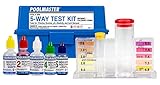
Accurate readings make every chlorine, pH, alkalinity, calcium, and CYA dose safer.
View on Amazon
Removes leaves and debris before they consume chlorine and stain the pool.
View on AmazonGet exact pool chemical doses
Pool Chemical Calculator turns your test readings, pool volume, and target levels into exact treatment amounts for chlorine, pH, alkalinity, calcium, stabilizer, salt, and more.
Open the Pool Chemical Calculator app for iOS, Android, or web.